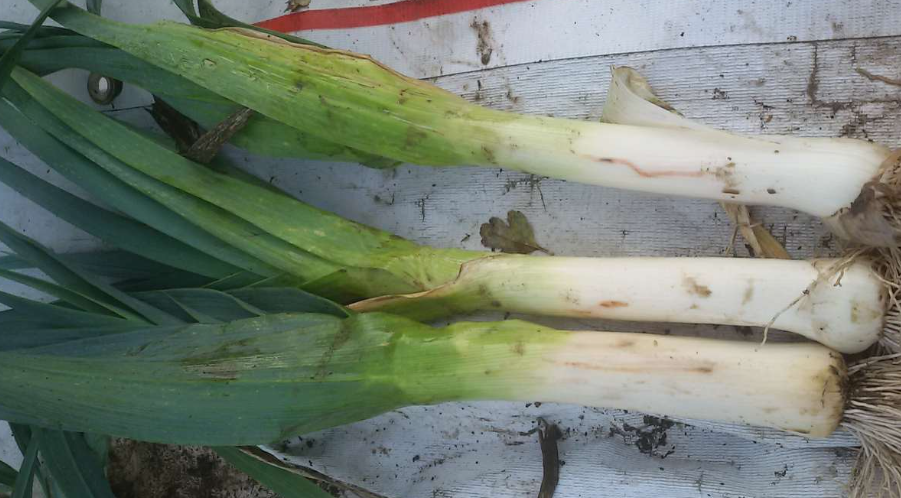
Leeks (Allium porrum) are generally dependable vegetables, but their long leaves and tightly packed stems can attract several insects and provide favorable conditions for a range of diseases. Problems may appear as tiny holes, silvery streaks, distorted leaves, yellowing, wilting, orange spots, or decay around the base.
The difficult part is that several leek problems can produce similar symptoms. A yellowing plant, for example, may be suffering from a soil-borne disease, damaged roots, insect feeding, or environmental stress. For that reason, good leek pest and disease management begins with identifying the cause before trying to control it. University of Minnesota Extension likewise recommends diagnosis before deciding how to address problems affecting leek roots, shafts, and leaves.
The good news is that many problems can be reduced through ordinary garden practices: crop rotation, sensible spacing, good drainage, careful watering, removal of diseased material, insect exclusion, and choosing suitable varieties.
1. Leek Moth
Leek moth is a small moth whose caterpillars feed within leek foliage. The damage can be particularly troublesome because the caterpillars may enter the leaves rather than remaining clearly visible on the outside.
Symptoms
Look for:
- Small holes or window-like patches in leaves
- Damaged young foliage
- Ragged leaves
- Caterpillars hidden among the leaves
- Brown or damaged areas around feeding sites
Severe feeding can weaken plants and create openings through which secondary infections may develop.
How to Control Leek Moth
Inspect plants frequently, especially during periods when adult moths are active. Fine insect-proof netting can provide an effective physical barrier against egg-laying adults.
Good garden hygiene also matters. Remove heavily damaged plant material and avoid leaving crop debris where pests can persist.
Crop rotation is another useful part of an integrated approach, particularly when leek moth has repeatedly caused problems in the same planting area.
2. Allium Leaf Miner
The allium leaf miner is an important pest of leeks and other Allium crops. Its larvae tunnel inside leaves and stems, making the damage more difficult to detect than insects feeding openly on the foliage.
The RHS identifies the main symptoms as white lines or mines on leaves, larvae inside the plant, and brown pupae within stems or bulbs. Damaged tissue may subsequently develop secondary fungal or bacterial rots.
How to Control Allium Leaf Miner
Fine insect-proof mesh is one of the most useful preventative measures. The RHS recommends covering susceptible crops during periods when adult flies are active and laying eggs. It also recommends crop rotation because adults can emerge from pupae associated with previously affected crops.
Remove badly affected plants rather than allowing damaged material to remain in the garden.
The timing of the pest is important because the RHS reports two generations, with adult activity occurring mainly in spring and again in late summer and autumn.
3. Onion Thrips
Onion thrips are tiny insects that feed on the leaves of leeks and other members of the onion family.
Because they are small, they can easily go unnoticed until feeding damage becomes obvious.
Symptoms
Typical signs include:
- Silvery or whitish streaks
- Fine stippling
- Distorted leaves
- Reduced plant vigor
- Dry-looking or bleached foliage
University of Minnesota Extension describes onion thrips feeding damage as whitish spots and streaks that can produce a silvery appearance on affected foliage.
How to Control Thrips
Regularly inspect the newest leaves and the protected areas between tightly packed foliage.
Keeping plants adequately watered during dry conditions can reduce stress, while removing weeds around the crop can eliminate some alternative hosts.
Encouraging beneficial insects and avoiding unnecessary broad-spectrum insecticide use can also be part of an integrated pest-management strategy.
For serious infestations, use only pest-control products that are specifically registered for the crop and pest in your location, and follow the product label.
4. Onion Maggot or Onion Fly
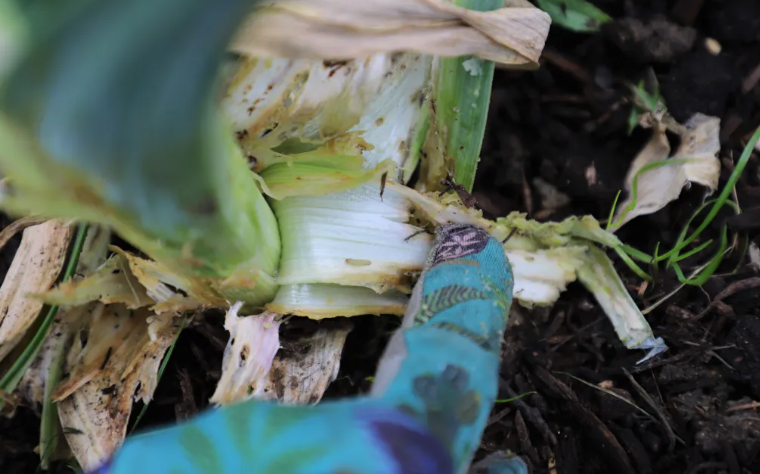
Onion maggots are the larvae of flies that attack plants in the onion family. They can enter the stems and roots, damaging tissues below the surface.
University of Minnesota Extension notes that onion maggots can bore into leek stems, causing plants to turn yellow and wilt.
Symptoms
Affected plants may show:
- Yellowing foliage
- Wilting
- Poor growth
- Weak or damaged roots
- Decay around the base
How to Control Onion Maggots
Prevention is particularly valuable because larvae feed in protected plant tissues.
Practice crop rotation and remove badly affected plants. Avoid leaving decaying leek material in the garden because it can contribute to conditions favorable to future problems.
Physical barriers can also help prevent adult flies from reaching young plants and laying eggs.
5. Slugs and Snails
Slugs and snails can damage young leeks, especially when conditions are damp.
The RHS lists slugs and snails among pests that can affect leeks.
Symptoms
Look for:
- Irregular holes
- Missing sections of young leaves
- Ragged foliage
- Slime trails
Damage is often easier to notice in the morning or after damp weather.
How to Control Slugs and Snails
Remove hiding places such as unnecessary boards, dense weeds, and garden debris around the crop.
Keep the immediate planting area reasonably open and inspect plants regularly.
If additional control is needed, choose a locally approved method and follow its directions carefully.
6. Leek Rust
Leek rust is one of the most recognizable leek diseases.
It is caused by the fungus Puccinia porri and can also affect garlic, onions, and chives. The characteristic symptom is the appearance of bright orange raised pustules on the leaves.
Symptoms
Early symptoms may include small orange spots that gradually become more obvious.
As an infection becomes severe:
- Leaves may shrivel
- Foliage can die prematurely
- Plant vigor may decline
- Overall yield can be reduced
The disease commonly becomes more noticeable from mid-summer through late autumn.
How to Control Leek Rust
Start with spacing.
Crowded leeks create a more humid environment around the foliage, which can favor disease development. The RHS recommends avoiding overcrowding and disposing of infected plant debris after cropping.
Avoid excessive nitrogen fertilization, particularly because the RHS notes that infection can be worse in nitrogen-rich soils with low potassium.
When choosing seed or plants, look for varieties with reported resistance where available. The RHS recommends selecting resistant varieties if leek rust has previously been a problem.
7. Onion White Rot
Onion white rot is a serious soil-borne fungal disease affecting leeks, onions, garlic, and other Allium crops.
It is caused by Stromatinia cepivora and can remain in soil for many years, making established infestations particularly difficult to manage.
Symptoms
Affected plants may develop:
- Yellowing foliage
- Wilting
- Poor growth
- Root decay
- Decay around the base of the plant
- White fungal growth around infected tissues
How to Control White Rot
Prevention is much more effective than trying to rescue severely infected plants.
Avoid moving contaminated soil from an affected bed to clean areas. Remove infected plants carefully and dispose of them appropriately rather than spreading affected soil around the garden.
Crop rotation can reduce the frequency with which susceptible crops are planted in the same location, although long-lived soil-borne pathogens can make rotation alone insufficient in heavily infested ground.
If white rot has become established in a particular bed, avoid repeatedly planting susceptible Allium crops there.
8. Downy Mildew
Downy mildew can affect members of the onion family during cool, damp conditions.
University of Minnesota Extension describes downy mildew symptoms as elongated pale green to tan areas followed by purplish-gray fuzzy growth. Severely affected leaves may collapse and die.
How to Control Downy Mildew
Good air circulation is important.
Avoid planting leeks too closely together, and try to water the soil rather than repeatedly wetting the foliage. The RHS also advises avoiding wetting leek foliage when watering because wet leaves can encourage fungal diseases such as rust.
Remove severely affected foliage where practical and clear plant debris after harvest.
9. Fungal Leaf Spots
Several fungal diseases can produce spots on leek leaves.
The exact appearance depends on the pathogen, but affected foliage may develop small spots that enlarge or merge as disease progresses.
Leaf-spot diseases tend to become more troublesome when foliage remains wet for prolonged periods.
How to Control Leaf Spots
Focus on prevention:
- Give plants adequate spacing
- Avoid unnecessary overhead watering
- Improve air movement
- Remove badly infected leaves
- Clear plant debris after harvest
- Rotate crops where practical
The RHS lists fungal leaf spots among diseases that may affect leeks.
10. Foot and Root Rots
Root and foot rots affect the tissues around the lower stem and root system.
Because the damage occurs partly below the soil surface, the first obvious sign may simply be poor growth or yellowing foliage.
How to Control Root and Foot Rots
Good drainage is one of the most important preventive measures.
Avoid growing leeks in areas where water remains stagnant after rain. Improve soil structure where necessary and avoid repeatedly saturating the root zone.
Remove severely affected plants and avoid spreading contaminated soil to other beds.
11. Smuts
Smuts are fungal diseases that can affect plants in the onion family, and the RHS lists smuts among potential diseases of leeks.
The symptoms can include dark or blackened areas within affected plant tissues.
How to Reduce the Risk
Crop rotation, good sanitation, and using healthy planting material are useful preventative measures.
Avoid moving soil from affected areas to clean beds, and remove badly diseased plants rather than leaving them to decompose among healthy crops.
How to Prevent Leek Pests and Diseases Before They Start
The best leek protection program begins before the first visible symptom.
1. Rotate Your Crops
Avoid planting leeks and closely related Allium crops in exactly the same location year after year.
Rotation can reduce the buildup of pests and pathogens associated with repeated Allium cultivation. It is particularly useful as part of a broader prevention strategy for soil-associated problems.
2. Give Plants Enough Space
Spacing is surprisingly important.
Crowded plants create a humid microclimate around their leaves and restrict airflow. This can favor fungal diseases.
The RHS specifically recommends avoiding overcrowding to reduce the likelihood of leek rust.
3. Water the Soil Rather Than the Leaves
Leeks need water, especially while becoming established and during prolonged dry periods.
However, repeatedly wetting foliage can create conditions favorable to fungal diseases. The RHS recommends avoiding wetting leek foliage during watering.
Water at the base whenever practical.
4. Keep the Growing Area Clean
Remove diseased leaves and severely affected plants.
After harvesting, clear remaining plant debris rather than allowing large amounts of infected material to remain in the bed.
This is particularly important for diseases that can survive in plant material or soil.
5. Inspect Plants Regularly
A weekly inspection can catch problems before they become widespread.
Look closely at:
- New leaves
- Leaf undersides
- Leaf bases
- The lower stems
- Soil around the roots
Don’t just look for insects. Check for discoloration, mines, holes, unusual streaks, fungal growth, and changes in plant vigor.
6. Use Insect-Proof Mesh When Appropriate
Fine mesh can be extremely useful against pests that need to land on plants to lay eggs.
The RHS specifically recommends insect-proof mesh for protecting alliums from allium leaf miner during periods of adult activity.
The key is to install the barrier before the pest reaches the crop, not after significant damage has already occurred.
7. Choose Suitable Varieties
Variety selection can be part of disease management.
Leek varieties differ in characteristics such as hardiness, maturity timing, and disease resistance. The RHS recommends looking for resistant varieties where leek rust has been a recurring problem.
8. Don’t Overfeed
More fertilizer does not automatically mean healthier leeks.
Excessive nitrogen can produce lush growth that may be more susceptible to certain problems. The RHS specifically notes that leek rust can be worse in nitrogen-rich soils with low potassium.
Feed according to the crop’s needs rather than trying to maximize growth with repeated heavy applications.
A Simple Leek Pest and Disease Troubleshooting Guide
| What you see | Possible cause |
|---|---|
| Orange raised spots | Leek rust |
| White mines or lines in leaves | Allium leaf miner |
| Silvery streaks | Onion thrips |
| Yellowing and wilting | Onion maggot, white rot, root problems, or other stress |
| Holes in young leaves | Slugs, snails, or caterpillars |
| Pale patches with fuzzy growth | Downy mildew |
| Rotting roots and base | White rot or other root/foot rots |
| Blackened areas | Possible smut |
| General poor growth | Root problems, pests, disease, water, nutrition, or environmental stress |
Remember that this table is a starting point rather than a definitive diagnosis. Several problems can produce similar symptoms, so examine the plant, roots, growing conditions, and surrounding plants before deciding what is responsible.
The Best Overall Strategy for Healthy Leeks
There is no single treatment that prevents every leek pest and disease.
A better approach is to combine several relatively simple practices:
healthy planting material + crop rotation + appropriate spacing + good drainage + careful watering + regular inspection + physical pest barriers + sanitation + suitable varieties.
This integrated approach is more dependable than waiting for a serious infestation or disease outbreak and then trying to correct everything at once.
Leeks are naturally fairly hardy vegetables, and many problems can be kept at manageable levels when plants are given suitable growing conditions. The RHS lists several pests and diseases that can affect leeks, including slugs and snails, leek moth, onion fly, onion thrips, leek rust, white rot, downy mildew, root rots, fungal leaf spots, and smuts.
The most useful habit, therefore, is not memorizing every pest or disease name. It is learning to notice changes early and investigate them before reaching for a treatment. A few minutes spent examining a leek’s leaves, stems, and soil can often tell you far more than simply seeing that the plant “looks unhealthy.”
That approach produces stronger plants, fewer unnecessary treatments, and a much better chance of harvesting clean, vigorous leeks.