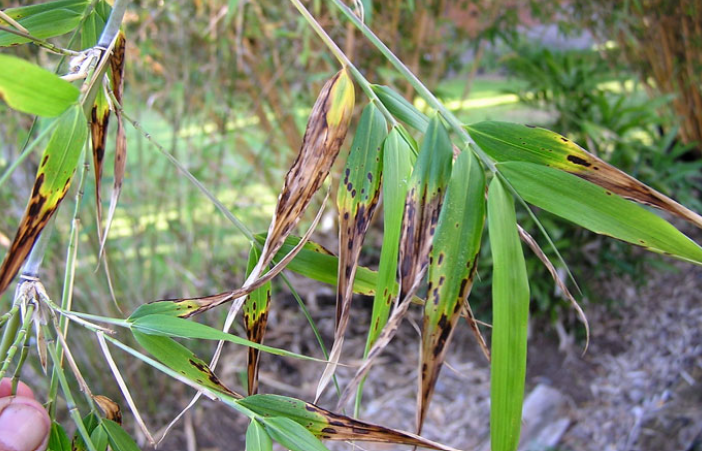
Bamboo is often thought of as a nearly indestructible plant. Once established, many bamboos grow vigorously and can tolerate a surprising range of conditions. However, vigorous growth does not make bamboo immune to pests and diseases. Depending on the species, climate, and growing conditions, bamboo can experience insect infestations, fungal diseases, root problems, and other forms of stress.
The good news is that serious pest and disease problems are not usually the first thing a gardener encounters. The RHS describes bamboos as usually trouble-free, while noting that rust disease, root rots, and bamboo aphids can occasionally occur.
One important point is that not every yellow leaf, brown cane, or bare stem indicates a disease. Bamboo naturally sheds older leaves, and individual canes can age and decline. The first step in controlling a problem is therefore learning to distinguish normal aging from genuine damage.
This guide covers the most common bamboo pests and diseases, the symptoms they produce, and practical ways to reduce or control them.
1. Bamboo Aphids
Bamboo aphids are among the insects that can colonize bamboo, particularly the leaves and young stems.
These small sap-feeding insects remove plant juices and may occur in groups rather than as isolated individuals.
Symptoms
Look for:
- Small insects clustered on stems or leaves
- Sticky residue on foliage
- Yellowing or weakened leaves
- Sooty-looking growth developing on sticky surfaces
- Reduced vigor in severe infestations
The sticky substance produced by aphids is called honeydew. It can make leaves appear shiny or attract ants.
How to Control Bamboo Aphids
Begin by inspecting new growth regularly.
Small infestations can sometimes be reduced simply by washing insects from the plant with a strong stream of water, provided the bamboo can tolerate the treatment.
Encouraging natural predators such as ladybirds and lacewings can also help keep aphid populations under control.
Avoid automatically treating every aphid sighting with an insecticide. A small population may cause little meaningful damage, particularly on a vigorous established bamboo.
If an infestation becomes severe, use only a product specifically registered for the pest and plant in your location, and follow its label.
2. Bamboo Mites
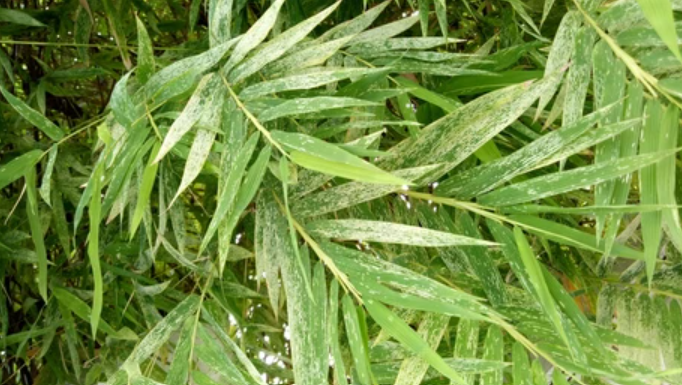
Mites can cause damage that is easy to confuse with environmental stress.
They are extremely small and may live on the undersides of leaves, where they feed on plant tissues.
Symptoms
Affected bamboo may develop:
- Fine pale speckling
- Yellow or bronze discoloration
- Dull-looking leaves
- Premature leaf decline
- Fine webbing in severe cases
The symptoms can become more noticeable during hot and dry weather.
How to Control Bamboo Mites
Regularly inspect the undersides of leaves.
Keeping bamboo adequately watered can reduce stress, although watering the soil does not directly eliminate mites.
Remove heavily damaged leaves where practical and maintain good plant vigor.
Avoid unnecessary broad-spectrum pesticide applications because they can also affect beneficial organisms that help regulate pest populations.
3. Bamboo Scale Insects
Scale insects attach themselves to stems or leaves and feed on plant sap.
Some scale species can be particularly inconspicuous because they resemble small bumps rather than mobile insects.
Bamboo white scale, for example, has been documented as a bamboo pest. The RHS has reported Kuwanaspis howardi among plant-health discoveries in Europe.
Symptoms
Possible signs include:
- Small scale-like bumps on stems
- Yellowing leaves
- Weak or declining shoots
- Sticky honeydew
- Black sooty growth
How to Control Scale
Inspect stems and leaf undersides carefully.
If only a few scales are present, they can sometimes be removed manually.
Pruning heavily infested stems can also reduce the pest population.
For persistent infestations, choose a control method appropriate for the particular scale species and bamboo. Correct identification matters because different scale insects can respond differently to treatments.
4. Bamboo Shoot and Culm Borers
Some insects attack bamboo shoots or penetrate the stems, creating internal damage.
A scientific review of bamboo pests identifies shoot and culm borers among important groups of insects associated with bamboo.
Symptoms
Watch for:
- Holes in young shoots
- Damaged or dying new growth
- Small openings in culms
- Sawdust-like material around holes
- Weak or distorted stems
- Sudden decline of individual shoots
Because the insect may spend part of its life inside the plant, external treatment can be difficult once a borer is established.
How to Control Borers
Inspect new shoots frequently during periods of active growth.
Remove severely damaged shoots when practical and dispose of them appropriately.
Keeping bamboo vigorous through suitable watering, nutrition, and growing conditions can also improve its ability to tolerate limited damage.
For serious infestations, identification of the actual borer is important before selecting a treatment.
5. Slugs and Snails
Slugs and snails can feed on tender bamboo growth, particularly young shoots.
The RHS lists slugs among pests that may affect some bamboos, including black bamboo.
Symptoms
Look for:
- Ragged edges on young leaves
- Irregular holes
- Missing portions of tender shoots
- Slime trails
Damage is often most obvious after wet weather.
How to Control Slugs and Snails
Reduce unnecessary hiding places around the base of the bamboo and inspect plants during periods of high slug activity.
Encouraging natural predators and maintaining a balanced garden ecosystem can help.
Where additional control is necessary, use an appropriate locally approved method and follow its directions.
6. Bamboo Rust
Rust diseases are among the better-known fungal problems associated with bamboo.
The RHS specifically lists rust disease as an occasional bamboo problem.
Symptoms
Rust may produce:
- Orange, yellow, brown, or reddish pustules
- Discolored leaves
- Premature leaf decline
- Reduced appearance of the foliage
The exact appearance varies according to the rust species and bamboo host.
How to Control Bamboo Rust
Start with the growing environment.
Avoid unnecessary overcrowding and improve air movement around the foliage.
Remove badly affected leaves where practical and dispose of diseased plant material rather than allowing it to accumulate around the plant.
Avoid repeatedly wetting foliage when irrigation is needed.
Good general plant health is important because stressed plants can be less able to tolerate disease.
7. Root Rot
Root rot can become a serious problem when bamboo grows in persistently waterlogged soil.
Although bamboo generally appreciates adequate moisture, its roots still need access to oxygen.
Symptoms
A bamboo suffering from root problems may show:
- Yellowing leaves
- Poor growth
- Wilting despite wet soil
- Weak new shoots
- Declining canes
- Dark or deteriorating roots
The RHS lists root rots among the occasional problems affecting bamboo.
How to Control Root Rot
Prevention is much easier than trying to rescue severely damaged roots.
Plant bamboo in moist but well-drained soil rather than permanently saturated ground. The RHS gives this type of soil as a suitable growing condition for common bamboo.
Avoid excessive irrigation and correct drainage problems where possible.
Container-grown bamboo should always be planted in a container with adequate drainage holes.
8. Bamboo Culm Base Rot
Some fungi can attack the lower portion of bamboo stems, causing decay around the base.
A scientific review of bamboo diseases identifies culm base rot among potentially serious bamboo diseases.
Symptoms
Possible symptoms include:
- Soft or deteriorating tissue near the soil line
- Discoloration at the base of canes
- Weakening stems
- Premature cane death
- Fungal growth around affected tissue
How to Reduce the Risk
Avoid constantly wet conditions around the base of bamboo.
Remove dead or severely damaged canes and improve general airflow.
When pruning, use clean tools and avoid unnecessarily damaging healthy stems.
If several canes are declining simultaneously, investigate the soil and root environment rather than assuming the problem is simply old age.
9. Bamboo Top Blight
Top blight refers to disease problems that affect the upper portions of bamboo stems and shoots.
The scientific literature identifies top blight among diseases that can become important in bamboo.
Symptoms
Symptoms may include:
- Dying shoot tips
- Brown or blackened upper stems
- Premature loss of leaves
- Weak new growth
- Progressive decline of affected shoots
How to Control It
Remove badly affected portions where practical and dispose of diseased material appropriately.
Avoid creating unnecessarily humid conditions around dense bamboo foliage.
Good spacing, airflow, sanitation, and avoiding excessive irrigation can all contribute to healthier plants.
10. Witches’ Broom
Witches’ broom is a distinctive type of abnormal plant growth in which numerous small shoots develop from a concentrated area, creating a broom-like appearance.
It is among the potentially serious bamboo diseases discussed in scientific literature.
Symptoms
Affected bamboo may develop:
- Clusters of unusually short shoots
- Dense, broom-like growth
- Abnormal branching
- Reduced normal cane development
How to Respond
If unusual broom-like growth appears, isolate the problem by inspecting nearby stems and plants.
Remove severely affected portions where practical and maintain good sanitation.
Because abnormal growth can have different causes, laboratory or expert diagnosis may be necessary when the problem is widespread or persistent.
11. Leaf Spot Diseases
Various fungi can cause spots on bamboo leaves.
The appearance can differ substantially depending on the pathogen.
Symptoms
Leaves may develop:
- Small brown spots
- Dark margins
- Yellow halos
- Enlarging lesions
- Premature leaf drop
A few spots on older leaves may not seriously affect an established bamboo.
How to Control Leaf Spots
Good airflow is one of the simplest preventative measures.
Avoid unnecessarily wetting the foliage and remove heavily infected leaves when practical.
Clean up fallen diseased material rather than allowing it to accumulate around the base.
The RHS recommends general garden hygiene, including removing diseased growth and debris, as part of preventing plant-health problems.
12. Sooty Mold
Sooty mold is different from many fungal diseases because it commonly develops on honeydew produced by sap-feeding insects rather than attacking healthy plant tissue directly.
It may appear as a black coating on leaves.
Symptoms
You may notice:
- Black or gray coating on leaves
- Sticky foliage
- Aphids or scale insects nearby
- Reduced appearance of the plant
How to Control Sooty Mold
The key is to control the insect producing the honeydew.
Once the pest population is reduced, new sooty mold usually becomes less of a problem.
Leaves can gradually become cleaner through weathering, although heavily coated foliage may be gently cleaned if appropriate for the plant.
Treating the black coating alone without addressing the underlying aphids or scales will not solve the problem.
Yellow Bamboo Leaves: Is It Always a Disease?
No.
This is one of the most important things to understand when diagnosing bamboo.
Bamboo naturally sheds older leaves, and the RHS notes that older leaves can naturally drop, particularly during spring.
Therefore, seeing an occasional yellow leaf does not automatically mean your bamboo has a disease.
Consider the pattern:
A few old leaves turning yellow: potentially normal.
Large numbers of leaves suddenly turning yellow: investigate.
Yellow leaves combined with wet soil: investigate drainage and root health.
Yellow leaves with insects or sticky residue: inspect for sap-feeding pests.
Yellowing accompanied by spots or pustules: investigate possible disease.
This approach prevents unnecessary treatments.
How to Prevent Bamboo Pests and Diseases
Prevention is generally easier than dealing with a major outbreak.
Start With Healthy Plants
Inspect new bamboo carefully before bringing it into the garden.
Look at the leaves, stems, growing points, and soil surface for insects, unusual discoloration, and signs of disease.
The RHS recommends checking new plants and, where possible, isolating them for several weeks before introducing them to an existing plant collection.
Choose the Right Bamboo for the Location
Healthy bamboo starts with choosing a type suited to the growing conditions.
For example, the RHS recommends moist but well-drained, humus-rich soil for common bamboo and notes that it can grow in sun or partial shade.
A bamboo struggling because it is planted in unsuitable conditions may be more difficult to maintain than one growing in a location that naturally matches its needs.
Improve Air Circulation
Dense bamboo can create its own humid environment.
Thin out weak, dead, or unnecessary canes to improve airflow and reduce congestion.
This is particularly useful where fungal leaf diseases have previously occurred.
Avoid Constantly Wet Soil
Bamboo is not a swamp plant simply because it likes moisture.
Adequate moisture and good drainage need to exist together.
If water remains around the roots for prolonged periods, investigate the soil and drainage rather than simply reducing irrigation without addressing the underlying problem.
Keep Tools Clean
Pruning tools can move plant pathogens from one plant to another.
Clean tools before moving between plants, especially when cutting visibly diseased material.
The RHS recommends keeping garden tools and growing areas clean to reduce the spread of plant-health problems.
Remove Diseased Material
Don’t allow severely diseased leaves and stems to accumulate around the plant.
Remove affected material and dispose of it appropriately.
The RHS specifically recommends removing diseased growth and disposing of affected garden waste carefully.
Don’t Overreact to Minor Damage
A mature bamboo can tolerate a surprising amount of cosmetic damage.
If a few leaves have been nibbled or a small number of aphids appear, immediate aggressive treatment may be unnecessary.
Monitor the plant and determine whether the pest population is actually increasing or causing meaningful damage.
This approach also helps preserve beneficial insects.
Bamboo Problems That Are Not Pests or Diseases
One of the most useful distinctions when caring for bamboo is separating plant health problems from growth behavior.
Excessive Spreading
Some bamboo problems have nothing to do with insects or diseases.
Running bamboos spread through underground rhizomes, and the RHS notes that these rhizomes can travel considerable distances in favorable conditions.
This can result in shoots appearing well away from the original plant.
How to Control Bamboo Spread
If you are planting bamboo for the first time, consider a clumping type if you want a more contained plant.
The RHS identifies genera such as Fargesia and Chusquea as clump-forming options, while many Phyllostachys types can spread under favorable conditions.
For running bamboo, physical root barriers or container growing can help restrict its spread.
The RHS recommends a root barrier approximately 60 cm (2 ft) deep, extending around 7.5 cm (3 in) above soil level, when installing a barrier.
Established plants may require regular inspection and removal of escaping rhizomes.
A Simple Bamboo Pest and Disease Diagnosis Guide
| What you notice | Possible cause |
|---|---|
| Sticky leaves | Aphids or scale |
| Black coating on leaves | Sooty mold associated with honeydew |
| Fine pale speckling | Possible mites |
| Orange or rusty spots | Rust |
| Brown leaf spots | Leaf-spot disease or environmental stress |
| Holes in young growth | Slugs, snails, or insects |
| Holes in stems | Possible borers |
| Yellow leaves with wet soil | Possible root problems |
| Decay around cane bases | Possible culm-base rot |
| Unusual broom-like shoots | Possible witches’ broom |
| Shoots appearing far from the plant | Rhizome spreading |
| Occasional old leaves turning yellow | May be natural leaf replacement |
This table should be treated as a starting point rather than a diagnosis. Several different problems can produce similar symptoms.
The Best Approach to Controlling Bamboo Pests and Diseases
The most effective bamboo-care strategy is rarely based on one pesticide or one treatment.
Instead, think of management as a series of small decisions:
Choose a suitable bamboo → plant it correctly → maintain good drainage → provide appropriate moisture → allow airflow → inspect regularly → remove problems early → protect beneficial organisms.
This integrated approach is consistent with modern plant-health recommendations that emphasize good cultivation, careful plant selection, monitoring, hygiene, and biological or physical controls before relying heavily on chemical treatments.
It is also worth remembering that bamboo is an unusually diverse group. There are more than 1,600 species described globally, and their susceptibility to individual pests and diseases can vary. A problem affecting one bamboo species is therefore not automatically going to affect every bamboo in the same way.
The most important skill is learning to distinguish normal bamboo behavior from genuine plant-health problems. Once you do that, controlling pests and diseases becomes much more straightforward, and you are less likely to treat a healthy plant for a problem it does not actually have.