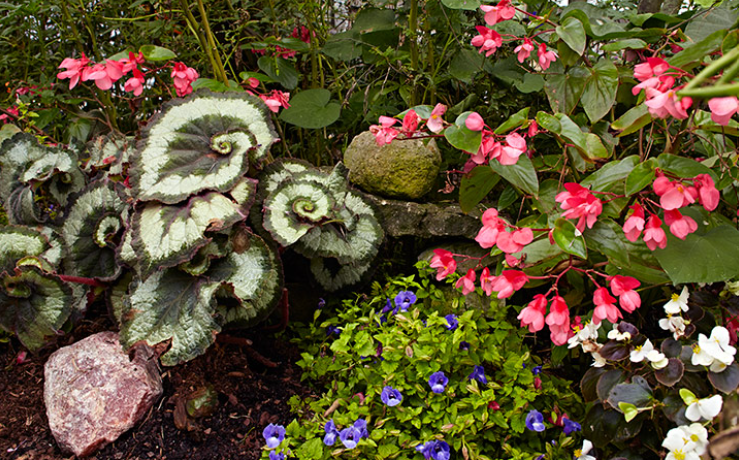
Rex begonia is one of those plants that can make an ordinary indoor plant collection look remarkably different. Its appeal comes primarily from its foliage rather than its flowers. Leaves can combine silver, green, burgundy, purple, pink, red, and cream in patterns that resemble brushstrokes, metallic bands, spirals, or intricate mosaics. Their surfaces may also be smooth, velvety, puckered, or textured.
The name Rex begonia usually refers to the Begonia Rex Cultorum Group rather than to one single modern species. These cultivated plants trace their ancestry to Begonia rex, a rhizomatous species native to northeastern India, but extensive hybridization has produced an enormous range of modern forms. This is important when caring for them because the plant sold as a “Rex begonia” may look very different from another cultivar while sharing broadly similar growing preferences.
Rex begonias are not particularly difficult once their main requirements are understood. The challenge is avoiding extremes. They appreciate bright filtered light but can scorch in intense sun, need moisture but dislike waterlogged roots, and enjoy humid air while also benefiting from good air movement.
Choose the Right Location
The location you choose can determine how well a Rex begonia performs.
Indoors, look for a position with bright, indirect light. A window with a sheer curtain or a spot slightly away from a bright window can work well. Direct, intense sunlight can scorch the decorative leaves, while very low light can result in slower, weaker growth.
A useful way to judge the location is to observe the foliage. If leaves develop bleached or scorched areas, the light may be too intense. If the plant becomes unusually stretched and produces weak growth, it may need brighter conditions.
Outdoor Rex begonias are best treated as shade or filtered-light plants rather than full-sun bedding plants.
Also Read: Other Types of Begonia
Understand the Rhizome Before You Plant
One feature that makes Rex begonias different from many common houseplants is their rhizomatous growth habit.
A rhizome is a modified stem that grows horizontally, producing roots and leaves as it develops. This means Rex begonias generally do not need a deep container simply because the plant has large leaves.
A shallow, relatively wide container can be particularly suitable. The University of Connecticut recommends shallow, wide pots for Rex begonias because of their rhizomatous growth.
When potting, avoid burying the rhizome deeply. The goal is to give the roots access to moisture while keeping the rhizomatous stem in a well-aerated environment.
Use a Light, Fast-Draining Growing Medium
Rex begonias need moisture, but the roots should not remain in stagnant, saturated soil.
Use a loose, well-draining potting medium that retains some moisture without becoming heavy and waterlogged. Organic matter can help provide moisture retention, while materials that improve drainage and air spaces can prevent the mixture from becoming compacted.
The University of California Cooperative Extension notes that Rex begonias perform well in well-draining media and emphasizes drainage as an important consideration.
Always use a container with drainage holes. A decorative outer pot can be used, but excess water should not be allowed to remain around the growing container.
Water Rex Begonia Carefully
Watering is probably the area where new Rex begonia growers make the most mistakes.
Rex begonias like even moisture, but they do not like constantly wet soil. The University of Connecticut recommends allowing the upper portion of the potting mix to dry before watering and warns that excessive moisture can encourage root rot.
Instead of watering according to a fixed schedule, check the growing medium.
If the surface and upper layer have begun to dry, water thoroughly until some water drains from the bottom. Then allow the excess to drain away.
During cooler or darker periods, the plant may use water more slowly. Watering should therefore be reduced rather than continued at the same frequency throughout the year. The RHS similarly recommends reducing watering during winter and allowing the surface of the compost to dry before watering again.
Keep Water Off the Leaves
Rex begonia foliage is beautiful but can be sensitive to prolonged wetness.
When watering, direct the water toward the potting medium rather than repeatedly wetting the leaves. Keeping the foliage dry can help reduce conditions associated with powdery mildew and other problems.
This is also one reason why simply misting Rex begonia leaves is not necessarily the best way to increase humidity.
If humidity is low, improve the surrounding atmosphere rather than keeping the foliage constantly wet.
Give Rex Begonia Enough Humidity
Rex begonias generally appreciate humid air, particularly when grown indoors where heating or air conditioning can make the atmosphere dry.
Brown, crispy leaf margins can sometimes indicate that the surrounding air is too dry.
There are several ways to improve humidity without creating a constantly wet environment around the plant.
You can group plants together, use a room humidifier, or place the pot on a pebble tray. If using a pebble tray, keep the water below the level of the pot so that the container itself is not sitting directly in water.
A bright bathroom or kitchen may also provide a naturally more humid environment if adequate light is available.
Maintain Good Air Circulation
High humidity and stagnant air should not be confused with good growing conditions.
Rex begonias appreciate humid surroundings, but air should still circulate around the leaves. Avoid placing the plant in a cramped corner where leaves remain damp and air barely moves.
Good circulation helps the foliage dry naturally and reduces the likelihood of disease problems.
At the same time, avoid strong, continuous drafts from fans, air-conditioning vents, or heaters. Rex begonias generally respond better to a stable environment than to repeated temperature and humidity swings.
Keep Temperatures Consistent
Rex begonias are warm-growing plants and do not appreciate cold conditions.
The RHS recommends a minimum winter temperature of approximately 13°C (55°F) for B. rex and related rhizomatous types. Growth also slows when temperatures fall significantly.
Keep the plant away from cold drafts, poorly insulated windows during cold weather, and heating vents that produce hot, dry air.
Stable conditions are particularly useful because sudden changes in temperature can lead to leaf drop or other stress symptoms.
Fertilize During Active Growth
Rex begonias need nutrients to produce their colorful foliage, but they do not need heavy feeding.
During active growth, use a diluted liquid fertilizer according to the product’s instructions. The University of Connecticut recommends a quarter-strength water-soluble fertilizer every two to three weeks during the growing season, while the RHS recommends feeding rhizomatous begonias during the main growing period.
Avoid increasing the fertilizer concentration simply because the plant is growing slowly. Slow growth may be caused by insufficient light, low temperatures, seasonal dormancy, or root problems rather than a lack of nutrients.
During winter, feeding should generally be reduced or stopped while the plant is not actively growing.
Repot Rex Begonia Only When Necessary
Rex begonias do not need to be moved into increasingly large pots every year.
Because they grow from rhizomes, the plant may gradually spread outward rather than simply filling a deep root ball. When the rhizome approaches the sides of its container, it may be time to repot or propagate the plant.
When repotting, choose a container only modestly larger than the existing one.
An oversized pot can hold too much moisture around a relatively small root system, making it harder to maintain the balance between moisture and drainage.
Repotting is also a good opportunity to replace old, compacted growing medium.
How to Prune Rex Begonia
Rex begonias generally require little conventional pruning.
Instead, focus on removing:
- Dead leaves
- Yellowing foliage
- Damaged leaves
- Diseased plant material
- Weak or unwanted growth
Use clean cutting tools and make cuts carefully so healthy parts of the plant are not unnecessarily damaged.
If a plant becomes uneven or loses older leaves, resist the temptation to remove large amounts of healthy foliage at once. Rex begonias can take time to replace leaves, and the remaining foliage continues to provide energy for new growth.
What to Do About Rex Begonia Flowers
Rex begonias are usually grown for their leaves rather than their flowers.
They can produce small flowers, but the blooms are generally less spectacular than those of many flowering begonia groups. If flowers appear, you can allow them to remain or remove them if your primary goal is maintaining the plant’s foliage display.
The decision is largely aesthetic.
A Rex begonia with exceptional foliage does not need abundant flowers to be an attractive plant.
Propagating Rex Begonia From Leaves
One of the most interesting aspects of Rex begonias is their ability to be propagated from leaf cuttings.
A healthy leaf can be used to produce new plants under appropriate conditions. Depending on the technique, sections of the leaf or the leaf and its petiole can be placed in a suitable propagation medium.
New plantlets can develop from the leaf tissue, eventually forming roots and shoots.
This method is particularly valuable with Rex begonias because seeds from cultivated hybrids may not reproduce the exact characteristics of the parent. Vegetative propagation provides a way of producing plants that retain the desirable characteristics of the original cultivar.
The University of Connecticut specifically notes leaf propagation as a way to renew older Rex begonia plants.
Propagating by Rhizome Division
Another option is dividing the rhizome.
If the plant has developed a large, healthy rhizome with several growing points, it may be possible to divide it into sections, with each section retaining suitable growth and roots.
This is particularly useful when a mature plant has become crowded.
Take care not to make unnecessary divisions of a small or weak plant. Propagation works best when the parent plant is actively growing and healthy.
Common Rex Begonia Problems
Brown Leaf Edges
Brown, crispy edges can be associated with dry air, inconsistent moisture, excessive fertilizer, or environmental stress.
Begin by checking humidity and watering rather than immediately assuming the plant needs fertilizer.
Scorched Leaves
Bleached, brown, or crispy patches can occur when foliage receives excessive direct sunlight.
Move the plant into brighter filtered light rather than simply placing it in a darker room. Rex begonias need light to maintain strong growth and attractive foliage, but intense direct sun can be damaging.
Yellow Leaves
An occasional older leaf turning yellow is not necessarily alarming.
Widespread yellowing, however, can indicate problems with watering, drainage, temperature, or light. Check the growing medium and roots before changing several aspects of the plant’s care at once.
Curling or Drooping Leaves
Drooping foliage can occur when the plant is too dry, but excessive moisture can also lead to unhealthy roots and poor water uptake.
Check the soil before watering. This simple habit prevents a common mistake: adding more water to a plant that is already suffering from overly wet roots.
Root Rot
Root problems are particularly likely when Rex begonias remain in saturated soil.
Poor drainage, oversized containers, and frequent watering can all contribute.
If the growing medium stays wet for an unusually long time, reassess the container, soil structure, and watering frequency.
Powdery Mildew
Powdery mildew can develop under conditions favorable to fungal growth. Keeping leaves dry, improving air circulation, and avoiding overcrowding can help reduce the risk.
Pests That Can Affect Rex Begonia
Rex begonias can occasionally attract common houseplant pests, including aphids, mealybugs, spider mites, and other sap-feeding insects.
Inspect the undersides of leaves, leaf stems, and new growth regularly.
Early detection is much easier to deal with than a widespread infestation. If one plant develops a significant pest problem, keeping it separate from other houseplants can help limit spread.
Caring for Rex Begonia in Winter
Winter care is different from summer care because growth often slows when light and temperatures decrease.
The plant may require less water, and fertilizer should generally be reduced or stopped while it is not actively growing. The University of Connecticut notes that Rex begonias may enter a period of dormancy under lower winter light and recommends keeping the growing medium only barely moist during such periods.
Do not interpret slower winter growth as an automatic sign that something is wrong.
Instead, pay attention to temperature, light, and moisture. Once conditions become warmer and brighter, new growth should resume.
Where Rex Begonia Works Best
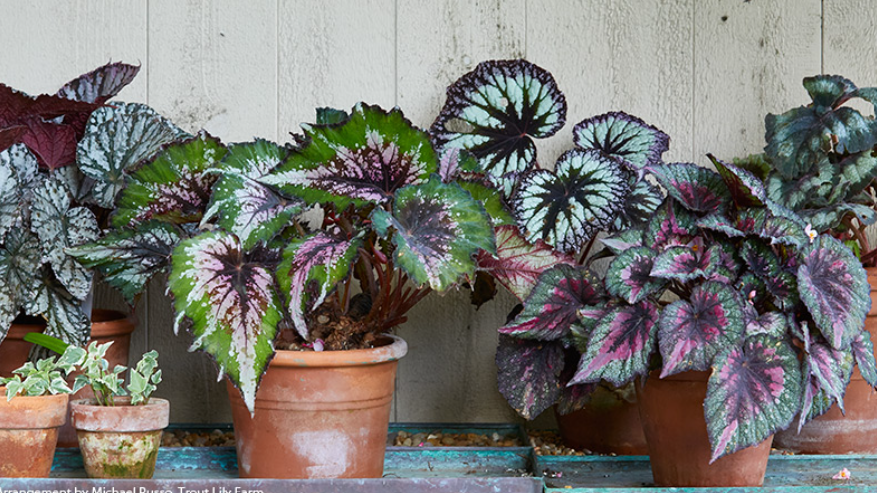
Rex begonias are especially effective as indoor foliage plants because their leaves can become living pieces of decoration.
They work well on plant stands, shelves, desks, bright bathrooms, enclosed patios, and other locations where their foliage can be viewed closely.
In suitable warm climates, they can also be grown outdoors in protected, shaded locations.
Their relatively compact size makes them useful where a gardener wants dramatic foliage without committing to a very large plant.
What You’ll Eventually Learn From Growing Rex Begonia
Growing Rex begonia teaches you to stop treating watering as a routine and start treating it as a response to the plant’s environment.
You will eventually notice that the same amount of water does not disappear from the pot at the same speed throughout the year. A plant in bright summer light may use moisture much faster than the same plant during a cool, darker winter period.
You will also learn that humidity and wet leaves are two different things. A Rex begonia can appreciate humid air while disliking foliage that remains wet. Once this distinction becomes clear, it becomes easier to create a humid environment without constantly spraying the leaves.
Another lesson comes from the plant’s foliage. Rex begonias communicate a great deal through their leaves. Scorching, browning, curling, yellowing, and loss of color can all encourage you to examine the environment rather than immediately reaching for fertilizer or other treatments.
You will also learn the importance of restraint. A Rex begonia does not necessarily need a bigger pot, more water, more fertilizer, or more sunlight simply because it is not growing quickly. Sometimes the best improvement is making the environment more stable.
Perhaps the most rewarding lesson is propagation. A single attractive leaf can potentially become the beginning of several new plants. This turns Rex begonia from an ordinary houseplant into a fascinating example of how plants can reproduce vegetatively.
Over time, you will begin to understand that growing Rex begonia is less about following a rigid schedule and more about creating a stable balance between light, moisture, humidity, temperature, air circulation, and nutrition.
Once that balance is established, the plant’s spectacular foliage becomes the reward. The intricate patterns and changing colors that first attracted you to Rex begonia can become a useful reminder that good plant care is often less about doing more and more about learning what the plant actually needs.