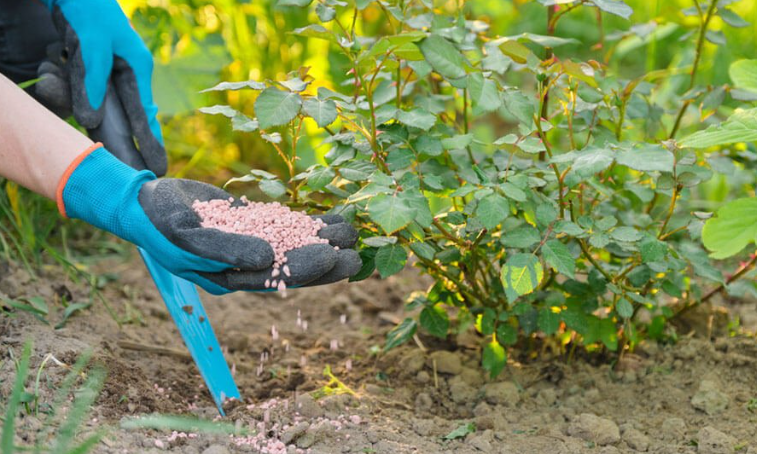
Roses are famous for their beauty, but that beauty takes fuel. A rose bush that pushes out lush foliage, thick canes, and wave after wave of blooms is drawing heavily on the soil around it, and if that soil isn’t replenished, the plant’s performance drops off fast. Fertilizing is one of the simplest ways to keep a rose garden thriving, yet it’s also one of the most misunderstood parts of rose care. Gardeners often either skip feeding altogether and wonder why their blooms are small and sparse, or they overdo it and end up with a plant that grows leggy green growth but refuses to flower. The good news is that fertilizing roses doesn’t have to be complicated. Once you understand what nutrients roses need, when they need them, and how to apply them correctly, feeding your roses becomes a quick, routine task rather than a guessing game. This guide breaks down everything a home gardener needs to know to keep roses well-fed and blooming from spring through fall.
Why Fertilizing Roses Matters
Roses are heavy feeders compared to many other garden plants. Because they’re bred and encouraged to produce repeated flushes of blooms throughout the growing season, they use up nutrients in the soil much faster than a typical shrub or perennial. Without regular feeding, a rose bush will still survive, but it will show it in smaller flowers, fewer blooms per season, pale or yellowing leaves, and weaker resistance to pests and disease. A well-fed rose, by contrast, produces stronger canes, deeper green foliage, and a noticeably longer bloom cycle. Fertilizing isn’t about forcing unnatural growth; it’s about replacing what the plant is already using up so it can keep doing what it does best.
Understanding What Roses Need: N-P-K Basics
Every fertilizer label carries three numbers, something like 10-10-10 or 18-24-16. These represent the percentage of nitrogen (N), phosphorus (P), and potassium (K) in the mix, and each one plays a different role in the plant’s health.
Nitrogen fuels leafy, green growth. It’s what gives a rose bush its lush foliage and vigorous canes, but too much nitrogen relative to the other nutrients can push a plant toward leaf growth at the expense of flowers.
Phosphorus supports root development and flower production. This is the nutrient most closely tied to bloom size, bloom quantity, and overall flowering performance, which is why many rose-specific fertilizers carry a higher middle number.
Potassium strengthens the plant overall. It supports disease resistance, helps regulate water movement within the plant, and contributes to hardier canes that can withstand weather stress and pruning.
Beyond the big three, roses also benefit from secondary nutrients like magnesium, calcium, and sulfur, along with trace elements such as iron and manganese. A quality rose fertilizer will often include these secondary nutrients, since deficiencies in them can show up as yellowing between leaf veins or stunted growth even when nitrogen, phosphorus, and potassium levels are adequate.
Also Read: Plants that Grow Well With Roses
When to Start Fertilizing Roses
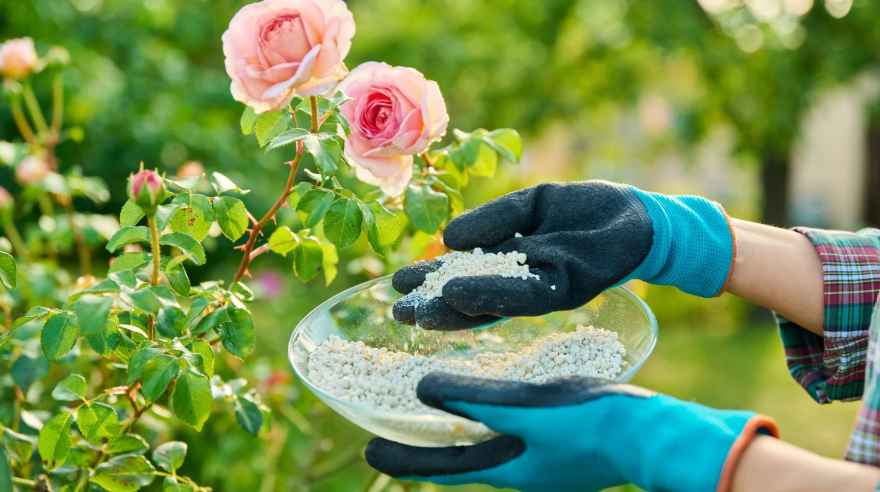
Timing matters just as much as the fertilizer itself. The general rule is to begin fertilizing in early spring, right around the time new growth starts to emerge after the last hard frost and after your roses have been pruned back. This is when the plant is waking up and putting energy into new stems and leaves, so it’s the ideal moment to give it a nutrient boost that supports that first flush of growth.
Avoid fertilizing too early, while the ground is still cold or roses are fully dormant, since the plant won’t be able to take up the nutrients efficiently and excess fertilizer can simply wash away or sit unused in the soil. Wait until you see the first signs of green buds swelling on the canes before applying that initial spring feeding.
A Simple Fertilizing Schedule Through the Season
Once the growing season is underway, roses generally benefit from being fed on a repeating cycle rather than a single application. A straightforward schedule looks like this:
Early spring, after pruning and once new growth begins, apply the first round of fertilizer to kick off the season.
After each bloom cycle, give the plant another light feeding. Roses that repeat-bloom use up a significant amount of energy producing each flush of flowers, and a follow-up feeding helps them recover and prepare for the next round.
Midsummer is typically the last major feeding of granular or synthetic fertilizer for the season, since roses need time to slow down and harden off their new growth before colder weather arrives.
Late season, roughly six to eight weeks before the first expected frost, fertilizing should stop entirely. Feeding roses too late in the year encourages tender new growth that won’t have time to harden before winter, leaving the plant more vulnerable to cold damage.
This cadence can shift slightly depending on your climate and the type of rose you’re growing, but the underlying principle stays the same: feed at the start of active growth, feed again after each bloom cycle, and stop well before dormancy.
Choosing the Right Type of Fertilizer
There’s no single “correct” fertilizer for roses, and many gardeners find success mixing approaches. Here’s a breakdown of the main options.
Granular Fertilizers
Granular fertilizers are applied around the base of the plant and worked lightly into the soil, then watered in. They release nutrients gradually and are convenient because a single application can feed the plant for several weeks. Many are formulated specifically for roses, with a balanced or bloom-boosting ratio designed to support flower production.
Slow-Release Fertilizers
Slow-release formulas are coated granules that break down over an extended period, feeding the plant steadily over several months rather than all at once. These are especially useful for gardeners who want to minimize how often they need to fertilize, since one application in spring can carry a rose through much of the season.
Liquid Fertilizers
Liquid fertilizers are mixed with water and applied directly to the soil or, in some formulations, sprayed on the foliage. They act quickly since the nutrients are already dissolved and ready for uptake, making them useful for giving a stressed or underperforming rose a fast boost. The tradeoff is that they don’t last as long in the soil and need more frequent reapplication, typically every two to four weeks during active growth.
Organic Fertilizers
Organic options include composted manure, bone meal, fish emulsion, alfalfa meal, and kelp meal. These tend to release nutrients more slowly and gently than synthetic fertilizers, while also improving the overall structure and microbial health of the soil over time. Compost or well-rotted manure worked into the soil around the base of a rose in spring is a classic, low-risk way to add nutrients without the danger of over-fertilizing. Alfalfa meal is a favorite among rose growers specifically because it contains a natural growth stimulant that can encourage more vigorous flowering.
Also Read: Common Rose Plant Problems
Synthetic Fertilizers
Synthetic or chemical fertilizers offer precise, measured nutrient ratios and tend to act faster than organic alternatives. They’re widely available in rose-specific blends and are easy to apply on a set schedule. The main thing to watch with synthetic fertilizers is quantity, since it’s much easier to over-apply a concentrated synthetic product than a bulky organic one.
How to Apply Fertilizer Correctly
Proper application matters as much as choosing the right product. A few core practices make fertilizing more effective and reduce the risk of harming the plant.
Always water the soil around the rose before applying fertilizer. Roses growing in dry soil can be damaged by fertilizer salts if they’re applied directly onto parched ground, so a good soak beforehand helps the roots absorb nutrients safely.
Apply fertilizer in a ring around the base of the plant, roughly starting a few inches from the main stem and extending out to the drip line, which is the outer edge of the plant’s canopy. This is where the most active feeder roots are located, so nutrients placed here are put to the best use.
Water again after applying granular or slow-release fertilizer. This helps dissolve the nutrients and carry them down into the root zone where the plant can access them.
Avoid getting fertilizer directly on the leaves or canes, particularly with concentrated synthetic products, since this can cause burning or scorching.
Common Fertilizing Mistakes to Avoid
Over-fertilizing is one of the most frequent issues home gardeners run into. More is not better with roses; excess fertilizer, particularly high-nitrogen products, can push a plant into producing lots of soft, leafy growth at the expense of flowers, and can even damage roots through salt buildup in the soil.
Fertilizing too late in the season is another common mistake. New growth stimulated in late summer or early fall often doesn’t have time to harden before frost, leaving the plant more susceptible to winter damage.
Skipping water before and after fertilizing can lead to root burn, especially with concentrated products. Always fertilize into moist soil and follow up with a thorough watering.
Ignoring soil pH can also undercut a fertilizing routine. Roses generally prefer slightly acidic soil, in the range of 6.0 to 6.5, and if the pH is too far outside that range, the plant may struggle to absorb nutrients even when they’re present in the soil. A simple soil test every couple of years can catch this before it becomes a recurring problem.
Also Read: Roses That Grow In Shaded Areas
Recognizing Nutrient Deficiencies
Roses tend to show visible signs when something is missing from their diet. Yellowing leaves with green veins often point to an iron or magnesium deficiency. Overall pale, weak growth with small leaves can signal a nitrogen shortage. Poor blooming despite otherwise healthy foliage may point to a lack of phosphorus. Weak stems, more frequent disease issues, or scorched-looking leaf edges can indicate a potassium deficiency. Catching these signs early and adjusting the fertilizing routine accordingly can prevent a small nutrient gap from turning into a bigger problem for the plant.
Fertilizing Roses in Containers
Container-grown roses have less soil volume to draw nutrients from, and regular watering tends to wash nutrients out of the pot faster than in garden soil. Because of this, potted roses generally need more frequent, lighter feedings compared to those growing in the ground. A diluted liquid fertilizer applied every two to three weeks during the growing season works well for containers, paired with a slow-release granular application at the start of the season to provide a steady baseline of nutrition.
Final Thoughts
Fertilizing roses comes down to a few simple principles: understand what nitrogen, phosphorus, and potassium each contribute, feed at the right times of the growing season, choose a fertilizer type that fits your gardening style, and apply it correctly into moist soil. Whether you lean toward organic amendments like compost and alfalfa meal or prefer the convenience of a granular rose-specific blend, consistency matters more than any single product choice. A rose bush that’s fed steadily through the season, and given a rest before winter, will reward that care with stronger canes, healthier foliage, and a fuller, longer-lasting display of blooms year after year.