Roses are among the most beloved flowering shrubs grown across the world, prized for their fragrant blooms, wide range of colors, and timeless association with beauty and romance. Belonging to the genus Rosa, these woody perennials come in thousands of cultivated varieties, from compact miniature roses suited to container gardens to sprawling climbers that can cover an entire trellis or fence. Their popularity spans centuries and cultures, appearing in gardens, bouquets, perfumes, and even culinary traditions. Despite their reputation for elegance, roses are surprisingly adaptable plants that can thrive in a variety of climates when given the right care. However, like any garden plant, roses are not immune to stress, and gardeners often encounter Common Rose Plant Problems ranging from pest infestations to fungal diseases and environmental setbacks.
Roses generally fall into several broad categories, including hybrid teas, floribundas, grandifloras, climbers, shrub roses, and old garden roses, each offering distinct growth habits and bloom styles. Hybrid teas are known for their long stems and large, single blooms, making them a favorite for cut flower arrangements, while floribundas produce clusters of smaller flowers that create a fuller, more continuous display of color. Climbing roses can be trained along structures to add vertical interest to a landscape, and shrub roses, including many modern disease-resistant varieties, are valued for their hardiness and low-maintenance nature. Understanding which type of rose is being grown can help gardeners anticipate its specific needs and vulnerabilities, since different classes of roses often respond differently to pests, diseases, and pruning practices.
Successful rose cultivation begins with the basics: sunlight, soil, water, and airflow. Most roses need at least six hours of direct sunlight daily to produce strong stems and abundant blooms, and they prefer well-draining, slightly acidic soil enriched with organic matter. Consistent watering is important, particularly during the growing season, but roses are sensitive to having their foliage stay wet for extended periods, which can invite fungal issues. Good air circulation around the plant, achieved through proper spacing and regular pruning, helps keep leaves dry and reduces the likelihood of disease. Feeding roses with a balanced fertilizer during their active growing months also supports healthy foliage and consistent flowering, giving the plant the resources it needs to fend off stress and recover from minor setbacks.
Even with attentive care, roses are susceptible to a range of issues caused by insects, fungi, bacteria, environmental conditions, and simple neglect. Because roses tend to be planted closely together in beds or trained along the same structures, problems can spread quickly from one plant to another if left unaddressed. Many of these issues present with visible symptoms on the leaves, stems, or buds, which makes early identification a key part of effective rose care. Gardeners who inspect their plants regularly are far more likely to catch a developing issue before it spreads or causes lasting damage, and often a small adjustment in watering, pruning, or spacing is enough to resolve the problem entirely.
This guide walks through twenty-one of the most frequently encountered rose plant issues, describing the symptoms to watch for and the practical fixes that can restore a struggling rose to health. From common fungal diseases like black spot and powdery mildew to pest problems such as aphids and spider mites, each entry offers a clear picture of what is happening to the plant and what steps can be taken to address it. Whether tending a single rose bush on a patio or managing an extensive rose garden, understanding these common challenges equips gardeners with the knowledge to keep their roses blooming beautifully season after season.
Also Read: Roses that Grow Well In Shade
1. Black Spot
Black spot is one of the most widespread fungal diseases affecting roses, especially in humid or rainy climates. It appears as circular black or dark brown spots with fringed edges on the upper surface of leaves, often surrounded by a yellow halo. As the disease progresses, affected leaves turn yellow and drop prematurely, weakening the plant over time. To manage black spot, remove and destroy infected leaves promptly, avoid overhead watering that keeps foliage wet, and ensure good air circulation by spacing plants properly and pruning for an open center. Applying a fungicide labeled for black spot at the first sign of infection, and continuing on a regular schedule during humid periods, can help keep the disease under control.
2. Powdery Mildew
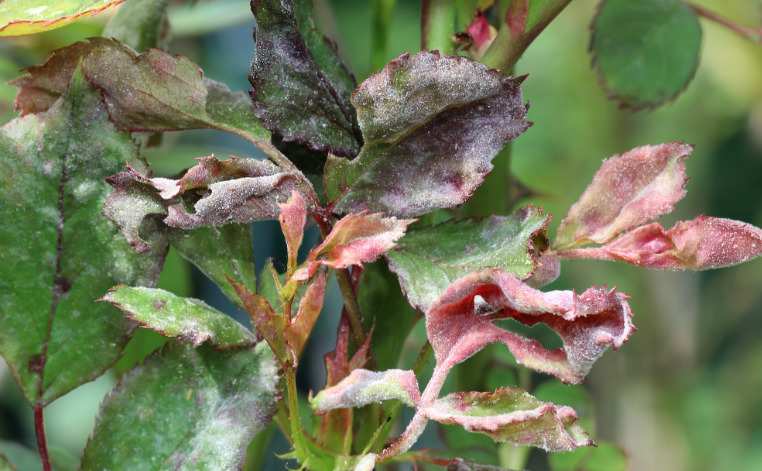
Powdery mildew shows up as a white or gray powdery coating on leaves, stems, and buds, giving the plant a dusty appearance. It thrives in conditions with high humidity at night and dry, warm days, and it can cause new growth to become distorted or stunted. Improving air circulation around the plant, spacing roses adequately, and avoiding excess nitrogen fertilizer, which encourages soft and susceptible new growth, all help reduce outbreaks. Removing and disposing of infected plant parts and applying a fungicide formulated for powdery mildew at the earliest signs of infection can prevent the disease from spreading further.
3. Rust
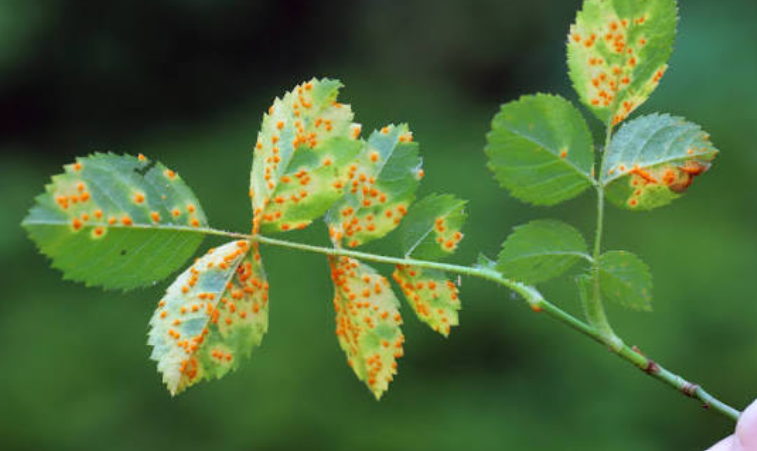
Rose rust is identified by small orange, rust-colored pustules on the undersides of leaves, with corresponding yellow spots visible on the upper leaf surface. Severely affected leaves may curl, dry out, and drop from the plant, reducing its overall vigor. Cleaning up and disposing of fallen leaves in autumn helps prevent the fungus from overwintering in the garden, and watering at the base of the plant rather than overhead limits the moisture that rust spores need to spread. A fungicide treatment applied early in the season, combined with regular pruning to improve airflow, is usually effective at keeping rust in check.
4. Aphids
Aphids are small, soft-bodied insects that cluster on new growth, buds, and the undersides of leaves, feeding on plant sap. Their presence often causes curled, distorted leaves and stunted new shoots, and heavy infestations can be accompanied by a sticky residue called honeydew, which may attract sooty mold. A strong spray of water can dislodge and reduce aphid populations, while insecticidal soap or neem oil provides a more targeted treatment for persistent infestations. Encouraging natural predators such as ladybugs and lacewings in the garden also helps keep aphid numbers naturally in check over time.
5. Spider Mites
Spider mites are tiny arachnids that are difficult to see with the naked eye but leave behind telltale signs of stippled, yellowing leaves and fine webbing on the undersides of foliage. They tend to thrive in hot, dry conditions and can quickly weaken a rose bush if left untreated. Regularly hosing down the foliage, particularly the undersides of leaves, helps disrupt mite populations and reduce their spread. For more severe infestations, applying miticide or insecticidal soap according to label instructions, along with maintaining adequate humidity around the plant, can bring the problem under control.
6. Japanese Beetles
Japanese beetles are metallic green and copper-colored insects that feed voraciously on rose foliage and flowers, often skeletonizing leaves by eating the tissue between the veins. They tend to appear in large numbers during the summer months and can cause significant damage in a short period of time. Handpicking beetles off plants in the early morning, when they are less active, and dropping them into soapy water is an effective non-chemical control method. For larger infestations, applying an insecticide labeled for Japanese beetles, along with using pheromone traps placed away from the rose garden, can help reduce their overall population.
7. Botrytis Blight
Botrytis blight, also known as gray mold, causes flower buds to turn brown and fail to open properly, often developing a fuzzy gray fungal growth in humid conditions. It tends to strike during cool, damp weather and can affect both buds and open blooms. Removing and disposing of infected flowers and buds promptly helps prevent the fungus from spreading to healthy parts of the plant. Improving air circulation, avoiding overhead watering, and applying a fungicide during periods of high humidity can further reduce the likelihood of botrytis taking hold.
8. Rose Mosaic Virus
Rose mosaic virus produces distinctive yellow mottling, wavy line patterns, or mosaic-like markings on the leaves, though the plant may otherwise appear to grow normally. Unlike fungal diseases, this virus cannot be cured with fungicides or other treatments, as it is spread through grafting infected plant material rather than through spores. The most effective approach is prevention, which means purchasing certified virus-free rose stock from reputable nurseries. If a plant is confirmed to have rose mosaic virus, removing and destroying it is generally recommended to prevent the virus from being transmitted to other roses through pruning tools or grafting.
9. Cane Borers
Cane borers are insect larvae that tunnel into the pith of rose canes, causing wilting, dieback, or hollowed stems, often noticeable after pruning when the center of a cut cane appears hollow or discolored. Sealing pruning cuts with a dab of white glue or pruning sealant helps prevent adult insects from laying eggs in the exposed cane tips. Promptly cutting out and destroying any wilted or hollow canes well below the point of damage removes the larvae before they can mature and spread. Keeping the rose bed free of debris and practicing good sanitation during pruning further reduces the risk of cane borer infestations.
Also Read: Roses that Live Longer (1-5) years
10. Rose Slugs
Rose slugs are not true slugs but rather the larvae of sawflies, and they feed on the surface tissue of leaves, leaving behind a skeletonized, lacy appearance or irregular holes. Damage is often most visible on the lower and interior leaves of the plant, where the larvae tend to concentrate. Handpicking visible larvae and disposing of them, along with hosing down the foliage to dislodge them, can reduce their numbers on lightly affected plants. For more significant infestations, insecticidal soap or a horticultural oil applied directly to the affected leaves provides effective control while minimizing harm to beneficial insects.
11. Rose Canker
Rose canker appears as sunken, discolored lesions on the canes, often with a reddish-brown or purplish border, and can eventually girdle and kill the affected stem. It typically enters through wounds caused by pruning, frost damage, or insect activity, making proper cane care essential for prevention. Pruning out and destroying infected canes, cutting well below the visible lesion into healthy tissue, helps stop the disease from spreading further into the plant. Disinfecting pruning tools between cuts and avoiding pruning during wet weather also reduces the chances of canker developing.
12. Chlorosis
Chlorosis in roses shows up as yellowing leaves with green veins, typically caused by a nutrient deficiency, most often iron, that prevents the plant from producing enough chlorophyll. It is commonly linked to soil that is too alkaline, which locks up certain nutrients and makes them unavailable to the plant’s roots. Testing the soil pH and amending it as needed, along with applying a chelated iron supplement or fertilizer formulated for acid-loving plants, can help correct the deficiency. Improving soil drainage and organic matter content over time also supports healthier nutrient uptake and reduces the recurrence of chlorosis.
13. Root Rot
Root rot develops when roses are planted in poorly draining soil or overwatered, leading to wilting, yellowing leaves, and a general decline in plant vigor despite adequate watering. The roots themselves often turn dark, mushy, and foul-smelling as the fungal or bacterial pathogens responsible for the rot take hold. Improving soil drainage, whether by amending heavy clay soil with organic matter or planting in raised beds, is essential to preventing root rot from developing. If caught early, reducing watering frequency and allowing the soil to dry out between waterings can sometimes allow the plant to recover, though severely affected roses may need to be removed.
14. Rose Rosette Disease
Rose rosette disease is a viral condition spread by microscopic mites, causing symptoms such as excessive thorniness, distorted red or discolored new growth, and clustered, witch’s broom-like shoots. There is currently no cure for this disease, and it can spread to nearby roses if not addressed quickly. Infected plants should be dug up, bagged, and disposed of entirely, including the root system, to prevent the mites and virus from spreading to healthy roses nearby. Maintaining distance between rose plantings and controlling mite populations with appropriate treatments can help reduce the risk of new infections.
Also Read: Types of Roses With an Extremely Strong Fragrance
15. Leaf Spot
Leaf spot diseases, distinct from black spot, cause circular or irregular brown, purple, or tan lesions on rose foliage, sometimes with a distinct border or halo. Heavily spotted leaves often yellow and drop prematurely, which can reduce the plant’s overall energy production over time. Removing and disposing of affected leaves, along with watering at the soil level to keep foliage dry, helps limit the spread of the fungus responsible. Applying a broad-spectrum fungicide and maintaining good spacing between plants for airflow further supports recovery and prevents recurrence in future growing seasons.
16. Thrips
Thrips are tiny, slender insects that feed on flower buds and petals, causing streaked, discolored, or distorted blooms that may fail to open properly. They are particularly problematic on light-colored roses, where the brown streaking and stippling caused by their feeding is most visible. Removing and disposing of affected flowers helps reduce the local thrips population, while blue or yellow sticky traps can help monitor and catch adult thrips. Insecticidal soap or a systemic insecticide labeled for thrips, applied according to instructions, offers effective control for more persistent infestations.
17. Sunscald
Sunscald occurs when rose canes or leaves are exposed to intense, direct sunlight, particularly during hot summer months, resulting in bleached, discolored, or cracked patches on the affected tissue. This is more common on roses that have been recently pruned heavily, exposing previously shaded canes to sudden intense light. Providing light afternoon shade in particularly hot climates, especially for young or newly pruned plants, helps prevent sunscald from developing. Avoiding overly aggressive pruning during the hottest parts of the growing season also reduces the sudden exposure that leads to this type of damage.
18. Nutrient Deficiency (General)
Beyond chlorosis, roses can display a range of symptoms tied to broader nutrient deficiencies, including pale or yellowing leaves, weak stems, reduced flowering, and stunted growth. Different deficiencies present differently: a lack of nitrogen often causes overall pale foliage, while a lack of potassium can cause browning along leaf edges. Conducting a soil test is the most reliable way to identify exactly which nutrients are lacking before applying any amendments. Feeding roses with a balanced, slow-release fertilizer formulated for roses, applied consistently during the growing season, generally resolves most general nutrient deficiencies over time.
19. Winter Kill
Winter kill refers to the damage roses sustain from prolonged cold exposure, particularly in regions with harsh winters, resulting in blackened, dead canes or a plant that fails to leaf out in spring. Roses that were not properly hardened off in autumn or left unprotected during hard freezes are especially vulnerable. Applying a protective mulch layer around the base of the plant before winter, and wrapping or covering more tender varieties, helps insulate the roots and lower canes from extreme cold. In spring, pruning back dead or blackened canes to healthy, green tissue allows the plant to redirect its energy toward new, vigorous growth.
20. Transplant Shock
Transplant shock occurs after a rose has been moved or replanted, showing symptoms such as wilting, leaf drop, and slowed growth as the plant adjusts to its new location. This stress response is a normal part of the transplanting process but can be minimized with proper care during and after the move. Watering deeply and consistently after transplanting, while avoiding fertilizing immediately, gives the roots time to establish without added stress. Providing temporary shade during the hottest part of the day for the first few weeks after transplanting also helps the rose recover more quickly and resume healthy growth.
Also Read: Best Mulch Options for Roses
21. Fungal Cane Dieback
Fungal cane dieback causes individual canes to blacken, wilt, and die back from the tip downward, often as a result of various fungal pathogens entering through pruning wounds or winter damage. If left unaddressed, the dieback can progress toward the base of the plant, threatening the overall health of the rose bush. Pruning out affected canes well below the visibly damaged area, cutting into clean, healthy tissue, is the most effective way to stop the spread. Disinfecting pruning shears between cuts and applying a fungicide as a preventive measure during the growing season further protects the plant from recurring dieback.