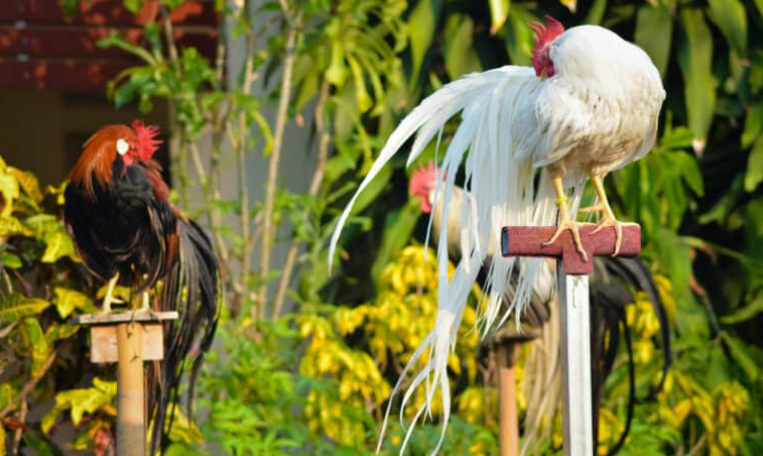
Long tail feathers in chickens are one of the most visually striking traits found in domestic poultry, and they arise primarily from a genetic mutation that dramatically slows or interrupts the normal molting cycle of the tail and saddle feathers, allowing these feathers to grow continuously across multiple years rather than being shed and regrown annually as occurs in most ordinary chicken breeds. In typical chickens, tail feathers reach a genetically predetermined length before molting resets their growth each year, but in long-tailed breeds this molting process is suppressed in the tail region specifically, allowing individual feathers to reach extraordinary lengths, in the most extreme cases stretching many feet long and requiring careful daily management to prevent damage, soiling, or breakage.
The most extreme and historically significant examples of this trait developed in Japan, where selective breeding for long tail feathers was pursued for centuries, particularly during the Edo period, as a matter of considerable cultural and aesthetic pride, with certain breeds eventually being formally recognized as a national treasure. Beyond Japan, several other regions and breeding traditions have independently developed or imported long-tailed chicken varieties for ornamental purposes, exhibition showing, and, in some cases, the harvesting of the long feathers themselves for use in fishing lures, millinery, and other decorative crafts. Because these feathers take years to reach their full dramatic length and require specialized housing to protect them from damage, breeders of long-tailed chickens typically maintain elevated perches, narrow protective boxes, or carefully managed enclosures that allow the tail to hang freely without dragging on the ground or catching on rough surfaces.
Raising long-tailed chicken breeds successfully requires meaningfully different care than raising standard poultry, since the birds need generous, obstruction-free space, protection from damp or muddy conditions that would soil and weaken the delicate feather shafts, and in many cases a dedicated raised perch or specially designed enclosure that allows the tail to drape downward without breaking. These breeds are generally kept for exhibition, ornamental value, and breed preservation rather than for meat or egg production, since the extensive care their plumage demands, combined with typically modest egg-laying performance, makes them impractical as conventional production birds. The following twelve breeds represent some of the most notable chickens prized specifically for the length, structure, and visual drama of their tail feathers.
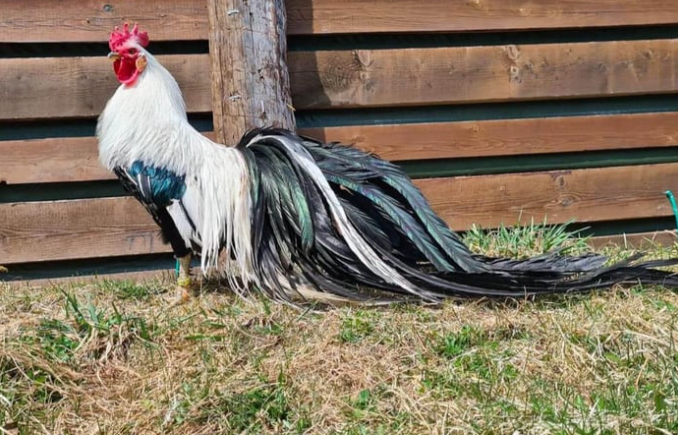
Types of Chicken With Long Tail Feathers
Onagadori
The Onagadori is a Japanese breed renowned as the longest-tailed chicken breed in the world, capable of growing tail feathers that extend well beyond ten feet in exceptional, carefully maintained specimens, a trait resulting from a genetic suppression of the normal annual molt in the tail feathers that allows continuous, uninterrupted growth year after year. Developed over centuries in Kōchi Prefecture on the island of Shikoku, the breed was formally designated a Special Natural Monument of Japan in recognition of its extraordinary cultural and biological significance, and owners traditionally house the birds in tall, narrow cages elevated above the ground specifically to allow the immense tail to hang freely without dragging, breaking, or becoming soiled. Raising a competition-quality Onagadori requires years of meticulous daily care, and the breed remains rare and highly prized among specialist poultry keepers both within Japan and internationally.
Iyo-Onagadori
The Iyo-Onagadori is a closely related regional variant of the Onagadori developed in Ehime Prefecture, also on the island of Shikoku, sharing the same remarkable genetic trait of continuously growing tail feathers but distinguished by subtle differences in feather structure, coloration standards, and the specific bloodlines maintained by dedicated regional breeders over many generations. Like its better-known Kōchi relative, the Iyo-Onagadori requires specialized elevated housing and careful daily attention to protect its extraordinarily long tail feathers from damage, and the breed has similarly been preserved through dedicated local breeding associations committed to maintaining its distinctive regional characteristics. The existence of multiple regional strains within the broader long-tailed Japanese chicken tradition reflects the depth and geographic spread of this centuries-old breeding practice across different communities of Shikoku.
Phoenix
The Phoenix is a chicken breed developed in nineteenth-century Germany using imported Onagadori stock crossed with hardier European breeds, created specifically to produce a long-tailed ornamental bird better suited to the more humid and varied European climate than the original Japanese breed, which requires extremely specialized care to thrive outside its native environment. While Phoenix roosters do not typically achieve the extreme multi-year tail lengths of a purebred Onagadori, their tails still grow considerably longer than those of ordinary chicken breeds, often trailing gracefully behind the bird, and the breed has become significantly more practical and popular among Western poultry keepers seeking a dramatic ornamental long-tailed bird without the exceptionally demanding care requirements of true Onagadori. Phoenix chickens are recognized in several color varieties and remain a popular exhibition breed at poultry shows across Europe and North America.
Yokohama
The Yokohama is another long-tailed ornamental breed developed in Germany during the nineteenth century, created through crossbreeding programs that, despite the breed’s name referencing the Japanese port city, drew on a combination of imported Asian long-tailed stock and selective European breeding to produce a bird with flowing, well-arched tail feathers and a distinctively upright, elegant carriage. The breed is recognized in several color varieties, including a striking red-shouldered white variety and a solid white form, and it is prized among exhibition poultry keepers for its graceful silhouette and dramatically cascading saddle and tail feathers, which, while not reaching the extreme lengths of a true Onagadori, still create a strikingly ornamental appearance. Yokohamas are generally considered somewhat easier to keep than purebred Japanese long-tailed breeds, making them a popular choice for hobbyist breeders interested in long-tailed poultry without the most intensive specialized care requirements.
Minohiki
The Minohiki is one of several officially recognized Japanese long-tailed chicken breeds, distinguished by particularly long, flowing saddle and hackle feathers in addition to its extended tail plumage, giving the bird an especially full and dramatic overall silhouette compared to some of its long-tailed relatives. Like other members of Japan’s long-tailed chicken tradition, the Minohiki carries the genetic trait suppressing the normal tail molt, allowing its feathers to grow continuously over multiple years, and dedicated breeders maintain the same kind of specialized elevated housing used for other long-tailed Japanese breeds to protect the plumage from damage. The breed remains relatively rare even within Japan, preserved primarily through dedicated regional breed societies and specialist keepers committed to maintaining its distinctive long-tailed characteristics across successive generations.
Totenko
The Totenko is a Japanese long-tailed breed particularly notable for its striking coloration, typically featuring a strongly contrasting combination of white body plumage with black, iridescent tail and hackle feathers, creating a visually dramatic effect that has made the breed especially prized among Japanese poultry enthusiasts and breed preservationists. Along with its distinctive coloring, the Totenko shares the same underlying genetic trait for continuous tail feather growth found across the broader family of Japanese long-tailed breeds, requiring similarly careful specialized housing and daily maintenance to protect the developing plumage from breakage or soiling. The breed has been maintained through dedicated conservation efforts in Japan, reflecting the broader cultural value placed on preserving the full diversity of the country’s historic long-tailed chicken breeding tradition.
Shokoku
The Shokoku is a Japanese long-tailed breed recognized for its particularly upright, proud carriage and well-arched, flowing tail plumage, sharing the characteristic continuous tail growth trait found throughout the broader group of historic Japanese long-tailed chicken breeds developed during the Edo period. The breed is maintained in multiple recognized color varieties and, like its close relatives, requires dedicated elevated housing and consistent daily care to allow its long feathers to develop and hang properly without damage from rough surfaces or ground contact. Shokoku breeders in Japan have worked to preserve the breed’s distinctive posture and plumage characteristics through careful, closely managed breeding programs, ensuring the continuation of this historically significant regional poultry tradition alongside its better-known relatives such as the Onagadori.
Sumatra
The Sumatra is a chicken breed originating from the Indonesian island for which it is named, distinguished by glossy, greenish-black plumage and a notably long, flowing tail carried low rather than in the more upright, arched posture typical of many other ornamental breeds, giving the bird a sleek, almost pheasant-like overall silhouette. Unlike the Japanese long-tailed breeds, the Sumatra’s long tail results from a somewhat different genetic and developmental pattern rather than the same extreme molt-suppression trait, though roosters of the breed still develop dramatically long, sweeping tail feathers that distinguish them clearly from standard farmyard chicken varieties. Historically valued in its native region partly for cockfighting due to its athletic build and aggressive temperament, the Sumatra is kept today primarily as an ornamental and exhibition breed prized for its striking dark plumage and elegant, low-carried tail.
Cubalaya
The Cubalaya is a chicken breed developed in Cuba through the crossbreeding of Spanish and various Asian game fowl stock, distinguished by a distinctive lobster-tail or “cushion-tail” shape in which the tail feathers spread horizontally rather than rising in the typical upright fan seen in most chicken breeds, combined with notably long, flowing sickle feathers that trail gracefully behind the bird. Originally developed for cockfighting before that use was banned, the Cubalaya has since become valued primarily as a dual-purpose and exhibition breed, prized both for its striking ornamental tail structure and for its reasonably practical qualities as a layer and meat bird, unlike some of the more purely ornamental long-tailed breeds. The breed is recognized in several color varieties and remains a relatively rare but distinctive presence among poultry keepers interested in breeds combining unusual tail structure with practical farmyard utility.
Yamato-Gunkei
The Yamato-Gunkei is a Japanese game breed characterized by a muscular, upright build reminiscent of other Asian fighting fowl, combined with notably long, well-developed tail and saddle plumage that sets it apart from most other short-tailed game breeds, giving the bird an unusually striking combination of athletic bearing and ornamental plumage. The breed’s name reflects its historical association with the Yamato region of Japan, and it has traditionally been valued both for its fighting ability, in the era before cockfighting was widely restricted, and for its distinctive appearance, which made it a notable exhibition bird among breeders interested in Japanese game fowl varieties. Yamato-Gunkei remain relatively uncommon outside dedicated breed preservation circles, maintained primarily by enthusiasts committed to preserving Japan’s diverse historical poultry breeding traditions.
Satsumadori
The Satsumadori is a Japanese game breed originating in the former Satsuma domain of Kagoshima Prefecture, recognized for its compact, powerfully built frame combined with a long, well-flowing tail that distinguishes it from many other more purely combat-oriented game breeds with shorter, more functional plumage. Historically bred and prized for cockfighting, the Satsumadori has since become valued primarily as an exhibition and breed-preservation bird within Japan, where its combination of athletic bearing, fine feather quality, and flowing tail plumage continues to be maintained through dedicated regional breeding programs. The breed is formally recognized as a Natural Monument within its home prefecture, reflecting its significance as part of Japan’s broader historical tradition of breeding distinctive regional poultry varieties, several of which developed notably long or elaborate tail feathers as a valued ornamental trait.
Kurokashiwa
The Kurokashiwa is a black-plumaged variety within Japan’s broader tradition of long-tailed chicken breeding, its name translating roughly to “black kashiwa” and reflecting its glossy, deep black feathering combined with the continuously growing tail plumage characteristic of the country’s historic long-tailed breed family. Like its more famous relatives such as the Onagadori and Minohiki, the Kurokashiwa requires specialized elevated housing to protect its long tail feathers from breakage and soiling as they grow uninterrupted across multiple years, and the breed is maintained today primarily by dedicated Japanese breed preservation societies committed to sustaining the country’s full historical diversity of long-tailed poultry varieties. The breed remains relatively obscure even within specialist poultry circles, representing one of the lesser-known but historically significant branches of Japan’s centuries-old long-tailed chicken breeding tradition.