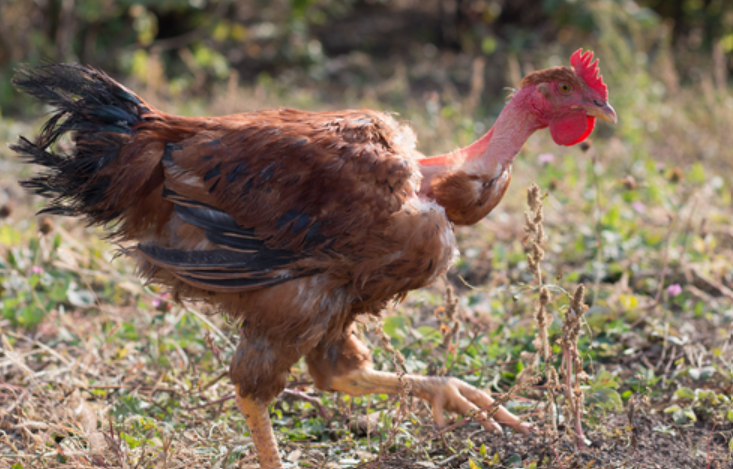
Chickens with a bare, featherless neck owe this unusual trait to a single, incompletely dominant gene, referred to by poultry geneticists as the Na gene, located on chromosome three, which causes an overproduction of a feather-suppressing molecule called BMP12 in the skin of the neck and crop region during embryonic development. This naked-neck trait is controlled by an incompletely dominant allele located near the middle of chromosome three, and because the trait is dominant, it can be bred relatively easily into almost any other chicken breed, producing a bare-necked version of that breed within just a couple of generations. Birds carrying only a single copy of the gene often retain a partial patch or tuft of feathers at the base of the neck, while those homozygous for the trait, meaning they carry two copies of the gene, tend to show the most completely bare neck and crop.
The naked-neck trait carries genuine practical advantages beyond its unusual appearance. Studies have found that the naked-neck gene improves breast size and reduces heat stress in birds that carry two copies of the gene, and when bred into broiler strains raised in tropical climates it has been shown to lower body temperature, increase weight gain, and improve feed conversion compared to normally feathered broilers. Naked-neck birds also carry noticeably less overall plumage than ordinary chickens, with some sources estimating around forty to fifty percent fewer feathers than other chickens, a reduction that historically made the birds notably easier and faster to pluck for meat, a practical advantage that likely contributed to the trait’s long history of deliberate selection in parts of Europe.
The most well-documented and standardized naked-neck breed, commonly called the Turken or Transylvanian Naked Neck, has a long history in Eastern Europe, with documented records going back to at least 1810. It is relatively rare in North America but considerably more popular in Europe, especially in France and Germany, and the American Poultry Association has formally recognized the breed since 1965. Because the naked-neck gene is dominant and passes easily into other breeds, poultry keepers distinguish between purebred, standardized Naked Necks bred to a formal show standard and the far more common informal crosses, sometimes called “turkens” more loosely, in which the bare-neck trait has simply been introduced into another established breed’s bloodline for practical or novelty purposes.
When breeding Turkens, not every chick hatches with a fully naked neck; roughly ninety percent may show the bare-neck trait, while about ten percent may hatch with a feathered neck instead. The thirty entries below cover the recognized standardized color varieties of the true Naked Neck breed, several regional and historical strains found around the world, and a range of naked-neck crosses that breeders have developed by introducing the trait into other familiar chicken breeds.
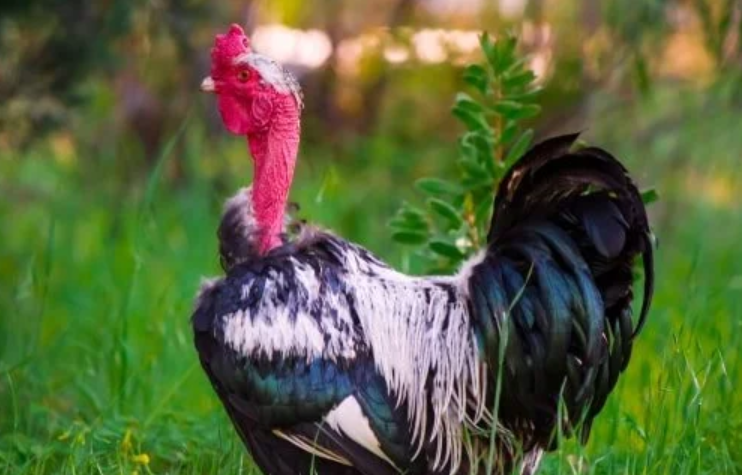
Naked Neck (Turken)
The Naked Neck, also widely known as the Turken or Transylvanian Naked Neck, is the standardized breed most closely associated with the bare-neck trait, distinguished by a completely featherless neck, face, and crop, with the head remaining feathered. The face, neck, and crop are bare, though a few feathers may be seen at the base of the neck, and the skin on the face, ears, crest, and wattle is red. The skin turns increasingly red in the sun, giving the bird an appearance somewhat reminiscent of a turkey, which is how the misleading nickname “Turken” originated, despite the bird being one hundred percent chicken. Turkens are calm, very friendly, and among the easiest chickens to tame, and despite their reduced feathering they are said to fare surprisingly well in cold weather.
Black Naked Neck
The Black Naked Neck is one of the principal recognized color varieties of the Naked Neck breed, bred historically in Romania and Hungary alongside the White and Cuckoo varieties, and it remains one of the more commonly seen colors both in its European homeland and among breeders elsewhere. The variety displays the same bare neck, face, and crop as other Naked Neck colors, set off by glossy black body plumage across the remainder of its noticeably reduced feather coverage. Like other Naked Neck varieties, it combines this striking appearance with a generally calm, hardy, and disease-resistant constitution.
White Naked Neck
The White Naked Neck is among the oldest and most widely bred color varieties of the Naked Neck, historically favored in France, where the related Cou Nu breed is recognized only in white and raised specifically as a meat fowl. The clean white plumage contrasts sharply with the bird’s bright red bare neck and face, particularly after sun exposure deepens the red coloration of the exposed skin. White Naked Necks are valued by breeders both for exhibition purposes and for their practical qualities as an easily processed dual-purpose meat and egg bird.
Buff Naked Neck
The Buff Naked Neck is one of the four color varieties formally recognized by the American Poultry Association, alongside black, white, and red, presenting a warm golden buff body plumage contrasted against the breed’s signature bare red neck, face, and crop. Buff, along with Cuckoo and White varieties, was restored from a much-reduced population following the Second World War, reflecting the breed’s resilience through a period when its numbers had been severely diminished across its native range in Eastern Europe. The variety remains popular among backyard keepers drawn to its warm coloring combined with the breed’s unmistakable silhouette.
Red Naked Neck
The Red Naked Neck is another of the core color varieties recognized in both the standard and bantam sizes of the breed, officially accepted by the American Poultry Association and the American Bantam Association, and displaying a rich reddish-brown body plumage that echoes the bare, sun-reddened skin of the neck itself. The variety is prized by exhibitors for the way its warm plumage tone complements the breed’s distinctive red facial and neck skin, creating a cohesive overall reddish appearance across the bird. Red Naked Necks share the same calm temperament and strong disease resistance associated with the broader breed.
Cuckoo Naked Neck
The Cuckoo Naked Neck is a barred color variety recognized by British and American bantam breed standards, added by the American Bantam Association alongside the Blue variety as an additional recognized color beyond the four core American Poultry Association colors. Its plumage displays the characteristic irregular barring pattern associated with cuckoo coloring in poultry generally, layered over the breed’s already reduced feather coverage, producing a distinctive dappled look across the bird’s back and wings. The Cuckoo variety has historically been especially associated with breeding populations in Romania and Hungary.
Blue Naked Neck
The Blue Naked Neck is a slate-blue colored variety recognized primarily by the American Bantam Association and various European standards, presenting a soft blue-grey body plumage that stands in gentle contrast to the breed’s bright red bare neck and facial skin. <cite index=”9-1″>In darker color varieties of the breed, the legs can appear dark slate or blue rather than the yellow legs typical of lighter-colored Naked Necks</cite>, a trait often visible in Blue specimens. The variety remains less common than the core black, white, buff, and red colors but is actively maintained by dedicated breed enthusiasts.
Silver Naked Neck
The Silver Naked Neck is a color variety found among Naked Neck populations, particularly in Europe, that remains a non-recognized color for standard-sized birds within the American Poultry Association’s official standard, alongside blue and barred, despite being bred and kept by hobbyists outside formal competition circles. Its pale, silvery-white plumage combined with the breed’s characteristic bare red neck gives the variety a striking, almost frosted appearance. Because it lacks official American recognition, the Silver Naked Neck is more commonly encountered among European breeders and specialist heritage poultry keepers than in mainstream American hatchery stock.
Barred Naked Neck
The Barred Naked Neck is another unofficial color variety in the United States, sharing the classic black-and-white barring pattern familiar from breeds such as the Plymouth Rock, layered onto the Naked Neck’s distinctively reduced feather coverage and bare neck and face. Like the Silver variety, Barred is one of several non-recognized colors bred more extensively in Europe than in North America, reflecting the broader pattern in which European Naked Neck breeding programs have historically maintained a wider range of color varieties than those formally recognized by American poultry associations.
Naked Neck Bantam
The Naked Neck Bantam is a miniature version of the standard Naked Neck, carrying the same bare-neck genetics in a considerably smaller body size well suited to keepers with limited space. Bantams were admitted into the American Poultry Association standard and are recognized in Buff, Red, and White colors, mirroring several of the core colors found in the full-sized breed. Despite its reduced size, the Naked Neck Bantam retains the same distinctive bare neck, face, and crop, along with the calm, hardy temperament associated with the larger standard-sized birds.
French Naked Neck
The French Naked Neck, known locally as the Cou Nu, meaning literally “naked neck” in French, is a distinct regional strain of naked-necked chicken developed and maintained in France largely independently of the Transylvanian bloodlines more commonly bred in Eastern Europe and North America. The Cou Nu has a completely naked neck and is recognized in France only in white, raised primarily as a meat fowl. The breed reflects a long-standing French tradition of valuing the naked-neck trait specifically for its practical advantages in meat production, particularly the ease of plucking that comes with substantially reduced neck and body feathering.
Cou Nu du Forez
The Cou Nu du Forez is a second, closely related French naked-neck variety named for the Forez region of central France, distinguished from the standard Cou Nu by a small but notable difference in feathering pattern. Unlike the fully naked Cou Nu, the Cou Nu du Forez retains a distinctive clump of feathers positioned low down on the neck, giving it a slightly less extreme bare-neck appearance while still clearly displaying the breed’s signature reduced neck feathering. Like its close relative, it is raised primarily as a meat bird within its home region of France.
Banatski Golosijan
The Banatski Golosijan is the name given to the naked-neck chicken as traditionally known and bred in Serbia, reflecting the trait’s wide historical distribution across Eastern Europe well beyond its more famous Transylvanian association. This regional Serbian strain shares the same fundamental bare-neck characteristic found in the broader Naked Neck family, maintained through generations of local breeding within Serbian farming communities. Its existence reflects how the naked-neck gene appears to have spread and been independently maintained across multiple neighboring regions of the Balkans and Carpathian basin over a long history of regional poultry keeping.
Frizzled Naked Neck
The Frizzled Naked Neck combines the bare-neck trait with the separate frizzle feather mutation, in which the bird’s remaining body feathers curl outward and backward rather than lying flat, producing an unusually dramatic combination of extensive bare skin alongside wildly textured, curling plumage on the rest of the body. Breeders have documented this combination in several colors, including Blue Frizzled and Black Frizzled Naked Necks, prized by hobbyists specifically for the striking visual contrast between the bird’s bare red neck and its unusually textured remaining feathers. This cross represents one of the more visually extreme variations found within the broader naked-neck breeding community.
Naked Neck Gamefowl
Naked-neck gamefowl represent a distinct historical branch of the bare-neck trait, found among traditional fighting and game chicken strains in various parts of the world rather than among the dual-purpose farmyard breeds more commonly associated with the Naked Neck name. Many sources notes the existence of naked-necked gamefowl as a category distinct from both the Transylvanian Naked Neck and the French naked neck, reflecting the trait’s independent appearance and selection within game breeding traditions in different regions. These birds combine the athletic build and upright carriage typical of traditional gamefowl with the same reduced neck feathering found throughout the broader naked-neck family.
Naked Neck Broiler Hybrid
Naked Neck broiler hybrids are commercial crosses developed specifically for meat production in hot climates, created by breeding the Na gene into fast-growing broiler bloodlines rather than into traditional heritage dual-purpose breeds. Research has shown that introducing the naked-neck gene into broiler strains raised in tropical conditions facilitates lower body temperature, increased weight gain, better feed conversion, and improved carcass traits compared to normally feathered broilers raised in the same hot conditions. These hybrids are used commercially in various tropical and subtropical poultry-producing regions specifically because the reduced feather coverage helps birds tolerate heat stress that would otherwise significantly reduce growth and productivity in conventional broiler breeds.
Naked Neck Silkie Cross
The Naked Neck Silkie cross combines the bare-neck trait with the Silkie’s famously soft, fur-like plumage and distinctive dark skin, producing birds that display bare red skin on the neck contrasted against unusually fluffy, hair-textured feathering across the rest of the body. Because the naked-neck gene is dominant and, as noted in breed literature, can be readily introduced into almost any other breed, hobbyist breeders have created these crosses primarily for their novel and eye-catching appearance rather than for any standardized exhibition purpose. Such crosses typically retain the gentle, calm temperament characteristic of both parent lines.
Naked Neck Orpington Cross
The Naked Neck Orpington cross introduces the bare-neck trait into the broad, plush-bodied Orpington breed, producing birds that combine Orpington’s characteristically full, rounded body shape with a strikingly bare red neck and face. Breeders pursuing this cross are typically drawn to the combination of the Orpington’s friendly, easygoing temperament and reliable egg production with the practical heat-tolerance benefits associated with reduced neck feathering. As with most naked-neck crosses developed outside formal breed standards, appearance and feather distribution can vary noticeably from bird to bird within the same hatch.
Naked Neck Sussex Cross
The Naked Neck Sussex cross combines the bare-neck trait with the hardy, dual-purpose Sussex breed, long valued for its reliable egg laying and meat qualities in traditional English farmyards. The resulting birds display the Sussex breed’s typical sturdy body conformation and coloring patterns alongside the naked neck’s characteristic bare red skin, offering keepers in warmer climates a heat-tolerant variation on an otherwise classic, well-established dual-purpose breed. This cross remains an informal hobbyist creation rather than a separately standardized breed.
Naked Neck Wyandotte Cross
The Naked Neck Wyandotte cross introduces the bare-neck gene into the rounded, richly patterned Wyandotte breed, producing birds that retain the Wyandotte’s characteristic laced or patterned plumage across most of the body while displaying a bare red neck and face. This combination appeals particularly to keepers in hot climates seeking the Wyandotte’s reliable cold-weather-oriented dual-purpose qualities adapted with improved heat tolerance through the naked-neck trait. As an informal cross rather than a standardized breed, the specific plumage pattern and extent of bare skin can vary across individual birds.
Naked Neck Marans Cross
The Naked Neck Marans cross combines the bare-neck trait with the French Marans breed, prized among backyard keepers primarily for its notably dark, chocolate-brown eggs, producing birds that retain this distinctive egg color while displaying reduced neck and crop feathering. This cross reflects the broader French tradition of naked-neck breeding for practical farmyard purposes, echoing the country’s long-standing Cou Nu meat-fowl tradition applied here to a popular modern egg-laying breed instead. The cross remains an informal hobbyist development rather than an officially recognized standardized variety.
Naked Neck Leghorn Cross
The Naked Neck Leghorn cross introduces the bare-neck trait into the lean, prolific egg-laying Leghorn breed, well known as the foundation of much of the world’s commercial white egg production, producing birds that combine Leghorn’s high egg output with improved heat tolerance from reduced feathering. Because Leghorns are already a lightweight, heat-adapted breed relative to many heavier dual-purpose breeds, this particular cross has drawn some interest among breeders in especially hot climates seeking to further improve laying performance under high-temperature conditions. The cross remains an informal hobbyist and small-scale breeding project rather than a widely standardized commercial line.
Naked Neck Rhode Island Red Cross
The Naked Neck Rhode Island Red cross combines the bare-neck trait with one of America’s most popular and productive dual-purpose breeds, producing birds that retain the Rhode Island Red’s deep reddish-brown plumage and strong egg-laying reputation alongside a bare, sun-reddened neck and face. Breeders pursuing this cross are typically motivated by a desire to combine the Rhode Island Red’s well-established productivity and hardiness with the practical heat-tolerance and easier-plucking advantages long associated with the naked-neck gene. As with other informal crosses, individual appearance can vary considerably depending on how many copies of the naked-neck gene a given bird has inherited.
Naked Neck Plymouth Rock Cross
The Naked Neck Plymouth Rock cross introduces the bare-neck trait into the classic barred Plymouth Rock breed, producing birds that display the breed’s familiar black-and-white barring across most of the body while showing a bare red neck and face. This combination appeals to keepers interested in retaining the Plymouth Rock’s well-known cold-hardiness and reliable dual-purpose qualities while exploring the naked-neck trait’s documented heat-tolerance benefits, an interesting pairing of traits suited to very different climate extremes. The cross exists primarily as a hobbyist and small-farm breeding project rather than a formally standardized variety.
Naked Neck Australorp Cross
The Naked Neck Australorp cross combines the bare-neck trait with the glossy black, historically record-setting egg-laying Australorp breed, producing birds that retain the Australorp’s rich black plumage and strong laying reputation alongside the characteristic bare red neck and crop. Breeders drawn to this cross typically value the combination of the Australorp’s excellent productivity with the practical benefits the naked-neck gene offers in hot, humid climates where standard, heavily feathered breeds are more prone to heat stress. As an informal hybrid, its characteristics vary somewhat from bird to bird depending on genetic inheritance.
Naked Neck Brahma Cross
The Naked Neck Brahma cross introduces the bare-neck trait into the massive, heavily feathered Brahma breed, producing an unusual combination in which the bird retains Brahma’s characteristic feathered legs and feet alongside a strikingly bare neck and face, an intriguing contrast between full feathering in one region of the body and none at all in another. This particular cross is pursued more for its novel and visually distinctive appearance than for any significant practical advantage, since the Brahma’s already substantial size and cold-climate orientation make it a somewhat unusual pairing with a trait more typically valued for heat tolerance. The cross remains a rare and largely hobbyist curiosity among poultry enthusiasts.
Naked Neck Cochin Cross
The Naked Neck Cochin cross combines the bare-neck trait with the enormously fluffy, rounded Cochin breed, producing birds with an unusual visual contrast between the Cochin’s characteristically dense, cloud-like body plumage and feathered feet and the sharply bare red skin of the neck and face. Like the Brahma cross, this particular combination is pursued largely for its striking, unusual appearance rather than for practical climate advantages, since Cochins are generally better suited to cooler conditions than the naked-neck trait’s typical heat-tolerant applications would suggest. The cross remains uncommon and is maintained mainly by hobbyist breeders drawn to unusual poultry combinations.
Naked Neck Polish Cross
The Naked Neck Polish cross introduces the bare-neck trait into the crested Polish breed, producing an unusual and visually striking bird that combines a full, fluffy pom-pom head crest with an otherwise bare neck and reduced body feathering. This particular combination creates one of the more visually dramatic naked-neck crosses, pairing the breed’s already eye-catching crested head with the naked neck’s distinctive bare red skin for a genuinely unusual overall silhouette. Like most naked-neck crosses involving ornamental breeds, it is pursued primarily for novelty and exhibition interest among specialist poultry hobbyists.
Naked Neck Faverolles Cross
The Naked Neck Faverolles cross combines the bare-neck trait with the soft-bearded, muffle-cheeked Faverolles breed, producing birds that retain the Faverolles’ distinctively fluffy facial feathering and feathered feet while displaying the naked neck’s characteristic bare red skin along the throat and crop. This unusual pairing creates a visually interesting contrast between the fluffy face and feet and the bare neck in between, appealing to hobbyist breeders interested in combining several distinctive poultry traits within a single bird. As with other informal crosses, the cross is maintained mainly by small-scale breeders rather than through any formal breed standard.
Naked Neck Easter Egger Cross
The Naked Neck Easter Egger cross combines the bare-neck trait with Easter Eggers, popular mixed-breed birds valued for laying eggs in shades of blue, green, and other unusual colors, producing birds that retain this colorful egg-laying trait alongside a bare red neck and reduced overall feathering. Because Easter Eggers are themselves already a mixed-breed category rather than a single standardized breed, this cross tends to display considerable individual variation in both plumage color and pattern, in addition to the naked neck’s characteristic bare skin. The combination remains popular primarily among backyard hobbyist keepers drawn to unusual, colorful, and heat-tolerant birds for small home flocks.