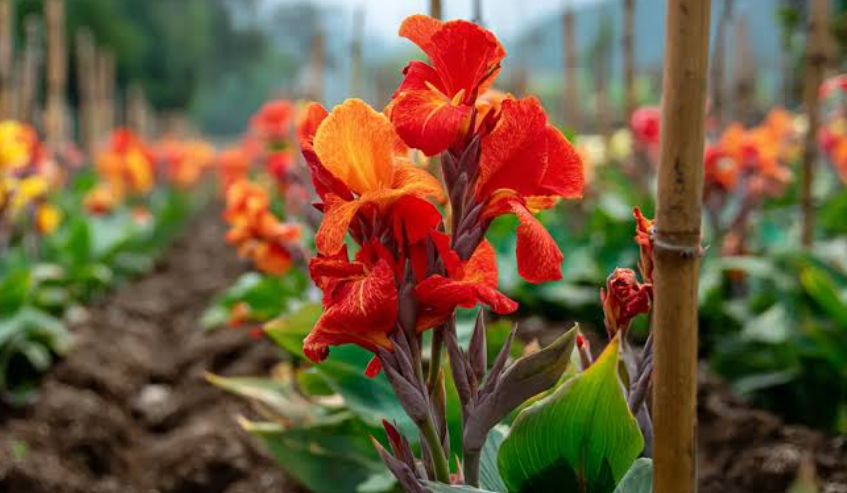
Canna lily is one of the boldest, most tropical-looking flowering plants grown in temperate gardens, prized as much for its broad, paddle-shaped foliage as for its vivid, showy blooms. Despite the common name, canna lilies are not true lilies at all, belonging instead to their own distinct plant family more closely related to bananas, heliconias, and birds of paradise. Most varieties grow between 2 and 6 feet tall, with some of the largest cultivars capable of exceeding 6 feet under ideal growing conditions, making canna one of the tallest flowering perennials commonly planted in home gardens.
Canna lilies grow from thick, nutrient-storing underground rhizomes rather than true bulbs, and a single rhizome can multiply into several new divisions within just 2 to 3 years of planting. The plant first appeared in American gardens in the 1840s but did not become widely popular until the 1890s, when breeders began developing the large-flowered hybrid types most familiar today. Canna lilies typically bloom from midsummer through the first fall frost, and deadheading spent flower spikes can encourage continuous blooming throughout that multi-month window.
Color range across canna lily varieties is exceptionally vivid, spanning red, orange, yellow, and pink, often within a single bicolor or speckled bloom. Foliage adds another dimension of color entirely, with leaves appearing in solid green, bronze, deep purple, or dramatic variegated stripes depending on the cultivar, making canna lilies valuable even before they flower. Roughly 795 named canna varieties are documented across major plant databases, reflecting more than a century and a half of active breeding since the genus was first introduced to Western gardens.
Hardiness varies by region, with canna lilies reliably surviving as perennials in zones 7 through 11, while gardeners in zones 3 through 7 typically dig up and store the rhizomes indoors over winter before replanting each spring. Canna lilies are also popular for their wildlife value, attracting hummingbirds, bees, and butterflies throughout their long flowering season, and they remain non-toxic to both cats and dogs, unlike many other popular garden bulbs. Below are 50 different types of canna lily, each known for its own color, size, or foliage pattern.
Types of Canna Lily
Black Knight
Black Knight produces magnificent blood-red flowers set against dramatic dark purple to almost black foliage, one of the most striking foliage contrasts found in canna lily breeding. This variety blooms from midsummer through the first frost when planted in spring. Black Knight’s dark leaves make it a popular choice for adding contrast among predominantly green garden plantings.
Carol’s Yellow
Carol’s Yellow produces soft yellow flowers accented with faint salmon flecks, offering a more understated coloring compared to the boldest red and orange canna varieties. This cultivar blends well with pastel-toned companion plants in mixed borders. Carol’s Yellow remains a favorite among gardeners seeking a gentler color palette within the canna lily family.
City of Portland
City of Portland produces petite, soft pink flowers on a variety with a notably compact overall size compared to many taller canna cultivars. This variety blooms from midsummer until the first frost and is well suited to patio and container plantings due to its smaller structure. City of Portland offers a similar pink coloring to some larger varieties without the accompanying height.
Lucifer
Lucifer is considered one of the most popular canna lily varieties available, producing a striking red bloom edged in bright yellow. This cultivar’s flower spikes branch as they mature, providing extended color coverage per plant. Lucifer blooms in light shade but produces the most flowers when grown in full sun.
Rosemond Cole
Rosemond Cole closely resembles Lucifer, featuring striking bright orange to yellow flowers held above glossy emerald green foliage. This perennial variety reaches 3 to 4 feet in height and thrives in zones 4 through 11. Rosemond Cole’s strong color contrast between bloom and foliage makes it a standout in mixed tropical plantings.
The President
The President is an ideal choice for gardeners who love canna lilies but prefer a shorter stature, typically growing 3 to 4 feet tall despite being capable of reaching 6 feet under perfect conditions. This variety produces vibrant red blooms above lush green foliage. The President has a notable history of large-scale use in public roadside beautification plantings.
Happy Julia
Happy Julia produces deep salmon blooms atop rich purple foliage, complementing other compact varieties in the same breeding series. This cultivar is valued for its vigor and compact growth habit despite its bold coloring. Happy Julia works well in container groupings alongside similarly sized canna types.
Happy Emily
Happy Emily is one of the smallest hybrids in general cultivation, reaching a maximum height of just 2 feet. This variety produces bright sunny yellow blooms speckled with orange above compact green foliage. Happy Emily thrives in full sun but can still bloom respectably in partial shade, showing excellent branching characteristics.
Happy Cleo
Happy Cleo offers vibrant orange blooms with gold undertones on a compact plant reaching just 1 to 2 feet tall, distinguishing it from taller canna types. This variety is ideal for containers or gardens where height needs to be kept in check. Happy Cleo can even be brought indoors near a bright window for extended seasonal display.
Harvest Yellow
Harvest Yellow produces radiant golden-yellow blooms adorned with orange speckles, bringing an autumnal color palette to the garden even in the height of summer. This variety benefits from having spent flower stalks trimmed back to encourage a fuller, more compact appearance. Harvest Yellow’s large leaves make it susceptible to wind damage, so thoughtful placement is recommended.
Yellow King Humbert
Yellow King Humbert is a majestic variety originating from Italy, standing 5 to 6 feet tall with bicolor flower clusters showing yellow petals marked with red spots. This heritage cultivar dates back to 1929 and remains popular in zones 4 through 11. Yellow King Humbert’s green leaves carry subtle purple markings, adding further ornamental interest.
Red King Humbert
Red King Humbert is a very common cultivar throughout the Midwest and Eastern United States, frequently used as a tall accent plant at the back of a bed or in the center of a detached planting. This variety produces bold red blooms consistent with its royal namesake. Red King Humbert remains one of the most recognizable heritage canna varieties still in wide cultivation.
Apricot Dream
Apricot Dream is a diminutive cultivar reaching only 2 to 3 feet in size, suitable for zones 3 through 10 and thriving in full sun. This variety blooms from midsummer through late fall, producing exquisite clusters of apricot-colored flowers. Apricot Dream’s smaller stature makes it a practical choice for gardeners with limited planting space.
Wyoming
Wyoming is considered something of a mysterious cultivar among canna enthusiasts, with murky origins that add to its appeal among collectors. This variety is valued for its striking foliage alongside its bloom display. Wyoming remains a favorite among gardeners who appreciate a bit of horticultural history with their plantings.
Bengal Tiger
Bengal Tiger is known for its distinctive striped leaves paired with bright orange flowers, growing up to 6 feet tall in ideal conditions. This variety’s variegated foliage often draws as much attention as its blooms. Bengal Tiger is frequently used as a dramatic back-of-border focal point in tropical-themed garden designs.
Ambassador
Ambassador produces large, brilliant red flowers and thrives best in sunny locations, often exceeding 4 feet in height. This variety’s bold coloring makes it a strong choice for creating a vibrant focal point in mixed plantings. Ambassador performs reliably across a range of garden conditions given adequate sun exposure.
Cleopatra
Cleopatra features striking foliage alongside vibrant blooms, reaching up to 5 feet in height at maturity. This variety is prized for combining ornamental leaf patterns with strong flower color in a single plant. Cleopatra works well as a tall accent in borders or mixed tropical displays.
Pfitzer
Pfitzer is a dwarf canna lily variety valued for vibrant coloring and interesting leaf patterns on a more compact plant. This type is well suited for adding color to small gardens without requiring extensive space. Pfitzer remains a popular choice for patio and container plantings.
Shorty
Shorty lives up to its name as a compact canna lily variety, offering vibrant blooms and attractive leaves on a notably smaller plant than most standard cultivars. This type is ideal for small gardens, patios, or container arrangements where space is limited. Shorty pairs well with other dwarf canna types for a coordinated low-growing display.
America
America produces striking red blooms on a reliable, well-established cultivar favored by gardeners across a range of climates. This variety’s bold coloring makes it a strong choice for patriotic or high-contrast plantings. America remains a dependable performer among classic canna lily selections.
Aloha
Aloha produces bright yellow flowers that bring a cheerful, tropical accent to summer garden beds. This variety’s sunny coloring pairs well with red and orange companion cannas for a vibrant, layered display. Aloha remains a popular choice among gardeners building a varied canna lily collection.
Tropicanna
Tropicanna, also known by an alternate cultivar name, boasts a kaleidoscope of foliage colors ranging from green and gold to burgundy and rust, topped with striking orange blooms. This variety requires full sun to partial shade and consistent moisture to maintain its vivid foliage display. Tropicanna remains one of the most visually complex canna lily cultivars available, valued as much for leaf color as for bloom.
Tropicanna Black
Tropicanna Black is a more recent addition to the black-foliage canna group, featuring shiny dark purple leaves that are wider though not quite as dark as some other black-leaved cultivars. This variety forms a 4-foot-tall clump topped with bright vermillion-red flowers from early summer through fall. Tropicanna Black is hardy in zones 7b through 10.
Valentine
Valentine produces eye-popping flowers in a true bluish-red tone rarely seen among the more common orange-red canna varieties. This dwarf cultivar makes a perfect attention-getter both in containers and in garden beds thanks to its unusual, vivid coloring. Valentine is hardy in zones 7b through 10.
Australia
Australia is notable for its bronze foliage, a rarity among canna lily cultivars that sets a dramatic stage for its deep red blooms. This variety can reach 5 to 6 feet tall, commanding attention wherever it is planted. Australia’s rich, warm foliage palette adds year-round visual interest even between flowering flushes.
Durban
Durban earns its place among rarer canna lily varieties thanks to its large leaves and vibrant red flowers, making a bold statement in any garden setting. This cultivar benefits from regular feeding and deadheading to promote continuous blooming. Durban is celebrated specifically for its distinctive leaf size paired with strong flower color.
Tenerife
Tenerife is a striking cultivar offering a stunning design option for gardeners seeking a colorful, tropical-style focal point. This variety pairs well with other bold canna types in mixed tropical borders. Tenerife remains a popular choice among modern canna lily selections.
Red Golden Flame
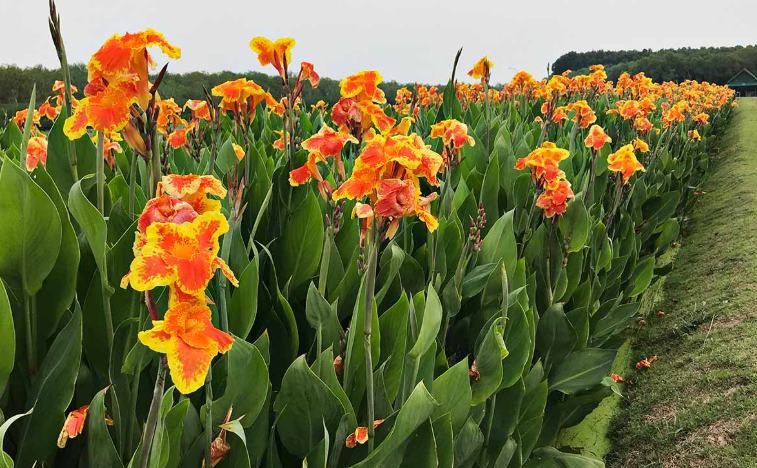
Red Golden Flame combines fiery red and golden-yellow tones within a single bloom, creating a dramatic, flame-like color pattern. This variety adds bold visual energy to mixed summer plantings. Red Golden Flame is frequently chosen for gardeners wanting maximum color contrast from a single cultivar.
Cannova Yellow
Cannova Yellow is a compact cultivar within a modern breeding series, perfectly suited for patios and decks where space is limited. This variety produces reliable, bright yellow blooms throughout its flowering season. Cannova Yellow is part of a broader series bred specifically for container performance.
Argentina
Argentina is a foliage-focused cultivar valued primarily for its ornamental leaf display rather than a particularly showy bloom. This variety was introduced in the late 1990s and remains a recognized name among canna foliage collectors. Argentina adds textural interest to mixed tropical plantings.
Musaefolia Grande
Musaefolia Grande belongs to a group of cannas with large leaves resembling those of banana plants, prized primarily for foliage size and structure. This variety creates a dramatic, jungle-like presence in the garden even before flowering begins. Musaefolia Grande is often used as a bold backdrop plant in tropical-themed landscaping.
R. Wallace
R. Wallace is a historically significant cultivar dating to the early 1900s, representing one of the foundational varieties in modern canna lily breeding. This variety helped establish the classic large-flowered hybrid form still popular today. R. Wallace remains a notable reference point in the history of canna cultivation.
Pretty Butterfly
Pretty Butterfly features large, somewhat fragile petal-like structures arranged loosely, creating a delicate, fluttering appearance distinct from more tightly formed canna blooms. This variety’s wide petals leave no visible gaps when the flower is fully open. Pretty Butterfly remains a distinctive choice among specialty canna cultivars.
Florian
Florian is a more recent cultivar introduction, registered in 2007 as part of ongoing canna lily breeding efforts. This variety reflects modern hybridizing trends within the genus. Florian remains a newer name gaining recognition among canna lily collectors.
Red Stripe
Red Stripe served as a key parent plant in developing several large-flowered, large-leaved modern hybrids, contributing its striking foliage pattern to subsequent crosses. This variety’s genetic influence extends into several well-known modern cultivars. Red Stripe remains historically significant within canna breeding programs.
Stuttgart
Stuttgart is grown primarily for its dramatic variegated foliage, featuring large leaves marked with irregular patches of white and green. This variety’s ornamental leaf display often outshines its more modest flowers. Stuttgart is a popular choice for gardeners prioritizing foliage impact over bloom color.
Picasso
Picasso produces yellow flowers speckled with red spots, creating an artistic, paint-splattered appearance that inspired its name. This variety adds playful, patterned color to mixed canna plantings. Picasso remains a popular choice among gardeners seeking unique, speckled bloom patterns.
Intrigue
Intrigue pairs deep purple foliage with bright orange blooms, creating strong contrast between leaf and flower color. This variety adds dramatic depth to tropical-themed garden beds. Intrigue is frequently chosen for its striking two-tone visual impact.
Pink Sunburst
Pink Sunburst produces soft pink blooms accented with variegated foliage, combining gentle flower color with more dramatic leaf patterning. This variety offers a pastel alternative to the boldest red and orange canna types. Pink Sunburst works well in mixed borders alongside both quiet and vibrant companion plants.
Orange Punch
Orange Punch produces vivid orange blooms that deliver bold color impact throughout the summer growing season. This variety’s saturated tone makes it a strong anchor plant in warm-colored garden schemes. Orange Punch pairs well with red and yellow companion cannas for a cohesive tropical palette.
South Pacific Scarlet
South Pacific Scarlet is part of a modern breeding series recognized for strong garden performance and vivid scarlet-red blooms. This variety has received recognition within trial garden programs for its reliability and color saturation. South Pacific Scarlet remains a popular modern choice for bold red canna plantings.
Toucan Coral
Toucan Coral is part of a modern container-friendly breeding series, producing soft coral-toned blooms on a more compact plant. This variety is bred specifically for strong performance in pots and smaller garden spaces. Toucan Coral offers a gentler color option within its broader breeding series.
Toucan Scarlet
Toucan Scarlet, part of the same modern breeding series as Toucan Coral, produces vivid scarlet-red blooms on a compact, well-branched plant. This variety is valued for reliable, continuous flowering throughout the summer season. Toucan Scarlet performs well in both garden beds and container arrangements.
Toucan Yellow
Toucan Yellow completes a trio within its breeding series, offering bright yellow blooms on the same compact, container-friendly growth habit as its coral and scarlet counterparts. This variety adds a sunny accent to mixed container plantings. Toucan Yellow remains popular for patio and balcony gardening.
Cannova Bronze Scarlet
Cannova Bronze Scarlet pairs bronze-toned foliage with vivid scarlet blooms, part of a modern breeding series developed for strong garden and container performance. This variety’s dark foliage provides dramatic contrast against its bright red flowers. Cannova Bronze Scarlet is bred for extended, reliable blooming throughout the season.
Bird of Paradise
Bird of Paradise is named for its blooms, which echo the shape and vivid coloring of its tropical namesake flower. This variety brings an especially exotic visual quality to canna lily plantings. Bird of Paradise is a popular choice for gardeners building a dedicated tropical-themed garden bed.
Panache
Panache produces narrow-petaled, bicolor blooms combining pink and yellow tones in an elegant, understated pattern. This variety’s more delicate flower form sets it apart from the boldest, widest-petaled canna cultivars. Panache adds a refined touch to mixed tropical borders.
Endeavour
Endeavour produces deep red blooms set against purple-green foliage, a combination that has earned it recognition from horticultural societies for garden performance. This variety holds its rich coloring well throughout a long flowering season. Endeavour remains a well-regarded choice among modern canna lily cultivars.
Musifolia
Musifolia is grown primarily for its giant, banana-like leaves, which can dominate a garden bed with sheer visual scale even without flowers present. This variety is often used to anchor tropical-themed plantings alongside true banana plants and elephant ears. Musifolia’s blooms are considered secondary to its dramatic foliage display.
Dwarf Canna
Dwarf Canna describes a broad category of compact cultivars bred specifically to stay under 2 to 3 feet tall, making them practical for small gardens, patios, and container displays. This type sacrifices little in bloom color compared to taller varieties while requiring significantly less space. Dwarf Canna types remain increasingly popular as more gardeners look to grow tropical-style plants in smaller urban spaces.