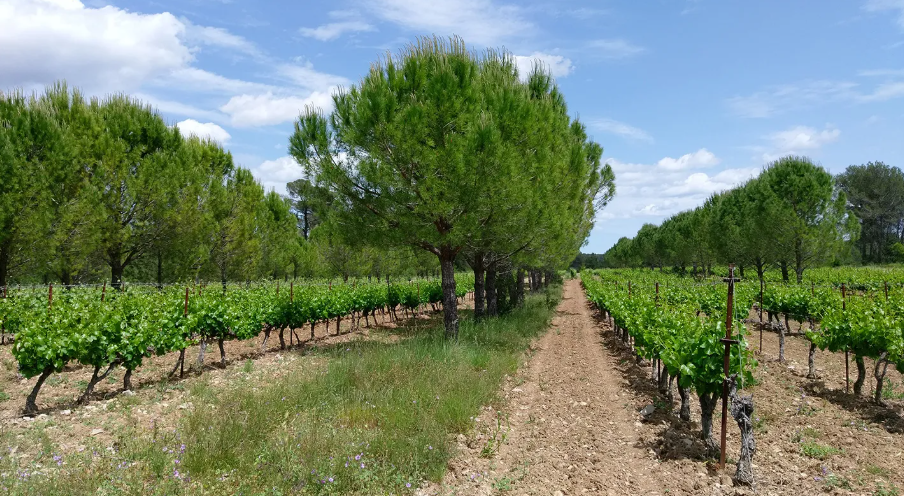
Agroforestry is one of the oldest and most ecologically intelligent land-use systems on earth, integrating trees deliberately into agricultural and livestock landscapes. Rather than viewing trees and crops as competitors, agroforestry treats them as allies — each enhancing the productivity, resilience, and sustainability of the other. Practiced across more than 1 billion hectares worldwide, it supports the livelihoods of an estimated 1.2 billion people, many of them smallholder farmers in tropical and subtropical regions.
The environmental credentials of agroforestry are remarkable. Trees in farming systems can sequester between 2 and 5 tonnes of carbon per hectare per year, making agroforestry one of the most cost-effective climate mitigation strategies available. They reduce soil erosion by up to 50%, improve water infiltration, regulate microclimates, and dramatically enhance on-farm biodiversity. Studies show that agroforestry systems can harbor up to 3 times more species of birds, insects, and plants than monoculture fields.
Economically, agroforestry trees deliver multiple income streams simultaneously — timber, fruit, fodder, medicinal products, gums, resins, and nitrogen fixation that reduces fertilizer costs. In sub-Saharan Africa alone, farmer-managed natural regeneration of agroforestry trees has restored tree cover across an estimated 12 million hectares, boosting crop yields by 15–25% in some regions. For many farming families, these trees represent a living savings account that matures alongside annual crops.
Agroforestry trees are selected for specific ecological roles: some fix atmospheric nitrogen to enrich soils, others provide deep-rooted access to subsoil nutrients, while others offer canopy shade that moderates temperatures for shade-loving crops like coffee and cacao. The right tree in the right place can transform a degraded landscape into a productive, multi-layered system that mimics the structure and function of a natural forest — while still feeding families and generating income.
Moringa (Moringa oleifera)
Often called the “miracle tree,” moringa is one of the most nutritionally dense plants known to science, with leaves containing more vitamin C than oranges, more calcium than milk, and more iron than spinach. It grows rapidly in arid and semi-arid zones, fixes erosion-prone soils, and provides fodder, food, and water-purifying seed extracts — making it invaluable in food-insecure regions across Africa and South Asia.
Leucaena (Leucaena leucocephala)
A fast-growing leguminous tree widely used across the tropics for alley cropping and fodder banks, leucaena fixes up to 500 kg of nitrogen per hectare annually, dramatically reducing the need for synthetic fertilizers. Its leaves decompose rapidly into a rich green manure, while its high-protein pods serve as premium livestock feed. It is particularly prominent in tropical alley farming systems across Central America and Southeast Asia.
Gliricidia (Gliricidia sepium)
Gliricidia is a workhorse of tropical agroforestry, prized for its ease of propagation from cuttings, rapid biomass production, and high-quality nitrogen-rich mulch. Farmers plant it as live fencing, windbreaks, and shade trees for coffee and cacao, and its prunings are incorporated directly into the soil as green manure. It is one of the most widely used multipurpose trees in Central America, West Africa, and South and Southeast Asia.
Faidherbia (Faidherbia albida)
Uniquely, faidherbia drops its leaves during the rainy season and retains them during the dry season — the reverse of most trees — meaning it provides nitrogen-rich leaf litter exactly when crops need it most without competing for light during the growing season. Studies from Zambia and Niger show maize yields increasing by up to 280% under faidherbia trees, and it is central to the Farmer Managed Natural Regeneration movement sweeping the Sahel.
Teak (Tectona grandis)
One of the world’s most commercially valuable hardwoods, teak is increasingly integrated into agroforestry systems in tropical Asia and Africa, where it is intercropped with annual crops during its early growth years. Its durable, golden-brown timber commands premium prices on global markets, and farmers in India, Indonesia, and East Africa plant it as a long-term timber investment alongside shorter-cycle food crops.
Neem (Azadirachta indica)
Neem is a drought-hardy, fast-growing tree whose every part has economic value — leaves, seeds, bark, and oil are used in biopesticides, pharmaceuticals, cosmetics, and traditional medicine. In agroforestry systems, it serves as a windbreak, a source of natural pesticide, and a shade tree for homesteads and fields. Neem oil is particularly valued by organic farmers as a broad-spectrum pest deterrent, with a global market exceeding $500 million annually.
Acacia (Acacia senegal and related species*)
Acacias are pillars of dryland agroforestry across the Sahel and East Africa, with Acacia senegal producing gum arabic — a commodity worth over $100 million annually in global trade. These nitrogen-fixing trees stabilize sandy soils, provide fodder during dry seasons, and support livelihoods in some of the world’s most food-insecure areas. The gum arabic belt stretching from Senegal to Ethiopia supports millions of pastoralist and farming households.
Casuarina (Casuarina equisetifolia)
Often mistaken for a conifer due to its needle-like branchlets, casuarina is a fast-growing coastal and dryland tree widely planted in agroforestry systems for windbreaks, fuelwood, and soil stabilization. It fixes nitrogen through a symbiotic relationship with the bacterium Frankia and can grow on sandy, saline, and degraded soils where little else thrives. It is extensively used in coastal agroforestry in India, Egypt, and West Africa.
Mango (Mangifera indica)
Mango trees are a central fixture of traditional homestead agroforestry across tropical Africa, Asia, and Latin America, providing canopy shade, fruit income, and habitat for beneficial insects. A single mature mango tree can yield 200–300 kg of fruit per season, giving smallholder families both a nutritional resource and a marketable commodity. Intercropped with vegetables, legumes, or root crops, mango trees create a productive multi-story system that utilizes vertical space efficiently.
Avocado (Persea americana)
In highland agroforestry systems of East and Central Africa, avocado has become one of the most economically transformative trees, with Kenyan smallholders earning significant income from both local markets and growing export demand. The tree provides shade for shade-tolerant crops, contributes organic matter to the soil, and its deep root system draws up subsoil nutrients. Global avocado demand has surged by over 300% in the past two decades, making it a highly attractive agroforestry investment.
Jackfruit (Artocarpus heterophyllus)
The world’s largest tree-borne fruit, jackfruit is a cornerstone of homestead agroforestry in Bangladesh, Sri Lanka, India, and across Southeast Asia, where every part of the tree — fruit, seeds, leaves, and timber — has practical use. A mature jackfruit tree can produce up to 200 fruits annually, providing food, fodder, and timber from a single long-lived planting. It grows well in multi-story systems alongside bananas, turmeric, and root crops.
Breadfruit (Artocarpus altilis)
Breadfruit is gaining renewed global attention as a climate-resilient, high-calorie staple food tree suited to tropical agroforestry systems. A single tree can produce up to 200 kg of starchy fruit per year for decades, requiring minimal inputs once established, and it thrives when intercropped with root vegetables, legumes, and medicinal plants. Organizations like the Breadfruit Institute estimate it could improve food security for millions across the Pacific, Caribbean, and tropical Africa.
Bamboo (Bambusoideae spp.)
Though technically a grass, bamboo functions as a tree in agroforestry systems, providing extraordinarily fast-growing biomass — some species grow up to 91 cm per day — along with construction material, food, fodder, and carbon sequestration. It is one of the most versatile agroforestry plants on earth, used for watershed protection, slope stabilization, fuelwood, and as a commercial timber substitute. The global bamboo industry is valued at over $60 billion annually.
Coconut (Cocos nucifera)
Coconut is the defining tree of coastal and lowland agroforestry systems across the tropics, supporting an estimated 11 million farming families worldwide through oil, milk, fiber, timber, and shell products. In multi-story systems, it is intercropped with cacao, black pepper, pineapple, and root crops beneath its canopy, maximizing land productivity. The Philippines, Indonesia, and India are among the top producers, where coconut-based agroforestry systems have supported farming communities for centuries.
Cacao (Theobroma cacao)
Cacao is grown almost exclusively in agroforestry systems — shade-grown under canopy trees like gliricidia, banana, and timber species — and is the foundation of the global chocolate industry, valued at over $130 billion. The shade-grown model not only produces higher-quality beans but supports far greater biodiversity than sun-grown monocultures, including migratory bird species and native pollinators. West Africa produces over 70% of the world’s cacao, much of it in smallholder agroforestry plots.
Coffee (Coffea arabica and C. canephora)
Traditional shade-grown coffee is one of the most iconic agroforestry systems in the world, intercropped beneath canopy trees that regulate temperature, humidity, and pest pressure while contributing leaf litter to enrich the soil. Shade-grown coffee farms support up to 90% more bird species than sun-grown farms and produce beans associated with more complex flavor profiles. The highlands of Ethiopia, Colombia, and Central America have practiced coffee agroforestry for generations.
Shea (Vitellaria paradoxa)
The shea tree is one of the most economically significant agroforestry trees in sub-Saharan Africa, producing fat-rich nuts that are processed into shea butter — a global cosmetics and food ingredient with a market worth over $2 billion annually. It grows across the savanna parklands of West and Central Africa, where it is deliberately retained by farmers in croplands for its fruit, fodder, and soil-improving qualities. Women’s shea cooperatives across Burkina Faso, Ghana, and Mali depend heavily on this tree for income.
Black Locust (Robinia pseudoacacia)
Black locust is a nitrogen-fixing leguminous tree increasingly used in temperate agroforestry across Europe and North America for windbreaks, living fences, and silvopasture systems. It produces one of the hardest, most rot-resistant timbers in the temperate world, valued for posts, outdoor furniture, and biomass energy, and its flowers are prized by beekeepers for high-quality honey production. It coppices vigorously, making it exceptionally productive for repeated biomass harvests.
Paulownia (Paulownia tomentosa and related species)
Paulownia is one of the fastest-growing hardwood trees on earth, capable of reaching 6 metres in its first year, and is being increasingly adopted in temperate and subtropical agroforestry for rapid timber production and alley cropping. Its large canopy shades the ground while allowing sufficient light to pass through for intercropped grains or vegetables, and its leaves — high in protein — serve as premium fodder. Its lightweight but strong timber is prized in furniture-making and musical instrument production.
Multipurpose Leucaena (Leucaena diversifolia)
Distinct from its more common relative L. leucocephala, Leucaena diversifolia is better adapted to highland and cooler tropical conditions, making it valuable in agroforestry zones above 1,500 metres where other leucaena species struggle. It provides the same suite of nitrogen-fixing, fodder, green manure, and fuelwood benefits, and is widely used in the East African highlands in alley cropping systems with maize and sorghum.
Tamarind (Tamarindus indica)
Tamarind is a long-lived, drought-tolerant tree deeply embedded in the agroforestry traditions of South Asia, East Africa, and Latin America, valued for its tart, nutrient-rich pods used in cooking, beverages, and traditional medicine. Its dense, spreading canopy provides shade for livestock and intercropped vegetables, while its roots tolerate dry, compacted soils that would challenge most fruit trees. A mature tamarind tree can live for over 200 years, making it a multigenerational agroforestry asset.
Pigeon Pea (Cajanus cajan)
Though shrubby rather than fully arboreal, pigeon pea functions as a short-lived perennial agroforestry tree in many tropical farming systems, fixing up to 40 kg of nitrogen per hectare per season and providing protein-rich grain, fodder, and organic mulch. It breaks hardpans with its deep taproot, improving water infiltration in degraded soils, and is a foundational crop in agroforestry systems across East and Southern Africa, India, and the Caribbean.
Rubber Tree (Hevea brasiliensis)
The rubber tree is a major agroforestry species across Southeast Asia, where it is intercropped with shade-tolerant crops like ginger, turmeric, and pineapple during the productive tapping years and provides high-value timber at the end of its latex-producing life. Rubber agroforestry systems known as jungle rubber mimic natural forest structure and support significantly greater biodiversity than monoculture rubber plantations. Indonesia, Thailand, and Malaysia together account for over 70% of global natural rubber production, much of it from smallholder agroforestry plots.
Macadamia (Macadamia integrifolia and M. tetraphylla)
Macadamia is a premium nut tree increasingly incorporated into highland tropical agroforestry systems in East Africa, where Kenya has become the world’s largest producer, generating over $100 million in export revenue annually. Its evergreen canopy provides year-round shade and organic matter, and it intercropped successfully with coffee, bananas, and food crops. Macadamia trees are long-lived, with commercial productivity extending over 40 years from a single planting.
Calliandra (Calliandra calothyrsus)
Calliandra is a fast-growing leguminous shrub-tree widely used in highland agroforestry across East Africa and Central America, prized for its dense, protein-rich foliage that makes outstanding fodder for dairy cattle and goats. Research in the East African highlands has shown that dairy cows supplemented with calliandra foliage produce significantly more milk, increasing farm income alongside soil fertility. Its vivid red flowers also attract pollinators, adding an ecological bonus to its agronomic functions.
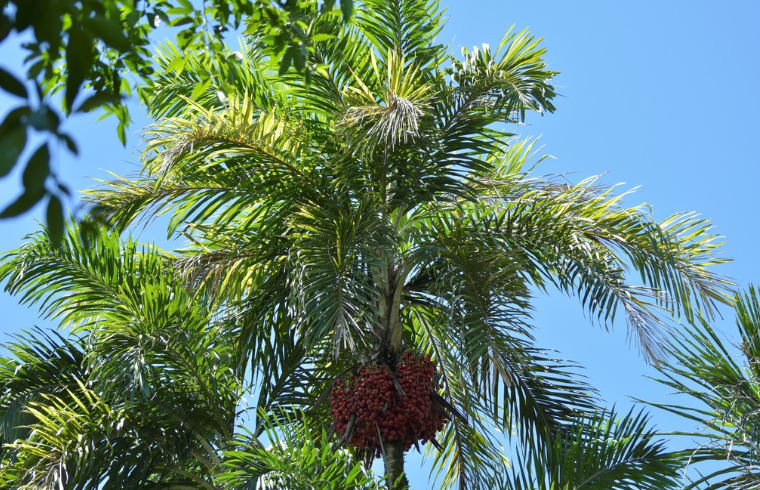
Peach Palm (Bactris gasipaes)
Peach palm is a multi-purpose Amazonian agroforestry palm that produces starchy, protein-rich fruits, edible palm hearts, and durable timber from a single plant. It has been cultivated by Indigenous communities in the Amazon basin for thousands of years and is now grown commercially across tropical Latin America for the palm heart market. Unlike most palms harvested for hearts, peach palm is multi-stemmed, meaning harvest does not kill the plant — making it highly productive and sustainable over decades.
Siris Tree (Albizia lebbeck)
Siris is a fast-growing, nitrogen-fixing leguminous tree used extensively in agroforestry systems across South Asia, East Africa, and the Pacific as a shade tree, windbreak, and green manure source. Its feathery canopy provides dappled shade ideal for intercropped vegetables and fodder grasses, and its dried pods — which rattle audibly in the wind — are a familiar feature of rural Indian landscapes. Its wood is valued for furniture, construction, and firewood.
Parkia (Parkia biglobosa)
The African locust bean tree (Parkia biglobosa) is one of the most cherished agroforestry trees of the West African savanna, producing large pods whose seeds are fermented into dawadawa — a pungent, protein-rich condiment central to regional cuisines. Beyond its food value, parkia fixes nitrogen, provides shade and fodder, and its flowers are an important dry-season nectar source for bees. It is deliberately retained in fields across Burkina Faso, Mali, and Ghana as a critical food security and income tree.
Inga (Inga edulis)
Inga, known as the ice cream bean tree, is a rapid-growing Amazonian leguminous tree used in a slash-and-mulch agroforestry technique that enables continuous cropping on highly weathered tropical soils without burning. It fixes nitrogen, produces abundant leaf litter that suppresses weeds and feeds the soil, and its sweet white pulp surrounding the seeds is eaten fresh. The Inga Foundation has promoted this system across Central America and Africa as an alternative to slash-and-burn agriculture that restores rather than degrades forest soils.
Honey Locust (Gleditsia triacanthos)
Honey locust is a versatile temperate agroforestry tree native to North America, valued in silvopasture systems for its high-sugar pods that serve as nutritious livestock fodder — reducing the need for supplemental feed during late summer and autumn. It tolerates a wide range of soils and climates, establishes quickly, and its fine, filtered canopy allows sufficient light penetration for understory grass growth. Its hard, durable timber and role as a deep-rooted windbreak add to its agroforestry utility.