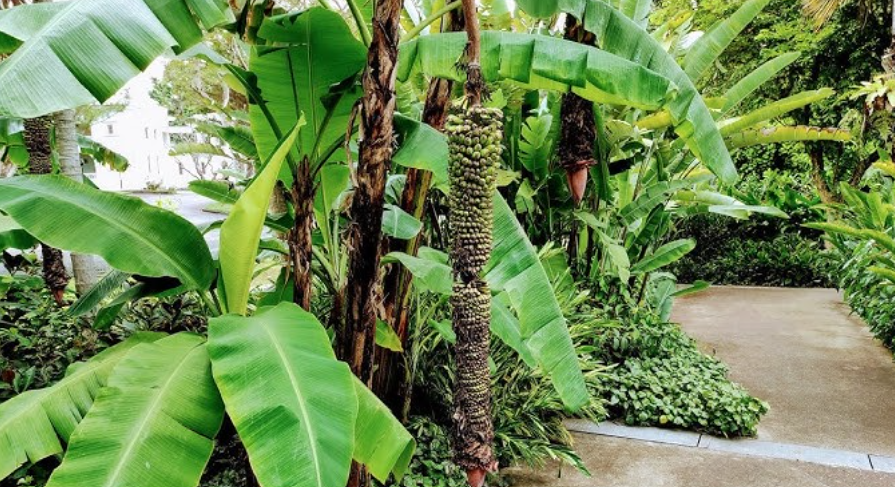
The Thousand Fingers banana is one of the most visually spectacular and botanically fascinating cultivars in the entire Musa genus, occupying a unique niche as both a genuinely productive fruiting banana and one of the most dramatic ornamental food plants a tropical or subtropical gardener can grow. Known by a colorful array of regional names — Cienpiés (“centipede” in Spanish), Many Fingers, Hands of Buddha, and Calcutta banana in some markets — it belongs to the AAA genomic group, carrying three complete chromosome sets derived entirely from Musa acuminata, aligning it genetically with the Cavendish subgroup even as its growth habit and fruit presentation differ dramatically from any commercial Cavendish variety. It is grown across tropical Latin America, the Caribbean, parts of Southeast Asia, and increasingly in specialty banana collections and home gardens worldwide, where its extraordinary bunch architecture never fails to draw astonishment from first-time observers.
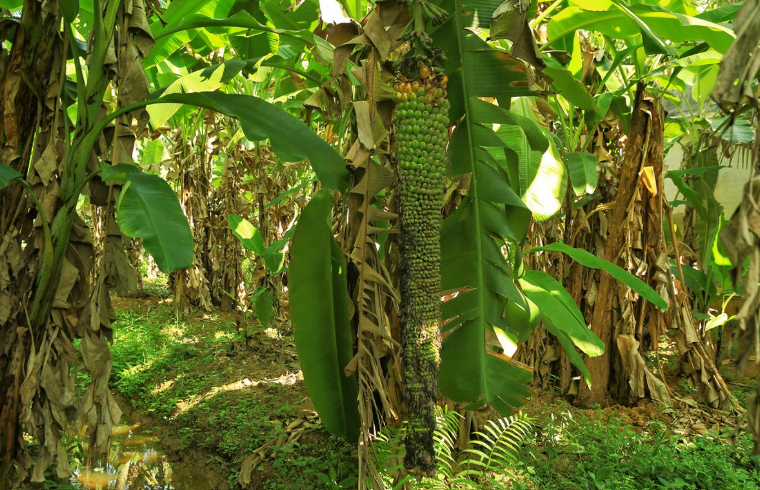
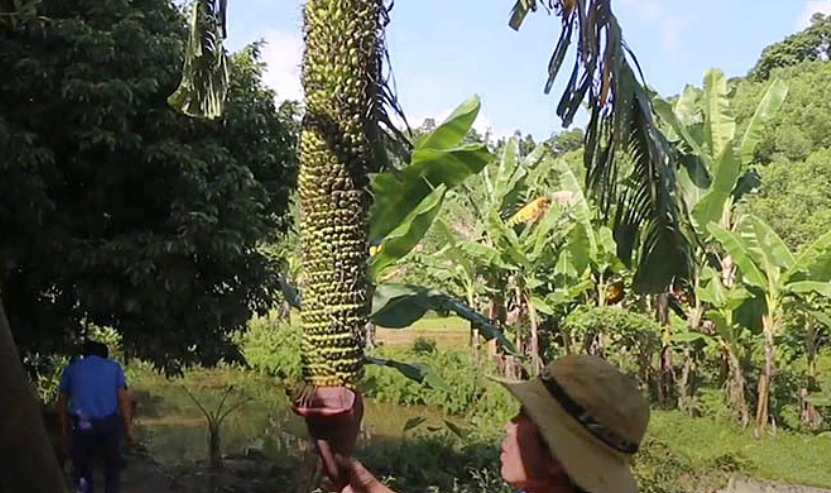
What defines the Thousand Fingers banana above all else is the sheer number of individual fruit fingers it produces on a single bunch — a characteristic so extreme it borders on the surreal. Where a standard Cavendish bunch carries perhaps 150 to 200 individual fingers across 9 to 14 hands, a mature Thousand Fingers bunch can carry 300 to 500 or more fingers arranged in a dramatically elongated, densely packed cluster that can stretch 1.5 metres or more in length and weigh 30 to 60 kg at full development. The individual fingers are small — typically 7 to 12 cm in length — and closely packed together along each hand, with hands numbering anywhere from 20 to 40 on a single bunch, creating the centipede-like visual effect that gives the variety its most common Spanish name. The overall impression of a fully developed Thousand Fingers bunch hanging from the plant is one of almost impossible botanical extravagance.
The flavor of Thousand Fingers bananas is genuinely pleasing and adds real culinary value beyond the variety’s obvious visual appeal. The fruits are sweet and aromatic at full ripeness — when the thin skin has turned deep yellow with characteristic dark freckling — with a flavor profile that many describe as richer and more complex than the mild Cavendish standard, carrying a pleasant floral quality and a honey-like sweetness that concentrates in the small fruits.
The texture is soft and creamy, similar to the Lady Finger or other sweet AAA dessert types, and the thin skin means the fruit ripens quickly and uniformly across the bunch. Because each individual fruit is small, the ratio of skin to flesh is higher than in larger-fingered varieties, but the eating quality of the flesh itself is consistently well-regarded by those who grow and consume the variety fresh from the plant.
The plant itself is a vigorous, moderately tall grower, typically reaching 3.5 to 5 metres at maturity with a robust pseudostem and broad, healthy foliage characteristic of the AAA genomic group. It produces suckers readily and develops a productive mat with good management, performing best in the warm, humid, fertile growing conditions of tropical lowlands where its high fruit production demands are met by consistent water and nutrient supply.
The Thousand Fingers banana is not considered a commercial export variety — its thin-skinned, densely packed fingers are highly susceptible to bruising and post-harvest deterioration, and the logistical challenge of packing and shipping such an unusually structured bunch makes it economically impractical for the conventional banana supply chain. Its value lies squarely in the fresh local market, the farm gate, the specialty grower’s collection, and increasingly the social media-driven world of novelty food horticulture where its dramatic appearance generates extraordinary attention.
Culturally and historically, the Thousand Fingers banana has deep roots in the traditional agricultural systems of tropical Latin America and the Caribbean, where it has been grown by smallholder farming communities for generations as a productive home garden and market garden variety. In parts of Colombia, Ecuador, Costa Rica, and Cuba, it appears regularly at local markets where consumers prize it for its sweetness and novelty, and it serves an important social function as a variety that generates conversation, pride, and community identity among the farmers who grow it.
The variety has also established a presence in parts of Southeast Asia, particularly in the Philippines and Indonesia, where densely fingered banana types are appreciated both for their productivity and their striking visual impact at market stalls and ceremonial occasions. In recent years, the global spread of images of Thousand Fingers bunches across social media platforms has dramatically increased awareness of and demand for the variety among home growers and specialty nurseries worldwide.
Despite its many virtues, the Thousand Fingers banana presents genuine management challenges that distinguish it from more conventional cultivars. The extraordinary weight of a fully developed bunch — which can exceed 60 kg in optimal conditions — places enormous mechanical stress on the pseudostem and bunch peduncle, making propping an absolute necessity from early bunch development and creating a real risk of plant collapse if support is inadequate or delayed.
The sheer density of fingers packed onto each hand also creates a humid microclimate within the bunch interior that can encourage fungal development and accelerate post-harvest deterioration if the bunch is not harvested promptly at the correct maturity stage. These challenges aside, for the grower willing to provide the attention and support the variety demands, Thousand Fingers delivers a combination of productivity, flavor, and visual spectacle that no other banana cultivar can match.
Also Read: Different Types of Bananas
How to Grow and Care for Thousand Fingers Banana
Climate and Site Selection
Thousand Fingers thrives in hot, humid tropical and subtropical climates with temperatures between 20°C and 38°C and consistent rainfall or irrigation of at least 1,500 mm annually, conditions that mirror its traditional growing regions in tropical Latin America and Southeast Asia. It is a warmth-demanding variety with limited cold tolerance — temperatures below 12°C will slow growth noticeably, and any frost will cause pseudostem damage that sets the plant back significantly.
Choose the warmest, most sheltered full-sun position available, protected from strong winds that could topple the plant under the extraordinary weight of a developing bunch — wind protection is more critical for Thousand Fingers than for almost any other banana variety given the mechanical load its bunches place on the pseudostem.
Soil Preparation
Plant Thousand Fingers in deep, well-draining, organically rich loam soil with a pH between 5.5 and 7.0, preparing the planting site to a depth of at least 60 cm to accommodate the variety’s vigorous, deep-exploring root system. Incorporate a generous quantity of aged compost and well-rotted farmyard manure — at least 10 to 15 kg per planting pit — along with a balanced pre-plant fertilizer, as the extraordinary fruit production potential of this variety demands exceptional soil fertility from the outset.
Drainage is non-negotiable — the dense, heavy bunch that Thousand Fingers produces requires a structurally sound, healthy root system to sustain, and waterlogged soils will undermine root health long before the plant reaches the productive stage where its spectacular bunch potential is realized.
Planting
Propagate Thousand Fingers from healthy, firm sword suckers sourced from productive, disease-free mother plants, selecting material of at least 60 cm height with a well-developed, undamaged corm. Plant at a depth of 35 to 45 cm — slightly deeper than smaller varieties to provide additional anchorage against the mechanical stress of supporting an exceptionally heavy bunch — and space plants generously at 3.5 to 4.5 metres apart to allow adequate room for the wide canopy and the large bunch that will eventually hang from each plant.
Water thoroughly at planting, firm the soil well around the corm to eliminate air pockets, and apply a broad circle of organic mulch immediately to conserve establishment moisture.
Watering
Provide consistent, deep irrigation equivalent to 30 to 50 mm per week during the active growing season, maintaining even soil moisture throughout the root zone without allowing waterlogging at any stage. The high fruit load that Thousand Fingers carries during bunch development creates an exceptionally high evapotranspiration demand, and any significant moisture stress during fruit fill will reduce finger size, slow bunch development, and compromise the eating quality of the finished fruit.
Drip irrigation delivering water directly to the root zone is ideal, maintaining the steady moisture supply the plant needs while keeping the pseudostem base dry to minimize fungal disease pressure around the corm.
Fertilizing
Thousand Fingers is a heavy feeder whose extraordinary bunch production potential can only be realized with a consistently generous and well-timed fertilizer program. Apply a high-nitrogen balanced fertilizer every 6 to 8 weeks from establishment through the vegetative phase to drive the rapid leaf production that underpins eventual bunch size, then transition to a potassium-dominant formula from flower emergence to maximize the sugar accumulation and fruit fill that makes the variety’s small fingers so flavorfully concentrated.
Supplement the base fertilizer program with regular applications of compost, aged manure, and foliar seaweed or fish emulsion sprays to maintain the broad spectrum of macro and micronutrients that sustain healthy growth and maximum productivity across the full crop cycle.
Mulching
Maintain a deep, permanent mulch layer of 12 to 15 cm across the entire mat area using sugarcane trash, straw, shredded leaves, or wood chips, replenishing it every 3 to 4 months as the organic material decomposes into the soil. Mulch is especially important for Thousand Fingers because its high productivity demands consistently available soil moisture and nutrients — conditions that mulch supports by reducing evaporation, moderating soil temperature, and continuously building soil organic matter as it decomposes.
Add chopped spent pseudostem sections from harvested plants back to the mulch ring after each harvest, completing the organic nutrient cycle and returning the significant potassium reserves stored in the pseudostem tissue to the root zone.
Desuckering
Manage the developing mat on a disciplined three-generation rotation — mother plant, primary follower, secondary follower — removing all additional suckers promptly every 4 to 6 weeks to prevent the resource competition that would reduce the extraordinary bunch sizes this variety is capable of achieving.
Given the mechanical stress that a heavy Thousand Fingers bunch places on the plant, it is particularly important that follower suckers are well-positioned and not allowed to crowd the mother plant during the critical bunch development and ripening period. Use clean, sharp tools to remove unwanted suckers at ground level and destroy the growing point, and sterilize equipment between cuts to minimize the risk of pathogen transfer within the mat.
Propping and Structural Support
Propping is the single most critical management practice specific to Thousand Fingers banana and must be implemented earlier and more robustly than for any other commonly grown variety. Install at least two and ideally three sturdy bamboo or timber props — each at least 4 metres long and 5 cm in diameter — angled from the ground to the pseudostem above the bunch peduncle as soon as the bunch begins to develop visible weight, typically 3 to 4 weeks after flower emergence.
In addition to standard lateral props, many experienced Thousand Fingers growers install an overhead rope or wire support system — anchoring a strong rope from the bunch peduncle to a fixed overhead structure or to stakes driven into the ground on the opposite side of the plant — to distribute the bunch weight vertically as well as laterally. Without adequate propping, plant collapse under the weight of a mature Thousand Fingers bunch is a genuine and costly risk.
Flowering and Bunch Management
Thousand Fingers typically flowers 10 to 15 months after planting under warm tropical conditions, producing a flower bract that continues generating new hands for an extended period — considerably longer than most Cavendish varieties — as the remarkable number of hands characteristic of the variety emerge sequentially. Monitor the developing bunch closely and begin installing propping support as soon as the first hands become visible beneath the emerging bract, before the bunch weight reaches levels that stress the peduncle.
Once the bract has finished producing new hands and the male bell is generating only empty bracts, remove it cleanly 15 to 20 cm below the last hand, and consider bagging the entire bunch with an extra-large perforated polyethylene bag or purpose-made bunch cover to protect the densely packed fingers from insect damage and fungal issues within the humid bunch interior.
Pest and Disease Management
Thousand Fingers shares the disease vulnerabilities common to all AAA Cavendish-group bananas, with Sigatoka leaf disease, Panama disease, banana weevil borer, and Banana Bunchy Top Virus representing the key management priorities. The dense packing of fingers within the bunch creates a particularly humid interior microclimate that can encourage fungal development on the fruit surface — particularly in wet tropical conditions — making bunch bagging and good airflow around the plant especially important for this variety.
Monitor plants regularly for signs of Fusarium wilt — yellowing and wilting of the entire plant from the oldest leaves inward — and immediately isolate and destroy any affected plants to prevent soil contamination spreading through the mat or to neighboring plantings.
Harvesting
Harvest Thousand Fingers bunches when the fingers have rounded out and lightened from deep green to medium green, typically 12 to 16 weeks after flowering, before full ripeness develops on the plant — where the sheer density of the bunch makes even ripening difficult and increases the risk of inner fingers deteriorating before outer ones ripen. Given the exceptional weight of a mature bunch, harvesting safely requires at minimum two people and ideally three — one to cut the bunch peduncle cleanly with a sharp knife or machete, one to support and guide the falling bunch, and ideally one to manage the props being removed simultaneously.
Handle the harvested bunch with extraordinary care, as the small, thin-skinned fingers bruise almost instantaneously under impact, and hang or lay the bunch in a cool, well-ventilated, shaded ripening space where air can circulate around the densely packed fingers to promote even, uniform ripening.
Post-Harvest Plant Care
After harvest, cut the spent pseudostem to 1 metre immediately and to ground level 2 to 3 weeks later, distributing the chopped sections as potassium-rich mulch across the mat area. Apply fresh compost, aged manure, and a balanced fertilizer around the base of the primary follower sucker, replenish the mulch layer, and check the propping infrastructure for any damage or displacement caused by the harvest operation — repairing or replacing props before the next generation bunch begins developing.
Maintain meticulous hygiene around the mat, removing any fallen or deteriorating fingers promptly to avoid attracting fruit flies and other pests that could establish damaging populations in the garden during the interval between successive harvests.