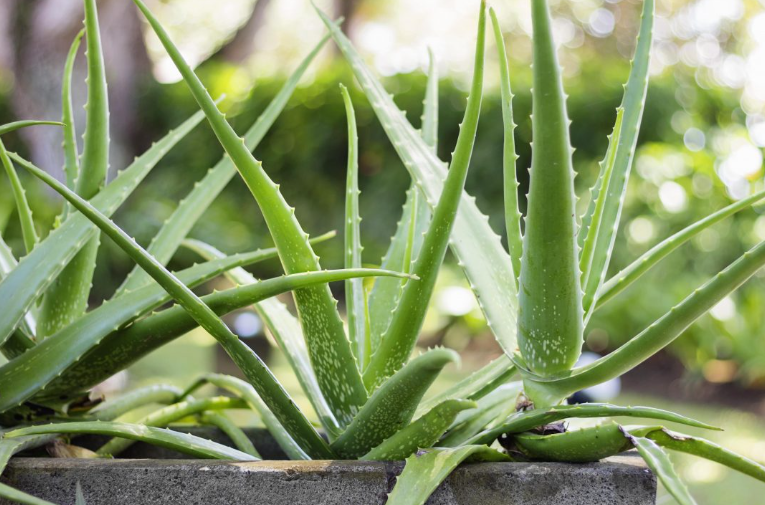
Aloe is one of the most remarkable and well-studied plant genera on Earth, encompassing over 650 recognized species distributed across Africa, the Arabian Peninsula, Madagascar, and the islands of the Indian Ocean. The genus belongs to the family Asphodelaceae and ranges from tiny, ground-hugging rosettes just a few centimetres wide to towering trees that can reach 18 metres in height.
South Africa alone is home to more than 130 native aloe species, making it one of the most important centers of aloe diversity anywhere in the world. Their extraordinary range of sizes, forms, leaf colorations, and ecological adaptations has made aloes among the most collected and cultivated succulent groups globally.
Aloes are defined by their rosettes of thick, fleshy leaves that store water as a gel or mucilage — a key adaptation to the arid and semi-arid habitats where most species originate. This water-storage capacity allows aloes to survive prolonged droughts, shallow soils, and the intense sun of rocky hillsides, coastal cliffs, and open savannah.
The gel contained in the leaves of certain species, most notably Aloe vera, has been documented to contain over 75 active compounds, including vitamins, minerals, enzymes, amino acids, and anti-inflammatory polysaccharides. This biochemical richness has driven thousands of years of medicinal and cosmetic use across Africa, Asia, and the Mediterranean world.
The global aloe market reflects the genus’s extraordinary commercial importance. The aloe vera industry alone is valued at approximately USD 600–700 million annually and is projected to grow significantly as demand for natural skincare, health supplements, and functional foods increases worldwide.
Aloe is now cultivated commercially on an industrial scale across countries including Mexico, the Dominican Republic, India, South Africa, and Australia. Beyond Aloe vera, dozens of other species are cultivated for ornamental horticulture, traditional medicine, and increasingly for ecological restoration projects in fire-prone and drought-affected landscapes.
Ecologically, aloes play an irreplaceable role in the habitats where they grow. Their tubular, nectar-rich flowers are primary food sources for sunbirds, hummingbirds, bee-eaters, and numerous bee and butterfly species, especially during the lean winter months when few other plants are flowering.
Several aloe species are keystone plants in their local ecosystems, supporting food webs that extend far beyond the plant itself. Unfortunately, approximately 40% of aloe species are considered threatened in their native habitats due to illegal collection, habitat loss, and overgrazing — making responsible cultivation and sourcing essential for gardeners and collectors worldwide.
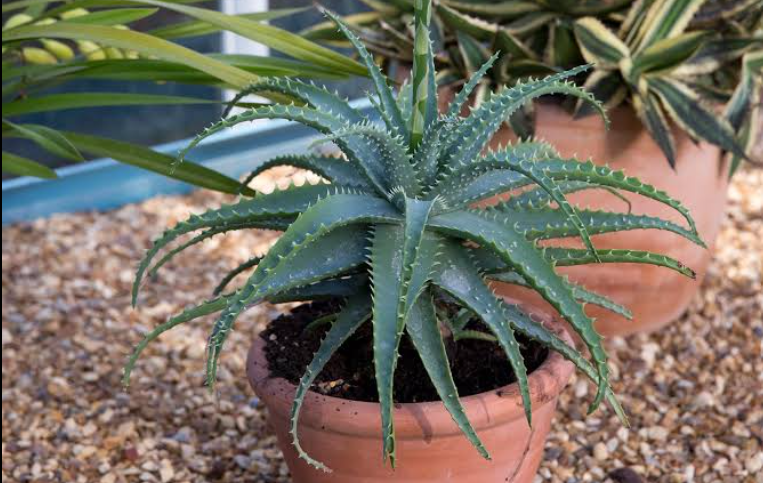
Also Read: Poisonous Aloe vera Species
1. Aloe Vera (Aloe barbadensis miller)
Aloe vera is the most commercially significant and widely recognized aloe in the world, cultivated on an estimated 100,000 hectares globally and generating a multi-billion-dollar industry in skincare, health beverages, and wound care. It produces rosettes of thick, upright, grey-green leaves edged with small pale teeth, and its clear inner gel has been shown in clinical studies to accelerate wound healing, reduce inflammation, and soothe sunburn.
Native to the Arabian Peninsula, it has been cultivated and traded for over 6,000 years, appearing in Egyptian, Greek, Roman, and Chinese medical texts. It is among the easiest aloes to grow, thriving in bright light and fast-draining soil with minimal watering.
2. Cape Aloe (Aloe ferox)
Aloe ferox, the Cape aloe or bitter aloe, is a tall, solitary-stemmed species native to the arid interior and coastal regions of the Western and Eastern Cape provinces of South Africa, capable of reaching 3–5 metres in height. It is one of the most commercially harvested aloes after Aloe vera — its bitter latex is extracted for use in laxatives, tonics, and herbal remedies, and its gel is increasingly used in the cosmetic industry.
In winter it produces spectacular multi-branched candelabra flower spikes of orange-red blooms that are among the most important nectar sources for Cape sugarbirds and sunbirds. The leaves are armed with hard, reddish-brown teeth on both margins and surfaces.
3. Mountain Aloe (Aloe marlothii)
Aloe marlothii is a large, single-stemmed aloe from the bushveld and rocky hillsides of South Africa, Zimbabwe, and Mozambique, eventually reaching 4–6 metres in height and bearing a dense rosette of broad, bluish-grey leaves armed with formidable reddish-brown spines on all surfaces — a feature shared by few other aloes.
In midwinter it produces up to 30 near-horizontal branched spikes of orange or yellow flowers simultaneously, creating one of the most dramatic floral displays of any aloe and providing an outstanding winter nectar source. It is a magnificent specimen plant for large gardens in warm, frost-light climates and is widely planted in botanical gardens worldwide.
4. Torch Aloe (Aloe arborescens)
Aloe arborescens, the torch aloe or candelabra aloe, is among the most widely cultivated aloes in the world outside of Aloe vera, grown extensively in Mediterranean Europe, Australia, California, and southern Africa. It grows as a multi-stemmed, sprawling shrub reaching up to 3 metres, with rosettes of long, grey-green, toothed leaves at the tips of each branching stem.
Its brilliant orange-red, torch-like flower spikes blaze through winter and early spring, providing critical nectar for birds and insects. Japanese studies have also investigated Aloe arborescens for potential anti-cancer properties, contributing to its longstanding popularity as a medicinal aloe in Japan alongside Aloe vera.
5. Fan Aloe (Aloe plicatilis)
Aloe plicatilis is a uniquely structured South African aloe from the mountain fynbos of the Western Cape, where it grows as a multi-branched shrub or small tree up to 3–5 metres tall. Instead of the typical radial rosette, its smooth, strap-like, blue-grey leaves are arranged in two opposite, symmetrical ranks that fan out on either side of the branch tip — an arrangement found in no other aloe species.
Tubular red flowers appear in winter on upright, unbranched spikes. Its distinctive architectural silhouette has made it one of the most prized aloes in cultivation, and it performs well in containers as a long-term specimen plant in temperate climates.
6. Tree Aloe (Aloe barberae)
Aloe barberae (syn. Aloe bainesii) holds the distinction of being the world’s largest aloe species, capable of reaching 18 metres in height with a massive, gnarled trunk and a broad, heavily branched canopy. Native to subtropical coastal bush and forest margins in KwaZulu-Natal and the Eastern Cape of South Africa, it is an imposing specimen tree that becomes increasingly magnificent with age.
Clusters of pale pink to coral-pink tubular flowers are borne on branched spikes in winter. In warm-climate gardens worldwide it is valued as a living sculpture, and specimens over 50 years old are particularly treasured. It is considered vulnerable in parts of its natural range.
7. Spiral Aloe (Aloe polyphylla)
Aloe polyphylla is arguably the most visually spectacular aloe in the world, producing a perfectly symmetrical rosette of approximately 75–150 leaves arranged in a precise five-ranked Fibonacci spiral — clockwise in some individuals, counterclockwise in others.
It is the national plant of Lesotho and is strictly protected by law, making it illegal to collect or export from its native high-altitude mountain grasslands. It requires very specific growing conditions — cold winters, cool humid summers, and perfect drainage — and is notoriously challenging to cultivate outside its native range. When successfully grown, it is one of the most celebrated plants in any succulent collection.
Also Read: Types of Succulents
8. Soap Aloe (Aloe maculata)
Aloe maculata, also called the soap aloe or zebra aloe, is a freely suckering, low-growing South African species producing broad, flat rosettes of dark green leaves generously spotted with white oblong markings and edged with reddish-brown teeth. Its sap produces a soapy lather when rubbed with water, giving rise to its common name, and it has been used for cleansing purposes by indigenous South Africans for generations.
It is one of the most tolerant and adaptable garden aloes, performing well in shade, poor soil, and light frost conditions where more demanding aloes would fail. Multi-branched spikes of orange-red flowers appear reliably in spring.
9. Coral Aloe (Aloe striata)
Aloe striata is a medium-sized, stemless or short-stemmed South African aloe producing a large, elegantly flat rosette of broad, smooth-edged, blue-grey to pale green leaves — remarkable for their near-total lack of marginal teeth, a rarity in the genus. The leaf margins are edged with a thin, pinkish-coral border, and faint longitudinal stripes run along the leaf surface.
Dense, branched spikes of coral to salmon-orange tubular flowers appear from late winter into spring. It is considered one of the most ornamentally handsome aloes for garden use, performing well in rocky slopes, containers, and Mediterranean-style gardens in many parts of the world.
10. Lace Aloe (Aloe aristata)
Aloe aristata is a compact, clump-forming South African aloe producing dark green rosettes densely studded with white tubercles and edged with soft white teeth and fine white bristles, giving the leaves a delicately lacy appearance. It is one of the smallest and most cold-tolerant of the commonly grown aloes, withstanding frosts that would damage larger species, and is widely grown as a houseplant and rock garden plant across temperate Europe.
Orange-red tubular flowers appear on slender, unbranched stems in autumn. It offsets freely to form dense clusters and is one of the most beginner-friendly aloes available for indoor or sheltered outdoor growing.
11. Partridge-Breasted Aloe (Aloe variegata)
Aloe variegata, the tiger aloe or partridge-breasted aloe, is a small South African aloe producing leaves arranged in three vertical rows, each dark green leaf boldly banded with irregular horizontal bars of white that recall the breast markings of a partridge. It rarely exceeds 30 cm in height and produces slender, unbranched spikes of coral to salmon-pink tubular flowers in winter.
It was one of the first aloes to become a popular houseplant in Europe, prized since at least the 18th century for its decorative foliage and compact size. It is now considered near threatened in its native range due to collection pressure and habitat degradation.
12. Crocodile Aloe (Aloe brevifolia)
Aloe brevifolia, the crocodile plant or short-leaved aloe, is a small, clumping South African species from the Western Cape, producing compact rosettes of stubby, glaucous blue-grey leaves with pronounced white teeth along the margins and keels that give the leaves a heavily armored, prehistoric appearance reminiscent of crocodile scales.
It stays under 15 cm in height and spreads slowly by offsetting to form low, spreading colonies. Orange-red tubular flowers appear on slender stems in spring and summer. It is among the most cold-tolerant compact aloes and performs well in containers, rock gardens, and sheltered outdoor beds in temperate climates.
13. Red Aloe (Aloe cameronii)
Aloe cameronii is a southern African species native to Zimbabwe and Malawi with the remarkable ability to shift its leaf color from green to vivid coppery-red, orange, or burnished bronze during periods of drought, heat, and full sun exposure. This color response is driven by the production of protective pigments under stress and makes it one of the most dramatic color-transforming succulents in cultivation. Branched spikes of coral-red tubular flowers appear in winter.
It grows to about 60 cm in height and produces offsets to form multi-stemmed clumps over time. It is highly sought after by designers and collectors for the warmth and drama of its coloring.
Also Read: Plants That Grow Easily From Cuttings
14. Dune Aloe (Aloe thraskii)
Aloe thraskii is a striking, single-stemmed South African aloe native to subtropical coastal dunes and dense coastal bush in KwaZulu-Natal, where it can reach 3–4 metres in height. Its long, deeply channelled, dark green leaves recurve gracefully downward at their tips, creating a distinctive weeping silhouette, while the dried remains of old leaves cling to the lower stem to form a characteristic layered skirt.
Tall, multi-branched spikes of rich yellow to golden-orange tubular flowers appear in winter and are avidly visited by sunbirds. It is well-suited to large, frost-light coastal gardens and is a prized specimen in botanical collections.
15. Prickly Aloe (Aloe aculeata)
Aloe aculeata, the prickly aloe or red hot poker aloe, is a large South African and Zimbabwean aloe distinctive for the dense covering of hard prickles on both the upper and lower surfaces of its broad, grey-green to yellowish leaves — a feature found in very few other aloes.
The multi-branched flower spikes carry densely packed yellow, orange, or red tubular blooms that light up the winter garden and attract birds and insects in large numbers. It grows to about 1–1.5 metres as a rosette plant before eventually developing a short stem. Its exceptional textural impact makes it a bold statement plant for warm, dry gardens.
16. Rock Aloe (Aloe petricola)
Aloe petricola, the rock aloe, is a South African species native to sheer cliff faces and rocky ridges in Limpopo and Mpumalanga, producing large rosettes of broad, grayish-green leaves edged with pale teeth. Its most celebrated feature is its bicolor flower spike — densely packed tubular blooms that open red and age to yellow or cream, producing a striking two-toned banding effect on each spike.
The combination of contrasting red and yellow flowers on the same inflorescence has made it a highly desirable garden plant in warm climates and a popular parent in aloe hybridization programs. It is well-suited to rocky slopes and raised beds.
17. Van Balen’s Aloe (Aloe vanbalenii)
Aloe vanbalenii is a visually distinctive South African aloe from KwaZulu-Natal, noted for its long, gracefully twisting and curling leaves that take on spectacular golden-orange to burnished-red tones during the dry winter season, when drought stress triggers the accumulation of warm protective pigments.
The plant grows as a stemless or very short-stemmed rosette and produces offsets to form spreading clumps. Dense, branched spikes of orange tubular flowers are produced in winter. In gardens it is valued both for its unusual leaf movement and for its warm seasonal coloration, which is among the most vivid of any aloe during the cooler, drier months.
18. Grass Aloe (Aloe linearifolia)
Aloe linearifolia is a slender, elegant South African aloe from the Limpopo province, producing narrow, grass-like leaves with fine white teeth, giving it a softer and more delicate appearance than most aloes. It grows to about 30–50 cm in height and produces simple or lightly branched spikes of orange to red tubular flowers in winter and spring.
Its narrow, arching foliage makes it useful in garden settings where a fine-textured succulent accent is needed among bolder, broader plants. It is a relatively uncommon species in cultivation but is gaining recognition among aloe enthusiasts for its graceful, restrained form and reliable winter flowering.
19. Bottlebrush Aloe (Aloe spicata)
Aloe spicata, the bottlebrush aloe, is a large, multi-stemmed South African and Swazi aloe that takes its common name from its distinctive flower spike — a dense, unbranched, cylindrical column of closely packed orange-red or yellowish tubular blooms that closely resembles the brushes used to clean bottles.
It grows to about 1–2 metres and produces offsets freely to develop into broad, multi-stemmed clumps. The broad, bluish-green leaves bear reddish-brown marginal teeth. It is a tough, adaptable garden plant that performs well in sunny, dry positions and is planted widely in South African municipal landscaping for its reliable winter color and structural presence.
20. Aloe Vera Yellow (Aloe vera var. chinensis)
This Chinese variant of Aloe vera is distinguished from the standard form by its narrower, more upright leaves and the presence of whitish spots on the leaf surfaces, particularly when young. It is widely grown in East Asia as a medicinal and ornamental plant and has naturalized across parts of Southeast Asia, China, and the Pacific.
While its gel composition is broadly similar to standard Aloe vera, it tends to produce a somewhat more compact plant with more prolific offsetting. It is considered by some botanists as a separate species or subspecies, though the taxonomy remains debated, and it is frequently sold in Asian markets simply as aloe vera.
21. African Aloe (Aloe africana)
Aloe africana, the uitenhage aloe, is a tall, single-stemmed South African aloe from the Eastern Cape, closely related to Aloe ferox but distinguished by its longer, more slender leaves that recurve dramatically downward and by its flower spikes — narrow, dense, and typically unbranched or lightly branched with rich golden-yellow to orange tubular blooms.
It can reach 3–4 metres in height and is an impressive specimen in warm-climate gardens. In its native habitat it grows in dense stands on rocky hillsides and coastal scrub. It is a protected species in South Africa, and several natural hybrids between it and neighbouring aloe species occur where their ranges overlap.
22. Sunset Aloe (Aloe dorotheae)
Aloe dorotheae, the sunset aloe, is a Tanzanian species that is one of the most vividly colored of all aloes in strong sunlight, shifting from apple green in shade to a brilliant spectrum of orange, red, and pink in full sun — earning its evocative common name. It produces compact rosettes of strap-like, finely toothed leaves and branched flower spikes of orange-red tubular blooms.
It is considered critically endangered in its native habitat in Tanzania, where only small, fragmented wild populations remain — making its cultivation in gardens worldwide an important conservation consideration. It offsets moderately and performs well in containers or sunny border positions.
Also Read: Front Yard Succulent Landscaping Ideas
23. Soap Aloe (Aloe saponaria)
Aloe saponaria is a different species from Aloe maculata but shares the common name soap aloe, a source of frequent confusion in the trade. It is a compact, freely suckering South African and Zimbabwean aloe with broad, flat, dark green leaves bearing prominent whitish or pale green oblong spots and reddish-brown marginal teeth.
Branched flower spikes carry salmon to orange tubular blooms in spring. Like Aloe maculata it tolerates shade, poor soils, and moderate frost, making it one of the most forgiving aloes for difficult garden positions. Its ability to form rapidly spreading colonies makes it effective as a groundcover on dry slopes and banks.
24. Rugged Aloe (Aloe rugosifolia)
Aloe rugosifolia is a lesser-known but highly distinctive Kenyan aloe whose leaves bear a remarkable surface texture of deep longitudinal ridges and furrows that give the foliage a rugged, corrugated quality quite different from the smooth-leaved appearance of most aloes. It forms compact rosettes and produces orange to red tubular flowers on branched spikes.
It is primarily a collector’s plant, appreciated by enthusiasts who seek out aloes with unusual foliage textures and forms. Being native to Kenya’s drier highlands, it is moderately drought-tolerant and best grown in containers in temperate climates, brought under cover during cold winter months.
25. Coral Aloe Hybrid (Aloe× spinosissima)
Aloe × spinosissima is a naturally occurring or cultivated hybrid between Aloe arborescens and Aloe humilis, producing compact, offsetting clumps of narrow, upright leaves densely armed with white teeth — more heavily spined than either parent. It grows to about 30–60 cm and produces branched spikes of orange-red flowers in winter and spring.
It is appreciated in cultivation for its cold tolerance, compact form, and reliable flowering, combining the vigor of A. arborescens with the smaller size and heavy armature of A. humilis. It performs well in containers and rock gardens and is particularly useful in temperate climates where a smaller but cold-tolerant aloe is needed.
26. Climbing Aloe (Aloe ciliaris)
Aloe ciliaris, the climbing aloe, is a remarkably different aloe from the typical rosette-forming species — it grows as a fast-climbing, scrambling plant with slender, rapidly elongating stems that can reach 3–5 metres, threading through shrubs and trees for support. Its small, soft-edged leaves are armed only with minute, hair-like cilia along the margins.
Small, orange-red tubular flowers appear in large quantities from autumn through spring, making it one of the longest-blooming aloes in cultivation. It is the fastest-growing aloe species known, capable of extending several centimetres per week under ideal conditions. It is widely used to clothe fences and trellises in warm gardens.
27. Hedgehog Aloe (Aloe humilis)
Aloe humilis, the hedgehog aloe or spider aloe, is a small, clumping South African aloe from the Western and Eastern Cape, producing compact rosettes of narrow, incurved, blue-grey leaves densely covered with white tubercles and edged with white teeth. It rarely grows taller than 15–20 cm, forming spreading low mounds of closely packed rosettes over time.
Slender, unbranched or lightly branched spikes of scarlet to orange tubular flowers appear in spring. Despite its diminutive size, it is a tough, adaptable plant that tolerates cold, poor soils, and relatively low light. It is a popular choice for rock gardens and small container displays in temperate gardens.
28. Aloe of the Drakensberg (Aloe drakensburgensis)
Aloe drakensburgensis is a cold-hardy South African aloe native to the high Drakensberg mountain range, where it experiences harsh winters with frequent frost and snow — making it among the most frost-tolerant aloe species known. It produces medium-sized rosettes of grey-green leaves with reddish-brown teeth and branched spikes of orange-red flowers in late winter and spring.
Its ability to tolerate temperatures well below 0°C — reportedly surviving down to approximately -10°C with good drainage — makes it an invaluable species for gardeners in temperate climates who wish to grow aloes outdoors year-round. It is increasingly sought after by cold-climate succulent enthusiasts.
Also Read: Succulents With Long Stems
29. Aloe of the Sudan (Aloe sinkatana)
Aloe sinkatana is a compact, clumping aloe native to the hills of Sudan and Eritrea, producing dense rosettes of narrow, grey-green leaves with small, white marginal teeth. It is adapted to the rocky, arid terrain of the Horn of Africa and is among the more drought-tolerant of the smaller aloe species. It produces branched spikes of coral to orange-red tubular flowers.
It is not widely known in general horticulture but is cultivated by specialist collectors interested in aloes from the northeastern African region, where the diversity of aloe species is often underappreciated compared to the better-documented southern African assemblages.
30. Aloe of Socotra (Aloe perryi)
Aloe perryi, Perry’s aloe or the Socotran aloe, is native exclusively to the island of Socotra in the Arabian Sea — one of the world’s most biodiverse and botanically unique islands, often called the “Galápagos of the Indian Ocean.” It produces rosettes of blue-grey leaves and dense spikes of red and yellow bicolor tubular flowers.
The dried latex extracted from its leaves has historically been traded across the Arabian Peninsula and Indian Ocean region as a medicinal bitter aloe. It is listed as vulnerable due to the limited extent of its range and the increasing impact of development and climate change on Socotra’s fragile endemic flora.
31. Aloe of Ethiopia (Aloe elegans)
Aloe elegans is a tall, elegant Ethiopian aloe from the Tigray region, producing single stems topped by large, spreading rosettes of grey-green leaves with pale teeth. Dense, branched flower spikes of orange-red tubular blooms appear in winter and spring and are an important resource for local bird species.
It is adapted to hot, rocky, semi-arid conditions and grows in areas receiving very low annual rainfall, making it highly drought-tolerant in cultivation. In collections outside its native range it is valued for its height, elegant proportions, and reliable winter flowering. Ethiopia has a remarkably diverse aloe flora, with over 50 species recorded within its borders.
32. Short-Leaved Aloe (Aloe breviscapa)
Aloe breviscapa is a compact, stemless aloe from the rocky terrain of Somalia and adjacent East African countries, producing dense rosettes of broad, glaucous leaves with pale marginal teeth. Its short, densely flowered spikes of orange-red blooms sit close to the rosette center, giving it a particularly neat and self-contained appearance compared to aloes with tall, reaching flower stalks.
It is adapted to very arid conditions and requires excellent drainage and minimal watering in cultivation. As a collector’s plant it is appreciated for its compact proportions and the unusual way the flower spikes nestle within the rosette rather than rising well above it.
33. Barberton Aloe (Aloe zebrina)
Aloe zebrina, the zebra aloe, is a South African and Zambian aloe producing spreading, often flat rosettes of lance-shaped, greyish-green leaves boldly marked with irregular, horizontally banded white blotches arranged in a pattern that suggested the common name zebra. It grows to about 30–50 cm as a rosette and produces simple or branched spikes of orange to orange-red tubular flowers in winter.
It is a variable species across its range, and several different forms are in cultivation. It is well-suited to dry, sunny gardens in warm climates and performs reliably in containers with minimal care requirements beyond good drainage and bright light.
34. Ferocious Aloe (Aloe ferox × arborescens hybrid)
Natural hybrids between Aloe ferox and Aloe arborescens occur where these species grow in proximity in South Africa, producing plants that combine the large rosette size and impressive spination of A. ferox with the multi-stemmed, shrubby habit of A. arborescens. These hybrids are intermediate in almost all characteristics and are vigorous, fast-growing garden plants.
Named garden selections of this cross are grown for their dramatic winter flower display and robust, low-maintenance character. They are popular choices for large-scale municipal landscaping in South Africa and increasingly in Mediterranean countries where bold, drought-tolerant plants are in demand.
35. Aloe of Namibia (Aloe namibensis)
Aloe namibensis is a small, compact aloe endemic to the Namib Desert of Namibia — one of the driest environments on Earth, where annual rainfall can be as low as 15–25 mm. It produces tight rosettes of narrow, upright leaves with fine white teeth and small, simple or lightly branched spikes of orange to yellow tubular flowers.
Its adaptation to extreme aridity makes it one of the most drought-tolerant species in the genus, requiring virtually no supplemental irrigation once established in a dry climate garden. It is a specialist collector’s plant primarily grown by enthusiasts with an interest in extreme desert adaptation and southern African endemics.
Also Read: Succulents With Yellow Flowers
36. Aloe of the Karoo (Aloe khamiesensis)
Aloe khamiesensis is a compact, clustering South African aloe from the Namakwaland and Northern Cape regions, well-adapted to the semi-arid, winter-rainfall climate of the Karoo and Namaqualand — a region famous for its spectacular spring wildflower displays.
It produces rosettes of grey-green leaves with reddish-brown teeth and branched spikes of orange-red tubular flowers in late winter and spring, coinciding with the broader floral spectacle of the Namaqualand season. It is adapted to sandy, nutrient-poor soils and is a reliable garden plant in dry climates. It is among the aloes most closely associated with the extraordinary botanical richness of the Cape Floristic Region.
37. Flat-Leaved Aloe (Aloe commixta)
Aloe commixta is a compact, clumping South African aloe from the Cape Peninsula, producing flat, spreading rosettes of broad, pale green to bluish leaves edged with white teeth. It is a naturally variable species and may hybridize freely with other aloes in its range. Dense spikes of orange to orange-red tubular flowers appear in late winter and spring.
It is well-adapted to the Mediterranean-type climate of the Western Cape — winter wet and summer dry — and performs well in cultivation in similar climates worldwide. It is a reliable, low-maintenance garden plant that spreads by offsetting to form broad, ground-covering colonies over time.
38. Aloe of the Highveld (Aloe transvaalensis)
Aloe transvaalensis is a medium-sized, clustering South African aloe from the Highveld grasslands of Limpopo and Mpumalanga, producing rosettes of upright, lance-shaped, dark green leaves with pale teeth and producing branched spikes of orange-red flowers in late winter.
It is adapted to the summer-rainfall climate and relatively cold winters of the Highveld, giving it somewhat more cold tolerance than many South African aloes. It is not commonly available in general horticulture outside South Africa, but it is a robust and reliable garden plant within its native climate zone and is sometimes used in highway and urban greenery plantings where low-maintenance, drought-tolerant plants are needed.
39. Aloe of Mozambique (Aloe mossurilensis)
Aloe mossurilensis is a coastal Mozambican aloe producing compact rosettes of recurving, grey-green leaves with pale marginal teeth. It is adapted to hot, coastal conditions with sandy, well-drained soils and is tolerant of salt spray — qualities that make it potentially useful as a coastal garden plant in tropical and subtropical regions.
Branched spikes of orange to red tubular flowers appear in winter. It is a relatively uncommon species in cultivation outside specialist collections, but growing interest in East African aloe diversity has increased its visibility in the horticultural trade. Mozambique is home to a number of aloe species that are less well known than their southern African counterparts.
40. Aloe of Madagascar (Aloe capitata)
Aloe capitata is a tall, distinctive Madagascan aloe producing a single stem topped by a rosette of long, narrow, spine-edged leaves, from which it sends up a dramatic, unbranched flower spike bearing a dense, globe-like head of tightly packed yellow or red tubular blooms — quite unlike the more typical branched flower spikes of most mainland African aloes.
This capitate (head-like) flower arrangement is shared by several Madagascan aloes and represents a remarkable convergent adaptation. Madagascar is home to approximately 11 endemic aloe species, all adapted to the island’s diverse range of habitats, from spiny desert in the south to humid plateaux in the center.
41. Yellow-Flowered Aloe (Aloe lutescens)
Aloe lutescens is a South African aloe notable for the clear, bright yellow color of its tubular flowers — a refreshing departure from the orange and red tones that dominate most aloe inflorescences. It is a clumping, medium-sized species from the Limpopo province, producing rosettes of grey-green leaves with pale marginal teeth and sending up branched spikes of yellow blooms in winter.
The warm yellow coloring makes it particularly effective in combination plantings with orange- and red-flowered aloes, where it provides contrast and variety. It is moderately drought-tolerant and performs well in sunny, well-drained positions in warm gardens.
42. Aloe of Kenya (Aloe kedongensis)
Aloe kedongensis is a clumping Kenyan aloe from the Rift Valley region, producing compact rosettes of narrow, upright, dark green leaves with white marginal teeth and forming dense colonies by prolific offsetting. Branched spikes of coral to orange tubular flowers appear in the dry season.
It grows in the rocky, volcanic soils of the Rift Valley floor and is adapted to the seasonally dry conditions of East African savannah. In cultivation it is a vigorous, low-maintenance plant that performs well in tropical and subtropical gardens. Kenya is rich in aloe diversity, with over 50 species found within its borders, many endemic to specific highland or valley habitats.
43. Climbing Tree Aloe (Aloe marlothii × barberae hybrid)
This natural or cultivated hybrid between the tree aloe and mountain aloe combines the large rosette and impressive spination of Aloe marlothii with tendencies toward the arborescent, multi-branching habit of Aloe barberae. The resulting plants are vigorous, large, and visually imposing, making them outstanding specimen plants for large gardens and municipal landscapes in warm climates.
They are valued for the dramatic winter flower display inherited from A. marlothii — multi-branched, near-horizontal spikes of orange flowers — on a plant with a more robust, tree-like structure. As with many large aloe hybrids, they are propagated vegetatively to maintain consistent characteristics.
44. Short-Stemmed Aloe (Aloe suprafoliata)
Aloe suprafoliata, the book aloe, is a visually unusual South African aloe from Swaziland and the adjacent highveld of South Africa. Immature plants produce leaves in two opposite, strongly flattened rows — like the open pages of a book — that only develop into a more typical spiral rosette as the plant matures.
Mature plants eventually develop a short stem and produce branched spikes of red to orange tubular flowers in winter. The distichous juvenile leaf arrangement is highly distinctive and makes young plants immediately recognizable. It is a rewarding species for collectors interested in developmental changes and unusual growth forms in aloes.
45. Aloe of Arabia (Aloe rubroviolacea)
Aloe rubroviolacea, the Arabian aloe, is native to the rocky, mountainous terrain of Yemen and southwestern Saudi Arabia and is among the most cold-tolerant aloes from the Arabian Peninsula. It produces large, solitary or clustering rosettes of broadly lance-shaped, bluish to violet-tinged leaves edged with reddish-brown teeth — the violet coloration intensifying in strong sunlight and cold temperatures.
Branched spikes of deep red tubular flowers appear in late winter and spring. Its attractive leaf coloration and reliable ornamental qualities have made it increasingly popular in collections, and it is one of the species behind several popular ornamental hybrids bred for violet or purple leaf tones.
Also Read: Plants That Grow Well Under Eucalyptus Trees
46. Candelabra Aloe (Aloe thraskii × ferox hybrid)
This hybrid between Aloe thraskii and Aloe ferox, whether natural or cultivated, tends to produce plants intermediate in size and habit between the tall, single-stemmed dune aloe and the impressive, spiny-leaved Cape aloe. These hybrids often display vigorous growth and ornamental qualities that exceed either parent — a phenomenon known as hybrid vigor — and produce large, multi-branched winter flower spikes of orange to red blooms. They are grown primarily as specimen plants in large gardens in warm climates and are popular in botanical garden collections where maximum visual impact from a winter-flowering aloe is desired.
47. Aloe of Malawi (Aloe mawii)
Aloe mawii is a clumping aloe endemic to the rocky hillsides and grasslands of Malawi, producing rosettes of grey-green, upright leaves with pale marginal teeth. It sends up branched spikes of orange to red tubular flowers in winter. It is a relatively uncommon species in international horticulture, partly due to Malawi’s limited participation in the plant export trade historically, but it is a robust and ornamentally attractive plant that deserves wider cultivation. Malawi’s aloe flora includes several species unique to the country’s highlands and rift escarpments, many of which are adapted to the combination of high altitude, summer rainfall, and rocky, freely draining substrates.
48. Aloe of Zimbabwe (Aloe excelsa)
Aloe excelsa is a tall, solitary-stemmed Zimbabwe and South African aloe that reaches 2–4 metres in height, with large rosettes of broad, greyish-green leaves armed with reddish-brown marginal teeth. In winter it produces impressive multi-branched spikes of orange to red-orange tubular flowers. It is adaptable to a wider range of garden soils and conditions than many large aloes and is among the most commonly planted specimen aloes in Zimbabwean gardens and parks. It performs well in subtropical and warm-temperate climates and has been used as a parent in hybridization programs aimed at producing large, impressive garden aloes with reliable winter color.
49. Dwarf Aloe (Aloe descoingsii)
Aloe descoingsii, from the dry southwestern region of Madagascar, holds the distinction of being one of the smallest aloe species in the world — mature plants rarely exceed 3–5 cm in rosette diameter. Despite its tiny size, it produces miniature white or pale green tubular flowers on slender stems disproportionately tall relative to the plant. It is a prized collector’s miniature, particularly popular among enthusiasts who grow their collections on windowsills or in small greenhouse spaces where space is limited. It requires the well-draining, gritty soil, and careful watering typical of Madagascan succulents, which tend to be sensitive to waterlogged conditions.
50. Aloe of Tanzania (Aloe lateritia)
Aloe lateritia is a variable, clumping East African aloe ranging from Tanzania through Kenya and Uganda, producing rosettes of greyish to brownish-green leaves with pale marginal teeth. It is widespread across a range of habitats — from coastal lowlands to high-altitude grasslands — and this ecological flexibility has produced considerable variation in plant size and leaf markings across its range. Branched spikes of orange to brick-red tubular flowers appear in the dry season. It is among the more commonly cultivated East African aloes in tropical and subtropical gardens worldwide and is valued for its adaptability, drought tolerance, and reliable warm-season flowering.
51. White-Flowered Aloe (Aloe whitcombei)
Aloe whitcombei is a rare Omani aloe that produces unusual, creamy-white to pale yellow tubular flowers — a coloring that is striking among aloes, the majority of which flower in shades of orange, red, or yellow. It grows on rocky limestone outcrops in Dhofar, Oman, and is adapted to the monsoon-influenced climate of this coastal mountain region. It is a protected species in Oman and is considered endangered due to its limited range and the pressure of development in its native habitat. In specialist aloe collections outside its native range it is highly sought after for both its rarity and the elegance of its pale flower coloring.
52. Aloe of Cameroon (Aloe buettneri)
Aloe buettneri is a West African aloe ranging from Cameroon and Nigeria through to Ghana and Togo, extending the known aloe range well beyond the more commonly recognized East and southern African concentrations of diversity. It produces rosettes of lance-shaped leaves with pale teeth and branched spikes of orange-red tubular flowers. West African aloes are generally less well represented in international collections and horticultural literature, making A. buettneri a useful reminder of the breadth of the genus’s distribution. It is adapted to the dry savannah woodlands and rocky outcrops of the West African interior.
53. Aloe of the Comoros (Aloe mayottensis)
Aloe mayottensis is endemic to the island of Mayotte in the Comoros archipelago in the Indian Ocean, a relatively small island group between Madagascar and Mozambique that is home to a small but distinct aloe flora shaped by its volcanic geology and moist, tropical climate. It produces medium-sized rosettes with distinctive leaf markings and branched flower spikes of orange tubular blooms. Like many island-endemic aloes, it faces ongoing threats from habitat loss and invasive species, and its restricted range makes it inherently vulnerable to any major disturbance. It is found in specialist botanical collections as part of broader Indian Ocean island biodiversity conservation efforts.
54. Aloe of Ethiopia Highland (Aloe monticola)
Aloe monticola is a tall, solitary-stemmed Ethiopian aloe from highland grasslands and rocky slopes, producing large rosettes of upright, grey-green leaves with reddish-brown teeth and impressive multi-branched spikes of orange to red tubular flowers in the dry season. It grows at elevations of up to 2,500 metres, where nighttime temperatures can be cool — giving it moderate cold tolerance relative to lowland African aloes. Ethiopia’s highland aloe diversity is remarkable, with numerous species adapted to the country’s extraordinarily varied topography, from low-lying Rift Valley floors to the high Simien and Bale mountain plateaux.
55. Blue Aloe (Aloe glauca)
Aloe glauca, the blue aloe, is a striking South African species from the arid mountain ranges of the Western Cape, immediately recognizable for the intense, powdery blue-grey color of its stiff, upright, toothed leaves — among the bluest of any aloe and rivaling the glaucous coloring of the most silver-blue agaves. It grows as a stemless or short-stemmed species, eventually producing a short trunk as it ages. Branched spikes of coral to orange-red tubular flowers appear in late winter and spring. It is a relatively slow grower but an outstanding ornamental plant for dry gardens, raised beds, and containers where its electric blue-grey coloring provides year-round visual impact.
56. Aloe of the Horn of Africa (Aloe gilbertii)
Aloe gilbertii is a compact, clustering aloe from the semi-arid lowlands of Ethiopia and Somalia, producing rosettes of narrow, upright, dark green leaves with pale marginal teeth. It is adapted to the arid, hot conditions of the Horn of Africa and is notably drought-tolerant in cultivation. Branched spikes of orange to red tubular flowers appear in the dry season, providing nectar for local bird species. It is primarily a collector’s plant in international horticulture, valued by enthusiasts with a specific interest in northeastern African aloe diversity, a region whose aloe flora has been less intensively collected and documented than that of southern Africa.
57. Aloe of Angola (Aloe greatheadii var. davyana)
This southern African variety, native to Angola and South Africa, is sometimes distinguished from the main species and produces medium-sized, clumping rosettes of green to brownish-green leaves with pale, oblong spots and reddish-brown marginal teeth. Branched spikes of orange-red to salmon tubular flowers appear in winter. It is an adaptable, robust garden plant and is among the more commonly grown aloes in South African suburban gardens for its ease of cultivation and reliable seasonal flowering. Angola’s aloe flora is incompletely surveyed, and ongoing botanical exploration of the country is expected to reveal additional species and varieties not yet formally described.
58. Aloe of the Kalahari (Aloe asperifolia)
Aloe asperifolia is a Namibian and Angolan aloe adapted to the sandy soils and hot, dry conditions of the Kalahari and adjacent arid zones. It produces spreading rosettes of rough-textured, grey-green leaves with pale teeth and generates branched spikes of orange to red tubular flowers. Its surface texture — coarser and more granular than most aloes — gives it its specific epithet, meaning rough-leaved. It is a drought specialist well-suited to desert and dryland garden designs, performing best in sandy, freely draining substrates with minimal supplemental irrigation. It is primarily collected by specialist enthusiasts interested in aloes from Namibia and southwestern Africa.
Also Read: Types of Cactus
59. Aloe of the Seychelles (Aloe aldabrensis)
Aloe aldabrensis is native to the coral atoll of Aldabra in the Seychelles — a UNESCO World Heritage Site and one of the world’s largest raised coral atolls, home to a remarkable assemblage of endemic species. This aloe is adapted to shallow, alkaline coral soils, salt exposure, and the intense heat and humidity of the low-lying equatorial atoll. It produces branched spikes of orange to red tubular flowers and is closely related to other Indian Ocean island aloes. As a protected endemic of one of the world’s most ecologically sensitive and carefully managed island ecosystems, it is not available in general horticulture and is known primarily from scientific collections and in situ conservation programs.
60. Ghost Aloe (Aloe somaliensis)
Aloe somaliensis, the Somali aloe, is a compact, offsetting aloe from the dry rocky terrain of Somalia and adjacent regions, producing neat rosettes of upright, blue-grey leaves adorned with pale spots and bold white marginal teeth that give the plant a ghostly, silver-toned appearance in strong sunlight. It produces simple or lightly branched spikes of orange-red tubular flowers in the dry season. It is well-adapted to extreme heat and drought and requires very little water in cultivation. Among collectors it is appreciated for the silvery, ethereal quality of its foliage and for representing a part of the African continent whose remarkable botanical diversity remains underrepresented in international plant collections.