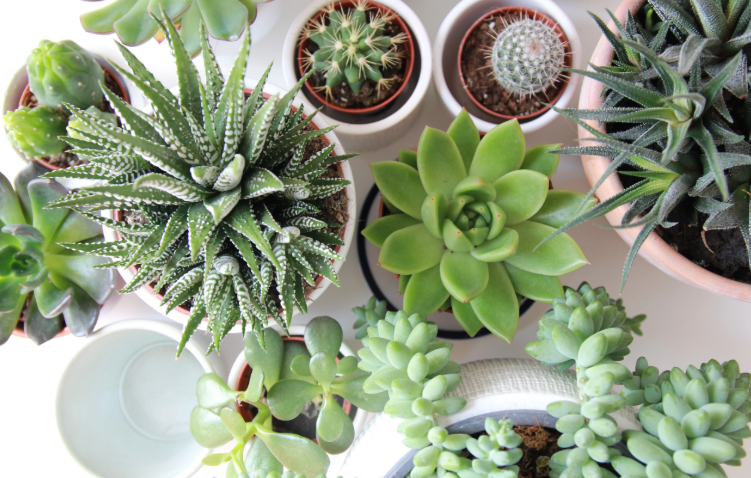
Succulents are among the most diverse and resilient plant groups on Earth, encompassing over 60 different plant families and more than 10,000 known species. They are defined by their ability to store water in thickened leaves, stems, or roots — an adaptation that allows them to thrive in arid, semi-arid, and even rocky environments across every continent except Antarctica. Their extraordinary variety of shapes, colors, and sizes has made them among the most popular ornamental plants in the world, with the global succulent market valued at several billion dollars annually and growing steadily each year.
The majority of succulents originate from regions with pronounced dry seasons, including the deserts of southern Africa, the highlands of Mexico and Central America, and the rocky coastlines of the Mediterranean. South Africa alone is home to an estimated 40% of all known succulent species, making it one of the world’s most important centers of succulent diversity. While most people associate succulents with hot, dry climates, many species are surprisingly cold-hardy and can survive frost and freezing temperatures, broadening their appeal to gardeners in temperate regions.
Succulents serve important ecological roles in their native habitats, providing food and shelter for insects, birds, and small mammals. In cultivation, they are prized for their low water requirements — most established succulents need watering only once every one to two weeks, and some can go months without irrigation. Studies show that succulent gardens can reduce residential water use by up to 50–75% compared to traditional lawns, making them an increasingly popular choice in drought-prone areas and among eco-conscious gardeners.
Interest in succulents has exploded in recent decades, driven by social media, urban gardening trends, and the broader houseplant boom. Searches for succulent care tips consistently rank among the top horticultural queries online, and they feature prominently in interior design, wedding décor, and retail gift markets. Whether grown in outdoor rock gardens, indoor windowsills, terrariums, or hanging planters, succulents offer gardeners at every level a rewarding combination of striking visual appeal, botanical curiosity, and remarkably forgiving cultivation requirements.
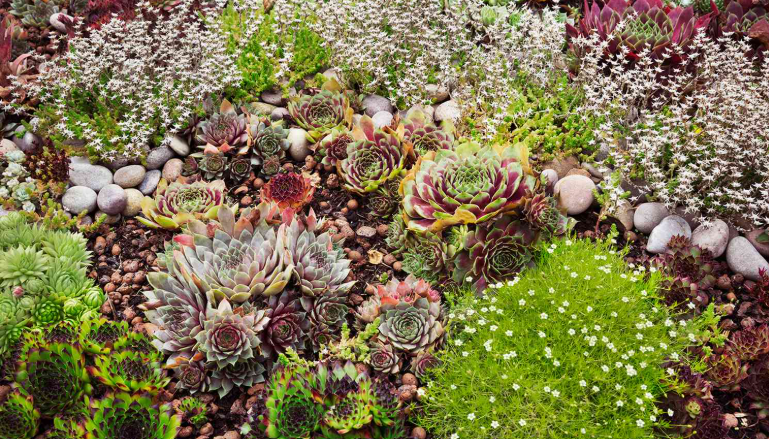
Also Read: Succulents With Spikes
1. Aloe Vera (Aloe barbadensis miller)
Perhaps the most widely recognized succulent in the world, Aloe vera produces thick, fleshy leaves edged with small teeth and filled with a clear gel long used in skincare and medicine. It thrives in bright light and well-draining soil, tolerating drought with ease. The plant grows in rosette form and can reach up to 60–90 cm in height, occasionally producing tall spikes of tubular yellow or orange flowers. It is native to the Arabian Peninsula but has been cultivated globally for thousands of years.
2. Echeveria (Echeveria spp.)
Echeverias are beloved for their tight, symmetrical rosettes that come in shades ranging from silvery blue and soft green to vivid purple and coral pink. Native to the semi-arid regions of Mexico and Central America, they are among the most popular succulents for container gardening and wedding arrangements. The rosettes can range from just a few centimetres to over 30 cm across, and they produce delicate, lantern-shaped flowers on arching stems in spring and summer. They prefer bright light and need excellent drainage to prevent rot.
3. Haworthia (Haworthia spp.)
Haworthias are compact, low-growing succulents native to South Africa, known for their stiff, pointed leaves often marked with translucent windows or white tubercles. They are one of the few succulents that thrive in lower light conditions, making them ideal for indoor settings and offices. Most species remain under 20 cm tall, forming neat rosettes or clumping clusters. Their subtle, intricate patterning has earned them a devoted following among collectors, and they are among the easiest succulents to propagate from offsets.
4. Jade Plant (Crassula ovata)
The jade plant is a classic houseplant succulent prized for its thick, oval, deep-green leaves and woody, tree-like stems that develop character over time. Native to South Africa and Mozambique, it can live for decades indoors and may eventually grow into a small shrub reaching 1–2 metres. In some cultures it is considered a symbol of good luck and prosperity. Given bright light and minimal watering, jade plants are remarkably low-maintenance and can produce clusters of small white or pink star-shaped flowers when mature.
5. Sedum (Sedum spp.)
Sedums — also called stonecrops — represent one of the largest succulent genera, with several hundred species ranging from tiny creeping groundcovers to upright clumping perennials. They are incredibly cold-hardy compared to most succulents, with some species tolerating temperatures well below freezing, making them popular for rock gardens and green roofs in temperate climates. Flowers are typically star-shaped and arrive in dense, flat-topped clusters in shades of yellow, pink, red, or white. Sedums are highly attractive to pollinators, particularly butterflies and bees.
Also Read: Succulents With Pink Flowers
6. Agave (Agave spp.)
Agaves are dramatic, architectural succulents native to the hot, dry regions of Mexico and the American Southwest, forming large rosettes of stiff, pointed leaves that are often edged with teeth or tipped with sharp spines. They are monocarpic, meaning each individual rosette blooms only once — producing a towering flower spike that can reach 6–9 metres — before dying, though they leave behind offsets. Some species take decades to bloom, earning the common name “century plant.” Agaves are extremely drought-tolerant and play important roles in their native ecosystems.
7. Sempervivum (Sempervivum spp.)
Commonly known as hens and chicks, sempervivums are hardy rosette-forming succulents native to the mountains of Europe and Asia, famous for their ability to survive frost and snow with ease. Each main rosette produces numerous smaller offsets around its base, creating dense, spreading mats over time. The rosettes come in shades of green, red, burgundy, silver, and purple, often intensifying in color under stress or cold. They are monocarpic like agaves, with the flowering rosette dying after bloom, but the surrounding chicks quickly fill the space.
8. Gasteria (Gasteria spp.)
Gasterias are slow-growing South African succulents closely related to Aloe, distinguished by their tongue-like, often mottled or warty leaves that are arranged in two opposite rows rather than a true rosette. Their name comes from the stomach-shaped base of their small, tubular flowers, which are typically red or orange with green tips. They are exceptionally tolerant of shade, making them useful in spots that would be too dim for most succulents. They grow well in containers and are rarely troubled by pests.
9. Lithops (Lithops spp.)
Known as living stones, lithops are among the most extraordinary plants in the world — small, stemless succulents that have evolved to resemble pebbles and stones so closely that they are nearly invisible among the gravel of their South African and Namibian desert habitats. Each plant consists of just two swollen leaves fused at the base, with a fissure across the top from which a daisy-like flower emerges in autumn. They require very little water and are highly sensitive to overwatering, which is the most common cause of their failure in cultivation.
10. Aeonium (Aeonium spp.)
Aeoniums are striking succulents native to the Canary Islands, Madeira, and North Africa, producing large, flat rosettes on branching stems that can give them the appearance of exotic bouquets on stalks. Unlike most succulents, they are winter growers that go dormant in summer heat, curling their leaves inward to conserve moisture. Rosette colors range from bright lime green to near-black burgundy, and they produce conical clusters of small yellow, pink, or white flowers. The black-leafed variety Aeonium arboreum ‘Zwartkop’ is especially popular in ornamental gardens.
11. Kalanchoe (Kalanchoe spp.)
Kalanchoes are cheerful, easy-care succulents popular as flowering houseplants, native to Madagascar and tropical Africa. The most widely sold variety, Kalanchoe blossfeldiana, produces long-lasting clusters of small, brightly colored flowers in red, orange, yellow, or pink and is commonly given as a gift. Many species have distinctive scalloped leaf margins, and some — like the mother of thousands (K. daigremontiana) — produce tiny plantlets along their leaf edges. They prefer bright, indirect light and moderate watering and generally bloom most abundantly in cooler seasons.
Also Read: Succulents With Long Stems
12. Crassula (Crassula spp.)
The Crassula genus is remarkably diverse, ranging from the familiar jade plant to tiny, stacked miniature species that look like geometric sculptures. Native primarily to South Africa, they produce leaves in opposite pairs along their stems, which in many species creates a striking stacked or pagoda-like effect. Crassula perforata, known as the string of buttons, is a popular example with triangular leaves spiraling around the stem. Most crassulas prefer bright light and gritty, fast-draining soil, and they are among the most reliable succulents for indoor growing.
13. Euphorbia (Euphorbia spp.)
The Euphorbia genus is enormous — with over 2,000 species — and includes numerous succulent forms that superficially resemble cacti, complete with spines and columnar or globular shapes. They differ fundamentally in their caustic white latex sap, which can cause severe skin and eye irritation. Euphorbia tirucalli (pencil cactus) and Euphorbia trigona (African milk tree) are among the most popular succulent euphorbias for cultivation. Native mainly to Africa and Madagascar, they are fast-growing, drought-tolerant, and architecturally bold, though their sap must always be handled with care.
14. Senecio (Senecio spp.)
Senecios are a wide-ranging succulent genus that includes some of the most visually unique trailing and cascading plants in cultivation. String of pearls (Senecio rowleyanus) produces long strands of perfectly spherical green beads, while string of bananas (S. radicans) features crescent-shaped leaves. Native mainly to South Africa, these trailing species are at their best in hanging baskets where their unusual foliage can cascade dramatically. They prefer bright light and should be allowed to dry thoroughly between waterings. Their small white flowers carry a pleasant, spicy-sweet fragrance.
15. Portulacaria afra (Elephant Bush)
Often called elephant bush or dwarf jade, Portulacaria afra is a South African succulent shrub with small, round, glossy green leaves on reddish-brown stems. Despite its resemblance to the jade plant, it is from a different family entirely and is considered one of the most important food plants for elephants and other wildlife in the South African bush. It grows more quickly than true jade and is more tolerant of heat. In cultivation it is widely used as a bonsai subject, hedge plant, or outdoor ornamental in warm climates, and a variegated form with cream-edged leaves is especially popular.
16. Aloe Aristata (Lace Aloe)
Aloe aristata is a compact, clump-forming succulent from South Africa, producing dark green rosettes studded with white bumps and soft white teeth along the leaf margins. It is considerably more tolerant of shade and cold than most aloes and makes an excellent windowsill plant. The rosettes stay under 15 cm in diameter, making it well-suited to small containers and terrariums. Orange-red tubular flowers appear on slender stems in autumn and are attractive to sunbirds and hummingbirds. It spreads by producing small offsets that cluster around the base.
17. Schlumbergera (Christmas Cactus)
Despite being called a cactus, Schlumbergera is a tropical forest succulent from the coastal mountains of Brazil, growing as an epiphyte in humid, shaded conditions quite unlike the typical desert succulent environment. It produces flattened, segmented stems and dazzling tubular flowers in shades of red, pink, purple, orange, or white that bloom around the winter holiday season, triggered by shorter days and cooler nights. Unlike desert succulents, it prefers slightly more moisture and humidity. It is one of the most popular houseplants sold globally during the Christmas season.
18. Stapelia (Carrion Flower)
Stapelias are fascinating South African succulents with angular, leafless, cactus-like stems in soft green or purple-red, but their most remarkable feature is their flowers — large, star-shaped blooms often intricately patterned in shades of maroon, brown, yellow, and cream and covered in fine hairs. These flowers mimic the smell of rotting flesh to attract blowflies as pollinators, and some species are capable of producing truly pungent odors. Despite this unusual characteristic, stapelias are widely grown by collectors who appreciate their bizarre beauty and easy cultivation in full sun with minimal watering.
19. Cotyledon (Cotyledon spp.)
Cotyledons are South African succulents known for their chubby, often powdery or waxy leaves and nodding, tubular bell-shaped flowers in orange, red, or yellow. Cotyledon orbiculata, commonly called pig’s ear or round-leafed navel-wort, is among the most recognizable, producing silver-grey rounded leaves with red margins. They thrive in full sun and fast-draining soil and are popular in Mediterranean-style gardens, rock gardens, and containers. Most species have a summer dormancy period and prefer to be kept drier during the hotter months.
20. Adromischus (Plover Eggs Plant)
Adromischus are charming, slow-growing South African succulents prized by collectors for their distinctively patterned, often mottled or spotted leaves in shades of grey, green, and reddish-brown. Adromischus cooperi, nicknamed the plover eggs plant, produces plump, egg-shaped leaves covered in purple-brown splotches that closely resemble bird eggs. They remain small and compact, rarely exceeding 15 cm, and are ideal for windowsills and miniature succulent collections. They prefer bright, indirect light and are quite drought-tolerant, needing water only when the soil is completely dry.
21. Graptoveria (Graptoveria spp.)
Graptoverias are attractive hybrids between Graptopetalum and Echeveria, inheriting the best traits of both parent genera — the pastel color palette and tidy rosette form of echeveria combined with the hardiness and ease of cultivation of graptopetalum. Popular varieties include ‘Debbie,’ which features soft lavender-pink rosettes, and ‘Fred Ives,’ with large rosettes in shades of pink, purple, and blue-green that intensify beautifully in bright sunlight. They are easy to propagate from leaves and are among the most beginner-friendly succulents available.
22. Graptopetalum (Ghost Plant)
Graptopetalum paraguayense, the ghost plant, is a Mexican succulent with loose rosettes of fleshy, pointed leaves in subtle shades of grey, lavender, and pale pink, coated in a powdery bloom that gives them their ghostly appearance. It is one of the most vigorous and adaptable succulents available, tolerating neglect, drought, and a wide range of light conditions with ease. The leaves root readily from cuttings, making propagation almost effortless. In full sun the rosettes take on warm pink and peachy tones, while in shade they remain cooler and more silvery.
Also Read: Succulents With Orange Flowers
23. Pachyphytum (Moonstone Succulent)
Pachyphytums are Mexican succulents prized for their exceptionally chubby, rounded leaves covered in a thick powdery bloom. Pachyphytum oviferum, known as moonstone or sugaralmond plant, produces soft, pastel-toned leaves in lavender, pink, and peach that have an almost candy-like quality. The leaves are quite fragile and the powdery coating is easily marked by fingerprints or water droplets, so minimal handling is advised. They prefer bright light to develop their best coloring and should be watered sparingly. Bell-shaped orange or red flowers appear on slender arching stems in spring.
24. Dudleya (Chalk Dudleya)
Dudleyas are striking succulents native to the coastal cliffs and dry chaparral of California and Baja California, often coated in a brilliant white, chalky powder that reflects intense sunlight. Dudleya pulverulenta, the chalk dudleya or chalk liveforever, can produce rosettes up to 60 cm across, their ghostly silver-white appearance making them instantly arresting in any landscape. They are adapted to summer drought and winter rainfall, so they require careful management in cultivation to avoid rot. Many species are listed as threatened or endangered in their native range, making responsible sourcing essential.
25. Oscularia (Pink Ice Plant)
Oscularia deltoides, commonly called the pink ice plant or sea rose, is a sprawling, mat-forming South African succulent with small, triangular blue-grey leaves edged with tiny teeth and masses of small, bright pink daisy-like flowers in spring and early summer. It is one of the most floriferous of all succulents, capable of producing such a profusion of blooms that the foliage is entirely hidden. It is widely used as a groundcover in Mediterranean and coastal gardens, tolerating drought, heat, poor soils, and light foot traffic. The flowers also carry a light, sweet fragrance.
26. Fenestraria (Baby Toes)
Fenestraria rhopalophylla, or baby toes, is a fascinating South African succulent that grows nearly buried in the sandy soil of its native coastal habitat, with only the transparent-tipped ends of its club-shaped leaves visible above ground. These “windows” at the leaf tips allow sunlight to filter into the leaf interior, where photosynthesis occurs in shades from direct sun and heat. It produces cheerful yellow or white daisy-like flowers in autumn. Baby toes is an excellent plant for collectors seeking a novelty item, though it requires very careful watering — too much moisture is quickly fatal.
27. Conophytum (Button Plants)
Conophytums are extraordinary miniature succulents from South Africa and Namibia, each plant consisting of a pair of leaves so tightly fused that they appear as a single, rounded or lobed body rarely more than 2–3 cm across. Like lithops, they are mimicry plants that blend into the rocky substrate of their native habitat. They shed their old leaf pair each year, the dried skin of the previous body acting as protective wrapping around the new growth. Flowers are often disproportionately large relative to the plant size and may be yellow, pink, magenta, or white.
28. Titanopsis (Jewel Plant)
Titanopsis calcarea, the jewel plant, is a small South African succulent whose leaf surfaces are covered with whitish, wart-like tubercles that so closely mimic the limestone rocks of its native habitat that it is virtually invisible among them. It forms compact rosettes of spoon-shaped leaves and produces small yellow flowers in autumn and winter. It is extremely drought-tolerant and needs very sharp drainage to thrive. Titanopsis is treasured by collectors of mimicry plants and is often displayed in dish gardens alongside lithops and conophytums to create miniature desert landscapes.
29. Pleiospilos (Split Rock)
Pleiospilos nelii, the split rock, is a South African succulent in the same family as lithops, featuring a pair of deeply cleft, rounded leaves in grey-green or purplish-brown that are dotted with darker spots, effectively camouflaging the plant among the granite outcrops of its native habitat. Each growing season the plant produces a new leaf pair that emerges from the fissure while the old pair gradually dries up. Large, shaggy, daisy-like flowers in pink, orange, or yellow appear in spring or autumn and can span up to 5 cm across — remarkably large for such a small plant.
30. Haworthiopsis (Zebra Haworthia)
Haworthiopsis attenuata, commonly called zebra haworthia, is one of the most distinctive and popular small succulents, featuring dark green leaves banded with horizontal white tubercles that give it a striking striped appearance. Native to the Eastern Cape of South Africa, it forms small, stemless rosettes rarely exceeding 15 cm in diameter and is notably tolerant of lower light conditions than most succulents, making it ideal for indoor growing. It slowly offsets to form spreading clumps. Slender racemes of small white flowers appear on tall stalks but are modest in comparison to the plant’s striking foliage.
31. Delosperma (Hardy Ice Plant)
Delospermas, or hardy ice plants, are low-growing South African succulents that function as superb groundcovers in rock gardens, slopes, and borders, covering themselves in glistening daisy-like flowers in shades of purple, magenta, orange, yellow, and white throughout the warmer months. Some species, particularly Delosperma cooperi, are surprisingly cold-hardy and can withstand temperatures down to around -20°C, extending the range of succulents into climates where they would not normally be expected. Their fleshy leaves sparkle in sunlight due to water-storing epidermal cells. They establish quickly and spread to fill gaps efficiently.
Also Read: Succulents With White Flowers
32. Lampranthus (Ice Plant)
Lampranthus is a genus of shrubby South African succulents closely related to Delosperma, also bearing the common name ice plant and similarly spectacular when in full bloom. They produce slender, cylindrical or triangular fleshy leaves on branching stems and smother themselves in vivid, satiny flowers — typically in cerise, orange, pink, or purple — from late winter through spring. They are widely used in coastal and Mediterranean gardens, particularly in California and the Mediterranean basin, where they serve as erosion-controlling groundcovers on sunny slopes. They are not as cold-hardy as Delosperma and prefer frost-free or nearly frost-free climates.
33. Carpobrotus (Hottentot Fig)
Carpobrotus edulis, the Hottentot fig or sour fig, is a robust, trailing South African succulent with long, angled, fleshy leaves and large, showy magenta or yellow flowers followed by edible, fig-like fruits that have historically been used in jams and preserves. It is an extremely vigorous plant used worldwide for coastal erosion control and dune stabilization but has become a significant invasive species in parts of California, the Mediterranean, and Australia. In its native range it plays an important role in stabilizing sandy coastal soils and providing food for wildlife, demonstrating the complex nature of introduced species management.
34. Mesembryanthemum (Ice Plant)
Mesembryanthemum is one of the original members of the ice plant family, producing low-growing annual or short-lived perennial plants with glistening, bead-like surface cells that cause the foliage to sparkle brilliantly in sunlight. The flowers are typically vivid — white, pink, magenta, or orange — and open only in full sun, closing at night and on overcast days. Native to South Africa, they are often grown as summer bedding plants in cool climates and are well-suited to seaside gardens. Though not as long-lived as some succulents, they self-seed freely and naturalize readily in dry, sunny spots.
35. Cyphostemma (Tree Grape)
Cyphostemma juttae, the tree grape or wild grape, is an extraordinary succulent from Namibia and South Africa that develops a thick, swollen, moisture-storing trunk — a feature known as a caudex — from which annual vine-like stems bearing large, grape-like leaves emerge each year. It can eventually grow to 2 metres and produces small yellow-green flowers followed by bunches of red, grape-like fruits that are toxic to humans. It is a prized specimen for caudex collectors and botanical gardens, valued for its dramatic sculptural presence. It requires full sun, excellent drainage, and a dry rest period in winter.
36. Pachycormus discolor (Elephant Tree)
Native to Baja California, Pachycormus discolor is a striking, caudiciform succulent tree with a thick, swollen, moisture-storing trunk covered in peeling, papery bark and gnarled, contorted branches. It produces small, feathery leaves during cooler, wetter periods and sheds them during summer drought. Clusters of small pink or white flowers appear before the leaves, creating a beautiful display on the bare branches. It is cultivated as a specimen plant and bonsai subject and is much admired for its sculptural beauty. In the wild it grows in rocky, extremely arid desert terrain.
37. Adenium obesum (Desert Rose)
The desert rose is one of the most spectacular flowering succulents, native to sub-Saharan Africa and the Arabian Peninsula, producing a dramatically swollen, bottle-shaped trunk and glossy deep-green leaves alongside abundant, trumpet-shaped flowers in shades of pink, red, white, and bicolor. It can grow into a substantial shrub or small tree over many years and is treasured in tropical and subtropical gardens as well as in bonsai collections. The sap is toxic and historically used by some African peoples as an arrow poison. Desert roses require warmth, bright sun, and excellent drainage to thrive.
38. Beaucarnea recurvata (Ponytail Palm)
Often called the ponytail palm, Beaucarnea recurvata is a fascinating Mexican succulent that bears a strikingly swollen, bulb-like base that stores vast reserves of water, topped by a crown of long, thin, arching leaves that resemble a ponytail or cascade of green straps. Despite its common name, it is not a palm at all but a member of the Asparagaceae family. It grows extremely slowly but can eventually reach 5–9 metres in the wild. In containers it remains much smaller and is one of the most popular and recognizable houseplants worldwide, tolerant of neglect, low humidity, and infrequent watering.
Also Read: Succulents That Winter Over Outdoors
39. Tylecodon (Caudiciform Succulents)
Tylecodons are unusual South African succulents with swollen, irregular caudices and papery bark that give them an ancient, gnarled appearance prized by succulent collectors. They are deciduous, losing their leaves during summer dormancy and leafing out in the cooler, wetter winter months — the reverse of most succulent growth patterns. The small tubular flowers appear on dried stems during summer dormancy. Most species are toxic to livestock, which has historically made them an agricultural concern in South Africa. In cultivation they are valued as bonsai subjects and specimen plants for their sculptural and botanical curiosity.
40. Orbea variegata (Starfish Flower)
Orbea variegata, the starfish flower or carrion plant, is a South African succulent with angled, spineless stems and some of the most visually compelling flowers in the plant kingdom — flat, five-pointed stars with intricate banding and spotting in shades of cream, yellow, and dark brown-purple, and fine surface hairs that create a velvety texture. Like its relatives the stapelias, it attracts flies as pollinators with the smell of rotting meat, though the odor is generally less pronounced than in Stapelia species. It is a compact plant that forms spreading clumps and is straightforward to grow in a sunny, well-drained position.
41. Aloe Ferox (Cape Aloe)
Aloe ferox, the Cape aloe or bitter aloe, is a tall, single-stemmed aloe from South Africa capable of reaching 3–5 metres in height, with large, blue-green leaves armed with reddish-brown teeth. It is one of the most commercially significant aloes, harvested for its bitter sap used in herbal medicine, laxatives, and cosmetics. In winter it produces spectacular, multi-branched flower spikes of orange-red tubular blooms that provide a vital nectar source for birds and insects in the lean winter months. It is an imposing garden specimen and is widely grown in Mediterranean and drought-tolerant landscapes worldwide.
42. Furcraea (Mauritius Hemp)
Furcraea is a close relative of agave native to Central America and the Caribbean, producing similar large rosettes of sword-like leaves and a towering monocarpic flower spike — but with a key difference: the flower branches are replaced by masses of tiny plantlets (bulbils) that drop to the ground and root readily, creating a new generation of plants. Some species have become naturalized across tropical and subtropical regions. The fibres of several species have historically been harvested for rope and textile production. They make bold architectural specimens in large garden settings and require minimal care once established.
43. Yucca (Yucca spp.)
Yuccas are dramatic, spiky succulents native to the hot, dry regions of the Americas, producing stiff rosettes of sword-shaped leaves and tall spikes of large, creamy-white, bell-shaped flowers. Many species are ecologically important — the Joshua tree (Yucca brevifolia) of California’s Mojave Desert is the defining landscape plant of that region — and they share an obligate mutualistic relationship with yucca moths. In cultivation they range from compact species suitable for containers to large landscape trees. Yucca filamentosa (Adam’s needle) is among the hardiest, tolerating cold and poor soils across temperate gardens.
44. Dasylirion (Desert Spoon)
Dasylirions are striking North American succulents from Mexico and the southwestern United States, producing dense rosettes of long, narrow, arching leaves edged with hooked teeth, often silvery or blue-green in color. A dried flower stem base that resembles a wooden spoon gives the most common species, Dasylirion wheeleri, its common name. Tall flower stalks can reach 3–5 metres and bear tiny flowers attractive to insects and birds. They are extremely drought and heat tolerant, performing well in dry gardens and roadside plantings, and are increasingly popular in contemporary xeriscape design.
45. Nolina (Bear Grass)
Nolinas are ornamental succulents from North America, closely related to dasylirion, producing large, fountain-like clumps of long, narrow, grass-like leaves from a swollen, woody base. Nolina microcarpa, bear grass, is an important plant of the desert grasslands of the American Southwest and northern Mexico, and its leaves were historically used by Native Americans for basket weaving. In the garden nolinas provide textural contrast and a naturalistic quality appreciated in xeriscape and prairie-style plantings. They are very long-lived and resilient once established, requiring virtually no supplemental irrigation in dry climates.
46. Dracaena (Dragon Tree)
Dracaena draco, the Canary Island dragon tree, is a slow-growing, long-lived succulent tree with a distinctive umbrella-shaped canopy of stiff, sword-like leaves and a stout, branching trunk. It is native to the Macaronesian region and produces a red resin known as dragon’s blood, historically used as a dye, varnish, and medicine. Specimens in the Canary Islands are believed to live for hundreds if not thousands of years. In cultivation it is grown as a bold specimen plant in warm-climate gardens and in pots indoors. Several other dracaena species, though less succulent, are popular as houseplants.
47. Portulaca (Moss Rose)
Portulaca grandiflora, the moss rose or sun plant, is a low-growing annual succulent from South America prized for its vivid, satiny flowers in shades of red, orange, yellow, pink, purple, and white that open wide in full sun and close at night or on cloudy days. The leaves are tiny, cylindrical, and succulent, allowing the plant to tolerate dry, hot, and poor conditions with ease. It is one of the most heat- and drought-tolerant annual plants for garden use, making it perfect for summer bedding, containers, and hanging baskets in challenging climates. It self-seeds readily in warm climates.
Also Read: Succulents That Winter Over In Zone 8
48. Cereus (Column Cactus)
Cereus is a genus of tall, columnar cacti from South America — technically succulents in the broader botanical sense — valued for their architectural, column-like form and large, night-blooming white flowers. Cereus repandus (Peruvian apple cactus) is among the most commonly cultivated, producing ribbed, blue-green columns that can eventually reach several metres and edible red fruits resembling small apples. They are fast-growing by cactus standards, extremely drought-tolerant, and widely used in Mediterranean, subtropical, and desert-style landscapes. A cristate (brain cactus) form is particularly valued by collectors.
49. Aloe Plicatilis (Fan Aloe)
Aloe plicatilis, the fan aloe or fan-leaf aloe, is a remarkable South African aloe from the fynbos region of the Western Cape, distinctive for its leaves arranged in two opposite ranks that fan out symmetrically rather than forming the typical aloe rosette. It grows as a multi-branched shrub or small tree up to 3–5 metres, with smooth, strap-like, blue-grey leaves. Tubular red flowers on upright spikes are produced in winter and are eagerly sought by sunbirds. It is prized in cultivation for its unique form and is considered one of the most architecturally distinctive of all aloes.
50. Echeveria Subsessilis (Morning Beauty)
Echeveria subsessilis, sometimes known as morning beauty, is a compact Mexican echeveria producing neat rosettes of powdery blue-grey leaves with delicate pink-to-lavender margins that intensify beautifully in strong sunlight. It is a variable species with several attractive forms in cultivation and is particularly admired for the subtle, pastel quality of its coloring. Like other echeverias it requires bright light and well-draining soil to maintain its best form and color. It offsets moderately and can be propagated from leaves or stem cuttings. Its bell-shaped flowers on arching stems are coral-orange with yellow tips.
51. Sedum Morganianum (Burro’s Tail)
Sedum morganianum, or burro’s tail, is a popular Mexican trailing succulent producing long, pendulous stems densely packed with small, plump, teardrop-shaped blue-grey leaves. The stems can reach 60–90 cm in length over time, creating a spectacular cascading effect that makes it ideal for hanging baskets and elevated containers. The leaves are extremely fragile and detach at the slightest touch, which can be both frustrating for the grower and convenient for propagation, as each leaf can root easily. Pink or red flowers sometimes appear at the stem tips in summer. It prefers bright light and dries thoroughly between waterings.
52. Crassula Muscosa (Watch Chain Plant)
Crassula muscosa, the watch chain plant or zipper plant, is a quirky South African succulent with densely packed, tiny scale-like leaves pressed tightly around slender, upright or spreading stems, giving the plant the appearance of a miniature tightly braided cord or zipper. It grows into a small, bushy clump rarely exceeding 30 cm and produces tiny, yellowish, barely visible flowers. It is extremely easy to grow and propagate from stem cuttings and is a popular choice for terrariums, rock gardens, and mixed succulent containers. It prefers bright light to maintain compact, tight growth.
53. Agave Victoriae-reginae (Queen Victoria Agave)
Agave victoriae-reginae is one of the most exquisite agaves, producing a perfectly symmetrical, globe-like rosette of short, rigid, dark green leaves brilliantly outlined with white margins and tipped with a solitary dark spine. Native to the Chihuahuan Desert of Mexico, it is a slow-growing species that stays compact and elegant — rarely exceeding 50 cm across — for many years before producing its terminal flower spike. It is highly prized as an ornamental specimen for containers, rock gardens, and architectural plantings and is considered one of the most beautiful succulents in the world.
54. Beschorneria (Mexican Lily)
Beschornerias are dramatic succulents from Mexico closely related to agave, producing large rosettes of soft, strap-like, grey-green leaves without the fierce terminal spines of most agaves. Their most remarkable feature is the flowering stalk — a tall, arching structure with vivid coral-red bracts from which hanging tubular flowers in red and green dangle in clusters. Beschorneria yuccoides is the most commonly cultivated species, valued for the dramatic tropical appearance of its flower spike. Unlike true agaves, beschornerias are not monocarpic and continue to produce offsets and new rosettes after flowering.
Also Read: Types of Hanging & Trailing Succulents
55. Aloe Vera Barbadensis (True Aloe)
While Aloe vera is widely recognized, the botanical designation Aloe barbadensis miller refers to the specifically cultivated medicinal strain prized for the concentration of its inner gel, used in an enormous range of skincare, wound care, and digestive health products. The global aloe vera market was valued at over USD 700 million and is projected to continue expanding. Commercially grown plants are carefully managed for leaf size and gel quality, with mature leaves harvested from the outer rows while the inner growth is preserved. This same plant has been cultivated and traded across the Mediterranean, Middle East, and Asia for more than 6,000 years.
56. Aloe Cameronii (Red Aloe)
Aloe cameronii, the red aloe, is a southern African species from Zimbabwe and Malawi with the remarkable ability to shift from green to vivid coppery-red or orange-red in full sun and during dry periods. The color change is a stress response related to the production of protective pigments and makes this aloe one of the most dramatic color-changing succulents available. It grows to about 60 cm tall with arching, toothed leaves and produces coral-red tubular flowers in winter that attract birds. It is well-suited to sunny borders, rock gardens, and Mediterranean-style plantings.
57. Euphorbia Obesa (Baseball Plant)
Euphorbia obesa is a remarkable South African succulent that grows as a perfect sphere or oval when young, with horizontal banding, subtle ribbing, and small dot-like vestigial flowers arranged symmetrically on its surface. It so closely resembles a baseball that it earned that common name. Unlike cacti, it contains no spines but produces the characteristic irritating white latex sap of the euphorbia family. It grows extremely slowly, rarely exceeding 20 cm in height, and requires excellent drainage and minimal water. Separate male and female plants exist, and it is a protected species in the wild due to historical overcollection.
58. Haworthia Cooperi (Transparent Haworthia)
Haworthia cooperi is among the most coveted of the haworthias, with soft, translucent, blue-green leaves tipped with clear, glassy windows that allow light to penetrate into the leaf interior. When backlit, the plant appears almost luminescent. Native to the Eastern Cape of South Africa, it naturally grows semi-buried in gravel and sandy soil so that only the transparent leaf tips are exposed. In cultivation it prefers bright, indirect light rather than harsh direct sun. It forms clumping rosettes and divides freely, making it a generous and rewarding plant for collectors who appreciate fine detail and subtlety.
59. Crassula Arborescens (Silver Jade Plant)
Crassula arborescens, the silver jade plant or blue bird, is a South African succulent shrub producing large, rounded, silver-blue leaves with reddish margins and a waxy, almost metallic sheen. It grows more upright and tree-like than the common jade plant, eventually reaching 1–4 metres in warm climates. Small, star-shaped pink or white flowers appear in winter and spring. It is an excellent container plant for indoors or outdoors and is well-suited to Mediterranean gardens where it can develop into an impressive specimen. Like all crassulas it prefers gritty, well-draining soil and infrequent watering.
60. Opuntia (Prickly Pear)
Opuntia is one of the largest and most widely recognized cactus genera — and therefore one of the most familiar broad-sense succulents — with flat, paddle-like stem segments (cladodes) armed with clusters of spines and glochids. Native to the Americas, prickly pears produce showy yellow, orange, or red flowers followed by edible, colorful fruits widely consumed in Mexico and the Mediterranean. Several species have naturalized across Africa, Australia, and southern Europe, sometimes becoming invasive. The fruits and stem segments are important food sources for wildlife and humans alike, and nopales (the edible paddles) are a staple of Mexican cuisine.
61. Aloe Marlothii (Mountain Aloe)
Aloe marlothii, the mountain aloe, is a large, impressive South African aloe growing on a single unbranched stem up to 4–6 metres tall, topped by a large rosette of broad, blue-grey leaves densely armed with reddish-brown teeth and spines on both surfaces. In midwinter it produces multiple, near-horizontal flower spikes in orange or yellow that provide a critical nectar source for birds, bees, and insects during the lean winter months. It is a magnificent architectural specimen for large gardens in warm climates, is drought-tolerant once established, and has been used medicinally by traditional healers in South Africa for generations.
62. Sedum Rupestre (Reflexed Stonecrop)
Sedum rupestre, also known as reflexed stonecrop or blue spruce sedum, is a hardy, mat-forming European succulent with neat, needle-like, blue-grey leaves arranged along spreading stems that give it a strong resemblance to miniature spruce branches. It produces cheerful yellow star-shaped flowers in summer that attract butterflies and bees. Extremely cold-hardy and tough, it is one of the most widely used succulents for groundcovers, rock gardens, green roofs, and wall crevices in temperate European and North American gardens. It spreads steadily without becoming invasive and performs well in full sun and poor, stony soil.
Also Read: Succulents With Yellow Flowers
63. Graptosedum (California Sunset)
Graptosedum ‘California Sunset’ is a popular hybrid between Graptopetalum and Sedum, producing loosely formed rosettes of fleshy, pointed leaves that shift from soft orange-pink to vivid rose and coppery-red in high light — creating what many describe as a sunset color palette in a single plant. It is a vigorous, easy grower that tolerates a range of conditions and offsets freely to create spreading clusters. Like most hybrid succulents it is propagated vegetatively and is not found in the wild. It is an excellent choice for containers, mixed succulent arrangements, and beginner collections.
64. Aloe Polyphylla (Spiral Aloe)
Aloe polyphylla, the spiral aloe, is the national plant of Lesotho and one of the most sought-after succulents in the world, producing a mesmerizing tight rosette of approximately 75 leaves arranged in a perfect Fibonacci spiral — either clockwise or counterclockwise. It is native to the high-altitude mountain grasslands of Lesotho and is strictly protected, making collection from the wild illegal. In cultivation it requires very specific conditions — excellent drainage, cold winters, and cool summers — and is notoriously difficult outside its native highland climate. When flowering it produces salmon-pink to coral tubular blooms on branched spikes.
65. Ceropegia Woodii (String of Hearts)
Ceropegia woodii, the string of hearts, is a delicate trailing succulent from South Africa with long, thread-like, purplish stems bearing pairs of small, heart-shaped leaves beautifully variegated in silver, dark green, and purple. It grows from a small, tuberous corm and produces curious, lantern-shaped flowers in pale purple and pink. It is a widely loved houseplant for shelves and hanging baskets, where its slender cascading stems can reach a metre or more. It is easy to propagate from stem cuttings, individual leaves, or the small tuber-like aerial nodes that form along the stems. It prefers bright, indirect light.
66. Sansevieria (Snake Plant)
Sansevieria trifasciata, the snake plant or mother-in-law’s tongue, is arguably the world’s most common houseplant succulent, recognized for its upright, sword-like leaves banded with various shades of green and edged with yellow or silver in variegated forms. Native to West Africa, it is exceptionally tolerant of low light, irregular watering, temperature fluctuations, and neglect — qualities that make it a perennial favourite for offices and homes. It also performs well as an air-purifying plant. NASA research included it among plants that remove certain volatile organic compounds from indoor air. It produces fragrant greenish-white flowers rarely but memorably.
67. Aloe Striata (Coral Aloe)
Aloe striata, the coral aloe, is a South African species with distinctive, flat, broad, blue-grey or pale green leaves that lack teeth along their margins — a rarity among aloes — and have a subtle striping of faint lines running lengthwise. The leaf margins are edged with a neat, pinkish-red border. It forms a large, tidy rosette and produces dense branched flower spikes of coral to salmon-orange tubular blooms in late winter and spring, which are among the most striking of any aloe in cultivation. It is widely grown in Mediterranean gardens and is considered one of the most handsome and well-behaved aloes for garden use.
68. Mammillaria (Pincushion Cactus)
Mammillaria is one of the largest cactus genera and contains some of the most familiar spherical to cylindrical cacti — technically broad-sense succulents — covered in spiral arrangements of spines rather than the ribs typical of most cacti. They produce a ring of small, neat flowers around the crown rather than singly at the top, creating a charming wreath-like floral display in shades of pink, red, white, and yellow. Native primarily to Mexico, they are among the easiest cacti to grow, tolerating dry indoor conditions, and are among the most widely sold succulents in the world for small container displays.
69. Aloe Brevifolia (Crocodile Plant)
Aloe brevifolia, the crocodile plant or short-leaved aloe, is a small, clumping South African aloe with stubby, glaucous blue-grey leaves bearing rows of white teeth along their margins and keels, giving them a distinctly armored, prehistoric appearance. It rarely exceeds 15 cm in height and spreads slowly by offsetting to form low, spreading colonies. Orange-red tubular flowers appear on slender stems in spring and summer. It is an excellent rock garden plant, suitable for containers and small gardens where a compact, architectural succulent is needed. Its cold tolerance and adaptability make it one of the most versatile aloes for temperate gardens.
70. Echeveria Subsessilis ‘Perle Von Nürnberg’
Echeveria ‘Perle von Nürnberg’ is one of the most popular echeveria hybrids in the world, producing symmetrical rosettes of fleshy, pointed leaves in luminous shades of pinkish-purple, lavender, and dusty rose, especially vivid in bright light. Its coloring is often described as pearlescent or almost iridescent, and it photographs exceptionally well, contributing to its enormous popularity on social media platforms and in succulent arrangements. It is a robust hybrid that grows readily, produces offsets, and can be propagated from leaves. Arching flower stems carry small, orange and pink lantern-shaped flowers in spring and summer.
Also Read: Succulents With Rose Like Flowers
71. Kalanchoe Tomentosa (Panda Plant)
Kalanchoe tomentosa, the panda plant, is a Madagascan succulent covered entirely in dense, velvety silver-white hairs, with the leaf tips and margins marked by contrasting brown or rust-red spots. The soft, tactile quality of the leaves makes it an appealing plant for children and tactile gardeners, and it is often featured in sensory gardens. It grows slowly into a small, branching shrub and produces small, yellowish-green tubular flowers occasionally. In cultivation it is grown for its foliage rather than its flowers and prefers bright light and well-draining soil. Overwatering is the most common cause of failure.
72. Crassula Falcata (Propeller Plant)
Crassula falcata, the propeller plant, is a South African succulent whose large, grey-green, sickle-shaped leaves are stacked in two opposite rows that twist at right angles to each other, creating the impression of propeller blades on an aircraft when viewed from above. It produces spectacular, dense, flat-topped clusters of tiny scarlet flowers in late summer that are among the brightest of any crassula. It grows to about 30–60 cm and prefers full sun and fast-draining soil. As with most crassulas, it is straightforward to propagate from stem cuttings and is a distinctive addition to any succulent collection.
73. Aloe Saponaria (African Soap Aloe)
Aloe saponaria, or the soap aloe, is a low-growing, clustering South African aloe with broad, flat leaves marked with whitish or pale green oblong spots and armed with reddish-brown teeth along the margins. Its sap produces a soapy lather when mixed with water, giving the plant its common name, and it has traditionally been used for cleansing purposes. Branched spikes of salmon to orange tubular flowers appear in spring and are attractive to birds. It offsets freely, forming large spreading mats, and is a tough, adaptable plant that tolerates drought, some shade, and poor soils — excellent for low-maintenance landscaping.
74. Echeveria Agavoides (Wax Echeveria)
Echeveria agavoides, the molded wax agave or wax echeveria, is a Mexican succulent producing firm, sharply pointed rosettes with a rigid, agave-like quality quite distinct from the softer appearance of most echeverias. The bright green leaves are tipped with a red to reddish-brown point that intensifies in strong sunlight, and the overall rosette can reach 30 cm across. It is one of the more sun-tolerant echeverias and is among the hardiest, tolerating brief periods of frost. Bright red and yellow flowers appear on tall stems in spring. Several cultivars exist, including the popular red-margined form ‘Ebony.’
75. Sedum Spectabile (Showy Stonecrop)
Sedum spectabile, now reclassified as Hylotelephium spectabile but still widely known by its former name, is a popular herbaceous succulent perennial from China and Korea, producing upright clumps of fleshy, blue-grey-green leaves and large, flat-topped flower heads in late summer and autumn in shades of dusty pink, mauve, or white. It is exceptionally attractive to bees, butterflies, and other pollinators and is sometimes sold as ‘Autumn Joy’ or ‘Ice Plant.’ It dies back to the ground in winter and re-emerges each spring. It is one of the most cold-hardy succulents available, performing well in temperate gardens across Europe and North America.
76. Crassula Columnaris (Columnar Pagoda)
Crassula columnaris is a miniature South African succulent producing a single, erect column of tightly packed, concave leaves stacked so closely they form a dense cylindrical tower rarely more than 5–8 cm tall. It is a biennial or short-lived perennial, growing slowly for a year or more before producing a mass of tiny white to pale yellow flowers clustered at the top of the column and then dying. Despite — or perhaps because of — its brief life, it is a fascinating collector’s plant with an architectural precision that seems almost artificial. It prefers bright light and gritty, very well-drained soil.
77. Aloe Maculata (Soap Aloe)
Aloe maculata, another species sharing the common name soap aloe, is a compact, freely suckering South African aloe producing flat, spreading rosettes of broad, dull green leaves generously spotted with white, giving it a bold, informal appearance. It is one of the most adaptable and forgiving of all garden aloes, tolerating shade, poor soil, occasional waterlogging, and light frost with minimal complaint. Multiple branched spikes of orange-red tubular flowers appear in spring and are favored by sunbirds and bees. It spreads by offsets to form broad, low-maintenance clumps suited to ground cover plantings and dry banks.
78. Aloe Aristata Hybrids (Torch Aloe Hybrids)
Hybrids between Aloe aristata and other aloe species have produced a range of compact, cold-tolerant garden aloes valued for their ornamental foliage and attractive flowers. These hybrids retain the shade tolerance and cold-hardiness of A. aristata while offering a wider range of leaf markings and flower colors. They are excellent choices for temperate gardens where hardier, smaller-scale aloes are needed in borders, rock gardens, and containers. Their manageable size and low maintenance requirements make them increasingly popular as interest in water-wise gardening grows in Europe, North America, and Australia.
79. Haworthia Limifolia (File Aloe)
Haworthia limifolia, the fairy washboard or file aloe, is a striking South African haworthia producing dark green rosettes with distinctive transverse ridges running across all leaf surfaces, creating a heavily textured, corrugated or file-like appearance. The patterning is precise and almost mechanical in quality, making it a visually distinctive member of the genus. It is notably more tolerant of low light and neglect than many succulents, performing well in indoor settings. It offsets moderately and is straightforward to maintain. Slender white flower racemes appear occasionally but are modest relative to the plant’s impressive foliage.
80. Euphorbia Ingens (Candelabra Tree)
Euphorbia ingens, the candelabra tree, is a dramatically architectural South African succulent euphorbia that grows into a massive, many-branched, tree-like form reaching 12–15 metres in the wild, with numerous deeply ribbed, dark green columnar branches arranged in candelabra fashion. In cultivation it is more commonly seen as a bold container specimen or garden accent plant that can be kept to a manageable size with occasional pruning — always performed with gloves and eye protection due to the highly caustic latex sap. It is common in southern African bushveld and is deeply integrated into the ecological communities where it grows.
Also Read: Types of Cactus Plants
81. Cylindropuntia (Cholla Cactus)
Cylindropuntias, or chollas, are North American cacti with cylindrical, segmented stems armed with barbed spines that detach easily and embed in passing animals and humans — an effective seed dispersal strategy known as epizoochory. Native to the deserts of Mexico and the American Southwest, they are striking landscape plants in appropriate climates, ranging from low, spreading shrubs to tree-like forms several metres tall. The jumping cholla (Cylindropuntia bigelovii) is particularly notorious for its seemingly aggressive spine attachment. Despite their fearsome reputation, they provide critical nesting habitat for cactus wrens and other desert wildlife.
82. Aloe Juvenna (Tiger Tooth Aloe)
Aloe juvenna, the tiger tooth aloe, is a compact, clumping Kenyan aloe producing upright stems densely clothed in triangular, dark green leaves edged with white teeth. As the stems elongate they begin to lean or trail slightly, creating a characteristic informal, cascading quality that makes it excellent for hanging baskets and raised planters. It turns an attractive reddish or bronzy color in strong sunlight. Tubular orange-red flowers appear in spring and summer on slender stems. It is one of the more cold-tolerant smaller aloes and is easy to grow in containers, requiring bright light and infrequent watering.
83. Aloe Variegata (Tiger Aloe)
Aloe variegata, the tiger aloe or partridge-breasted aloe, is a small, compact South African aloe producing neat, dark green leaves arranged in three distinct rows and boldly banded with irregular horizontal bars of white, creating a striking tiger or partridge-breast pattern. It rarely exceeds 30 cm in height and produces coral-pink to orange tubular flowers in winter and spring on slender, unbranched stems. It is one of the classic succulents of Victorian and Edwardian windowsill cultivation and remains popular as a small, ornamental houseplant. It needs good light but should be protected from intense midday sun.
84. Aeonium Haworthii (Pinwheel Aeonium)
Aeonium haworthii, the pinwheel aeonium, is a Canarian succulent producing a freely branching shrub of medium size, with each branch tipped by a flat rosette of bluish-green leaves with pinkish-red margins that create an appealing pastel contrast. The rosette form — loosely layered and somewhat informal — gives the plant a particularly natural, windswept quality. Pale yellow flowers appear in dense conical clusters in spring. Like all aeoniums it is a winter grower that goes dormant in summer, curling its leaves inward to conserve moisture. It is a reliable, adaptable garden plant in coastal Mediterranean climates.
85. Crassula Tetragona (Miniature Pine Tree)
Crassula tetragona, the miniature pine tree or pine succulent, is a South African succulent that grows into a small, multi-branching shrub with needle-like, sharply pointed leaves arranged along the stems in a manner that strikingly resembles a tiny conifer. It reaches about 30–60 cm and is widely used in bonsai-style presentations and fairy gardens where its tree-like form complements miniature landscapes. Small, white, star-shaped flowers appear in summer. It is easy to grow and propagate from cuttings, performs well in containers, and benefits from occasional light pruning to maintain a bushy, symmetrical form.
86. Trichocereus Pachanoi (San Pedro Cactus)
Trichocereus pachanoi (also known as Echinopsis pachanoi), the San Pedro cactus, is a fast-growing columnar cactus native to the Andes mountains of Ecuador and Peru, producing tall, multi-ribbed columns of blue-green that can reach 6 metres or more. It produces large, spectacular white flowers that bloom at night and are pollinated by moths. It is among the fastest-growing columnar cacti and is widely used as a garden accent, privacy screen, and grafting stock for slower-growing cacti. It is culturally significant in Andean shamanic traditions and has been used ceremonially for thousands of years.
87. Aloe Aculeata (Red Hot Poker Aloe)
Aloe aculeata, the prickly aloe or red hot poker aloe, is a large, single-stemmed South African and Zimbabwean aloe with broad, grey-green to yellowish leaves densely covered with hard prickles on both the upper and lower surfaces — an unusual characteristic that makes it one of the most tactilely striking of all aloes. The flower spikes are tall and multi-branched with densely packed yellow, orange, or red tubular blooms. It is a bold specimen plant for large gardens in warm climates and is particularly effective in mass plantings where its unusual texture creates a dramatic landscape statement.
88. Crassula Perforata (String of Buttons)
Crassula perforata, string of buttons or necklace vine, is a South African succulent with small, triangular, grey-green leaves edged with a fine pinkish margin, arranged in opposite pairs that are rotated 90° on each successive node, creating a stacked, spiral effect around the slender stems. It grows into a loosely branching, partially trailing plant that is well-suited to hanging baskets and wall-mounted containers. Tiny, pale yellow or white star-shaped flowers appear in spring. It is an easy, reliable plant that tolerates a wide range of indoor conditions and is popular in succulent arrangements for its distinctive structural texture.
89. Xerosicyos Danguyi (Silver Dollar Plant)
Xerosicyos danguyi, the silver dollar plant or coin succulent, is an unusual climbing succulent vine from Madagascar, producing coin-like, perfectly round, thick, silver-grey leaves on scrambling stems that climb by tendrils. It is related to cucumbers and squashes but is thoroughly adapted to dry conditions. The round, rigid, almost metallic leaves are highly distinctive and make it an immediately recognizable plant in any succulent collection. It can reach several metres in length when given support. Tiny yellow-green flowers appear occasionally. In cultivation it prefers bright light, very sharp drainage, and a support structure to climb.
90. Aloe Spicata (Bottle Brush Aloe)
Aloe spicata, the bottlebrush aloe, is a large, multi-stemmed South African and Swaziland aloe producing broad, bluish-green leaves with reddish-brown marginal teeth. It is named for its distinctive flower spike — a dense, cylindrical, unbranched spike of tightly packed orange or yellowish-red tubular blooms that closely resembles a bottlebrush. The spikes appear in winter and spring and are a reliable nectar source for birds and insects. It grows to about 1–2 metres in height and offsets freely to form multi-stemmed clumps. It is a tough, adaptable species well-suited to dry gardens and open countryside plantings in warm climates.
91. Faucaria (Tiger Jaws)
Faucaria tigrina, tiger jaws, is a compact South African succulent with small, fleshy, triangular leaves arranged in pairs, their margins armed with curved white teeth that interlock to create the convincing impression of an open animal jaw. Bright yellow daisy-like flowers emerge from between the leaf pairs in autumn and are remarkably large relative to the plant’s compact size. It grows best in bright, direct sunlight and requires very sharp drainage and minimal watering to avoid rotting. It is a popular collector’s plant, prized for its dramatic, animal-like appearance and the visual humor of its gaping jaw form.
92. Gibbaeum (Chubby Fingers)
Gibbaeum is a genus of small South African succulents with paired, unequally-sized leaves that give the plants a distinctly lopsided, chubby quality. Species like Gibbaeum heathii produce tightly clustered rosettes of short, puffy, dove-grey leaf pairs from which pink to white daisy-like flowers emerge in winter. They are mimicry plants adapted to blend into the rocky, gravelly soils of their native Karoo habitat. Like lithops and conophytums, they require very careful watering and excellent drainage. They are collected by enthusiasts of small, unusual succulents and are best displayed in shallow dishes or specialty rock garden designs.
93. Aloe Barberae (Tree Aloe)
Aloe barberae (syn. Aloe bainesii), the tree aloe, is the largest aloe in the world, capable of growing 18 metres tall with a massive, branching canopy and a gnarled, fibrous trunk. Native to the eastern coast of southern Africa, it is a defining feature of coastal forest margins in KwaZulu-Natal and the Eastern Cape. Clusters of pink to coral tubular flowers appear on branched spikes in winter. In cultivation it is used as a bold specimen tree in warm, frost-free gardens and becomes increasingly magnificent with age. It is increasingly planted in large-scale landscape projects in warm climate countries.
94. Aloe Thraskii (Dune Aloe)
Aloe thraskii, the dune aloe, is a striking South African aloe native to coastal dunes and subtropical bush, producing a single stem up to 3–4 metres tall topped by a large rosette of long, channelled, deep-green leaves that recurve gracefully downward at their tips. The old, dried leaves remain clasped to the lower stem for several years, eventually falling to create a characteristic shaggy skirt. Tall branched flower spikes of rich yellow to orange tubular blooms appear in winter, providing an important food source for sunbirds. It is an excellent specimen for large coastal gardens in warm, frost-light climates.
95. Cotyledon Tomentosa (Bear’s Paw)
Cotyledon tomentosa, the bear’s paw, is an irresistibly charming South African succulent with thick, velvety, oval leaves tipped with reddish-brown, tooth-like lobes that give each leaf the appearance of a small, furry bear’s foot. The soft surface texture is due to a dense covering of fine hairs. It grows into a small, branching shrub up to about 50 cm and produces hanging, tubular orange-red flowers in spring and summer. It is a popular collector’s plant and a perennial favourite on social media for its endearing visual quality. It prefers bright light and should be kept dry in winter to prevent stem rot.
96. Aloe Vanbalenii (Van Balen’s Aloe)
Aloe vanbalenii, Van Balen’s aloe, is a distinctive South African aloe from KwaZulu-Natal, notable for its long, gracefully curving, bright golden-orange to reddish leaves that spiral loosely outward from the rosette center, especially during the dry season when drought stress intensifies the coloring. The flower spikes carry dense clusters of orange tubular blooms in winter. It typically grows as a stemless or short-stemmed plant and produces offsets to form spreading clumps. The unusual leaf coloration makes it immediately eye-catching in the landscape and a popular choice among collectors seeking aloes with warm, sunset tones.
97. Euphorbia Caput-medusae (Medusa’s Head)
Euphorbia caput-medusae, Medusa’s head, is a remarkable South African succulent euphorbia producing a swollen, central tubercle from which dozens of long, sinuous, grey-green branches radiate outward in all directions across the ground — creating an uncanny resemblance to the serpentine hair of the mythological Medusa. The plant can spread to a metre or more in diameter while remaining low to the ground. Tiny yellowish flowers cluster at the tips of the branches. It requires full sun, very sharp drainage, and minimal water. It is a striking and unusual specimen for collectors and dry garden displays.
98. Aloe Arborescens (Torch Aloe)
Aloe arborescens, the torch aloe or candelabra aloe, is one of the most widely cultivated aloes in the world, growing as a multi-stemmed, sprawling shrub that can reach 3 metres in height and spread. Native to southern Africa, it produces rosettes of long, toothed, grey-green leaves and spectacular torches of bright red or orange-red tubular flowers in winter — one of the most vivid and reliable winter flowering plants for warm-climate gardens. It is hardier and more adaptable than most aloes, tolerating poor soil, coastal exposure, light frost, and considerable drought. It is widely planted as a garden hedge and a wildlife food plant.
99. Aloe Petricola (Rock Aloe)
Aloe petricola, the rock aloe, is a South African species native to the rocky ridges and cliffs of Limpopo and Mpumalanga provinces, where it grows from crevices in sheer rock faces. It produces large rosettes of broad, grayish-green leaves edged with pale teeth and sends up tall, multi-branched flower spikes bearing bicolor blooms of red and yellow or orange and cream — a combination that makes it one of the most visually striking of all aloes in flower. The two-toned flowers have made it a desirable garden plant in warm climates and a popular subject for hybridization with other aloes.
100. Gasteria Baylissiana (Bayliss’s Gasteria)
Gasteria baylissiana is a rare, highly prized South African gasteria from the Eastern Cape, distinguished from most gasterias by its narrow, elongated, dark green leaves marked with irregular, contrasting white patches and bearing a rough, bumpy texture. It is an extremely slow grower, forming a small, tidy rosette rarely exceeding 20 cm across. Like all gasterias it is tolerant of shade and lower light conditions, making it one of the few succulents genuinely suited to north-facing windowsills and dim indoor corners in the northern hemisphere. Slender racemes of small, orange-red tubular flowers appear in spring and summer on tall, arching stems.