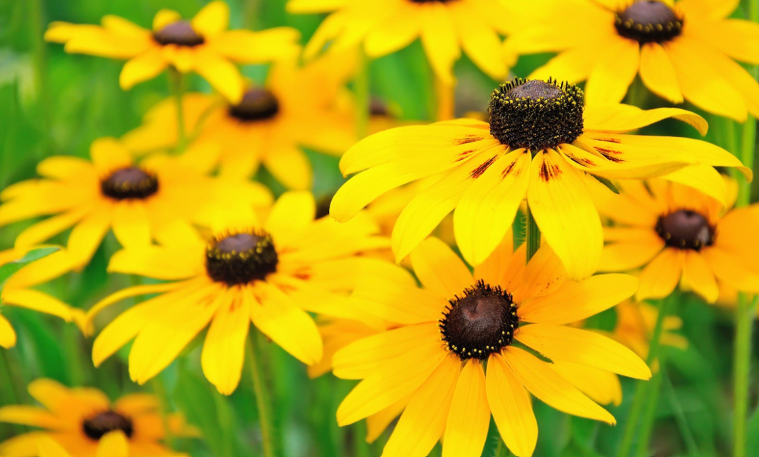
Black-Eyed Susan (Rudbeckia hirta) is a cheerful, golden-flowered perennial or biennial plant belonging to the daisy family Asteraceae, native to the meadows, prairies, and open woodlands of North America. It is one of the most recognizable wildflowers on the continent, with its bright yellow ray petals surrounding a distinctive dark brown to black central cone. With millions of plants sold annually across garden centers in North America and Europe, Black-Eyed Susan ranks among the most popular native wildflowers in cultivation worldwide.
As a plant, Black-Eyed Susan produces rough, hairy, lance-shaped to ovate leaves that are medium green and slightly coarse to the touch. The stems are sturdy and upright, typically reaching heights of 1 to 3 feet (30 to 90 centimeters) depending on the variety and growing conditions. Both the leaves and stems are covered in fine hairs that give the plant a somewhat bristly texture and help it tolerate dry conditions.
The flowers are Black-Eyed Susan’s most celebrated feature, consisting of golden yellow ray petals surrounding a raised, dome-shaped central disc that darkens from brown to near black as it matures. Each flower head measures 2 to 3 inches across, and a single plant can produce dozens of blooms simultaneously during peak flowering. The blooming season typically runs from early summer through early autumn, providing months of reliable color in the garden.
Black-Eyed Susan thrives in USDA zones 3 through 9, making it one of the most cold-hardy and widely adaptable native wildflowers available to North American gardeners. This broad hardiness range allows it to be grown successfully across most of the continental United States and much of Canada. Its tolerance of both cold winters and hot, dry summers gives it remarkable versatility across a wide range of climates and garden conditions.
Ecologically, Black-Eyed Susan is an extraordinarily valuable plant, supporting over 17 species of native bees along with numerous butterflies, moths, and other beneficial insects. The seed heads that form after flowering provide an important food source for birds, particularly goldfinches and chickadees, through autumn and into winter. Its role as a keystone plant in native meadow and prairie ecosystems makes it one of the most ecologically significant wildflowers in North America.
Black-Eyed Susan was designated the state flower of Maryland in 1918 and has since become deeply embedded in American cultural identity. It is also closely associated with the Preakness Stakes horse race, where a blanket of Black-Eyed Susans is draped over the winning horse in a tradition dating back to 1917. Beyond its cultural symbolism, the plant has been used in traditional Native American medicine for treating colds, earaches, and skin infections.
With its bold golden color, exceptional toughness, and outstanding ecological value, Black-Eyed Susan is a cornerstone plant for native gardens, pollinator plantings, and low-maintenance landscapes. Its ability to naturalize and self-seed means that a single planting can establish a long-lasting, ever-expanding display over time. Few flowering plants combine such cheerful beauty with such practical resilience and wildlife benefit.
Also Read: How to Grow and Care for Black-Eyed Susan
How to Grow and Care for Black-Eyed Susan
- Choose a Sunny Planting Location: Black-Eyed Susan performs best in full sun, requiring at least six hours of direct sunlight daily for strong growth and abundant flowering. While it tolerates light shade, too much shade produces weak, floppy stems and significantly fewer blooms. An open border, meadow, or prairie planting in full sun is the ideal setting.
- Select Well-Draining Soil: This plant adapts to a wide range of soil types, from sandy to clay, as long as drainage is reasonable. It actually thrives in average to poor soils, where excessive fertility can cause overly lush growth and reduced flowering. Avoid consistently wet or waterlogged planting sites, which can cause root rot.
- Sow Seeds Directly or Transplant: Black-Eyed Susan can be grown from seed sown directly in the garden in spring or autumn, or from young transplants purchased from a nursery. Direct sowing in autumn allows seeds to undergo natural cold stratification over winter, improving spring germination rates. Transplants establish quickly and often flower in their first season.
- Plant at the Right Time: Spring planting after the last frost gives plants the longest possible growing season before autumn. Autumn planting works well for direct-seeded sowings in most climates. Spacing plants or thinning seedlings to 18 to 24 inches apart allows adequate room for mature growth.
- Water During Establishment: Newly planted Black-Eyed Susans need consistent watering for the first growing season while roots establish. Once settled, the plant is highly drought-tolerant and rarely needs supplemental irrigation in most climates. Overwatering established plants can cause crown rot and other moisture-related problems.
- Avoid Heavy Fertilization: Black-Eyed Susan thrives in lean soil and rarely needs additional feeding. Excessive fertilization, particularly with nitrogen-rich products, produces excessive leafy growth at the expense of flowers. A light topdressing of compost in spring is generally the most that’s needed to maintain healthy growth.
- Deadhead for Extended Blooming: Removing spent flower heads encourages the plant to continue producing new blooms throughout the season. Regular deadheading can significantly extend the flowering period from midsummer well into autumn. Leaving some seed heads in place toward the end of the season benefits birds and allows natural self-seeding.
- Allow Self-Seeding for Naturalization: Black-Eyed Susan self-seeds readily, gradually expanding into larger colonies over time when seed heads are left intact. This natural spreading habit is ideal for meadow, prairie, and wildlife garden settings. Unwanted seedlings are easy to remove or transplant while still small and manageable.
- Cut Back After Flowering: Once blooming is complete and seed heads have been enjoyed by wildlife, cutting stems back to basal foliage tidies the plant for winter. Leaving some stems standing through winter provides habitat for beneficial insects and structural interest in the garden. Final cleanup is best completed in early spring before new growth emerges.
- Divide Established Clumps: Black-Eyed Susan spreads through rhizomes and benefits from division every three to four years to maintain vigor and prevent overcrowding. Spring division, when new growth is just emerging, causes the least stress to the plant. Outer sections of the clump are most vigorous and should be replanted while the older central portion is discarded.
- Watch for Powdery Mildew: Powdery mildew is the most common disease issue affecting Black-Eyed Susan, particularly during warm, humid late-summer conditions. Improving air circulation through proper plant spacing and avoiding overhead watering reduces the risk significantly. Choosing mildew-resistant cultivars such as Rudbeckia fulgida provides the most reliable long-term solution.
- Monitor for Aphids and Spider Mites: These common pests occasionally target Black-Eyed Susan during hot, dry weather. Regular inspection and early treatment with insecticidal soap or a strong water spray prevents infestations from escalating. Encouraging natural predators such as ladybugs and lacewings helps maintain pest populations at manageable levels.
- Watch for Leaf Spot: Fungal leaf spot can cause brown or black spots on foliage, particularly during wet seasons. Removing affected leaves promptly and avoiding overhead watering reduces disease spread. Improving overall plant vigor through proper care is the best defense against fungal issues.
- Combine with Companion Plants: Black-Eyed Susan pairs beautifully with coneflowers, ornamental grasses, salvias, and rudbeckias in mixed borders and prairie plantings. Its golden yellow flowers contrast particularly well with purple and blue flowering companions. Thoughtful plant combinations extend the overall season of interest and maximize visual impact.
- Use as a Cut Flower: Black-Eyed Susan makes an excellent long-lasting cut flower, with stems holding up well in arrangements for up to one week. Cutting stems early in the morning when flowers are fully open produces the longest vase life. Regular cutting also encourages the plant to produce additional flowering stems throughout the season.
- Grow Native Species for Wildlife Value: While many improved cultivars are available, the straight native species Rudbeckia hirta provides the greatest benefit to native pollinators and wildlife. Native species are also generally more vigorous, longer-lived, and better adapted to local conditions than highly bred hybrids. Incorporating native Black-Eyed Susans into meadow and wildlife plantings maximizes both ecological and ornamental value.
Also Read: How To Grow Black eyed Susan In Pots And Containers