Onions are one of the oldest and most universally grown vegetables in human history, cultivated for at least 5,000 years across virtually every agricultural civilization from ancient Egypt and Mesopotamia to China and pre-Columbian America. They belong to the allium family alongside garlic, leeks, chives, and shallots, and are today grown on every inhabited continent in an extraordinary range of climates, soils, and agricultural systems. Global onion production exceeds 100 million metric tons annually, making onions the second most widely produced vegetable in the world after tomatoes, with China, India, the United States, Egypt, and Iran among the largest producing nations.
Onions vary enormously in size, shape, color, and flavor across the hundreds of cultivated varieties available to growers and consumers worldwide. Individual bulbs range from tiny pearl onions less than an inch across to enormous exhibition varieties exceeding 10 inches in diameter and weighing over 10 pounds, while skin colors span white, yellow, gold, red, and purple. They are grown in USDA zones 3 to 9 depending on the variety, and most cultivated types are divided into long-day varieties suited to northern latitudes, short-day varieties suited to southern latitudes, and intermediate-day varieties that perform across a wider geographic range.
Nutritionally, onions are rich in vitamin C, vitamin B6, folate, potassium, and a range of powerful antioxidant and anti-inflammatory compounds including quercetin, anthocyanins, and organosulfur compounds that have been extensively studied for their potential health benefits. A medium-sized raw onion contains approximately 44 calories and provides meaningful amounts of dietary fiber and prebiotic compounds that support digestive health. The distinctive pungency of onions is produced by sulfur-containing compounds released when the cell walls are broken by cutting, and the same compounds are responsible for the characteristic eye-irritation experienced when chopping onions.
Onions are a cornerstone of the culinary traditions of virtually every culture on earth, used raw in salads and salsas, caramelized slowly into rich, sweet condiments, fried into crispy toppings, pickled in vinegar, roasted whole, and cooked as the flavor base of countless soups, stews, curries, and braised dishes across every major world cuisine. They store exceptionally well compared to most vegetables — properly cured, dry onions can be kept for 3 to 12 months depending on the variety — making them one of the most practical and valuable vegetables any gardener or kitchen can have on hand. The extraordinary range of varieties available, spanning mild and sweet to fiery and pungent, ensures that there is an onion perfectly suited to every culinary application and every growing environment.
Also Read: Different Types of Cabbages
Types of Onions
1. Yellow Onion
The Yellow Onion is the most widely grown and consumed onion in the world, accounting for approximately 87 percent of all onion production in the United States alone and dominating onion markets across Europe, Asia, and beyond. It produces round to slightly flattened bulbs with papery, golden-yellow to bronze-brown outer skin and white to pale yellow flesh with a robust, full-bodied, pungent flavor that mellows and sweetens dramatically when cooked.
It is the foundational cooking onion of virtually every major world cuisine, indispensable as the flavor base for soups, stews, sauces, braises, and countless other cooked dishes where its deep, savory character provides essential culinary backbone.
2. Red Onion
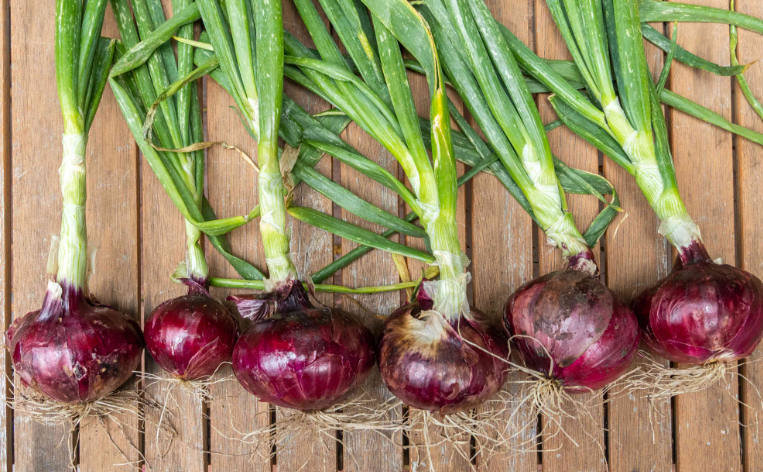
Red Onion is the second most widely consumed onion type globally, producing round to slightly flattened bulbs with vivid, deep purple-red to burgundy outer skin and white flesh shot through with pink to purple-red color between the layers.
The flavor is milder and slightly sweeter than yellow onions with a pleasant, mild pungency that makes red onions one of the finest alliums for raw use in salads, salsas, pickles, and sandwiches. The vivid color — produced by anthocyanin pigments — fades considerably when cooked, making red onions most valued in raw and lightly cooked applications where their striking color and mild flavor can be fully appreciated.
3. White Onion
White Onion produces round bulbs with papery white outer skin and bright white flesh with a clean, sharp, relatively pungent flavor that is somewhat more assertive than yellow onions when raw but cooks down more quickly and cleanly.
White onions are the dominant onion of Mexican and Latin American cuisine, used in everything from salsas and guacamole to pozole and ceviche, and are the standard onion in many Central American cooking traditions. They have a slightly shorter storage life than yellow onions — typically 3 to 6 months compared to 6 to 12 months for well-dried yellow types — but their clean, bright flavor is irreplaceable in the dishes where they are traditionally used.
4. Sweet Onion
Sweet Onions are a category of mild, low-pungency onion varieties characterized by a very high water content, relatively low sulfur content, and a natural sweetness that allows them to be eaten raw with very little of the sharp bite associated with standard yellow and white types.
The most famous sweet onion varieties — Vidalia from Georgia, Walla Walla from Washington, and Maui from Hawaii — have become celebrated regional specialties with protected geographic designations that restrict use of their names to onions grown within specific defined areas. Individual bulbs are typically large, measuring 3 to 5 inches across, and the short storage life of 1 to 3 months reflects their high moisture content.
5. Vidalia Onion
Vidalia is the most famous sweet onion in the United States and one of the most celebrated regional food products in American agriculture, produced exclusively in a defined 20-county area of southeastern Georgia where the low-sulfur soils impart the extraordinary mildness and sweetness that have made these onions world-famous.
Bulbs are large, flat to round, with pale yellow skin and very mild, sweet, almost fruity white flesh that can genuinely be eaten raw like an apple without causing eye irritation or sharp aftertaste. The Vidalia name is federally protected and only onions grown in the designated Georgia region from approved varieties — primarily Granex types — may legally be sold as Vidalias.
Also Read: Types of Multiplying Onions
6. Walla Walla Sweet
Walla Walla Sweet is Washington State’s most celebrated agricultural product, a large, round, very mild sweet onion with thin, pale yellow skin and exceptionally juicy, sweet, white flesh that is the defining onion of the Pacific Northwest food culture.
The Walla Walla Sweet has been grown in the Walla Walla Valley since the late nineteenth century, when seeds were brought from Corsica, and the unique combination of the valley’s volcanic soil, dry summer climate, and cool winters creates the specific conditions that produce its characteristic sweetness. Individual bulbs are often very large, regularly exceeding 4 to 5 inches in diameter, and the season is short — typically available only from June through August — which adds to their annual anticipation.
7. Maui Onion
The Maui Onion is Hawaii’s most famous agricultural specialty, grown on the volcanic slopes of Haleakalā on the island of Maui at elevations between 1,000 and 4,000 feet where the unique combination of volcanic soil, cool nights, and intense tropical sunlight creates conditions that produce some of the mildest, sweetest onions grown anywhere in the world.
The bulbs are medium to large, round to slightly flattened, with thin, golden-yellow skin and very juicy, sweet, white flesh with virtually no pungency that makes them one of the most sought-after specialty onions in American fine dining. Production volumes are relatively small compared to mainland sweet onion varieties, which contributes to their premium price and limited seasonal availability.
8. Cipollini Onion
Cipollini onions are a traditional Italian variety producing small, flat, disc-shaped bulbs typically measuring 1.5 to 2.5 inches in diameter with thin, pale yellow to golden-brown skin and sweet, rich, concentrated flavor that intensifies dramatically when roasted or caramelized.
The distinctive flat shape and small size make them ideal for whole roasting and glazing, where they become extraordinarily sweet and tender, and they are a classic ingredient in Italian agrodolce preparations and braised meat dishes. They have become widely popular in North American specialty food retail and farmers markets over the past two decades as awareness of their exceptional culinary qualities has grown.
9. Pearl Onion
Pearl Onions are tiny, marble-sized onions typically measuring 0.5 to 1.5 inches in diameter that are grown specifically for their small size and are harvested before the bulbs have an opportunity to develop further. They are available in white, yellow, and red-skinned forms and have a mild, sweet flavor that concentrates beautifully when roasted, pickled, or used in classic preparations such as beef bourguignon and coq au vin.
The traditional labor-intensive blanching and peeling required to remove the papery skins from fresh pearl onions has largely been replaced in modern cooking by the availability of frozen pre-peeled pearl onions, though fresh ones from the farmers market or garden remain superior in flavor.
Also Read: Types of Onions that Make You Cry
10. Shallot
Shallots are the most refined and culinarily prestigious member of the cultivated allium family, producing clusters of small, elongated or round bulbs with golden, red, or grey papery skin and pale pink-white flesh of exceptional mildness, sweetness, and complex flavor depth that has made them the allium of choice in classical French cuisine and professional kitchens worldwide.
A single planted bulb divides underground to produce a cluster of 6 to 12 bulbs at harvest, making them one of the most productive alliums relative to planting material. Their delicate, complex flavor is irreplaceable in fine sauces, vinaigrettes, and preparations where the aggressive pungency of a standard onion would overwhelm other flavors.
11. Scallion (Green Onion)
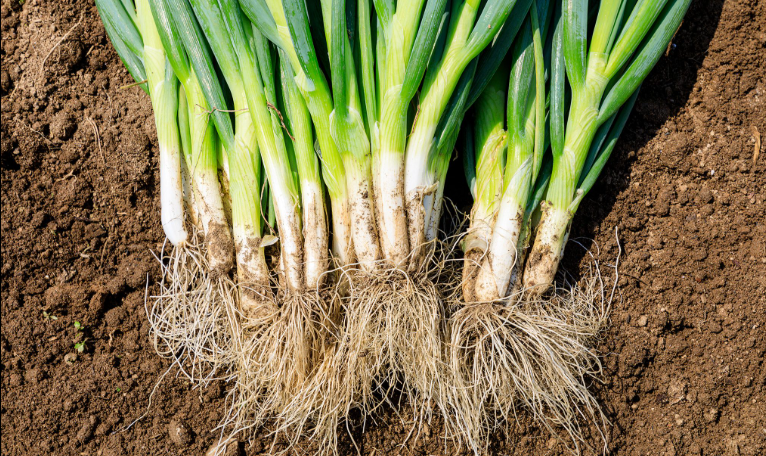
Scallions, also called green onions or spring onions, are immature onions harvested before a full bulb has formed, producing long, hollow green tops and a small, undeveloped white base that are both entirely edible and widely used raw as a garnish and flavoring across countless cuisines from East Asian to Mexican to American.
They are the most rapidly maturing of all cultivated alliums, ready for harvest in as little as 60 to 70 days from seed, and can be grown in virtually any climate and soil condition including containers on a windowsill. The flavor is mild and fresh with a pleasant, gentle onion character that suits raw applications, light stir-fries, and as a finishing garnish where the bright green color and delicate flavor add freshness without overpowering other ingredients.
12. Bunching Onion
Bunching Onions are a type of perennial or semi-perennial allium that does not form a significant underground bulb but instead produces dense clumps of upright, cylindrical green stems that are harvested in bunches for use like scallions.
Unlike standard onions that are grown as annual crops, bunching onions can be harvested repeatedly by cutting the stems above the base and allowing regrowth, providing a continuous supply of fresh green onion tops throughout the growing season. They are a staple vegetable across East Asian cuisines and particularly central to Japanese, Chinese, and Korean cooking where they are used both as a primary ingredient and as an essential garnishing herb.
13. Leek
Leeks are the largest and most architecturally impressive of the cultivated alliums, producing long, thick, cylindrical, blanched white stems topped with flat, dark blue-green leaves that can reach 18 to 24 inches in total length and 1 to 2 inches in diameter on well-grown specimens.
They have a mild, sweet, delicate flavor compared to standard onions — closer to a refined, gentle onion taste without pungency — that makes them one of the most versatile and beloved vegetables in European cooking, central to dishes from French vichyssoise to Welsh cawl and Scottish cock-a-leekie soup. They are cold-hardy vegetables that can remain in the ground through hard frosts in USDA zones 5 to 9, making them one of the most valuable late-season and winter garden vegetables available.
Also Read: Types of Onions that Don’t Make You Cry
14. Texas 1015 Sweet
Texas 1015 Sweet, named for its optimal planting date of October 15 in Texas, is the signature sweet onion of the Lone Star State and one of the most important short-day sweet onion varieties grown in the southern United States.
It produces very large, round bulbs often exceeding 4 to 5 inches in diameter with thin, pale yellow skin and very mild, sweet, juicy white flesh with very low pungency that has earned it the nickname the millionaire onion among Texas farmers. It is grown commercially across the Rio Grande Valley and other south Texas growing regions and is widely celebrated as one of the finest sweet onions produced anywhere in North America.
15. Candy Onion
Candy is one of the most popular intermediate-day sweet onion varieties for home garden production across a wide range of North American growing regions, producing large, round, 3 to 4 inch diameter bulbs with pale yellow skin and very mild, sweet, juicy white flesh with significantly lower pungency than standard yellow onions.
It matures in around 100 to 115 days from transplant and is one of the most widely recommended sweet onion varieties for home gardeners in the central United States where neither strictly short-day nor strictly long-day varieties perform optimally. The outstanding sweetness, large bulb size, and wide geographic adaptability have made Candy one of the best-selling sweet onion varieties in American seed catalogues for over two decades.
16. Ailsa Craig
Ailsa Craig is one of the most famous and beloved British heirloom onion varieties, originally bred in Scotland and named after the distinctive rocky island off the Ayrshire coast, producing very large, round to slightly flattened bulbs with thin, straw-golden skin and mild, sweet, juicy white flesh that is widely regarded as one of the finest-flavored exhibition and culinary onions available.
It is the most frequently grown variety by competitive vegetable growers seeking to produce the largest possible onion for exhibition, with well-grown specimens regularly reaching 4 to 6 inches in diameter and winning prizes at horticultural shows across the United Kingdom. It stores reasonably well for 4 to 6 months and is widely available from heritage seed suppliers worldwide.
17. Stuttgarter
Stuttgarter is one of the most widely grown and commercially important onion varieties in Europe, producing medium-sized, distinctively flat to semi-globe-shaped bulbs with rich, golden-brown skin and firm, pungent, white to pale yellow flesh with a strong, classic onion flavor that is excellent for cooking.
It is one of the most commonly grown varieties from sets — small, immature bulbs planted rather than seed — in home kitchen gardens across the United Kingdom and northern Europe, prized for its reliability, productivity, and the firmness of the bulbs which gives them an outstanding storage life of up to 12 months. It is available from virtually every mainstream seed and garden supply retailer in Europe and North America.
18. Kelsae Sweet Giant
Kelsae Sweet Giant holds the Guinness World Record for the largest onion ever grown, with the record specimen reaching an extraordinary 18 pounds 11.84 ounces — a testament to this variety’s extraordinary potential for producing enormous bulbs under optimal exhibition growing conditions.
Under normal garden conditions it produces very large, round to slightly flattened bulbs of 4 to 6 inches in diameter with mild, sweet, straw-colored skin and pleasant, relatively mild white flesh. It is primarily grown by competitive vegetable exhibitors seeking maximum bulb size for show competition, though the flavor is decent enough for culinary use as well.
Also Read: Vegetable With Highest Fiber Content
19. Granex
The Granex type is the most important sweet onion variety in commercial American production and the primary variety used to produce the famous Vidalia and Texas 1015 sweet onions, producing characteristically flat, top-shaped bulbs with thin, pale yellow skin and very mild, sweet, juicy white flesh.
It was developed by the Texas Agricultural Experiment Station and is a short-day variety best suited to production in the southern United States where the day length triggers proper bulb development. The Granex type and its improved descendants dominate commercial sweet onion production across Georgia, Texas, and other southern growing regions.
20. Red Baron
Red Baron is one of the most popular red onion varieties for home garden production in the United Kingdom and northern Europe, producing round to slightly oval, medium to large bulbs with deep, glossy, burgundy-red skin and white flesh interspersed with vivid red-purple layers that create a striking visual effect when the bulb is sliced.
The flavor is mild to moderately pungent with the pleasant, slightly sweet character typical of the best red onion varieties, and the bulbs store well for 6 to 9 months in good conditions. It is widely available from mainstream seed suppliers and is one of the most consistently recommended red onion varieties for British kitchen gardens.
21. Bedfordshire Champion
Bedfordshire Champion is a classic British heirloom onion variety producing large, round, uniform bulbs with rich, golden-bronze skin and firm, strongly flavored, white to pale yellow flesh that stores exceptionally well for up to 12 months in cool, dry conditions.
It has been a staple of British kitchen gardens for well over a century and remains one of the most widely grown onion varieties from seed in the United Kingdom, valued for its reliable performance in the cool, wet British climate and its outstanding storage quality that keeps it usable from harvest right through to the following summer. It is available from virtually every mainstream British seed supplier and garden center.
22. Wethersfield Red
Wethersfield Red is one of the oldest surviving American heirloom onion varieties, with a cultivation history stretching back to colonial New England where it was one of the primary onions grown for food and trade in the Connecticut River Valley.
It produces medium to large, flattened-round bulbs with deep, rich, red-purple skin and white flesh tinted pink-red at the outer layers, with a moderately pungent, full-flavored character. It is hardy, productive, and stores well for 6 to 9 months, making it a reliable choice for home gardeners across USDA zones 4 to 8 who appreciate the historical significance of growing a variety with deep roots in American horticultural heritage.
23. Patterson
Patterson is one of the most important and widely grown commercial yellow onion varieties in North America, dominating commercial dry onion production in the Pacific Northwest and California where it is valued for its exceptionally long storage life of 12 to 18 months — significantly longer than most other commercial onion varieties — combined with high yields, good disease resistance, and consistent bulb quality.
It produces medium to large, round, hard, firm bulbs with rich, golden-brown skin and strongly flavored, white flesh that holds its quality exceptionally well in commercial cold storage. The outstanding storage performance of Patterson has made it the dominant commercial processing and storage onion in North American production.
Also Read: Different Types of Kales
24. Cipolla Rossa di Acquaviva
Cipolla Rossa di Acquaviva is a rare and ancient Italian heirloom red onion from the small town of Acquaviva delle Fonti in the Puglia region of southern Italy, producing distinctive, flattened, disc-shaped bulbs with vivid, deep magenta-red skin and exceptionally sweet, crisp, almost completely non-pungent white to pale pink flesh that is considered one of the most extraordinary raw-eating onions in the world.
The bulbs typically measure 3 to 5 inches across and the flavor is so mild and sweet that locals traditionally eat them raw like fruit, sliced with nothing more than a drizzle of olive oil and a pinch of salt. It holds Slow Food Presidium status, recognizing it as a threatened traditional food product of outstanding cultural and gastronomic importance that deserves active preservation.
25. Long Red Florence
Long Red Florence, also called Torpedo Onion or Red Bottle Onion, is a traditional Italian heirloom variety producing distinctive, elongated, torpedo-shaped bulbs 4 to 6 inches long with vivid, deep red-purple skin and mild, sweet, pink-white flesh that is among the least pungent of any red onion variety.
The elegant, sculptural shape makes it one of the most visually beautiful of all onion varieties, and the mild, sweet, pleasant flavor suits raw use in salads and antipasto preparations. It is a fixture of Italian kitchen garden growing and is increasingly available from specialty vegetable seed suppliers in North America and the United Kingdom.
26. Tropea
Tropea is the most prestigious Italian red onion, produced in the Tropea region of Calabria in southern Italy, where the unique combination of Mediterranean climate, sea air, and the specific mineral composition of the coastal sandy soils creates conditions that produce onions of extraordinary sweetness and mildness quite unlike any other red onion.
Bulbs are elongated to slightly round, with vivid deep red-purple skin and sweet, crisp, almost non-pungent white to pink flesh that can be eaten raw with minimal preparation and is used extensively in southern Italian cuisine in salads, on bruschetta, and as a table condiment. Tropea onions hold Protected Designation of Origin status under European law and are considered among the finest allium products of Italian gastronomy.
27. Yellow Sweet Spanish
Yellow Sweet Spanish is one of the most widely grown and commercially important long-day sweet onion varieties in the United States, producing very large, round to slightly globe-shaped bulbs commonly reaching 4 to 5 inches in diameter with thin, golden-yellow skin and mild, sweet, juicy white flesh with low to moderate pungency.
It matures in around 110 to 120 days from transplant and is well-suited to production across the northern tier of the United States and Canada where the long summer days trigger proper bulb development in long-day varieties. It is widely available from mainstream seed suppliers and has been a home garden staple for generations of American vegetable growers.
Also Read: Cold-Hardy Vegetables For Winter Climates
28. White Sweet Spanish
White Sweet Spanish is the white-skinned counterpart to the Yellow Sweet Spanish, producing the same large, round, mild, juicy bulbs but with pure white outer skin and bright white flesh that makes it one of the most visually clean and attractive of all sweet onion varieties.
It shares the same long-day adaptation and 110 to 120 day maturity of the yellow form and performs well across the northern United States and Canada under long summer day conditions. The clean, bright white appearance of the bulbs makes it particularly attractive for fresh market sale and for culinary presentations where the visual purity of white onion flesh is valued.
29. Purplette
Purplette is a charming miniature red onion variety producing small, globe-shaped bulbs typically 1 to 1.5 inches in diameter with vivid, deep burgundy-red skin and pink to white flesh with a mild, sweet, pleasant flavor that makes them one of the finest pickling onions and pearl-onion substitutes available.
They can also be harvested very young as colorful scallions when the purple-tinged leaves are still visible above ground, adding an ornamental element to salad and garnishing use. They mature in about 60 days when harvested as scallions and around 95 days for full-sized mini bulbs, making them one of the faster-maturing onion varieties for home garden production.
30. Borettana
Borettana is a traditional Italian flat onion variety closely related to the Cipollini type, producing small to medium, very flat, disc-shaped bulbs typically 2 to 3 inches in diameter with pale golden-yellow to straw-colored skin and sweet, mild, dense flesh that concentrates to an extraordinary sweetness when roasted or caramelized whole.
It is the classic Italian onion for agrodolce — the sweet and sour onion preparation that is a cornerstone of Italian antipasto culture — and is increasingly available from specialty food retailers and farmers markets in North America and northern Europe. The flat, disc shape and intense sweetness when cooked make it one of the most distinct and culinarily valuable traditional Italian onion varieties.
31. Rossa di Tropea Lunga
Rossa di Tropea Lunga is the elongated, torpedo-shaped form of the celebrated Tropea red onion of Calabria, producing slender, tapered bulbs 3 to 5 inches long with vivid red-purple skin and sweet, mild, almost non-pungent flesh.
It shares all the extraordinary sweetness and mildness of the standard round Tropea onion but in the distinctive elongated form that makes it one of the most visually elegant of all onion varieties. It is grown primarily in the Tropea coastal area of Calabria and is a protected geographical indication product in the European Union.
32. Snowball
Snowball is a small, round, pure white onion variety producing neat, marble to golf-ball-sized bulbs typically 1 to 2 inches in diameter with clean white skin and mild, sweet, crisp white flesh that makes it one of the finest and most attractive pickling onion varieties available.
The small, uniform bulbs pickle beautifully in white wine vinegar or malt vinegar and are a classic ingredient in traditional British pickled onion preparations as well as cocktail onion garnishes. They mature relatively quickly at around 95 to 100 days and are widely available from mainstream seed suppliers in the United Kingdom and North America.
Also Read: Most Challenging Vegetables to Grow
33. Paris Silverskin
Paris Silverskin is the most widely grown pickling onion variety in the United Kingdom and one of the most popular in Europe, producing very small, neat, round bulbs with silvery-white to pale straw skin and mild, crisp white flesh that pickles with exceptional quality and retains a satisfying crunch in the jar.
It is sown thickly in spring and harvested in late summer when the bulbs are still small — typically 0.5 to 1.5 inches in diameter — making it one of the most space-efficient and productive pickling onion crops for the kitchen garden. Paris Silverskin pickled onions are a traditional British condiment served with ploughman’s lunches, cold meats, and cheese boards.
34. Brunswick
Brunswick is a traditional British red onion heirloom variety producing medium to large, flat to semi-globe-shaped bulbs with deep, rich, red-brown to purple-red skin and white flesh with prominent red-purple outer layers that create a vivid visual effect when the onion is cut or pickled.
The flavor is moderately pungent with a pleasant, slightly sweet character, and the bulbs store reasonably well for 6 to 8 months in good conditions. It is one of the most widely grown and historically significant red onion varieties in British kitchen garden tradition and remains available from heritage seed suppliers and mainstream British garden centers.
35. Rossa Lunga di Firenze
Rossa Lunga di Firenze, meaning Long Red of Florence, is a traditional Tuscan heirloom onion producing distinctive, elongated, spindle-shaped bulbs 4 to 6 inches long with rich, deep red-purple skin and sweet, mild, pink-tinged white flesh.
It is one of several traditional Italian elongated red onion varieties, closely related to Long Red Florence but with a slightly more intensely colored skin and somewhat richer, more complex flavor character associated with traditional Florentine vegetable growing traditions. It is grown in Tuscany both for fresh market sale and home kitchen garden production.
36. Zebrune Shallot-Onion
Zebrune is a French specialty allium occupying a culinary and botanical position between a shallot and an onion, producing elongated, tapered, torpedo-shaped bulbs with attractively mottled, striped, pink-copper skin and mild, sweet, refined flesh with a flavor complexity intermediate between a standard onion and a true shallot.
While technically classified as a shallot type by many seed suppliers, it produces somewhat larger bulbs than most true shallots and is used interchangeably with both shallots and mild onions in French cooking. It is increasingly available from specialty vegetable seed suppliers internationally.
37. Pompeii
Pompeii is a medium-early maturing red onion variety bred for good performance in both long and intermediate day length conditions, producing medium to large, round to slightly flattened bulbs with vivid, deep red-purple skin and white to pale pink flesh with a moderately mild, pleasant flavor and good storage life of 8 to 10 months.
It shows good resistance to bolting and neck rot — two of the most common problems affecting red onion crops in variable weather conditions — and maintains its vivid color well both fresh and after mild cooking. It is widely available from European and North American seed suppliers.
Also Read: Vegetables that Grow Well In Full Sun
38. Centurion
Centurion is one of the most widely grown commercial yellow onion varieties in the United Kingdom, producing medium to large, round to globe-shaped bulbs with rich, golden-brown skin and firm, strongly flavored white flesh with an outstanding storage life of up to 12 months.
It is particularly valued in commercial UK production for its consistent performance in the cool, wet British growing season, its resistance to bolting, and the uniformity of bulb sizing across the crop that suits supermarket fresh market requirements. It is also widely grown from sets in home kitchen gardens across the United Kingdom and is available from virtually every mainstream British seed and garden supply retailer.
39. Senshyu Yellow
Senshyu Yellow is a Japanese overwintering onion variety specifically bred for autumn planting and overwintering in the field for an early summer harvest, producing medium to large, round to slightly flattened bulbs with attractive, golden-yellow skin and mild, sweet, white to pale yellow flesh with lower pungency than standard yellow storage onions.
It is one of the most widely grown overwintering onion varieties in the United Kingdom and northern Europe, prized for providing an early onion harvest in June and July before the main-crop varieties are ready. The mild, sweet flavor and early harvest date make it a popular and valuable variety for home kitchen gardeners.
40. Globo
Globo is a large, mild, intermediate-day sweet onion variety producing very round, globe-shaped bulbs of impressive size — regularly reaching 4 to 5 inches in diameter — with thin, pale yellow skin and very mild, sweet, juicy white flesh with low purgency suitable for raw eating.
It matures in around 110 days from transplant and is adaptable across a wider range of latitudes than strictly short-day or long-day varieties, making it one of the more versatile sweet onion options for home garden growing across much of the United States. The impressive bulb size and mild, sweet flavor make it a popular choice at farmers markets.
41. Northstar
Northstar is a yellow onion variety specifically bred for production in cold, short-season growing regions including the northern United States, Canada, and Scandinavia, maturing in a relatively short 95 to 105 days from transplant and producing medium to large, round, firm bulbs with golden-brown skin and strongly flavored white flesh.
The short maturity and cold tolerance make it one of the most practical yellow storage onion varieties for gardeners in USDA zones 3 to 5 where the growing season is too short for longer-maturing varieties to fully develop before autumn frosts arrive. It stores well for 6 to 9 months under cool, dry conditions.
42. Talon
Talon is a high-yielding commercial yellow onion variety widely grown in Europe, producing medium to large, round to slightly oval, hard, firm bulbs with rich golden-brown skin and strongly flavored white flesh with an outstanding storage life that makes it one of the preferred varieties for commercial cold storage and long-term market supply.
The combination of high yield, good disease resistance, hard, firm bulbs that resist mechanical damage during harvest and packing, and exceptional storage quality have made it one of the most commercially planted onion varieties in British and northern European commercial production. It is also available from some mainstream seed suppliers for home garden growing.
43. Redwing
Redwing is a high-performance commercial red onion variety producing medium to large, round, very hard and firm bulbs with deep, vivid, burgundy-red skin and white flesh prominently ringed with red-purple outer layers, with good to excellent storage life of 8 to 12 months that is exceptional for a red-skinned variety.
Red onion varieties generally have a shorter storage life than yellow types, making Redwing’s outstanding keeping quality a particularly valued characteristic in both commercial production and home garden growing. It shows good resistance to bolting and is widely planted in commercial European red onion production.
Also Read: Types of Red Peppers
44. Rossa di Milano
Rossa di Milano is a traditional Italian red onion from the Lombardy region of northern Italy, producing medium to large, round to slightly flattened bulbs with deep, rich, mahogany-red to purple-red skin and mildly pungent, white to pale pink flesh with a good balance of sweetness and flavor depth that suits both raw and cooked applications.
It is a heritage variety grown in the Po Valley region of Lombardy for fresh market sale and local kitchen use, and is part of a broader family of traditional northern Italian red onion varieties that differ in flavor character from the sweeter southern Italian red types like Tropea. It is available from Italian and some specialist international seed suppliers.
45. Lilia
Lilia is a reliable, widely grown intermediate-day yellow onion variety producing medium-sized, round, uniform bulbs with golden-brown skin and moderately pungent white flesh with a classic onion flavor and reasonable storage life of 6 to 9 months.
It performs well across a wide geographic range including both the United Kingdom and much of continental Europe, tolerating variable weather conditions with reasonable resilience. It is widely available from European seed suppliers as both sets and seeds and is a practical, undemanding variety for home kitchen garden production across USDA zones 4 to 8.
46. Mammoth Red
Mammoth Red is a large-bulbing red onion variety selected specifically for producing the biggest possible red onion bulbs, with well-grown specimens reaching 4 to 6 inches in diameter and rivaling exhibition-standard yellow types in sheer size. The flavor is moderately mild for a red onion with a pleasant, slightly sweet character and the bulbs have a reasonable storage life of 5 to 8 months under good conditions.
It is grown both for competitive exhibition at horticultural shows — where size is the primary judging criterion — and for home culinary use where the impressive bulb size reduces the number of onions needed for large-batch cooking.
47. Doux de Bretagne
Doux de Bretagne, meaning Sweet from Brittany, is a traditional French yellow sweet onion from the Brittany region of northwestern France, producing large, round to slightly flattened bulbs with golden-yellow skin and mild, sweet, juicy flesh with lower pungency than standard yellow types.
It is grown in the cool, Atlantic-influenced climate of Brittany, where the combination of mild summers, plentiful rainfall, and specific soil conditions produce the sweetness and mildness that characterize this traditional regional variety. It is a well-regarded specialty product of Breton agriculture and is available from French and some specialist international seed suppliers.
48. Rijnsburger
Rijnsburger is one of the most important long-day yellow onion varieties in European commercial production, originating from the Rijnsburg area of the Netherlands and dominating commercial onion production across the Netherlands, Germany, and much of northern Europe for decades.
It produces medium to large, round to globe-shaped, hard, firm bulbs with rich, golden-brown skin and strongly flavored, white to pale yellow flesh with outstanding storage quality of up to 12 months or more under commercial cold storage conditions. Several improved selections and descendants of the original Rijnsburger type have been developed and dominate commercial European onion production today.
49. White Lisbon
White Lisbon is the most widely grown bunching onion and scallion variety in the United Kingdom, producing straight, upright, medium-thick stems with bright, clean white bases and dark green, vigorous tops of excellent mild onion flavor that are harvested young as spring onions throughout the growing season.
It is fast-maturing — ready in as little as 60 days from direct sowing — and can be sown in succession every three to four weeks from early spring through summer to provide a continuous supply of fresh scallions throughout the growing season. It is one of the most widely available onion varieties from mainstream British seed suppliers and is equally popular in home gardens and small-scale market garden production.
Also Read: Types of Yellow Peppers
50. Zeytinburnu
Zeytinburnu is a traditional Turkish onion variety from the Istanbul region, producing medium-sized, round to slightly flattened bulbs with distinctive, deep red-purple to almost black outer skin — one of the darkest-skinned of all cultivated onion varieties — and mildly pungent, white to pink flesh with a good balance of sweetness and onion flavor.
Turkey is the world’s fifth-largest onion producer and has developed a range of distinctive regional onion varieties across its diverse growing regions, with Zeytinburnu being one of the most distinctive in terms of skin color and the deep, slightly sweet flavor character that has made it a valued ingredient in traditional Istanbul and broader Turkish cuisine for generations.