Weeds that cause skin irritation don’t all work the same way, which is part of why so many people get caught off guard by plants that don’t look obviously dangerous. Some rely on an allergic chemical reaction that only affects sensitized individuals, some deliver a genuine chemical burn triggered by sunlight, some inject irritating compounds through microscopic hollow hairs on contact, and others simply cause mechanical injury through sharp spines that let bacteria and irritants into broken skin. Recognizing which mechanism is at play matters for treatment, since washing exposed skin within minutes helps with an allergic reaction but does little for a phototoxic burn that hasn’t been triggered by sunlight yet.
This list groups plants representing each of those major categories, from the allergic contact dermatitis caused by poison ivy and its relatives, to the phytophotodermatitis triggered by sunlight interacting with sap from hogweed and its carrot-family relatives, to the histamine-driven sting of nettles, to a handful of plants whose irritation comes down to simple mechanical contact with spines or coarse hairs.
These weeds grow across an enormous combined range spanning nearly every inhabited continent, with several native to North America and others introduced from Europe and Asia before naturalizing widely. A few are genuinely dangerous enough to warrant real caution, while others cause only mild, temporary discomfort that clears up within a day or two.
What follows covers 30 weeds documented to cause skin irritation, along with where each one grows, its typical size, and the data behind its specific reaction.
Poison Ivy
Poison ivy is native to North America, and according to the University of Georgia’s College of Agricultural and Environmental Sciences, it causes allergic reactions in as many as 50 million Americans annually, with roughly 90% of people allergic to some degree. Its oily compound, urushiol, is found in every part of the plant and is released whenever the plant is damaged, bruised, or burned, with symptoms typically appearing 12 to 48 hours after contact. A mature plant can grow as a climbing vine or a low shrub depending on region, always with leaves arranged in clusters of 3.
It grows throughout most of the United States and Canada except Alaska, Hawaii, and the driest desert regions of the Southwest.
Poison Oak
Poison oak, found in both eastern and western forms, is native to North America and produces the same allergenic compound, urushiol, as poison ivy, causing a nearly identical allergic contact dermatitis. Its lobed, oak-shaped leaflets, typically in groups of 3, distinguish it visually from poison ivy’s more pointed leaf shape, though the reaction it causes is essentially the same. A mature plant grows as a low shrub in the East and can form dense thickets up to 6 feet tall on the West Coast.
It grows across the eastern United States as Atlantic poison oak and along the entire Pacific coast as western poison oak, generally absent from the central part of the country.
Poison Sumac
Poison sumac is native to North America, typically found in wetlands, swamps, and other consistently wet, boggy soils rather than the drier ground favored by poison ivy and poison oak. It produces the same urushiol compound as its relatives, and some sources consider its reaction even more severe due to a higher concentration of the allergen in its sap. A mature shrub or small tree can reach 20 feet tall, with compound leaves made up of 7 to 13 leaflets.
It grows throughout the eastern United States and parts of Canada, restricted almost entirely to wetland habitats.
Giant Hogweed
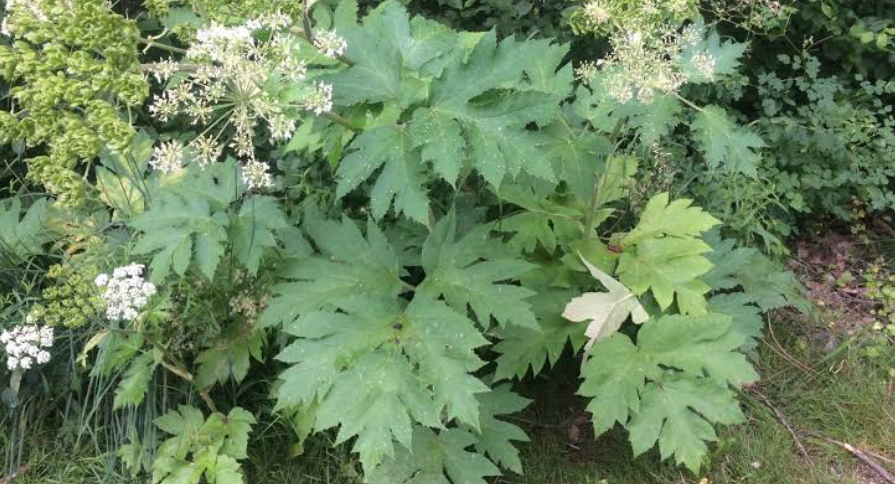
Giant hogweed is native to the Caucasus region of Europe and Asia and produces a sap containing furanocoumarins that cause severe chemical burns when exposed to sunlight after skin contact. A mature plant can reach 15 to 20 feet tall, with leaves up to 5 feet wide, and the resulting skin discoloration and sun sensitivity can persist for years after a single exposure. Contact with the eyes can cause temporary or permanent blindness, making it one of the more dangerous plants on this list.
It grows primarily in the northeastern United States and parts of the Pacific Northwest, and anyone suspecting contact should wash the area immediately and avoid sunlight before seeking medical care.
Wild Parsnip
Wild parsnip is native to Eurasia, and according to Utah State University Extension, its sap contains furanocoumarins that cause severe burns and blistering when exposed to sunlight, with affected skin remaining discolored and sun-sensitive for up to 2 years afterward. Concentrations of the irritating compound actually increase in the plant if it’s cut back and allowed to regrow or if insects feed on it. A mature flowering plant typically reaches 4 to 5 feet tall, with flat clusters of small yellow flowers.
It grows throughout most of the United States, particularly common along roadsides, in restored prairies, and in pastures across the Midwest and Northeast.
Cow Parsnip
Cow parsnip is native to North America and is frequently confused with the far more dangerous giant hogweed, since both produce large, lobed leaves and white flower clusters, but cow parsnip generally causes a milder phototoxic reaction. It typically reaches 4 to 8 feet tall, considerably smaller than giant hogweed, and its sap can still cause noticeable skin redness and blistering under sunlight exposure, though reactions tend to be less severe. Its leaves are divided into 3 broad lobes rather than the more deeply cut foliage of giant hogweed.
It grows throughout most of the United States and Canada, typically found in moist meadows and along stream banks at a range of elevations.
Queen Anne’s Lace
Queen Anne’s lace, also called wild carrot, is native to Europe and temperate Asia and grows as a naturalized weed across most of North America. Like its more dangerous relatives in the carrot family, its foliage contains furanocoumarins capable of causing mild phytophotodermatitis in sensitive individuals, though reactions are generally far less severe than those caused by wild parsnip or giant hogweed. A mature plant typically reaches 2 to 4 feet tall, with a flat, lacy white flower head often marked by a single dark purple floret at its center.
It grows throughout most of the United States and Canada, commonly found in fields, roadsides, and disturbed meadows.
Rue
Rue is native to the Mediterranean region and grows as an escaped garden weed in warmer parts of North America, and it’s considered one of the more severe phototoxic plants available to home gardeners. Its sap contains a particularly high concentration of furanocoumarins, and even brief contact followed by sun exposure can cause significant blistering, especially in humid conditions when the compound is more readily absorbed. A mature plant typically reaches 2 to 3 feet tall, with distinctive blue-green, finely divided foliage.
It grows as an occasional garden escapee in warmer regions of the United States, and gardeners are often surprised by the severity of its reaction given its otherwise unassuming appearance.
Stinging Nettle
Stinging nettle is native to Europe, Asia, and North Africa, and according to University of California’s Statewide Integrated Pest Management Program, its stinging reaction is classified as irritant dermatitis rather than an allergic reaction, meaning it affects essentially everyone who makes contact rather than only sensitized individuals. Its hollow hairs inject a mix of histamine, formic acid, acetylcholine, and serotonin directly into the skin on contact, producing an immediate burning, itching sensation. A mature plant typically reaches 3 to 7 feet tall, spreading via underground rhizomes.
It grows throughout most of North America, particularly common along stream banks and in nutrient-rich, disturbed soil.
Wood Nettle
Wood nettle is native to eastern North America, typically found in shaded, moist woodland habitats rather than the sunnier sites preferred by stinging nettle. It carries the same type of stinging hairs and causes a nearly identical immediate burning and itching reaction on contact. A mature plant typically reaches 2 to 4 feet tall, with broader, more alternately arranged leaves than stinging nettle’s opposite leaf pattern.
It grows throughout the eastern United States and parts of Canada, generally favoring richer, shadier forest floor habitats than open-growing stinging nettle.
Spurge Nettle
Spurge nettle, also called tread-softly, is native to the southeastern United States, typically found in sandy fields, dunes, and disturbed open ground. Despite its common name, it’s unrelated to true nettles, but its stinging hairs deliver a similarly immediate and painful burning sensation on contact, sometimes described as more intense than stinging nettle. A mature plant typically reaches 1 to 3 feet tall, with deeply lobed leaves and showy white flowers.
It grows throughout the coastal plain of the southeastern United States, particularly common in sandy soils from North Carolina to Texas.
Leafy Spurge
Leafy spurge is native to Eurasia and has become a prohibited noxious weed across the northern Great Plains, and its milky sap is genuinely toxic, capable of causing significant skin irritation and blistering on contact in addition to its threat to grazing livestock. Its root system can extend both 15 feet horizontally and 30 feet deep, making it extraordinarily difficult to eradicate once established. A mature plant typically reaches 2 to 3 feet tall.
It grows extensively across the northern Great Plains states and Canadian prairie provinces, and gloves are recommended when handling the plant.
Snow-on-the-Mountain
Snow-on-the-mountain is native to the central Great Plains of North America, and its milky sap is genuinely toxic, capable of causing painful blistering on skin contact in addition to serious illness in livestock that graze on it. Its showy white-bordered leaves have made it a popular garden ornamental in some regions despite the real handling risk. A mature plant typically reaches 1 to 3 feet tall.
It grows across the central and southern Great Plains, particularly common in overgrazed pastures.
Castor Bean
Castor bean is native to eastern Africa and has naturalized as a weed across warm regions of the southern United States, and while it’s best known for the deadly toxin ricin contained in its seeds, handling the plant’s leaves, stems, and seed pods can also cause allergic skin reactions and irritation in sensitive individuals, a documented occupational concern among agricultural workers who process castor seed. Its large, star-shaped leaves can reach up to 2 feet across. A mature plant can reach 6 to 10 feet tall in a single growing season.
It grows as a naturalized weed across the southern United States, and given the severity of ricin poisoning from its seeds, the plant should be handled with particular caution around children.
Buttercup
Buttercup, a genus including numerous common lawn and pasture weed species, is native worldwide, and according to Colorado State University’s College of Veterinary Medicine and Biomedical Sciences, its compound ranunculin converts to the irritating oil protoanemonin when the plant is crushed or bruised, causing blistering of the skin and mucous membranes. The toxin breaks down into a harmless compound as the plant dries, meaning dried hay poses far less risk than fresh, actively growing plants. A mature plant typically reaches 1 to 2 feet tall, with the familiar glossy yellow flowers.
It grows throughout most of North America, commonly found in moist meadows, pastures, and disturbed lawns.
Smartweed
Smartweed is native to North America and Eurasia and grows as a common weed of moist soil, ditches, and disturbed agricultural ground across most of the continent. Its foliage contains compounds capable of causing a burning, blistering skin reaction in sensitive individuals, which is how the plant earned its common name, referring to the “smarting” sensation caused by contact. A mature plant typically reaches 1 to 3 feet tall, with narrow, lance-shaped leaves and small pink to white flower spikes.
It grows throughout most of North America, particularly common in wet ditches, pond margins, and disturbed farmland.
Common Ragweed
Common ragweed is native to North America and is far better known as a major cause of seasonal hay fever than as a skin irritant, but direct contact with its foliage can cause allergic contact dermatitis in sensitized individuals, a reaction distinct from its airborne pollen allergy. A mature plant typically reaches 1 to 4 feet tall, with finely divided, fern-like leaves.
It grows throughout most of the United States and Canada, thriving in disturbed fields, roadsides, and waste ground.
Common Tansy
Common tansy is native to Europe and Asia and grows as a naturalized weed across much of North America, and like several other members of the aster family, it can cause allergic contact dermatitis in sensitized individuals through compounds called sesquiterpene lactones found in its foliage. A mature plant typically reaches 2 to 4 feet tall, with finely divided, fern-like leaves and clusters of small, button-like yellow flowers.
It grows throughout the northern United States and Canada, commonly found along roadsides and in disturbed pastures.
Mugwort
Mugwort is native to Europe and Asia and grows as an aggressive naturalized weed across much of North America, and its pollen and foliage are both documented causes of allergic reactions, including contact dermatitis in sensitized individuals, through the same class of sesquiterpene lactone compounds found in tansy and related aster family weeds. A mature plant typically reaches 2 to 6 feet tall, with silvery-backed, deeply lobed leaves.
It grows throughout the northeastern and midwestern United States, particularly common in disturbed urban lots and along roadsides.
Stinking Mayweed
Stinking mayweed, also called dog fennel or mayweed chamomile, is native to Europe and grows as a naturalized weed across much of North America, and it’s considered one of the classic examples of aster family contact dermatitis, capable of causing blistering skin reactions with repeated handling. A mature plant typically reaches 1 to 2 feet tall, with finely divided, chamomile-like foliage that releases a strong, unpleasant odor when crushed.
It grows throughout much of the United States, commonly found in overgrazed pastures and along farm lanes.
Feverfew
Feverfew is native to the Balkans and western Asia and has escaped cultivation to become a naturalized garden weed across parts of North America, and its foliage contains sesquiterpene lactones capable of causing allergic contact dermatitis, particularly among people who handle the plant regularly for herbal use. A mature plant typically reaches 1 to 2 feet tall, with small, daisy-like white flowers.
It grows as a scattered garden escapee across the northeastern and midwestern United States.
Virginia Creeper
Virginia creeper is native to eastern North America, typically found climbing trees, fences, and structures across a wide range of woodland and disturbed habitats. Its sap contains calcium oxalate crystals capable of causing skin irritation and a mild rash in sensitive individuals, a much less severe reaction than true poison ivy, with which it’s sometimes confused despite having 5 leaflets rather than 3. A mature vine can climb 30 feet or more up a supporting structure.
It grows throughout the eastern and central United States and Canada, commonly found climbing trees and fences at woodland edges.
Trumpet Creeper
Trumpet creeper is native to the southeastern and central United States, typically found climbing trees, fences, and structures in woodland edges and disturbed ground. Its sap and foliage can cause skin irritation and a rash resembling a mild version of poison ivy dermatitis in sensitive individuals who handle the plant without gloves. A mature vine can climb 30 to 40 feet, with showy orange to red trumpet-shaped flowers.
It grows throughout the southeastern and central United States, commonly found along fence lines and climbing into trees at forest edges.
Spurge Laurel
Spurge laurel is native to Europe and has become an invasive weed in parts of the Pacific Northwest, and its sap is genuinely toxic, capable of causing significant skin irritation and blistering on contact, along with severe illness if any part of the plant is ingested. A mature shrub typically reaches 3 to 5 feet tall, with glossy, evergreen leaves and small, fragrant greenish-yellow flowers in late winter.
It grows in the Pacific Northwest, particularly British Columbia and parts of Washington and Oregon, typically found invading shaded forest understories.
Bull Thistle
Bull thistle is native to Europe, western Asia, and North Africa and grows throughout most of North America as a common pasture and roadside weed. Its irritation comes down to simple mechanical injury rather than any chemical compound, since its stems and leaves are covered in stiff, sharp spines capable of causing painful puncture wounds and scratches. A mature plant can reach 6 feet tall in its flowering second year.
It grows throughout most of North America, commonly found in overgrazed pastures and disturbed roadsides.
Canada Thistle
Canada thistle is native to Europe and Asia despite its common name and grows as an aggressive perennial weed across most of North America. Like bull thistle, its irritation is mechanical rather than chemical, caused by the sharp, prickly spines lining its leaf margins. A mature stand typically reaches 3 to 5 feet tall, spreading through an extensive underground root system.
It grows across most of North America and is classified as a prohibited noxious weed in more than 30 U.S. states.
Bristly Oxtongue
Bristly oxtongue is native to Europe and grows as a naturalized weed across parts of North America, particularly common in California. Its leaves are covered in stiff, wart-like hairs each tipped with a small hooked bristle, and handling the plant without gloves can cause mechanical skin irritation and scratching from the numerous small barbs. A mature plant can reach 1 to 4 feet tall.
It grows primarily across California and other mild coastal regions of the United States, thriving in disturbed agricultural and roadside habitats.
Wild Mustard
Wild mustard is native to Europe and Asia and grows as a common agricultural weed across much of North America. Its foliage contains mustard oil compounds that can cause mild skin irritation with prolonged or concentrated contact, similar in principle to the way cultivated mustard and horseradish can irritate skin when handled in bulk. A mature plant can reach 2 to 4 feet tall, with bright yellow flowers.
It grows throughout much of North America as a common weed of cereal grain and canola fields.
Horseradish
Horseradish, when escaped from cultivation, grows as a persistent perennial weed across parts of North America, and its roots and leaves contain the same pungent mustard oil compounds responsible for its culinary use, capable of causing skin and eye irritation with concentrated handling, particularly when the root is grated or processed in quantity. A mature plant typically reaches 2 to 3 feet tall, with large, coarse leaves.
It grows as an escaped garden weed across the northern and central United States, often persisting for years around former garden sites.
Poison Hemlock
Poison hemlock is native to Europe, North Africa, and western Asia and grows as a naturalized weed across most of North America, and while it’s far better known for its severe toxicity if ingested, some individuals report mild skin irritation from handling the fresh foliage, likely related to compounds shared with other members of the carrot family. A mature plant can reach 6 to 10 feet tall, with purple-blotched stems and finely divided, fern-like leaves.
It grows throughout most of the United States and Canada, and given the severity of its toxicity if ingested, gloves are strongly recommended when handling or removing the plant regardless of the milder skin-contact risk.
Further References
- Cornell University — Weeds and Human Health: The Severe Seven — Covers weeds that can affect human health, including giant hogweed and other plants capable of causing skin irritation or reactions.
- University of California — Burning and Stinging Nettles — Explains how burning and stinging nettles cause itching, burning, redness, and other skin reactions through their stinging hairs.
- University of Maryland Extension — Giant Hogweed in Maryland — Provides identification information and explains how giant hogweed sap can cause serious skin inflammation when combined with sunlight.
- Iowa State University Extension — Stinging Nettle — Describes the identification features of stinging nettle and explains how its specialized hairs can cause skin irritation.
- Montana State University Extension — Identifying Montana Plants That Cause Skin Irritation — Covers stinging nettle and other plants that may cause skin redness, swelling, itching, or irritation following contact.