Vertical gardening solves a problem raised beds and rain gardens don’t: a lack of horizontal space in the first place. A small balcony, a narrow side yard, or an apartment with no real yard at all still has vertical surface to work with, and that’s exactly the gap this whole category of gardening idea fills. But it’s worth separating 2 genuinely different engineering challenges that both get called “vertical gardening” almost interchangeably: training an existing vining plant, like a tomato or a cucumber, up a trellis is a completely different problem than building a true living wall, where soil, growing medium, or a full hydroponic system has to somehow stay attached to a vertical surface and keep every plant watered evenly from top to bottom.
Gravity is the real design constraint behind nearly every idea on this list, whether the builder is thinking about it directly or not. Water naturally wants to run down and pool at the bottom of a vertical system rather than distributing evenly, which is why so many of the more sophisticated designs incorporate a deliberate irrigation strategy, drip lines, a wicking layer, or a recirculating reservoir, rather than just hoping gravity and occasional hand-watering will even things out on their own. Weight matters just as much, since wet soil is genuinely heavy, and a wall-mounted system needs real structural support behind it rather than a few screws into drywall.
The ideas below range from genuinely simple, repurposed-material projects anyone can build in an afternoon to more elaborate engineered systems that function closer to a piece of architecture than a garden bed. The University of Georgia Extension’s vertical gardening guide covers the structural and irrigation planning side of a larger living wall project in more technical depth than a general overview can. What follows covers 50 vertical garden ideas, spanning structural systems, plant-specific applications, and a range of budgets and skill levels.
Living Wall System
Living wall systems attach individual planting pockets or modular panels directly to a vertical structure, creating a genuinely dense, continuous plant surface rather than a scattered collection of separate containers. Their considerable visual impact has made them a signature feature in both residential and commercial landscape design.
They require real structural planning and typically an integrated irrigation system, since hand-watering a full living wall evenly is genuinely impractical once it reaches any real size.
Pocket Planter Wall
Pocket planter walls use individual fabric or plastic pockets attached in rows to a mounted frame or directly to a fence, each pocket holding its own small planting of soil and roots. Their modular design makes it easy to swap out an individual plant without disturbing the rest of the wall.
They dry out faster than a soil-backed living wall given the pockets’ relatively small soil volume, so more frequent watering attention genuinely matters here than with a bulkier system.
Pallet Vertical Garden
Pallet vertical gardens stand a wooden shipping pallet upright, lining the back and filling the gaps between slats with soil to create a genuinely low-cost vertical planting surface. Their reclaimed-material construction makes them one of the most budget-friendly entries on this list.
They dry out considerably faster than a purpose-built system given their thin soil depth, requiring more frequent watering to keep plants healthy through a hot stretch.
Trellis Garden
Trellis gardens provide a simple upright framework, often lattice or wire grid, for training a naturally vining plant like a cucumber, pole bean, or clematis to climb rather than sprawl across the ground. Their straightforward mechanics make them one of the most accessible vertical gardening ideas for a beginner.
They require selecting a plant genuinely suited to climbing, since a naturally sprawling or bushy species won’t attach to a trellis on its own without active training.
A-Frame Trellis
A-frame trellis structures form a tent-like shape over a garden bed, letting vining crops climb both angled sides while creating a genuinely shaded, tunnel-like space underneath. Their doubled growing surface makes efficient use of a single bed’s footprint.
They need sturdy construction at the peak connection point, since a mature, fruit-laden vine puts real structural weight on the frame from both directions at once.
Tower Garden
Tower gardens stack a series of planting pockets around a central vertical column, often incorporating a built-in reservoir and pump that circulates water and nutrients up through the tower. Their compact footprint lets a genuinely large number of plants grow in a small patio or balcony space.
They typically require an electrical connection to run the pump, a real limitation for a fully off-grid or remote setup compared to a passive system.
Vertical Hydroponic Tower
Vertical hydroponic towers grow plants entirely without soil, feeding roots through a nutrient solution that trickles down through multiple levels stacked in a single vertical column. Their soilless design eliminates the weight concern that a soil-filled vertical system genuinely has to manage.
They require reliable power for the circulating pump and more active monitoring of nutrient balance than a soil-based vertical garden typically demands.
Gutter Garden
Gutter gardens repurpose standard rain gutter sections, mounted horizontally in a stacked, ladder-like arrangement against a wall or fence, each gutter functioning as its own narrow planting trough. Their low material cost and simple construction make them a popular DIY project.
They hold a genuinely shallow soil depth, limiting practical plant choices to shallow-rooted crops like lettuce, herbs, or strawberries rather than anything needing real root depth.
Shoe Organizer Vertical Garden
Shoe organizer vertical gardens repurpose a hanging fabric shoe organizer, its individual pockets filled with soil and planted with small herbs or succulents, as a genuinely inexpensive instant vertical planter. Their ready-made pocket structure requires essentially no construction at all.
They have a shorter functional lifespan than a purpose-built system, since the fabric eventually breaks down from repeated moisture exposure.
PVC Pipe Vertical Garden
PVC pipe vertical gardens cut planting holes into a length of large-diameter pipe, mounted vertically or at an angle, creating a lightweight, weather-resistant planting column. Their genuinely low material cost and simple assembly make them a popular budget DIY project.
They need drainage holes drilled carefully at the base of each planting pocket, since standing water inside a sealed pipe can quickly rot roots without an escape route.
Ladder Garden
Ladder gardens repurpose an old wooden ladder, leaned against a wall or fence, with individual potted plants set on each rung to create an instant tiered display. Their genuinely simple setup requires no construction beyond finding the right ladder.
They work best with potted plants rather than any soil built directly into the structure, since the ladder itself provides support rather than a planting surface.
Cinder Block Vertical Garden
Cinder block vertical gardens stack standard concrete blocks with their hollow cores facing outward, filling each opening with soil to create a genuinely sturdy, modular planting wall. Their considerable weight and stability mean the structure rarely shifts once assembled.
They retain heat noticeably in direct sun, a real consideration for the plants growing directly in contact with the sun-warmed concrete.
Kokedama Wall Frame
Kokedama wall frames display Japanese moss-ball plantings, each root ball wrapped in moss and twine, mounted or hung against a wire grid or wooden frame. Their sculptural, minimalist aesthetic offers a genuinely distinct visual style from a conventional potted vertical garden.
They require regular soaking to keep the moss ball hydrated, a maintenance routine genuinely different from watering a standard soil-filled container.
Modular Wall Panel System
Modular wall panel systems use pre-engineered, interlocking planting panels designed specifically for large-scale living wall installation, often incorporating built-in irrigation channels between panels. Their standardized design makes scaling up to a genuinely large wall considerably more manageable than custom-building one from scratch.
They cost more per square foot than a DIY pocket or pallet system, reflecting the engineering and manufacturing behind the interlocking panel design.
Freestanding Vertical Garden Screen
Freestanding vertical garden screens stand independently on their own base rather than attaching to an existing wall or fence, making them movable and suitable for a rented space where permanent wall mounting isn’t an option. Their portability is a genuine advantage over any fixed-mount system.
They need a genuinely stable, weighted base to avoid tipping once the structure is fully planted and loaded with wet soil.
Vertical Garden Room Divider
Vertical garden room dividers use a planted vertical structure to visually separate 2 areas of an outdoor space, functioning as a living alternative to a solid fence or screen panel. Their green, textured surface softens what would otherwise be a hard architectural boundary.
They need consistent maintenance from both sides if the divider is visible from 2 different areas, since an unkempt back side undermines the whole visual effect.
Stacked Planter Tower
Stacked planter towers interlock individual pot-like tiers into a single vertical column, each tier offset to let light reach the plants below without one level fully shading another. Their genuinely simple stacking mechanism requires no tools or mounting hardware at all.
They can become top-heavy and unstable once fully planted and watered, so a wider, weighted base matters more than it might initially seem.
Wall-Mounted Shelf Garden
Wall-mounted shelf gardens attach a series of horizontal shelves or brackets to a vertical surface, each holding individual potted plants rather than a built-in soil system. Their flexible arrangement makes it easy to rearrange or swap out plants without disturbing the whole structure.
They need genuinely sturdy wall anchors, since a row of loaded plant pots represents real cumulative weight pulling against the mounting hardware.
Hanging Basket Wall
Hanging basket walls mount a series of hooks or brackets along a fence or wall, each holding an individual hanging basket at a slightly different height for visual layering. Their modular design makes it simple to add or remove individual baskets seasonally.
They dry out faster than an in-ground or soil-backed system given a typical hanging basket’s limited soil volume, needing more frequent watering through a hot summer stretch.
Macrame Plant Hanger Wall
Macrame plant hanger walls suspend individual potted plants from a series of knotted rope hangers mounted at varying heights against a wall or from an overhead structure. Their handcrafted, textural quality adds a genuinely distinct decorative element beyond the plants themselves.
They work best with lighter plants and smaller pots, since the knotted rope has real weight limits before it stretches or fails under a heavier load.
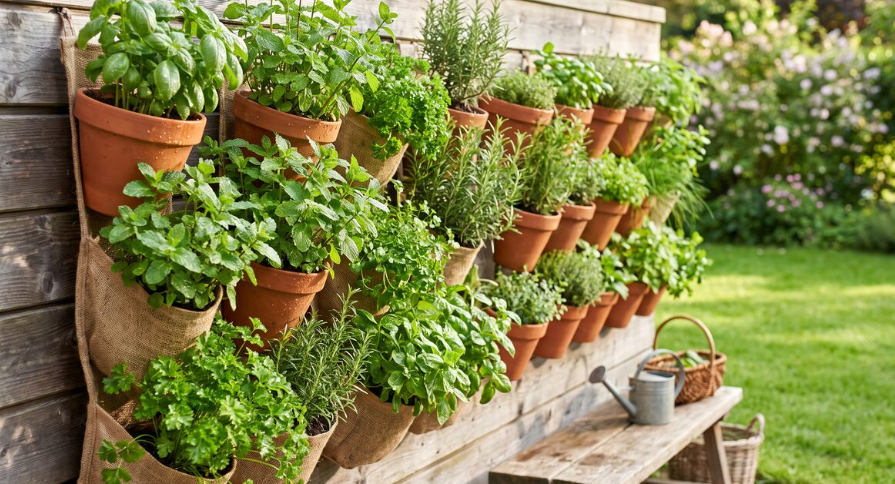
Vertical Herb Garden
Vertical herb gardens dedicate a wall-mounted or tiered structure specifically to culinary herbs, positioning frequently harvested plants like basil, thyme, and chives within easy reach near a kitchen door or window. Their practical, frequently used nature makes proximity to the kitchen genuinely worth prioritizing in the design.
They benefit from grouping herbs with similar water needs together, since a thirsty basil and a drought-tolerant rosemary sharing the same watering schedule rarely both thrive.
Vertical Strawberry Tower
Vertical strawberry towers stack planting pockets specifically for strawberry plants, whose shallow root systems and cascading runners suit a vertical column particularly well. Their considerable yield-per-square-foot has made them a favorite among small-space food gardeners.
They need consistent moisture throughout the growing season, since strawberries are genuinely sensitive to the drying-out that a vertical system’s upper levels can experience more than a ground-level bed would.
Vertical Succulent Garden
Vertical succulent gardens mount a shallow, soil-filled frame or panel specifically planted with drought-tolerant succulents, whose minimal water needs make them genuinely well suited to a vertical system’s tendency to dry out. Their considerable textural and color variety creates a genuinely striking mosaic-like display.
They need excellent drainage built into the frame, since succulents are considerably more vulnerable to rot from trapped moisture than they are to underwatering.
Vertical Vegetable Trellis Garden
Vertical vegetable trellis gardens train naturally climbing crops, pole beans, peas, cucumbers, and indeterminate tomatoes, up a sturdy support structure to maximize a small garden bed’s productive yield. Their vertical growth also improves air circulation around the foliage, genuinely reducing certain fungal disease pressure compared to sprawling ground-level growth.
They need a trellis structure sturdy enough to handle a mature, fruit-laden vine’s real weight, particularly for a heavier crop like squash or larger tomato varieties.
Vertical Salad Garden
Vertical salad gardens dedicate a tiered or pocket-based structure to lettuce, spinach, and other shallow-rooted salad greens, taking advantage of their genuinely modest root depth requirements. Their compact, frequently harvested nature suits a small space particularly well.
They benefit from succession planting across the different levels, staggering sowing dates to keep a continuous harvest coming rather than everything maturing at once.
Vertical Fern Wall
Vertical fern walls mount shade-loving ferns in a soil-backed or pocket system positioned in a genuinely low-light spot where most flowering plants would struggle. Their lush, textured fronds create a soft, jungle-like visual density.
They need consistently high humidity and moisture, struggling considerably in a dry, sun-exposed vertical location that would suit a succulent wall far better.
Vertical Air Plant Display
Vertical air plant displays mount tillandsia species in small wire cradles, wall-mounted holders, or a driftwood frame, taking advantage of the plants’ genuine ability to grow without any soil at all. Their soilless nature eliminates the weight and drainage concerns most other vertical garden ideas have to manage.
They need periodic misting or soaking despite requiring no soil, since air plants still draw moisture and nutrients through their leaves rather than roots.
Vertical Orchid Wall
Vertical orchid walls mount orchid plants in individual mesh baskets or bark-filled mounts attached to a vertical frame, replicating the way many orchid species naturally grow attached to a tree trunk in the wild. Their striking blooms make a mature orchid wall a genuine showpiece.
They need bright, indirect light and careful humidity management, considerably more exacting care than most other plants suited to a vertical garden.
Repurposed Bookshelf Vertical Garden
Repurposed bookshelf vertical gardens lay an old bookshelf on its back or stand it upright with sturdy shelf-lining, using each shelf level as a planting surface for a tiered indoor or covered outdoor display. Their genuinely distinctive, upcycled character sets them apart from a purpose-built planter.
They need real waterproofing on each shelf surface, since raw wood exposed to regular watering will warp or rot considerably faster than in its original furniture use.
Repurposed Dresser Vertical Garden
Repurposed dresser vertical gardens pull drawers partway out at staggered depths, filling each with soil to create a genuinely whimsical, tiered planting display from an otherwise discarded piece of furniture. Their upcycled charm has made them a popular cottage-garden focal point.
They break down faster than purpose-built planters when exposed to outdoor weather, so a covered location or weatherproof sealing genuinely extends their usable life.
Industrial Pipe Shelf Garden
Industrial pipe shelf gardens use threaded metal pipe fittings to construct an exposed-hardware shelving frame, each shelf holding potted plants in a genuinely modern, utilitarian aesthetic. Their raw, unfinished look suits a contemporary or industrial-style interior particularly well.
They cost more than simple wood shelving given the metal pipe and fitting components, though the resulting structure is genuinely durable and easy to reconfigure.
Bamboo Vertical Garden Frame
Bamboo vertical garden frames use lashed or joined bamboo poles to build a lightweight, naturalistic trellis or shelving structure for climbing or potted plants. Their renewable, fast-growing material source appeals to a gardener specifically prioritizing sustainable building materials.
They have a shorter outdoor lifespan than treated lumber or metal, generally needing replacement or reinforcement after a handful of years exposed to weather.
Metal Grid Wall Garden
Metal grid wall gardens mount a welded wire panel to a wall or fence, providing attachment points for hanging pots, clip-on planters, or simply a climbing surface for a vining plant. Their open, industrial structure works well in both a garden and an indoor plant-wall context.
They need the grid securely anchored to structural framing behind the wall, since a fully loaded panel represents genuine cumulative weight the mounting hardware has to support.
Woven Willow Vertical Planter
Woven willow vertical planters weave flexible willow branches into a freestanding or wall-mounted lattice, creating a genuinely rustic, handmade structure for climbing plants or hanging pots. Their organic, textural appearance suits a cottage or naturalistic garden style particularly well.
They break down faster than a milled lumber or metal structure, typically needing rebuilding every few years as the woven branches naturally decay.
Concrete Block Living Wall
Concrete block living walls stack larger, more uniform concrete blocks than standard cinder block, offering genuine structural permanence for a taller vertical planting wall. Their considerable strength supports a taller, heavier planted structure than most lighter materials could manage.
They require more upfront construction effort and cost than a simpler wood or fabric-based system, though the resulting wall genuinely outlasts nearly every other option on this list.
Self-Watering Vertical Garden
Self-watering vertical gardens incorporate an internal reservoir and wicking mechanism, similar in principle to a self-watering raised bed, specifically engineered to address gravity’s tendency to leave upper levels of a vertical system dry. Their built-in water management genuinely reduces the manual watering burden a tall planted wall would otherwise demand.
They require more complex initial construction, including a reliable reservoir and distribution system, than a simple gravity-fed pocket wall.
Vertical Aquaponic Wall
Vertical aquaponic walls combine a fish tank with a vertically stacked planting system, using fish waste to fertilize the plants while the plants help filter water returned to the tank. Their closed-loop design makes them a genuinely distinct hybrid rather than a purely plant-focused vertical garden.
They demand real ongoing monitoring of water chemistry, balancing fish health against plant nutrient needs in a way a purely soil-based vertical system never has to consider.
Vertical Garden with Drip Irrigation
Vertical gardens with drip irrigation run tubing to each individual planting level or pocket, delivering water directly and evenly regardless of the system’s height, solving gravity’s tendency to leave the top dry and the bottom oversaturated. Their automated watering also reduces the daily hands-on attention a tall vertical structure would otherwise require.
They need periodic checking to make sure emitters at each level haven’t clogged or shifted, since a single blocked emitter can leave an entire section of the wall dry.
Solar-Powered Vertical Garden
Solar-powered vertical gardens integrate a small solar panel to run a pump or lighting system, eliminating the need for a permanent electrical connection in a location where wiring isn’t practical. Their self-contained power source makes them genuinely useful for a remote or off-grid vertical garden installation.
They depend on reliable sun exposure to keep the battery charged, a real limitation for a shaded location where solar panels can’t collect enough energy.
Indoor Vertical Grow Wall
Indoor vertical grow walls incorporate supplemental grow lighting directly into the structure, letting plants thrive in an interior space with genuinely insufficient natural light on its own. Their integrated lighting makes year-round indoor growing possible regardless of window exposure or season.
They require a genuine electrical setup for the lighting and typically consume more ongoing energy than any other vertical garden idea on this list.
Vertical Garden Privacy Fence
Vertical garden privacy fences train dense, fast-growing climbing plants up a fence structure specifically to block an unwanted view or create outdoor privacy, functioning as a living screen rather than a purely decorative planting. Their combination of function and greenery offers real value beyond a plain wood or vinyl fence.
They need a genuinely vigorous, evergreen or dense-foliage climbing species to maintain year-round privacy, since a deciduous vine leaves the fence exposed through winter.
Balcony Railing Planter
Balcony railing planters mount directly to an existing railing, turning otherwise unused vertical space into a genuine growing surface without requiring any floor footprint at all. Their compact design makes them one of the most practical vertical garden ideas for a genuinely small apartment balcony.
They need to be securely clipped or strapped to the railing, since a planter that shifts or falls from height poses a real safety risk to anyone below.
Window Box Vertical Stack
Window box vertical stacks mount multiple traditional window boxes at staggered heights along an exterior wall rather than limiting the idea to a single box beneath one window. Their layered arrangement multiplies a classic, familiar planting style into a genuinely fuller vertical display.
They need secure individual mounting brackets for each box, since stacking several loaded planters concentrates real weight along a single section of wall.
Vertical Garden Arbor
Vertical garden arbors train climbing plants over an arched overhead structure, typically positioned above a garden entrance or walkway, creating a genuine living gateway rather than a flat wall planting. Their overhead coverage also provides functional shade beneath the arch once the climbing plants fill in.
They need sturdy construction to handle a mature vine’s weight overhead, a genuine structural concern given the load is suspended rather than resting against a solid wall.
Vertical Garden Obelisk
Vertical garden obelisks provide a tall, tapering, freestanding structure for a single climbing plant to spiral up, functioning as a genuine architectural focal point within a garden bed rather than a wall-mounted system. Their sculptural form adds vertical interest even before a plant has fully grown to cover it.
They need a stable, well-anchored base to avoid tipping once a mature, wind-catching vine has filled in the structure.
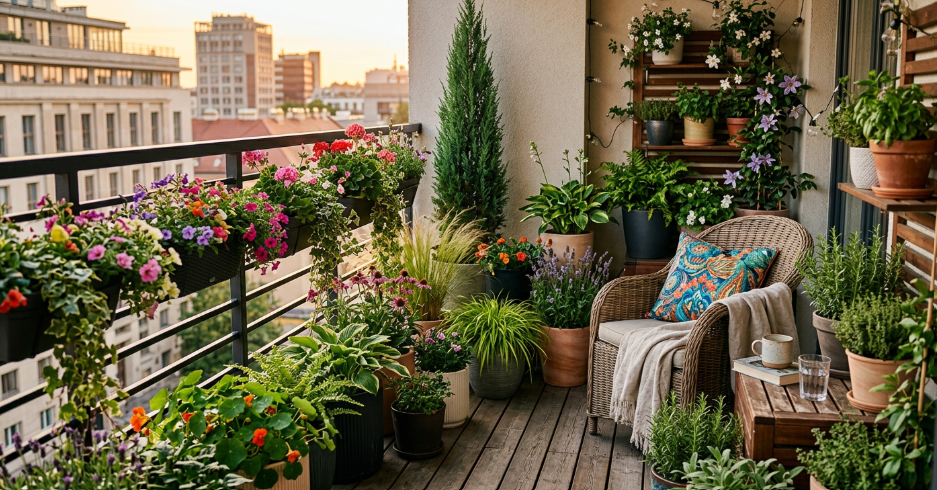
Apartment Balcony Vertical Garden
Apartment balcony vertical gardens combine several lighter-weight techniques, railing planters, wall-mounted pockets, hanging baskets, specifically suited to a rented space’s weight and mounting restrictions. Their modular, largely non-permanent nature makes them practical for a tenant who can’t drill into a shared building wall.
They need genuinely lightweight materials and containers, since many balconies have real weight limits that a soil-heavy system could exceed.
Small Courtyard Vertical Garden
Small courtyard vertical gardens use the surrounding walls of an enclosed outdoor space to multiply usable growing area well beyond what the courtyard’s actual floor footprint would otherwise allow. Their wraparound approach can turn a genuinely tiny space into a surprisingly productive garden.
They need attention to how much direct sun each wall actually receives, since a courtyard’s surrounding structure often creates meaningfully different light conditions on each side.
Rooftop Vertical Garden
Rooftop vertical gardens combine wall-mounted or trellised planting with a rooftop’s often unobstructed sun and wind exposure, a genuinely different environment than a ground-level vertical garden has to contend with. Their elevated position also means weight and structural load-bearing capacity matter more than almost anywhere else on this list.
They require a genuine structural engineering assessment of the roof’s actual load capacity before installation, since a rooftop wasn’t necessarily built to support garden-scale weight.
Vertical Garden Fence Topper
Vertical garden fence toppers add a planted structure to the top edge of an existing fence, extending both height and greenery without replacing the fence itself. Their addition to an already-standing structure makes them a relatively low-effort way to add vertical planting.
They need the existing fence to be genuinely sturdy enough to support the added weight, since an older or weaker fence may not handle a fully planted topper without reinforcement.
Community Vertical Garden Wall
Community vertical garden walls install a shared planting structure in a public or semi-public space, often divided into individually assigned sections for different community members or groups to tend. Their shared ownership model makes them a genuine tool for neighborhood engagement beyond just growing plants.
They need clear organizational planning around maintenance responsibility and water access, since a shared structure without defined care roles tends to fall into neglect.
Key Takeaways
Vertical garden ideas can make productive and attractive use of limited outdoor or indoor space by growing plants upward instead of across the ground. Wall planters, trellises, hanging systems, shelves, and living walls can accommodate flowers, herbs, vegetables, vines, and ornamental plants.
Choosing a suitable vertical garden system depends on available space, sunlight, climate, plant type, weight, watering needs, and maintenance requirements. Plants should be matched to the structure and growing conditions, while sturdy supports and adequate drainage can help prevent problems as plants mature.
A well-planned vertical garden can add greenery, privacy, color, and visual interest to small spaces. Combining plants with different heights, textures, and growth habits can create a more attractive display, while regular watering, pruning, feeding, and checking the support structure can keep the garden healthy.