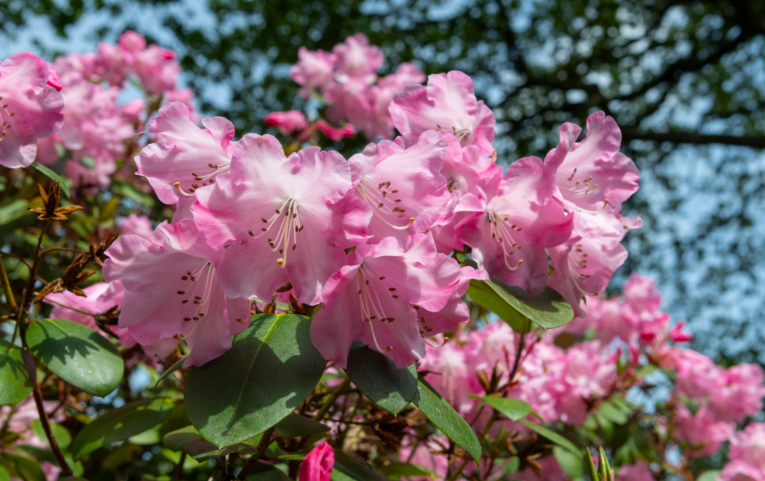
Rhododendrons are one of the largest and most spectacular flowering shrub genera in the plant kingdom, encompassing over 1,000 recognized species and more than 28,000 named cultivars developed through centuries of hybridization and selection. Native primarily to the Himalayan region of Asia — where the greatest concentration of wild species is found across Nepal, Bhutan, Tibet, and the mountains of southwestern China — they also occur naturally across North America, Europe, Australia, and parts of Southeast Asia. They are the national flower of Nepal and the state flower of Washington, West Virginia, and several other American states.
Rhododendrons range enormously in size from tiny, mat-forming alpine species reaching only 6 to 12 inches in height to towering tree-like specimens exceeding 30 feet in favorable conditions. Most commonly grown garden varieties fall between 3 and 10 feet in height and spread. They are grown in USDA zones 4 to 9 depending on the variety, with some cold-hardy modern hybrids surviving in zone 4 where temperatures drop to -30°F, and they bloom from late winter through early summer depending on the species and cultivar — providing one of the longest collectively sequential flowering seasons of any flowering shrub genus.
The flowers of rhododendrons are produced in large, showy trusses — rounded clusters of individual funnel-shaped, bell-shaped, or tubular flowers — that can contain anywhere from 3 to 30 or more individual blooms per cluster. Individual flowers range from 1 to 5 inches across depending on the species, and the color range spans white, cream, yellow, orange, pink, red, purple, lavender, and bicolor combinations in virtually every conceivable shade and marking pattern. The global rhododendron industry is enormous — the United States alone imports tens of millions of rhododendron plants annually — and they are among the top ten most commercially important ornamental shrubs sold in garden centers worldwide.
Rhododendrons require acidic soil with a pH of 4.5 to 6.0, excellent drainage, and protection from drying winds and intense afternoon sun in most climates to perform at their best. Most species and cultivars are broad-leaved evergreens that provide year-round garden structure alongside their spectacular flowering display, though the deciduous azalea subgroup loses its leaves in winter. They are sensitive to waterlogged soils, which cause root rot rapidly, and benefit from mulching with pine bark or composted oak leaves that maintain soil acidity and moisture while keeping roots cool. When given appropriate conditions, few garden shrubs can match the sheer spectacular impact of a rhododendron in full bloom.
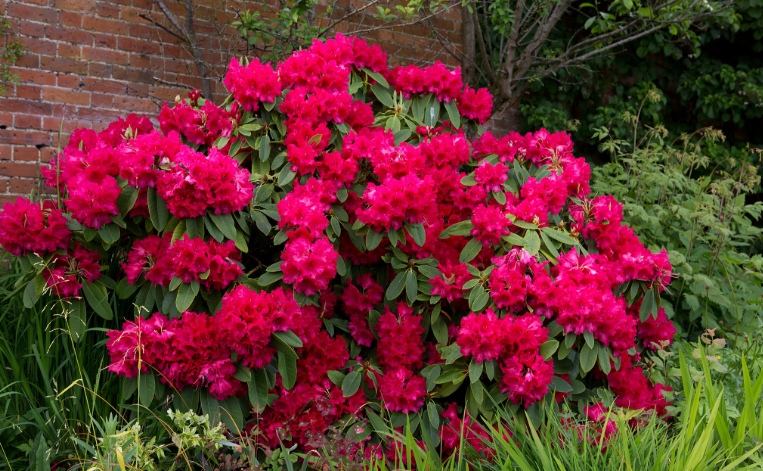
Also Read: Different Types of Cosmos Flowers
Types of Rhododendron Flowers
1. PJM Rhododendron
PJM is the most widely sold and planted rhododendron variety in the United States, producing masses of vivid, bright lavender-pink to magenta flowers in very early spring — often as early as March in the northeastern United States — on a compact, dense, small-leafed evergreen shrub reaching 3 to 6 feet. It is cold-hardy to -25°F in USDA zones 4 to 8, tolerates full sun better than most rhododendrons, and the small leaves turn attractive mahogany-purple in winter, providing additional seasonal interest. It is virtually indestructible under appropriate growing conditions and available from virtually every mainstream garden center in North America.
2. Nova Zembla
Nova Zembla is one of the most cold-hardy and widely grown hybrid rhododendrons in the world, producing large, rounded trusses of vivid, rich red flowers with darker red spotting in late spring on a vigorous, compact, dark-leafed evergreen shrub reaching 5 to 6 feet. It is reliably cold-hardy in USDA zones 4 to 8 and shows good heat tolerance compared to many large-leafed rhododendrons, making it one of the most adaptable and widely planted red rhododendron varieties across a wide geographic range. It is available from virtually every mainstream garden center across North America and Europe.
3. Cunningham’s White
Cunningham’s White is one of the oldest and most widely planted hybrid rhododendrons in the world, developed in Scotland in the nineteenth century and producing trusses of white flowers with yellowish-green spotting in mid-spring on a rounded, compact evergreen shrub reaching 4 to 6 feet. It is cold-hardy in USDA zones 5 to 8 and is also widely used as rootstock for grafting other rhododendron varieties due to its vigorous, reliable root system. Its reliable performance, clean white flowers, and compact habit have kept it in continuous commercial production for well over a century.
4. Blue Peter
Blue Peter is one of the most popular and widely grown blue-lavender hybrid rhododendrons in the world, producing large, frilled, lavender-blue flowers with a distinctive darker purple blotch in well-rounded trusses in late spring on a vigorous, wide-spreading evergreen shrub reaching 6 to 8 feet. It is hardy in USDA zones 6 to 8 and has received the Royal Horticultural Society’s Award of Garden Merit for outstanding garden performance. The large flower size, good cold hardiness, and attractive lavender-blue coloring have made it one of the most commercially important blue-toned rhododendron varieties.
5. Catawba Rhododendron
The Catawba Rhododendron is the most important native North American rhododendron species and the foundation parent of the majority of cold-hardy hybrid rhododendrons grown in American and European gardens. It produces large, rounded trusses of lilac-purple to rose-purple flowers in late spring on a large, vigorous evergreen shrub reaching 6 to 10 feet, cold-hardy in USDA zones 4 to 8. Its exceptional cold hardiness combined with large, attractive trusses made it the essential parent species for developing rhododendrons tolerant of the cold winters of northeastern America and northern Europe.
6. Yakushimanum Hybrid (Yak Hybrid)
Yak hybrids are derived from a compact Japanese island species and represent one of the most important and popular groups in modern rhododendron breeding, producing spectacular flower trusses that open from deep pink buds through pale pink to white on dome-shaped plants reaching only 3 to 4 feet in height. They are hardy in USDA zones 5 to 9 and the compact habit, stunning bicolor flower effect, and excellent heat tolerance have made them the dominant parent group for compact, weather-tolerant garden rhododendrons. Named Yak hybrids such as Solidarity, Fantastica, and Sneezy are among the most widely sold compact rhododendrons globally.
7. Exbury Azalea
The Exbury azaleas are a celebrated group of deciduous azalea hybrids developed at Exbury Estate in Hampshire, England in the 1920s and 1930s, producing some of the largest, most spectacular, and most fragrant deciduous azalea flowers in enormous trusses of vivid red, orange, yellow, pink, white, and multicolor combinations. They grow to 6 to 10 feet as multi-stemmed deciduous shrubs, are hardy in USDA zones 5 to 8, and produce brilliant autumn leaf color as an additional ornamental bonus. The Exbury group represents the pinnacle of deciduous azalea breeding achievement and is widely available from specialist nurseries.
8. Rhododendron Luteum (Yellow Azalea)
The Yellow Azalea is the most important and widely grown yellow-flowered deciduous azalea species, native across eastern Europe from Poland to the Caucasus, producing masses of vivid, golden-yellow, intensely fragrant, tubular flowers in mid-spring that are among the most powerfully scented of any rhododendron. It grows to 8 to 12 feet as a multi-stemmed deciduous shrub, is cold-hardy in USDA zones 5 to 9, and also provides excellent autumn leaf color. It is one of the most important parent species of the celebrated Ghent and Mollis deciduous azalea hybrid groups.
9. Ghent Azalea
Ghent azaleas are the oldest group of deciduous azalea hybrids, developed in Ghent, Belgium in the early nineteenth century, producing masses of relatively small but intensely fragrant, honeysuckle-like flowers in shades of yellow, orange, pink, red, and white on tall, upright, multi-stemmed deciduous shrubs reaching 6 to 10 feet. They are among the most cold-hardy of all deciduous azalea hybrids, performing reliably in USDA zones 4 to 8, and several named Ghent varieties have been in continuous cultivation for nearly 200 years. The powerful, sweet fragrance of Ghent azaleas is among the finest of any spring-flowering shrub.
10. Mollis Azalea
Mollis azaleas are a group of deciduous azalea hybrids derived primarily from Japanese and Chinese species, producing very large, showy, unscented flowers in vivid shades of red, orange, yellow, salmon, and pink in late spring on broadly spreading, multi-stemmed deciduous shrubs reaching 5 to 8 feet. They are hardy in USDA zones 5 to 8 and are particularly valued for the very large, bold flower size and the vivid, saturated color intensity of the best named varieties. Combined with brilliant autumn leaf color, they are outstanding multi-season deciduous shrubs for garden display.
11. Knap Hill Azalea
Knap Hill azaleas are a group of deciduous azalea hybrids developed at the Knap Hill Nursery in Surrey, England during the nineteenth and early twentieth centuries, closely related to the Exbury group and producing large, bold, unscented to lightly fragrant flowers in vivid shades of orange, red, yellow, pink, white, and multicolor in late spring on broadly spreading, multi-stemmed deciduous shrubs reaching 5 to 8 feet. They are hardy in USDA zones 5 to 8 and represent one of the foundational groups in English deciduous azalea breeding alongside the Exbury hybrids. Many named Knap Hill varieties remain commercially available.
12. Rhododendron Arboreum (Tree Rhododendron)
The Tree Rhododendron is the most widely distributed Himalayan rhododendron species and the national flower of Nepal, producing brilliant blood-red to crimson, bell-shaped flowers in large trusses in early spring on a large tree-like shrub reaching 20 to 40 feet in favorable mild conditions. It is one of the most important parent species in rhododendron hybridization, contributing its vivid red flower color and large truss size to countless hybrid varieties. It is hardy in USDA zones 7 to 9 and grown primarily in mild, wet Atlantic coastal climates that replicate Himalayan cloud forest conditions.
13. Korean Rhododendron
The Korean Rhododendron is a deciduous species native to Korea, Japan, and northeastern China that is one of the earliest flowering rhododendrons, producing masses of vivid, bright rose-pink to purple-pink flowers in late winter to very early spring — often in February to March — before the leaves emerge. It grows to 4 to 8 feet in height and is cold-hardy in USDA zones 4 to 7, making it one of the most valuable early spring flowering shrubs for cold-climate gardens where color is desperately needed after a long winter.
14. Rhododendron Augustinii (Blue Rhododendron)
The Blue Rhododendron is one of the most celebrated Chinese species, widely regarded as producing some of the finest blue to lavender-blue flowers achievable in the genus — approaching a true blue that is extremely rare among flowering shrubs. It produces masses of wide-opening, funnel-shaped flowers in vivid lavender-blue to violet-blue in mid-spring on a large, open-growing evergreen shrub reaching 6 to 10 feet, hardy in USDA zones 7 to 9. It is the foundation parent of most blue and lavender hybrid rhododendrons in cultivation today.
15. Rhododendron Macabeanum (Giant-Leafed Rhododendron)
The Giant-Leafed Rhododendron is one of the most spectacular large-leafed species, producing enormous creamy-yellow bell-shaped flowers with purple basal spots in large trusses on a magnificent large shrub or small tree reaching 20 to 30 feet in favorable conditions. The very large leaves — reaching 12 to 18 inches in length — with white to silver felted undersides are among the most spectacular foliage of any rhododendron. It is hardy in USDA zones 8 to 9 and grown primarily in mild, wet Atlantic coastal gardens in the British Isles and the Pacific Northwest.
16. Rhododendron Cinnabarinum (Tubular Rhododendron)
The Tubular Rhododendron is a beautiful Himalayan species producing distinctive, long, narrow, waxy, pendulous tubular flowers in shades of orange, red, pink, yellow, and bicolor combinations quite unlike the broad, funnel-shaped flowers of most rhododendrons. Growing to 6 to 10 feet as an open, elegant, upright shrub, the uniquely shaped flowers give it a distinctly exotic, architectural appearance that makes it immediately recognizable in collections. It is hardy in USDA zones 7 to 9 and grown primarily in mild, humid Atlantic coastal gardens.
17. Rhododendron Fortunei (Fragrant Rhododendron)
The Fragrant Rhododendron is one of the most historically significant Chinese species, introduced from China in 1855 and producing large trusses of fragrant, pale pink to white, funnel-shaped flowers in mid-spring on a large vigorous evergreen shrub reaching 8 to 12 feet. The fragrance is unusual and valuable among rhododendrons where most species and hybrids lack meaningful scent, and it has been an important parent species for breeding fragrant, heat-tolerant hybrids. It is hardy in USDA zones 6 to 9.
18. Rhododendron Thomsonii (Blood-Red Rhododendron)
The Blood-Red Rhododendron is a celebrated Himalayan species prized for producing some of the most richly and purely colored red flowers of any rhododendron, with deep, waxy, blood-red, bell-shaped flowers of extraordinary richness in rounded trusses in mid-spring. It grows to 6 to 10 feet with attractive round blue-green leaves and smooth, peeling, plum to mahogany-brown bark that provides additional year-round interest. It is hardy in USDA zones 7 to 9 and grown primarily in collections and woodland gardens in mild, humid coastal climates.
19. Rhododendron Ponticum (Common Rhododendron)
The Common Rhododendron is a large, vigorous, purple-flowered species native to the western Mediterranean and southwestern Asia that has become widely naturalized — and considered invasive — across the British Isles, where it was extensively planted in Victorian times as game cover. It produces large trusses of purple to lilac-pink flowers in late spring and early summer on a large, multi-stemmed evergreen shrub reaching 10 to 15 feet. Despite its invasive reputation in Britain and Ireland, it is widely used as rootstock for grafted varieties.
20. Rhododendron Decorum (White Chinese Rhododendron)
The White Chinese Rhododendron is a large, fragrant Chinese species producing beautiful, wide, funnel-shaped flowers of soft white to pale pink with green spotting in large, loose trusses in late spring on a vigorous evergreen shrub reaching 10 to 15 feet. The flowers are pleasantly fragrant and the large, smooth, bluish-green leaves are attractive year-round. It is hardy in USDA zones 7 to 9 and is one of the most important and widely used fragrant Chinese species in hybrid breeding programs aimed at developing scented garden rhododendrons.
21. Rhododendron Williamsianum (Bell-Flowered Rhododendron)
The Bell-Flowered Rhododendron is a charming, compact Chinese species producing pure, soft, shell-pink, bell-shaped flowers in loose, open trusses in mid-spring on a low-growing, mounding, dome-shaped evergreen shrub reaching only 3 to 4 feet in height. The round, bronze-tinged new leaves and the beautiful bell-shaped flowers give it year-round ornamental appeal, and it is one of the most important compact parent species used in breeding small-growing hybrid rhododendrons. It is hardy in USDA zones 6 to 8.
22. Rhododendron Bureeavii (Rusty-Leafed Rhododendron)
The Rusty-Leafed Rhododendron is a distinctive Himalayan species grown as much for its extraordinary, very thick, deep rust-red to cinnamon-brown felted leaf undersides as for its flowers, which are pale to deep pink in compact trusses in mid to late spring. The vivid, deep rusty-red indumentum — the dense felt of hairs — on the leaf undersides and young stems is among the most spectacular of any rhododendron species and provides year-round ornamental interest regardless of the flowering season. It is hardy in USDA zones 7 to 9.
23. Rhododendron Yakushimanum Koichiro Wada
Koichiro Wada is a specific named selection of the Yakushimanum species considered by many rhododendron specialists to be one of the most perfectly formed and beautiful rhododendrons in cultivation, producing tightly mounded, dome-shaped plants with exceptionally thick, white-indumentum-covered new growth and perfectly formed trusses of flowers opening from deep rose-red buds through pale pink to pure white. It grows to only 3 to 4 feet in height and spread and is hardy in USDA zones 5 to 9. It received the Royal Horticultural Society’s Award of Garden Merit.
24. Rhododendron Keiskei (Lemon-Yellow Rhododendron)
The Lemon-Yellow Rhododendron is a compact, small-leafed Japanese species producing masses of pale, soft, lemon-yellow to primrose-yellow, funnel-shaped flowers in early to mid-spring on a low-growing, spreading evergreen shrub reaching only 2 to 4 feet in height. It is one of the very few small-growing species producing true yellow flowers and is cold-hardy in USDA zones 5 to 8, making it valuable for developing cold-hardy, compact, yellow-flowered hybrids. The compact size suits rock gardens, containers, and the front of shrub borders.
25. Rhododendron Dauricum (Dahurian Rhododendron)
The Dahurian Rhododendron is one of the hardiest rhododendron species, native to the cold continental climates of Siberia, Mongolia, and northeastern China and producing masses of vivid, bright rose-pink to purple-pink flowers very early in spring — often in late winter — before the semi-deciduous leaves emerge. It grows to 4 to 6 feet in height and is cold-hardy to -40°F in USDA zones 3 to 7, making it one of the most cold-hardy rhododendrons in existence and invaluable for gardens in the harshest winter climates. It is one of the parent species of the famous Rhododendron Praecox early-flowering hybrid.
Also Read: Different Types of Carnation Flowers
26. Rhododendron Praecox (Early Rhododendron)
Praecox is a historic hybrid rhododendron produced in the mid-nineteenth century, one of the earliest rhododendrons to flower each year — producing vivid, bright rosy-purple, wide-opening flowers in late winter to very early spring, often in February or March in mild climates. It grows to 4 to 5 feet in height as a compact, semi-evergreen shrub and is hardy in USDA zones 6 to 8. The very early flowering season makes it one of the most valuable cold-hardy rhododendrons for providing early spring color when little else is in bloom in the winter garden.
27. Rhododendron Impeditum (Dwarf Blue Rhododendron)
The Dwarf Blue Rhododendron is a tiny, mat-forming alpine species from the mountains of Yunnan, China, producing masses of small, vivid, purple to blue-purple flowers on a dense, cushion-forming evergreen shrublet reaching only 12 to 18 inches in height and spread. The tiny, aromatic, grey-green leaves are attractive year-round and the dense, compact, mounding habit suits rock gardens, troughs, and alpine garden planting perfectly. It is hardy in USDA zones 4 to 8 and is one of the most reliably compact and floriferous of all dwarf rhododendron species.
28. Rhododendron Hippophaeoides (Willow-Leafed Rhododendron)
The Willow-Leafed Rhododendron is a compact, small-leafed Chinese species producing masses of pale to deep lavender-blue, lilac-pink, or pale purple, small, widely funnel-shaped flowers on a dense, upright, small-leafed evergreen shrub reaching 3 to 5 feet. It is one of the more cold-hardy small-leafed blue-flowered species, performing in USDA zones 5 to 8, and the masses of small flowers covering the plant in mid-spring create a very dense, floriferous display out of proportion to the compact plant size. It is useful as a source of blue coloring in cold-hardy breeding programs.
29. Rhododendron Calophytum (Large-Leafed Chinese Rhododendron)
The Large-Leafed Chinese Rhododendron is one of the most impressive large-leafed Chinese species, producing enormous leaves up to 18 to 24 inches long and large, loose trusses of pale pink to white flowers with a deep maroon basal blotch in early spring — one of the earliest of the large-leafed species to flower. It grows to 15 to 25 feet in height in favorable conditions and is hardy in USDA zones 7 to 9. The very long leaves, early flowering, and large size make it an impressive specimen for large woodland garden settings.
30. Rhododendron Wardii (Ward’s Yellow Rhododendron)
Ward’s Yellow Rhododendron is a Tibetan species producing beautiful, wide, saucer-shaped flowers of clear, pure lemon-yellow to golden-yellow in compact, flat-topped trusses in mid-spring — one of the finest yellow-flowered rhododendron species available for garden cultivation. It grows to 6 to 10 feet in height with attractive, round, blue-green leaves and is hardy in USDA zones 7 to 9. The clear, true yellow of the flowers is exceptional among rhododendrons and has made it one of the most important parent species for breeding quality yellow-flowered hybrid varieties.
31. Rhododendron Smirnowii (Smirnow’s Rhododendron)
Smirnow’s Rhododendron is a remarkably cold-hardy Caucasian species producing large, rounded trusses of rose-pink to lilac-pink flowers in late spring on a large, vigorous evergreen shrub reaching 6 to 10 feet with distinctively white to grey-felted undersides to the large leaves. It is one of the most cold-hardy large-leafed rhododendron species, performing in USDA zones 4 to 7, and has been an important parent species for developing cold-hardy, large-leafed hybrid rhododendrons tolerant of cold continental climates. The attractive white leaf undersides provide additional year-round ornamental interest.
32. Rhododendron Hyperythrum (Taiwan Rhododendron)
The Taiwan Rhododendron is a compact, relatively cold-hardy species from Taiwan producing attractive, clean white to pale pink flowers with purple spotting in well-formed trusses in mid-spring on a rounded, compact evergreen shrub reaching 4 to 6 feet. It is hardy in USDA zones 6 to 9 and has been useful in breeding programs aimed at developing compact, white-flowered hybrids with improved heat tolerance for warmer growing regions. The clean, well-formed flowers and compact habit make it an ornamentally pleasing garden species in its own right.
33. Rhododendron Orbiculare (Round-Leafed Rhododendron)
The Round-Leafed Rhododendron is a beautiful Chinese species grown as much for its remarkably round, perfectly circular, blue-green leaves — unusual among rhododendrons — as for its beautiful, soft rose-pink, bell-shaped flowers produced in loose, open trusses in mid-spring. It grows to 6 to 10 feet in height and is hardy in USDA zones 7 to 9. The combination of the distinctively rounded leaf form and the delicate bell-shaped flowers gives it a refined, elegant quality that makes it a treasured ornamental specimen in mild woodland garden collections.
34. Rhododendron Sutchuenense (Sichuan Rhododendron)
The Sichuan Rhododendron is a large, impressive Chinese species producing very large trusses of pale to deep rose-pink to lilac-pink, bell-shaped flowers with darker spotting in late winter to early spring — one of the earlier large-leafed species to flower. It grows to 15 to 25 feet in height with very long, narrow leaves reaching 12 to 16 inches and is hardy in USDA zones 7 to 9. The very early flowering season for such a large-leafed species and the impressively sized leaves and flower trusses make it a dramatic woodland garden specimen.
35. Rhododendron Pseudochrysanthum (False Gold Rhododendron)
The False Gold Rhododendron is a compact, beautiful Taiwanese species producing attractive trusses of soft, pale pink to white flowers with pink spotting alongside distinctive, densely white-woolly new growth that is highly ornamental as it unfolds in spring. It grows to 4 to 6 feet in height and is hardy in USDA zones 6 to 9. The combination of attractive new growth, well-formed flowers, and compact habit has made it a useful parent species for breeding compact rhododendrons with ornamental foliage as well as flower interest.
36. Rhododendron Racemosum (Rack Rhododendron)
The Rack Rhododendron is a variable Chinese species producing masses of small, pale pink to deep rose-pink, funnel-shaped flowers along the stems rather than in terminal trusses — an unusual, racemose flowering arrangement that distinguishes it from most other rhododendrons — on a dense, twiggy, small-leafed evergreen shrub reaching 3 to 6 feet. It is one of the more cold-hardy small-leafed Chinese species, performing in USDA zones 5 to 8, and the generous, stem-covering flower display in mid-spring is very attractive. It is occasionally available from specialist rhododendron nurseries.
37. Rhododendron Aberconwayi (Aberconway’s Rhododendron)
Aberconway’s Rhododendron is a Chinese species producing attractive, widely funnel-shaped to saucer-shaped flowers of white to pale pink with purple spotting in mid-spring on a compact, mounding evergreen shrub reaching 4 to 6 feet. The flat, saucer-shaped flower form is distinctive and appealing, and the compact, well-branched habit gives the plant good garden presence. It is hardy in USDA zones 7 to 9 and is available from specialist rhododendron nurseries, valued for the delicate beauty of the open, flat flowers and the compact plant habit.
38. Rhododendron Morii (Mori’s Rhododendron)
Mori’s Rhododendron is a large-leafed Taiwanese species producing attractive trusses of white flowers with reddish to purple spotting in mid-spring on a vigorous evergreen shrub reaching 8 to 12 feet. It is one of the more cold-hardy large-leafed species from Taiwan, performing in USDA zones 6 to 9, and has been useful in breeding programs aimed at developing heat-tolerant, large-leafed hybrid rhododendrons for warmer growing regions of the southeastern United States. It is available from specialist rhododendron nurseries and botanical garden collections.
39. Rhododendron Brachycarpum (Fuju Rhododendron)
The Fuju Rhododendron is a Japanese and Korean species producing compact trusses of white to pale pink flowers with greenish spotting in midsummer — significantly later than most rhododendrons — on a large, dense evergreen shrub reaching 6 to 10 feet with attractive, white-woolly leaf undersides. It is one of the more cold-hardy large-leafed species, performing in USDA zones 5 to 8, and the late flowering season fills a gap in the rhododendron display calendar when most other species have finished. It is available from specialist nurseries.
40. Rhododendron Bureeavii x Yakushimanum Hybrids
Crosses between the Rusty-Leafed species and the Yakushimanum species have produced some of the most ornamentally complete compact rhododendrons available, combining the spectacular rust-red indumentum on new growth and leaf undersides of one parent with the dome-shaped compact habit, bicolor flower display, and excellent heat tolerance of the other. These hybrids typically reach 3 to 5 feet in height and combine attractive foliage year-round with beautiful flower trusses in mid-spring. They are hardy in USDA zones 5 to 8 and are increasingly available from specialist rhododendron nurseries.
41. Rhododendron Calostrotum (Beautiful-Colored Rhododendron)
The Beautiful-Colored Rhododendron is a delightful dwarf Himalayan species producing large, flat, saucer-shaped flowers of deep rose-crimson to magenta-purple that are disproportionately large relative to the tiny, mat-forming plant reaching only 12 to 18 inches in height and spread. The flat, open flower form and vivid, saturated color are striking in the rock garden setting where this compact species is most effectively displayed. It is hardy in USDA zones 6 to 8 and is one of the most ornamentally refined of all dwarf rhododendron species.
42. Rhododendron Campanulatum (Bell Rhododendron)
The Bell Rhododendron is a Himalayan species producing large, widely bell-shaped flowers of lavender, lilac, pale blue-purple, or white in compact, rounded trusses in mid-spring on a large, rounded evergreen shrub reaching 8 to 12 feet with attractive, rust-brown indumentum on the leaf undersides. It is one of the larger Himalayan species with good ornamental foliage as well as attractive flowers and is hardy in USDA zones 7 to 9. The broadly bell-shaped flower form is one of the most elegant among Himalayan species and gives the flower trusses a refined, architectural quality.
43. Rhododendron Falconeri (Falcon’s Rhododendron)
Falcon’s Rhododendron is one of the most magnificent of all large-leafed Himalayan species, producing truly enormous leaves up to 18 to 24 inches long with striking rust-brown felted undersides and large, compact trusses of creamy-white to pale yellow flowers with purple basal blotches in early to mid-spring on a large, tree-like shrub reaching 20 to 30 feet in favorable conditions. The combination of enormous, felted leaves and bold flower trusses makes it one of the most dramatically spectacular rhododendrons for large, sheltered woodland garden settings. It is hardy in USDA zones 8 to 9.
44. Rhododendron Strigillosum (Bristly Rhododendron)
The Bristly Rhododendron is a Chinese species notable for its distinctively bristly stems and leaf stalks alongside its brilliant, vivid, intense scarlet-red, tubular-bell-shaped flowers produced early in the season in compact, rounded trusses on a large evergreen shrub reaching 8 to 12 feet. The intense scarlet-red of the flowers — approaching the color of Rhododendron Thomsonii but produced earlier in the season — is among the most vivid of any Chinese rhododendron species. It is hardy in USDA zones 7 to 9 and available from specialist collections.
45. Rhododendron Proteoides (Dwarf Himalayan Rhododendron)
The Dwarf Himalayan Rhododendron is a tiny, very compact alpine species from the high Himalayas, forming dense, cushion-like mounds of very small, narrow, deep green leaves reaching only 6 to 12 inches in height and producing small trusses of white to pale pink flowers in mid-spring. It is one of the most dwarf of all rhododendron species and is grown primarily by specialist alpine and rock garden enthusiasts who appreciate the extraordinary compactness and botanical curiosity of this miniature high-altitude survivor. It is hardy in USDA zones 4 to 7.
46. Rhododendron Edgeworthii (Edgeworth’s Rhododendron)
Edgeworth’s Rhododendron is a remarkable Himalayan epiphytic species growing naturally on the mossy branches of forest trees, producing some of the most intensely fragrant flowers of any rhododendron — large, white to pale pink, trumpet-shaped blooms with an extraordinarily powerful, sweet, lily-like scent that can perfume the air for considerable distances. It grows to 4 to 8 feet as an epiphytic or terrestrial shrub and is hardy in USDA zones 8 to 9. The combination of extraordinary fragrance and beautiful white flowers makes it one of the most sensory impressive rhododendrons for mild garden climates.
47. Rhododendron Maddenii (Madden’s Rhododendron)
Madden’s Rhododendron is a fragrant Himalayan species producing large, white to pale pink, wide funnel-shaped, intensely fragrant flowers in mid to late spring on a large, open-growing evergreen shrub reaching 8 to 12 feet. It is one of the most important parent species for breeding fragrant rhododendron hybrids and is the foundation of the Maddenii subsection hybrids — a group of tender, fragrant rhododendrons grown in conservatories and mild coastal gardens for their extraordinary scent. It is hardy in USDA zones 8 to 10 and requires mild conditions to thrive.
48. Rhododendron Nuttallii (Nuttall’s Rhododendron)
Nuttall’s Rhododendron is the giant of the fragrant Himalayan rhododendrons, producing enormous, trumpet-shaped, white to pale yellow flowers up to 5 to 6 inches across with an extraordinarily powerful, exotic, lily-like fragrance on a large, tree-like shrub reaching 15 to 25 feet. The very large flower size and extraordinary fragrance make it one of the most dramatically impressive of all fragrant rhododendrons. It is hardy only in USDA zones 9 to 10 and requires conservatory or very sheltered mild garden conditions outside its native Himalayan climate.
49. Rhododendron Hodgsonii (Hodgson’s Rhododendron)
Hodgson’s Rhododendron is a large, impressive Himalayan species producing compact, rounded trusses of pink to lilac-pink, bell-shaped flowers in early to mid-spring on a magnificent, large, tree-like shrub reaching 15 to 25 feet with very long, broad leaves and attractively peeling, mahogany to plum-brown bark that provides outstanding year-round ornamental interest. The combination of impressive leaf size, beautiful bark, and attractive flowers makes it one of the most ornamentally complete of all large Himalayan rhododendrons. It is hardy in USDA zones 7 to 9.
50. Rhododendron Catawbiense Album (White Catawba)
White Catawba is a white-flowered selection of the native North American Catawba Rhododendron, combining the exceptional cold hardiness of the species — performing reliably in USDA zones 4 to 8 — with large, pure white, purple-spotted flowers in well-rounded trusses in late spring on a vigorous, large, rounded evergreen shrub reaching 6 to 10 feet. The combination of outstanding cold hardiness and clean white flowers has made it one of the most important and widely planted white rhododendrons for cold-climate gardens, providing a reliable large-flowered white option where most white rhododendrons would not survive. It is widely available from mainstream garden centers.