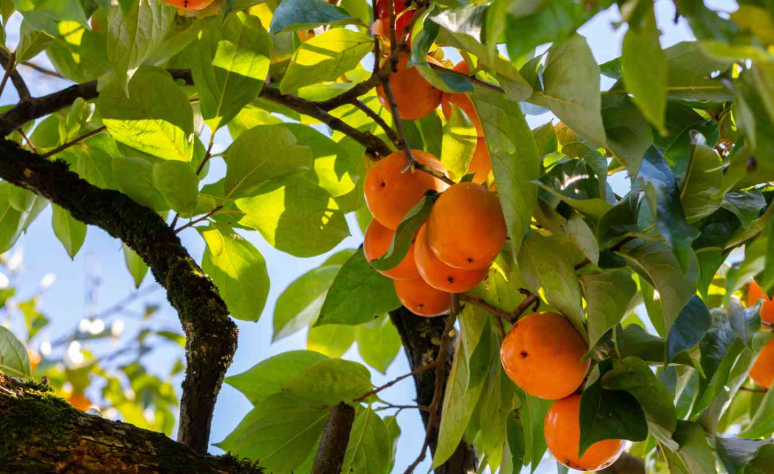
Persimmons are among the most distinctive fruits grown in temperate and subtropical regions. Their smooth skin, brilliant orange or reddish color, and unusual combination of sweetness and astringency make them easy to recognize. Depending on the variety, a persimmon may be round and flattened, acorn-shaped, elongated, or almost tomato-like. Some can be eaten while still firm, while others need to become extremely soft before their flavor reaches its best.
Although the word persimmon is often used as though it refers to a single fruit, there are actually numerous species, cultivars, and named varieties. The most important cultivated species is Japanese persimmon (Diospyros kaki), which accounts for many of the varieties found in orchards and grocery stores. Other important species include American persimmon (Diospyros virginiana) and date plum (Diospyros lotus), while hybrids combine characteristics from different species.
Persimmon varieties also differ considerably in their eating characteristics. Some are non-astringent, meaning they can be eaten while firm and crisp. Others are astringent and need to soften before they become pleasant to eat. A third group is classified as pollination-variant, meaning the fruit’s flesh and astringency can change depending on whether the flowers were pollinated and seeds developed.
The 24 persimmons below represent a mixture of well-known Japanese persimmons, American types, hybrids, and unusual cultivars. They vary in shape, color, texture, flavor, harvest period, and cold tolerance. This diversity makes persimmons especially interesting for gardeners and fruit enthusiasts looking beyond the standard supermarket varieties.
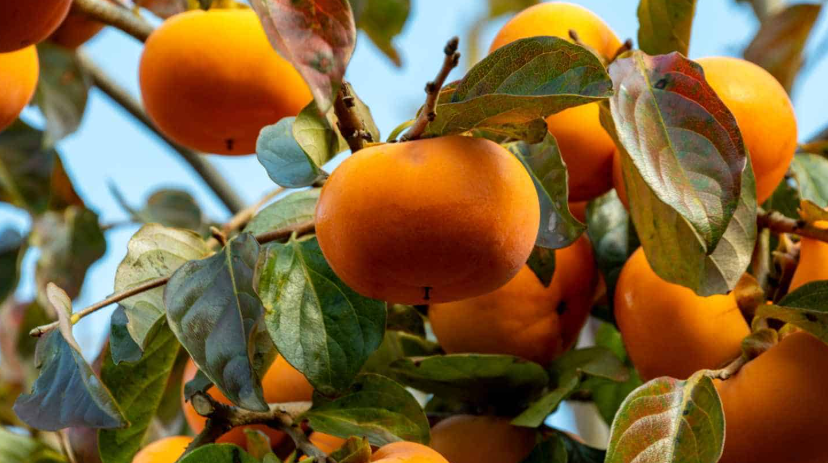
Types of Persimmons
1. Fuyu Persimmon
Fuyu is one of the most popular non-astringent persimmons and is widely grown commercially.
The fruits are characteristically short, round, and flattened, often resembling a small orange tomato. Their skin develops a rich orange color when ripe.
One of Fuyu’s biggest advantages is that it can be eaten while still firm. The flesh is crisp, juicy, and sweet, with a mild flavor that makes it particularly appealing to people who are unfamiliar with persimmons.
Fuyu trees are relatively compact compared with some other persimmon varieties and are commonly grown in home orchards and backyard gardens.
2. Jiro Persimmon
Jiro is another highly regarded non-astringent Japanese persimmon.
The fruits are generally flattened and blocky, with four subtle grooves running from the stem toward the bottom.
Jiro persimmons turn orange as they mature and can be eaten while firm. Their flesh is usually crisp, sweet, and relatively mild.
The variety is often compared with Fuyu because both can be harvested and eaten without the extreme softness required by astringent varieties.
3. Hachiya Persimmon
Hachiya is one of the most recognizable astringent persimmons.
Its large fruits are typically elongated and acorn-shaped, with a pointed bottom. When mature, the skin becomes bright orange to reddish-orange.
Unlike Fuyu, Hachiya should generally not be eaten while firm. Unripe fruit contains high levels of soluble tannins that create an intense astringent sensation.
When completely ripe, the flesh becomes extremely soft and pudding-like. This makes Hachiya particularly useful for baking, smoothies, desserts, sauces, and other recipes.
4. American Persimmon
American persimmon (Diospyros virginiana) is native to the eastern and central United States.
The fruit is generally smaller than cultivated Japanese persimmons, often around 1–2 inches across, although size varies.
Unripe fruits can be extremely astringent. When fully ripe, however, they become exceptionally sweet and soft.
American persimmons range from orange to reddish-purple and may contain several relatively large seeds.
The species is also considerably more cold hardy than Japanese persimmon, making it particularly valuable for gardeners in colder regions.
5. Chocolate Persimmon
Chocolate persimmon is a popular Japanese persimmon type known for its unusual flesh.
The exterior is typically orange, while the interior can develop brown or chocolate-colored streaks when the fruit contains seeds.
The flesh can be firm and sweet, with a rich flavor.
Chocolate persimmon is generally considered a pollination-variant type, meaning pollination can influence the appearance and characteristics of the flesh.
6. Maru Persimmon
Maru is another Japanese persimmon cultivar associated with brown or darkened flesh when pollinated.
The fruits are generally round to somewhat flattened and develop orange skin.
When fully ripe, Maru can have a rich sweetness and distinctive flavor.
The brown interior is one of its most interesting characteristics and explains why it is sometimes grouped with chocolate-type persimmons.
7. Sharon Fruit
Sharon fruit is a commercial name commonly associated with persimmons grown in Israel and marketed internationally.
It is generally derived from a non-astringent Japanese persimmon type and has a round to slightly flattened shape.
The fruit can be eaten while firm, making it convenient for fresh consumption.
Its flesh is sweet, smooth, and usually seedless.
The name “Sharon fruit” refers primarily to its commercial identity rather than a completely separate persimmon species.
8. Saijo Persimmon
Saijo is a traditional Japanese persimmon cultivar.
It produces elongated, narrow fruits with a pointed or slightly tapered end.
Saijo is an astringent variety and should be allowed to ripen fully before eating fresh.
The ripe flesh becomes soft and intensely sweet. The cultivar is also valued for drying, a traditional way of preserving persimmons.
Saijo trees can be productive and are particularly interesting for gardeners seeking an old Japanese variety.
9. Gosho Persimmon
Gosho, also known as Giant Fuyu, is a large non-astringent persimmon.
Its fruit is generally round and somewhat flattened, resembling Fuyu but often reaching a considerably larger size.
The skin turns a bright orange when ripe.
Gosho is valued for its sweet, crisp flesh and attractive appearance. Because it can be eaten while firm, it is particularly convenient for slicing into salads or eating fresh.
10. Izu Persimmon
Izu is an early-ripening non-astringent Japanese persimmon.
The fruit is typically medium-sized, orange, and flattened.
One of its most useful characteristics is its relatively early harvest season, allowing gardeners to enjoy persimmons before many later cultivars mature.
Izu is also valued for its sweet flavor and firm texture.
11. Tamopan Persimmon
Tamopan is notable for its unusually large fruits.
The fruits can be rounded or somewhat flattened and often have a prominent horizontal groove around the middle.
They develop orange skin and can become quite substantial compared with many other persimmons.
Tamopan is generally an astringent type and needs appropriate ripening before fresh consumption.
Its unusual shape also gives it ornamental interest.
12. Hyakume Persimmon
Hyakume is a traditional Japanese cultivar famous for its brownish flesh.
The fruit is generally medium-sized and somewhat flattened.
When pollinated, the flesh can develop attractive dark brown areas, while the fruit remains sweet and flavorful.
Hyakume is commonly associated with pollination-variant behavior and is appreciated by persimmon enthusiasts for its distinctive appearance.
13. Amagaki Persimmon
Amagaki refers to sweet or non-astringent Japanese persimmons.
The name is associated with persimmons that can be eaten while firm rather than requiring the soft texture characteristic of astringent cultivars.
Many Amagaki types have orange skin and crisp, sweet flesh.
They are especially appealing for fresh eating because their texture is closer to a firm apple than a soft pudding.
14. Tanenashi Persimmon
Tanenashi is a well-known Japanese persimmon cultivar.
Its name is associated with seedlessness, and the fruit is generally elongated to conical.
The skin develops a bright orange color as the fruit matures.
Tanenashi is an astringent cultivar, so it needs proper ripening before it becomes pleasant to eat.
It has historically been important in commercial persimmon production.
15. Triumph Persimmon
Triumph is an Israeli persimmon cultivar that is closely associated with the commercial Sharon fruit trade.
The fruits are medium-sized, rounded, and orange.
Triumph is naturally astringent, but commercial treatment can remove the astringency without requiring the fruit to become soft.
This allows the fruit to be shipped and eaten while still relatively firm.
16. Nishimura Wase Persimmon
Nishimura Wase is a Japanese cultivar valued for its early maturity.
It produces medium-sized fruits with orange to reddish-orange skin.
The flesh can develop brown coloration when pollinated, placing it among the interesting pollination-variant persimmons.
Its relatively early harvest makes it useful in regions where the growing season is not long enough for very late cultivars.
17. Chocolate Fuyu
Chocolate Fuyu is a pollination-variant type related to the familiar Fuyu group.
The exterior resembles a conventional Fuyu, with a rounded and flattened orange fruit.
The flesh, however, can develop dark brown streaks or patches when seeds are present.
It combines the attractive shape of Fuyu with the unusual interior coloration associated with chocolate-type persimmons.
18. Eureka Persimmon
Eureka is a persimmon cultivar grown particularly in regions with suitable warm climates.
The fruits develop orange to reddish-orange skin and are generally rounded to somewhat elongated.
The variety is valued for productive trees and attractive fruit.
As with many named persimmon cultivars, local climate and growing conditions can strongly influence fruit size, quality, and harvest timing.
19. Great Wall Persimmon
Great Wall is a Chinese-origin persimmon cultivar that has become known among collectors and home fruit growers.
It produces attractive orange fruits and is valued for its adaptation to certain growing conditions.
The cultivar is particularly interesting for gardeners who want something less common than Fuyu or Hachiya.
Its fruit characteristics can vary depending on climate and pollination.
20. Russian Beauty Persimmon
Russian Beauty is associated with hybrid persimmon breeding and is valued for its relatively good cold tolerance.
The fruit can develop orange-red skin and sweet flesh.
Hybrid persimmons are particularly interesting to gardeners in regions where standard Japanese persimmons may suffer winter damage.
Russian Beauty is therefore sometimes considered by growers looking for a balance between fruit quality and improved cold hardiness.
21. Nikita’s Gift Persimmon
Nikita’s Gift is a well-known hybrid involving Japanese and American persimmon genetics.
The cultivar was developed in Ukraine and has become popular among gardeners interested in growing persimmons in cooler climates.
The fruit is generally orange-red and can be medium-sized.
One of its major attractions is its combination of fruit quality and improved cold tolerance compared with many standard Japanese persimmons.
22. Meader Persimmon
Meader is a selected American persimmon cultivar.
It produces relatively large fruit compared with many wild American persimmons and is valued for sweet, flavorful flesh when fully ripe.
The tree can tolerate considerably colder temperatures than typical Japanese persimmon cultivars.
For gardeners in colder parts of the United States, Meader can therefore be a practical choice.
23. Early Golden Persimmon
Early Golden is an American persimmon cultivar known for producing fruit relatively early in the season.
The fruits are generally small to medium-sized and orange when mature.
As with other American persimmons, the fruit should be fully ripe before eating because immature fruit can be strongly astringent.
Its early ripening period can be useful in regions with shorter growing seasons.
24. Prok Persimmon
Prok is an American persimmon selection known for producing larger-than-average fruit.
The fruits can be around 2 inches or more in diameter, depending on growing conditions.
They become soft and sweet when fully ripe and are useful for fresh eating, baking, preserves, and desserts.
Prok is also valued for its cold tolerance, making it an interesting option for gardeners who live too far north for many Japanese persimmons.
Understanding the Main Types of Persimmon
The easiest way to understand persimmon diversity is to divide varieties according to astringency and pollination behavior.
Astringent Persimmons
Astringent persimmons contain tannins that create a strong drying sensation when the fruit is not fully ripe.
Hachiya, Saijo, Tanenashi, and many American persimmons fall into this category.
These fruits should generally be allowed to become very soft before fresh consumption.
Non-Astringent Persimmons
Non-astringent varieties can generally be eaten while they are still firm.
Fuyu, Jiro, Gosho, and Izu are examples.
They are particularly popular for fresh eating because they can be sliced and eaten much like an apple.
Pollination-Variant Persimmons
Pollination-variant cultivars are especially interesting because seed development can affect the fruit’s flesh color and texture.
Chocolate, Maru, Hyakume, and Chocolate Fuyu can develop brown or dark-colored flesh when pollinated.
This creates a striking contrast between the orange exterior and darker interior.
Japanese Persimmon vs. American Persimmon
Japanese persimmon and American persimmon are both members of the genus Diospyros, but they have important differences.
Japanese persimmon (Diospyros kaki) generally produces larger fruits and is most widely associated with commercial cultivars such as Fuyu and Hachiya. It prefers relatively mild climates and is commonly grown in USDA Zones 7–10, although exact hardiness varies by cultivar and site.
American persimmon (Diospyros virginiana) is native to North America and is considerably more cold tolerant. It can survive winter temperatures well below those tolerated by many Japanese persimmons.
American persimmon fruit is generally smaller, but its flavor can be exceptionally sweet once completely ripe.
Choosing a Persimmon Variety for the Garden
Climate should be one of the first considerations when selecting a persimmon.
Gardeners in warmer regions have a much wider choice of Japanese persimmons, while those in colder areas may want to investigate American persimmons or Japanese-American hybrids.
Fruit texture is another important consideration.
If you prefer crisp fruit, Fuyu, Jiro, Gosho, and Izu are attractive choices. If you enjoy extremely soft, custard-like fruit, Hachiya and other astringent varieties may be more suitable.
Pollination is also worth investigating before planting. Some varieties can produce fruit without another tree, while others perform better with compatible pollination partners.
Soil drainage is equally important. Persimmons generally perform best in deep, well-drained soil and a sunny location. Poor drainage can weaken roots and reduce overall tree performance.
Persimmon Harvest Times
Harvest timing varies considerably among cultivars and climates.
Early varieties such as Izu and Early Golden can mature before later cultivars such as Hachiya and some American persimmons.
In many temperate regions, the main persimmon harvest occurs during fall, often extending from September into November depending on cultivar and local weather.
Astringent varieties may need additional ripening after harvest. They can be allowed to soften naturally at room temperature, while controlled ripening methods can also be used.
Non-astringent varieties can generally be harvested and eaten while firm once they have developed their characteristic orange color.
Persimmons in the Landscape
Persimmon trees are not only fruit producers. They can also make attractive ornamental trees.
Their broad green leaves create a useful summer canopy, while the foliage can develop attractive yellow, orange, or reddish tones in autumn.
The brightly colored fruit can remain on the branches after the leaves begin to fall, creating a particularly striking display.
American persimmons can also provide valuable wildlife habitat. Birds and mammals consume the ripe fruit, making native persimmons useful additions to wildlife-friendly landscapes.
For edible gardens, a persimmon can therefore provide fruit, autumn color, wildlife value, and ornamental interest from a single tree.