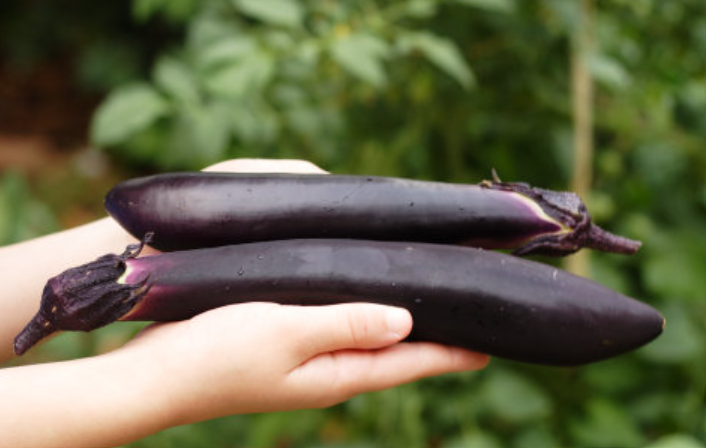
Japanese eggplant refers to a genuine horticultural type within the broader eggplant species, distinguished by its long, slender, cylindrical shape and notably thin, glossy purple skin, quite different from the large, rounder globe eggplant more commonly sold in American grocery stores. A typical Japanese eggplant runs about 12 to 15 centimeters long with an oval to slightly tapered shape, and its considerably thinner skin and near-seedless flesh give it a milder flavor and creamier texture once cooked.
Japan’s own eggplant industry reflects centuries of regional specialization rather than a single standardized crop. Niigata Prefecture holds the largest eggplant growing acreage in the country as of 2019 and alone cultivates more than 18 documented distinct eggplant varieties, each suited to a different traditional preparation, some bred specifically for pickling, others for grilling or stewing. That kind of regional variety development, repeated in prefectures across the country, has produced named heirloom cultivars like Yoshikawa Nasu, which became the first traditional Japanese vegetable to receive national Geographical Indication status in 2016 after nearly disappearing from cultivation in the late 20th century.
Eggplant, called nasu in Japanese, carries genuine cultural weight beyond the kitchen too, appearing in a well-known New Year’s proverb about auspicious first dreams of the year, ranking third in luck behind only Mount Fuji and a hawk. Nutritionally, the vegetable is over 90 percent water by weight and contributes dietary fiber, potassium, and folate, while its deep purple skin owes its color to nasunin, an antioxidant compound concentrated specifically in that outer layer.
The Purdue University Center for New Crops and Plant Products documents eggplant variety types and regional cultivation patterns, including Asian long-fruited types like the Japanese eggplant, in more horticultural depth than a general overview can.
Senryo Nasu
Senryo nasu produces a genuinely egg-shaped, medium-sized fruit and is the variety most commonly eaten across Japan’s Kanto and Tohoku regions, its glossy purple skin and tender flesh holding its shape well when cooked. Its considerable versatility has made it a genuine everyday staple in home cooking across eastern Japan.
It thrives in a warm growing season, its reliable productivity making it one of the most commercially significant Japanese eggplant types.
Senryo Nigo
Senryo Nigo, literally “Senryo Number 2,” is a specific, widely grown cultivar within the broader Senryo family, bred for improved disease resistance and consistent fruit shape compared to older Senryo strains. Its considerable reliability has made it one of the standard commercial varieties used across Japanese vegetable farms today.
It thrives in a warm growing season, its improved disease resistance offering real practical advantage over older, less refined Senryo lines.
Naga-Nasu
Naga-nasu, meaning simply “long eggplant,” refers to the genuinely long, slender eggplant type favored throughout western Japan, in contrast to the rounder Senryo type more common in the east. Its considerable length and thin skin make it well suited to grilling and quick stir-frying.
It thrives in a warm growing season, its slender shape reflecting a genuinely distinct regional preference from the shorter, rounder varieties favored elsewhere in the country.
Kamo Nasu
Kamo nasu, sometimes called the “Queen of Eggplants,” originated in the Kamo River area of Kyoto and is one of Kyoto’s officially protected kyo-yasai heirloom vegetables, its round, dense fruit weighing up to half a pound. Its considerable prestige has made it a fixture at Kyoto’s finest restaurants and the subject of an annual harvest blessing festival at Kamigamo Shrine.
It tolerates warm, humid summer conditions, its considerable culinary reputation reflecting genuine centuries-long cultivation specific to the Kyoto region.
Komaru-Nasu
Komaru-nasu, meaning “small round eggplant,” is a genuinely compact variety valued specifically for pickling, its smaller size making it easy to preserve whole. Its considerable popularity in Japanese pickle-making reflects a specific culinary use distinct from larger cooking varieties.
It thrives in a warm growing season, its compact size and dense flesh suiting it particularly well to traditional Japanese pickling methods.
Mizunasu
Mizunasu, meaning “water eggplant,” originated in the Senshu area of Osaka Prefecture, its remarkably delicate skin and extremely soft, succulent flesh making it genuinely mild enough to eat raw, unlike most other eggplant varieties. Its considerable tenderness has made it a distinctive regional specialty served fresh in salads.
It tolerates warm, humid growing conditions, its unusually soft texture reflecting specific regional soil and climate conditions around Osaka.
Yoshikawa Nasu
Yoshikawa nasu originated in Yoshikawa Village in Fukui Prefecture and became the first traditional Japanese vegetable to receive national Geographical Indication protection in 2016, after nearly disappearing from cultivation due to its considerably lower yield compared to modern hybrids. Its historically prized shape once carried genuine symbolic value in the region.
It tolerates a range of soil conditions, its considerably lower productivity compared to modern varieties reflecting genuine heirloom rather than commercial breeding priorities.
Millionaire
Millionaire is a genuinely widely grown modern hybrid, developed for its reliable productivity and long, slender, glossy purple fruit, and remains one of the most common Japanese eggplant varieties sold internationally under the Japanese eggplant name. Its considerable consistency has made it a dependable choice for both home gardeners and commercial growers.
It thrives in full sun and warm, rich soil, its considerable reliability having made it a genuine industry standard variety.
Orient Express
Orient Express is another genuinely popular modern hybrid, prized for its early maturity and slender, deep purple fruit that develops considerably faster than many other Japanese eggplant varieties. Its considerable speed to harvest has made it a favorite for gardeners in a region with a shorter growing season.
It thrives in full sun and warm, rich soil, its early maturity offering real practical value in a marginal or shorter growing climate.
Konasu
Konasu, meaning simply “small eggplant,” refers to a genuinely compact Japanese eggplant type valued for its tender flesh and quick cooking time. Its considerable size makes it well suited to being cooked and served whole rather than sliced.
It thrives in a warm growing season, its compact size reflecting a genuine, distinct category within Japan’s broader eggplant classification system.
Kurume Long
Kurume Long originated in the city of Kurume in Japan’s Fukuoka Prefecture, its glossy, deep purple-black fruit growing considerably long on distinctive black stems. Its mild, tender flesh has made it a favorite for tempura and pickling throughout the region it’s named for.
It thrives in a warm growing season, maturing considerably quickly, often within about 60 days of transplanting.
Shoya Long
Shoya Long produces genuinely elongated, deep purple fruit valued for its mild flavor and tender texture, a widely available commercial variety representing one of the standard long-fruited Japanese eggplant types. Its considerable reliability has made it a common choice in both Japanese and international seed catalogs.
It thrives in full sun and warm, rich soil, its long, slender shape genuinely typical of the broader naga-nasu category it belongs to.
Mangan
Mangan is a genuinely established Japanese eggplant variety producing slender, deep purple fruit valued for its consistent productivity and mild flavor. Its considerable reliability has kept it in circulation among both commercial growers and home gardeners specifically seeking classic Japanese eggplant characteristics.
It thrives in full sun and warm, rich soil, its considerable consistency in size and shape reflecting genuine, established breeding.
Kinchaku-Nasu
Kinchaku-nasu, named for its round, drawstring-purse-like shape, is a genuine regional Niigata Prefecture variety, with the Nakajima and Nagaoka strains specifically prized for steaming in the traditional dish fukashi-nasu. Its considerable dense, meaty flesh holds up particularly well to that steaming preparation.
It tolerates Niigata’s specific regional growing conditions, its round, flesh-centered shape genuinely bred for that region’s traditional steamed eggplant dish.
Kyo Yamashina Nasu
Kyo Yamashina nasu is another of Kyoto’s officially protected kyo-yasai heirloom vegetables, genuinely distinct from the more famous Kamo nasu despite sharing the same regional heirloom protection status. Its considerable regional specificity reflects the same post-war Kyoto Prefecture effort to preserve heirloom vegetables from extinction as foreign imports increased.
It tolerates Kyoto’s specific regional growing conditions, its protected heirloom status reflecting genuine historical significance within the kyo-yasai vegetable tradition.
Ichiban
Ichiban is a genuinely popular modern hybrid variety, bred for heat tolerance and continuous production of long, slender, glossy purple fruit through a long, hot growing season. Its considerable productivity has made it one of the most widely grown Japanese eggplant varieties in American home gardens specifically.
It thrives in full sun and warm, rich soil, its considerable heat tolerance allowing continued fruiting through the hottest part of summer.
Maru-Nasu
Maru-nasu, meaning simply “round eggplant,” describes the broader category of round Japanese eggplant types that Kamo nasu and several other regional heirlooms belong to, distinguishing them from the long naga-nasu category favored elsewhere in the country. Its considerable regional association with Kyoto and central Japan reflects real historical cultivation patterns.
It tolerates a range of growing conditions depending on the specific regional variety, its round shape reflecting one of Japan’s 2 broad traditional eggplant shape categories.
Choryoku
Choryoku is a genuinely distinctive Japanese hybrid producing long, bright green fruit rather than the purple skin found on most other varieties on this list, offering a subtly sweet flavor. Its unusual color has made it a genuine novelty among gardeners specifically seeking a non-purple eggplant option.
It thrives in full sun and warm, rich soil, its considerable length, often reaching nearly a foot, developing well under a genuinely long, warm growing season.
Black Egg
Black Egg is a genuine Japanese heirloom producing small, round, nearly black fruit with a notably sweet, compact flavor, distinct from the larger, more common purple varieties. Its considerable color intensity and unusual round shape have made it a favorite among gardeners seeking a genuinely striking specialty variety.
It thrives in full sun and warm, rich soil, its compact size and dark color reflecting deliberate heirloom selection distinct from larger commercial types.
Japanese Pickling Eggplant
Japanese Pickling Eggplant produces genuinely exceptional length, among the longest of any eggplant type commonly grown, reaching well past 20 inches under good growing conditions. Its considerable length and thin skin make it particularly well suited to the traditional pickling preparations its name references.
It thrives in full sun and warm, rich soil, its remarkable length requiring genuinely careful staking or support to keep the developing fruit off the ground.
Sanjaku Nasu
Sanjaku nasu, whose name references a traditional Japanese unit of length equivalent to roughly a foot, describes a genuinely long-fruited Japanese eggplant type bred specifically to maximize length. Its considerable size has made it a favorite for slicing into long, even pieces for grilling or stir-frying.
It thrives in full sun and warm, rich soil, its impressive length reflecting deliberate breeding within Japan’s broader naga-nasu long-eggplant tradition.
Long Asian
Long Asian is a genuinely popular open-pollinated variety sold under the broader Japanese eggplant style, producing tender, sweet, purple fruit with no bitterness and none of the seediness of a globe eggplant. Its considerable ease of growing has made it a favorite for home gardeners specifically seeking an authentic Japanese-style eggplant.
It thrives in full sun and warm, rich soil, reaching harvestable size within about 60 days of transplanting.
Torpedo
Torpedo describes a genuinely elongated, tapered Japanese-style eggplant commonly sold under that descriptive commercial name, its shape and thin skin reflecting the same long, slender characteristics found throughout the broader naga-nasu category. Its considerable popularity in American and European seed catalogs has introduced the Japanese eggplant style to gardeners well beyond Japan itself.
It thrives in full sun and warm, rich soil, its tapered shape making it easy to identify among other long, slender Japanese-style varieties.
Shiro Nasu
Shiro nasu, meaning “white eggplant,” describes the genuinely less common ivory-white Japanese eggplant type, offering the same mild flavor and tender flesh as its purple relatives in a considerably less pigmented skin. Its unusual color has made it a specialty item among Japanese heirloom vegetable enthusiasts.
It thrives in full sun and warm, rich soil, its pale skin genuinely showing bruising more easily than the darker, more common purple varieties.
Key Takeaways
- Japanese eggplants are generally known for their long, slender fruits, although varieties differ in size, color, shape, and flavor.
- Popular varieties can produce fruits ranging from deep purple and nearly black to lighter purple and green, depending on the cultivar.
- Compared with many globe eggplants, Japanese types often have thin skins and tender flesh, making them suitable for grilling, roasting, stir-frying, and other dishes.
- Some varieties mature relatively quickly, making them useful for gardeners with shorter growing seasons or limited space.
- Japanese eggplants generally prefer warm temperatures, full sun, fertile well-drained soil, and consistent moisture.
- Fruit size and flavor can vary considerably, so harvesting at the appropriate stage helps maintain tender texture and good eating quality.
- When choosing a Japanese eggplant variety, consider fruit color and size, days to maturity, available garden space, climate, and intended culinary use.