Hellebores are among the earliest flowering perennials in the garden, often blooming while snow is still on the ground and continuing their display for as long as 8 to 10 weeks before fading. The genus includes roughly 20 recognized species, but decades of hybridizing have expanded that number into the hundreds when named cultivars and seed strains are counted. A single mature hellebore clump can produce more than 50 individual blooms in a single season, with many flowers remaining attached to the plant for a month or longer before dropping.
Hellebores are prized for their tolerance of deep shade, a trait that sets them apart from most other early-blooming perennials, and they typically reach a mature height of 12 to 18 inches, though a few taller species can grow past 3 feet. Individual flowers range from small, understated blooms under half an inch across to showy cultivars measuring 3 to 4 inches in diameter. Most hellebores are also notably deer and rabbit resistant, a quality that has driven roughly a threefold increase in commercial hellebore sales over the past 2 decades as more gardeners look for reliable shade perennials.
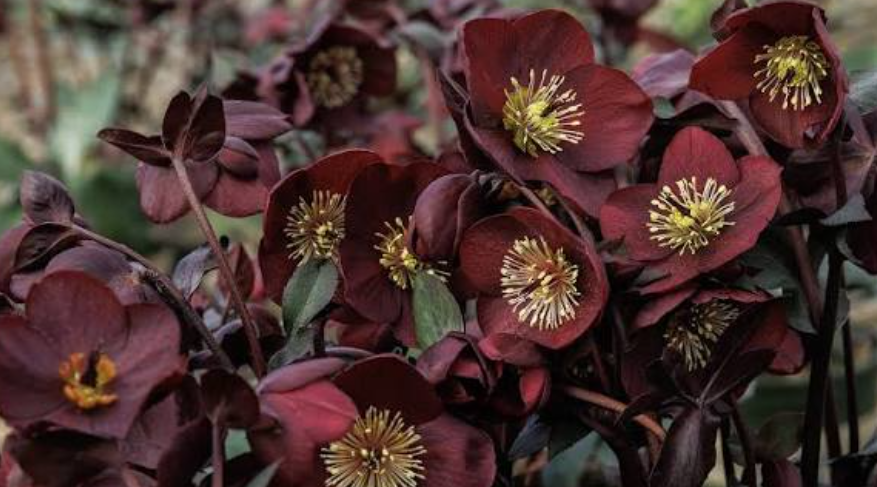
Color range has expanded dramatically through modern breeding, moving well beyond the muted greens and whites of wild species into slate gray, near-black, deep plum, rich red, apricot, and clear yellow tones. Many cultivars also display intricate patterning on the inner petal surface, including speckling, veining, and picotee edging where a paler background is rimmed with a darker contrasting color. Bloom form varies as well, with single, semi-double, and fully double types each offering a different look, and double-flowered cultivars in particular have driven much of the recent surge in collector interest.
Most hellebores bloom from late fall through early spring depending on the species and climate, with peak flowering for many garden hybrids occurring between January and March in temperate regions. The flowers themselves are technically made up of sepals rather than true petals, a structural quirk that allows the blooms to remain colorful and intact for weeks longer than most other perennial flowers. Below are 40 different types of hellebore, each known for a distinct color, pattern, or growth habit.
Types of Hellebore Flowers
Christmas Rose
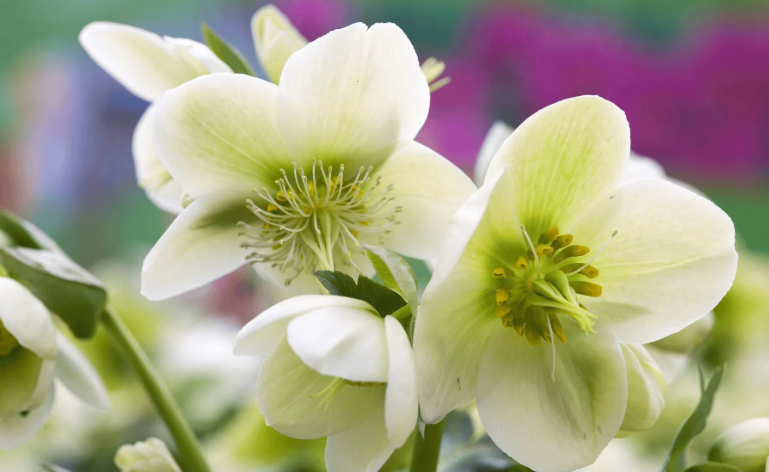
The Christmas Rose is one of the most traditional hellebore types grown in cottage gardens, valued for its pure white blooms that often age to a soft pink as the flower matures. This type tends to hold its flowers in a more outward-facing position than many other hellebores, making the blooms easier to view without bending down. Christmas Rose typically reaches 12 to 18 inches tall and is among the earliest hellebores to bloom, sometimes flowering as early as December in mild climates.
Lenten Rose
Lenten Rose is the most widely planted hellebore type, forming the genetic base for the vast majority of modern hybrid cultivars sold today. This type blooms later than the Christmas Rose, generally from February through April, and produces flowers in a far wider color range that includes white, pink, purple, and near-black tones. Lenten Rose plants typically grow 12 to 18 inches tall and can produce more than 20 blooms per clump once established.
Corsican Hellebore
Corsican Hellebore is the largest of the commonly grown hellebore types, capable of reaching heights of 24 to 48 inches, well beyond the typical 12 to 18 inch range of most other hellebores. This type produces pale, apple-green, cup-shaped flowers in pendant clusters rather than the single downward-facing blooms found on many other varieties. Corsican Hellebore tolerates more direct sun than most hellebore types and is often used as a structural, architectural plant in mixed borders.
Stinking Hellebore
Stinking Hellebore gets its unusual name from the faint odor released when its foliage is crushed or bruised, though the flowers themselves are not particularly foul-smelling. This type produces clusters of small, pale green, bell-shaped blooms often edged in maroon, contrasting nicely with its finely divided, dark evergreen foliage. Stinking Hellebore readily self-seeds in favorable garden conditions, with a single mature plant capable of producing dozens of seedlings around its base in a single season.
Majorcan Hellebore
Majorcan Hellebore closely resembles the Corsican type with its three-part leaf structure, but produces blooms ranging from pale green to soft rose rather than pure green. This type has glossy foliage prominently veined in white, giving it strong ornamental value even when not in flower. Majorcan Hellebore reaches 12 to 18 inches tall and is more cold-tender than most other hellebore types, generally limited to warmer growing zones.
Ivory Prince
Ivory Prince is a compact, well-branched cultivar known for its bright pink buds that open into ivory-colored flowers with subtle chartreuse and blush veining. This type produces blooms that face outward rather than downward, making the coloring and veining easier to appreciate without lifting the flower. Ivory Prince has blue-green foliage and stays relatively dense and compact compared to many older hellebore types.
Onyx Odyssey
Onyx Odyssey is one of the darkest hellebore cultivars available, producing fully double blooms in a deep purple so intense it appears nearly black. This type is often used as a dramatic accent among lighter-colored companion plants, since the near-black tone stands out strongly against pale foliage. Onyx Odyssey typically reaches 15 to 18 inches tall with a dense, well-formed flower structure.
Royal Heritage
Royal Heritage is a long-established seed strain offering an unusually wide color range within a single planting, spanning white, purple, and red tones from seed-grown plants. Because it is propagated by seed rather than as a single clone, individual plants within the Royal Heritage line show noticeable variation in color and pattern. This type typically grows 15 to 18 inches tall and has been a garden staple for several decades.
Cherry Blossom
Cherry Blossom produces semi-double blooms in rich pink or purple tones with a distinctive cherry-red center that deepens toward the middle of each flower. This type is especially popular for shaded borders, where its two-tone coloring stands out against darker foliage companions. Cherry Blossom typically blooms in late winter and reaches 12 to 15 inches in height.
Jacob
Jacob is a reliable single-flowered white cultivar that performs especially well in fully shaded garden positions where many other flowering perennials struggle. This type typically begins blooming in November, earlier than most hellebore cultivars, and continues flowering well into winter. Jacob is also noted for strong resistance to deer and rabbit browsing, a trait shared across most hellebore types.
New York Night
New York Night produces deep purple-black blooms offset by creamy yellow stamens at the center, creating strong visual contrast within each flower. This type is considered low-maintenance and easy to grow, making it a popular choice for gardeners new to hellebore cultivation. New York Night typically reaches 12 to 15 inches tall with blooms lasting 4 or more weeks on the plant.
Dark and Handsome
Dark and Handsome features fully double flowers in a silky black-purple shade with lime-green stamens providing a bright contrast at the center of each bloom. This cultivar pairs particularly well with yellow-foliaged companion plants, which help highlight the depth of its dark coloring. Dark and Handsome typically reaches 18 to 24 inches tall and wide, among the larger cultivars in general cultivation.
Snowbells
Snowbells is a semi-double, bright white cultivar with large, showy yellow-green stamens that stand out prominently against the pale petals. Unlike many hellebores that nod downward, Snowbells blooms face outward, making the flower’s full structure easier to see. This type stays relatively petite, reaching about 10 to 15 inches tall, with blooms measuring up to 3 inches across.
Sandy Shores
Sandy Shores produces flowers that grow to about 3 inches in diameter, opening in early spring against a backdrop of attractive green foliage. This type is often planted alongside pink or purple tulips for a coordinated seasonal color display. Sandy Shores generally reaches a moderate height similar to most hybrid hellebore cultivars.
Winterbells
Winterbells is a rare interspecific cross combining the fragrant, bell-shaped blooms of one parent type with the earlier flowering habit of another. This cultivar opens ivory white and gradually matures to green as the blooms age, creating a two-toned effect across a single flowering cycle. Winterbells is sterile and will not self-sow, staying a more compact 10 to 15 inches tall.
California Dreaming
California Dreaming produces clear, unspotted yellow blooms measuring about 3 inches across, a color that brightens shaded spring gardens considerably. This cultivar was selected specifically for strong color on the back of the sepals as well as the front, giving it a more finished look from every angle. California Dreaming typically reaches 18 to 24 inches tall and wide.
French Kiss
French Kiss features large white flowers accented with magenta veining that radiates outward from the center of each bloom. This cultivar is part of a breeding line selected for vigor and side-facing flowers, making the veined pattern easier to view in the garden. French Kiss generally reaches a similar mature size to other cultivars in its breeding series, around 18 to 24 inches.
Rome in Red
Rome in Red produces deep maroon-red blooms that offer one of the more saturated red tones available among hellebore cultivars. This type holds its color consistently from first opening through the multi-week bloom period typical of the species. Rome in Red typically grows 18 to 24 inches tall with strong, upright flowering stems.
Tropical Sunset
Tropical Sunset produces light yellow flowers streaked with warmer tones, giving each bloom a subtle gradient effect reminiscent of its namesake. This cultivar is part of a breeding series selected for vibrant, long-lasting blooms that hold up well through a full flowering season. Tropical Sunset typically reaches 18 to 24 inches in height.
Mother of the Bride
Mother of the Bride produces fully double, peach-colored flowers with a strong, vibrant color that carries through to the back of the sepals rather than fading toward the outer edge. Darker dots decorate the inner surface of the petals, adding subtle detail to the overall soft peach tone. This cultivar typically reaches 18 to 24 inches tall and wide.
Golden Sunrise
Golden Sunrise is a yellow-flowered cultivar within a larger breeding series known for producing unusually large blooms across a wide color spectrum. This type brings a warm, sunny tone to shaded garden beds where yellow flowering plants are otherwise limited in late winter. Golden Sunrise typically reaches a similar height to most hybrid hellebore types, around 15 to 18 inches.
Apricot Blush
Apricot Blush produces white petals gently tinged with apricot coloring, creating a soft, blended tone rather than a single solid color. This cultivar is part of a series bred specifically for large bloom size and rich coloring across a wide palette. Apricot Blush typically grows 15 to 18 inches tall with blooms that hold their color well through the flowering period.
Black Diamond
Black Diamond is considered one of the standout entries within its breeding series, producing deeply saturated near-black blooms that command attention in any planting. This cultivar contrasts sharply with lighter-colored companion plants and is frequently used as a focal point in dark-themed garden beds. Black Diamond typically reaches 15 to 18 inches tall.
Anna Pavord
Anna Pavord produces flowers in an opulent reddish-purple shade, with sepals encircling a cluster of creamy yellow stamens at the center. This cultivar’s stems are flushed purple and rise above delicately marbled foliage that is often tinged pink in spring. Anna Pavord typically reaches a moderate hellebore height and is valued for its coordinated color scheme from stem to bloom.
Champion Compact
Champion Compact is a smaller-statured cultivar reaching just 8 to 12 inches tall, notably shorter than most hybrid hellebore types. This variety produces rosy buds that open into creamy white flowers, which gradually age toward a soft rose tone as the bloom matures. Champion Compact’s more compact size makes it well suited for smaller garden beds and container plantings.
Wester Flisk
Wester Flisk is a striking selection known for its red-flushed flowers and matching red flower stalks, a distinctive combination not commonly found in other hellebore types. This cultivar has become increasingly popular alongside newer selections featuring golden-yellow foliage for added contrast. Wester Flisk typically reaches a moderate height similar to its parent type.
Pink Ice
Pink Ice is a specialty hybrid created by crossing two distinct hellebore parent types, resulting in a cultivar whose garden performance is still being evaluated by growers. This type represents one of the more experimental crosses to emerge from dedicated hellebore breeding programs in recent decades. Pink Ice remains relatively rare in general cultivation compared to more established cultivars.
Briar Rose
Briar Rose is another specialty cross bred from two hellebore parent types not commonly combined in mainstream cultivation. Like other experimental crosses, this cultivar’s long-term garden performance is still being assessed by specialist growers. Briar Rose remains a rare find outside of dedicated hellebore nurseries and collector circles.
Liara
Liara is part of a hybrid breeding series between two well-known hellebore parent lines, reaching 18 to 20 inches tall with light pink flowers accented by darker pink veining. This cultivar blooms earlier than many other hybrids in its series, typically starting in November. Liara’s veining pattern becomes more pronounced as each bloom matures over its multi-week flowering period.
Linda
Linda features cream-colored flowers with a yellowish-green center, offering a softer, more understated coloring than many of its more dramatically patterned counterparts. This cultivar is part of the same hybrid breeding series as Liara, sharing similar growth habits and bloom timing. Linda typically reaches a comparable height to other cultivars within its series.
Leona
Leona produces wine-red blooms that begin appearing as early as December, among the earliest flowering times recorded for hybrid hellebore cultivars. This type is valued for extending the hellebore flowering season into the earliest weeks of winter. Leona typically reaches a moderate height consistent with its breeding series.
Janet Starnes
Janet Starnes is grown primarily for its striking variegated foliage, which displays a mix of green and white rather than a solid color. While the flowers themselves are secondary to the foliage display, this cultivar adds visual interest to the garden even outside of the main bloom period. Janet Starnes reaches a height typical of its parent species, generally in the 12 to 18 inch range.
Frostkiss
Frostkiss refers to a hybrid series known for an unusually long bloom time that can stretch from late December through March, several weeks longer than many standard cultivars. This series is also notable for its ornamental foliage, which appears blue-green marbled with silver and white, sometimes flushed pink. Frostkiss types typically grow 16 to 24 inches tall with nodding single flowers held well above the leaves.
Double Ellen
Double Ellen is a widely grown seed strain producing fully double flowers across an extensive color range, including picotee and speckled patterns. This series is one of the most commonly available double-flowered hellebore lines sold commercially, making double blooms accessible to home gardeners rather than only specialist collectors. Double Ellen plants typically reach 15 to 18 inches tall.
Winter Jewels
Winter Jewels is a breeding series designed to produce large, richly colored blooms across a wide spectrum, including named selections in shades of pink, yellow, apricot, and near-black. This series has become one of the more recognizable hellebore lines among home gardeners due to its wide retail availability. Winter Jewels cultivars typically reach 12 to 18 inches tall.
Picotee Hellebore
Picotee hellebores are defined by a distinctive pattern rather than a single cultivar, featuring pale-colored sepals edged in a narrow band of darker contrasting color. This pattern type is considered highly desirable among collectors and commands premium pricing compared to solid-colored types. Picotee hellebores appear across multiple breeding series and color combinations.
Double Hellebore
Double hellebore refers to any cultivar bred to produce an extra interior row of petal-like structures inside the outer sepals, a trait that originated as a natural mutation before being deliberately enhanced through selective breeding. This bloom form creates a fuller, more rounded flower shape compared to standard single types. Double hellebores are available across nearly every color found in the species.
Single Hellebore
Single hellebore describes the standard, unmodified bloom form found in most wild species and many older garden cultivars, consisting of one ring of 5 sepals surrounding the central reproductive structures. This form remains the most common bloom type in general cultivation despite the rising popularity of double-flowered cultivars. Single hellebores are typically less expensive and more widely available than double or semi-double types.
Anemone-Flowered Hellebore
Anemone-flowered hellebores fall between single and fully double forms, featuring a central cluster of smaller petal-like structures surrounded by the standard outer ring of sepals. This intermediate bloom form creates a fuller appearance than a single flower without the dense layering of a true double. Anemone-flowered types are increasingly available across multiple modern breeding series.
Spotted Hellebore
Spotted hellebore describes cultivars bred to display pink, red, or purple speckling across a paler background color, a pattern especially common in certain hybrid lines. This speckled pattern varies significantly in density from plant to plant, with some blooms showing only a handful of spots and others displaying dense speckling across most of the sepal surface. Spotted hellebores remain a popular choice among gardeners seeking detailed, close-up interest in their winter blooms.