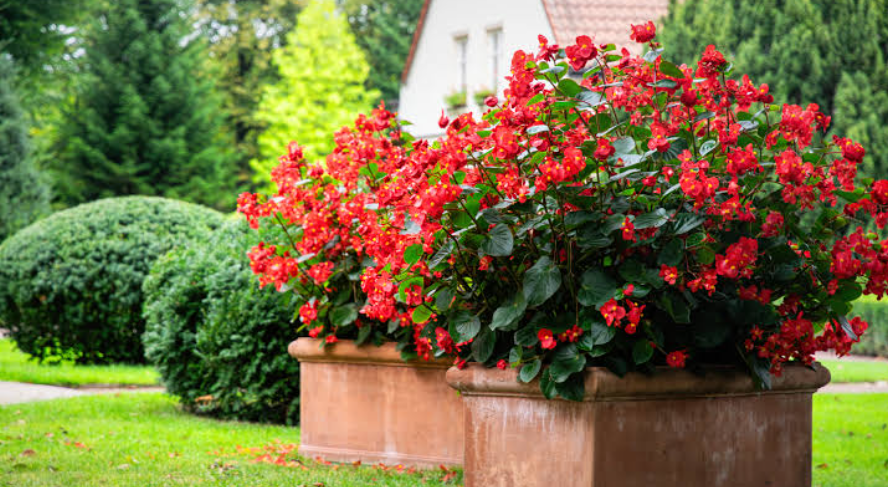
Wax begonias are among the most dependable flowering plants for adding long-lasting color to gardens, containers, window boxes, and other ornamental spaces. Their compact growth, fleshy stems, glossy leaves, and clusters of colorful flowers make them easy to recognize and versatile enough for many different planting arrangements. Depending on the variety, the foliage may be green, bronze, or reddish, while the flowers commonly appear in shades of white, pink, and red.
The name wax begonia is commonly used for plants in the Begonia semperflorens group and related hybrids. These plants are sometimes called bedding begonias because of their extensive use in flower beds and landscape displays. Unlike some begonias that are grown mainly for their decorative leaves, wax begonias are particularly valued for their combination of attractive foliage and abundant flowers.
Botanical Classification of Wax Begonias
Wax begonias belong to the following botanical classification:
- Kingdom: Plantae
- Clade: Angiosperms
- Clade: Eudicots
- Order: Cucurbitales
- Family: Begoniaceae
- Genus: Begonia
- Group: Begonia semperflorens group
The name Begonia semperflorens has historically been used for a group of closely related plants commonly known as semperflorens begonias. Modern horticulture includes numerous hybrids and cultivars derived from this group, so the wax begonia found in gardens may not correspond to a single naturally occurring species.
The genus Begonia itself contains thousands of species and cultivated forms. Wax begonias represent one of the most important groups for bedding and container horticulture.
History of Wax Begonias
The history of wax begonias is connected to the broader history of the genus Begonia, which originated primarily in tropical and subtropical parts of the world.
The genus was named after Michel Bégon, a French administrator and plant enthusiast. The French botanist Charles Plumier named the genus Begonia in his honor after encountering begonias during botanical exploration.
As begonias became known in European horticulture, plant collectors and breeders began experimenting with different species and forms. The plants that eventually became known as semperflorens or wax begonias were selected for their compact growth, attractive foliage, and ability to flower abundantly.
Horticultural breeding subsequently produced numerous cultivars with different flower colors, plant sizes, foliage colors, and growth characteristics.
Today, wax begonias are widely used as bedding plants in gardens and public landscapes and are also popular in containers and window boxes.
Also Read: Other Types of Begonias
Identifying Characteristics of Wax Begonias
Wax begonias have several characteristics that make them relatively easy to distinguish from many other ornamental plants.
Glossy, Wax-Like Leaves
The most obvious feature behind the common name is the appearance of the foliage.
Wax begonia leaves tend to have a smooth, glossy surface that can appear almost wax-coated. The leaves are generally rounded to oval and may have slightly toothed or scalloped edges.
Foliage color varies between cultivars. Common forms have green leaves, while others have bronze or reddish foliage.
The contrast between glossy leaves and brightly colored flowers is one of the plant’s main ornamental attractions.
Compact Growth
Wax begonias generally have a low, bushy growth habit.
Depending on the cultivar, plants may remain relatively small or develop into larger mounds. This makes them particularly useful for planting along borders and pathways or grouping together in flower beds.
Their compact form also makes them suitable for containers.
Fleshy Stems
Wax begonias have relatively soft, fleshy stems that hold moisture.
The stems are usually upright and branch readily, contributing to the plant’s rounded appearance.
Because the stems are not woody, they can be damaged by frost, rough handling, or severe environmental stress.
Colorful Flowers
Wax begonias produce numerous flowers throughout favorable growing conditions.
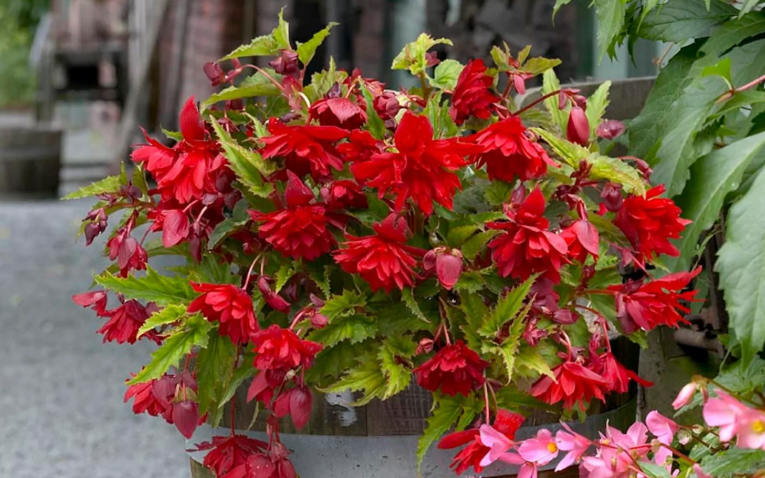
The flowers are commonly white, pink, or red, although modern cultivars offer a broader range of shades.
Flowers can be single or double depending on the cultivar. They are generally produced above or among the foliage, creating a continuous-looking display when plants are healthy.
Separate Male and Female Flowers
Like other begonias, wax begonias produce separate male and female flowers on the same plant.
Male flowers contain stamens, while female flowers contain the structures responsible for seed production.
This characteristic is part of the reproductive biology of the Begonia genus.
Where Wax Begonias Are Used
Wax begonias are especially popular because they can be used in many ornamental settings.
They are commonly planted in:
- Flower beds
- Borders
- Containers
- Window boxes
- Hanging baskets
- Patio displays
- Public landscapes
- Indoor containers
Their compact size allows gardeners to plant them in groups to create large areas of consistent color.
They can also be combined with foliage plants and other flowering annuals to create contrasting textures.
How to Grow Wax Begonias
Wax begonias are generally considered easy plants for gardeners to grow. Their success depends largely on providing suitable light, well-drained soil, adequate moisture, and protection from environmental extremes.
Choose the Right Location
Wax begonias can tolerate different light conditions, but they generally perform well in partial shade to bright light.
In cooler climates, they can tolerate more direct sunlight. In areas with intense heat, however, harsh afternoon sun can scorch leaves and stress plants.
A location receiving morning sun followed by some afternoon protection can be particularly useful in hot climates.
Bronze-leaved cultivars often tolerate brighter conditions better than some green-leaved forms, although the specific cultivar should always be considered.
Prepare Well-Drained Soil
Wax begonias prefer soil that drains efficiently while retaining enough moisture for healthy growth.
Before planting, loosen compacted soil and incorporate organic matter such as mature compost if the soil is poor.
Avoid locations where water regularly collects after rain. Constantly saturated soil can create unfavorable conditions around the roots.
For containers, use a quality potting mix rather than heavy garden soil.
Planting Wax Begonias
Plant wax begonias after the threat of damaging frost has passed.
Dig a hole approximately as deep as the root ball and somewhat wider. Place the plant at about the same depth at which it was growing in its container.
After planting, gently firm the soil around the roots and water thoroughly.
Give plants enough space for their mature size. Crowding may reduce air circulation and make the foliage remain damp for longer periods.
Watering Wax Begonias
Wax begonias prefer consistent moisture but do not like constantly saturated soil.
Check the soil regularly, especially during hot weather. Water when the upper portion of the soil begins to dry, then water thoroughly enough to moisten the root zone.
Container-grown plants usually require more frequent watering because pots can dry out quickly.
Whenever possible, water near the base of the plant rather than repeatedly soaking the foliage. Morning watering is generally preferable because any moisture that reaches the leaves has more time to dry.
Fertilizing Wax Begonias
Wax begonias benefit from adequate nutrition during active growth.
A balanced fertilizer can be applied according to the manufacturer’s directions. Container-grown plants may need more regular feeding than plants growing in fertile garden soil because nutrients are gradually lost through watering.
Avoid excessive fertilizer applications. Very high nutrient levels can encourage excessive leafy growth and may damage roots.
Healthy soil, appropriate light, and consistent moisture are just as important as fertilizer.
Deadheading Wax Begonias
One advantage of wax begonias is that they generally do not require extensive deadheading to remain attractive.
However, removing old flowers can improve the appearance of plants, particularly in containers and formal flower beds.
Simply remove faded flowers and damaged plant material when necessary.
Because wax begonias can continue producing new flowers over an extended period under suitable conditions, regular light maintenance can help keep plants looking fresh.
Pruning Wax Begonias
Wax begonias usually maintain a naturally compact form, so extensive pruning is unnecessary.
If plants become stretched, uneven, or overly large, lightly trimming the stems can encourage branching and restore a fuller appearance.
Remove damaged or diseased stems promptly.
Pruning should be moderate because excessive cutting can temporarily reduce flowering.
Growing Wax Begonias in Containers
Wax begonias are excellent container plants.
Choose a container with drainage holes and fill it with a well-draining potting mix. The container should be large enough to accommodate the plant’s root system without being excessively oversized.
Containers can be placed on patios, balconies, porches, windowsills, or other suitable locations.
Because containers dry more quickly than garden beds, check moisture regularly during warm or windy weather.
Propagating Wax Begonias
Wax begonias can be propagated from seeds or cuttings.
Seeds are useful when producing many plants, although some hybrids may not produce offspring identical to the parent.
Stem cuttings provide a convenient way to produce new plants from desirable specimens. A healthy stem can be cut and rooted under appropriate conditions.
Vegetative propagation is particularly useful when the goal is to preserve the characteristics of a particular cultivar.
Common Problems With Wax Begonias
Wax begonias are relatively resilient, but several problems can occur.
Root Problems
Overwatering and poorly drained soil can create unfavorable root conditions. Symptoms may include yellowing leaves, wilting despite wet soil, and poor growth.
Improving drainage and avoiding excessive watering are important preventive measures.
Leaf Scorch
Leaves may develop brown or damaged areas when plants are exposed to excessive heat or intense sunlight, particularly when the variety is not well adapted to those conditions.
Providing appropriate light and adequate moisture can reduce stress.
Powdery Mildew
Powdery mildew can sometimes develop when plants experience poor air circulation and humid conditions.
Avoid overcrowding and provide sufficient spacing between plants. Watering at the soil level can also help keep foliage drier.
Aphids
Aphids may gather on young stems and developing growth. Regularly inspecting the plant can help detect infestations early.
Root and Stem Rot
Constantly wet conditions can contribute to fungal and bacterial problems affecting roots or stems. Good drainage and careful watering are among the most effective preventative measures.
Wax Begonias and Pollinators
Wax begonia flowers can provide resources for flower-visiting insects. Their open, single flowers are generally more accessible than heavily double forms.
If supporting pollinators is a priority, gardeners can combine wax begonias with other flowering plants that provide a wider range of floral resources.
Begonias should therefore be viewed not only as decorative bedding plants but also as one component of a more diverse garden ecosystem.
Wax Begonias as Annuals and Perennials
In warm, frost-free climates, wax begonias can survive for more than one growing season and may behave as tender perennials.
In colder climates, they are commonly grown as annual bedding plants because freezing temperatures can damage or kill them.
The distinction between annual and perennial behavior therefore depends heavily on climate and the specific growing environment.
What You’ll Eventually Learn From Growing Wax Begonias
Growing wax begonias can teach you how much difference small changes in growing conditions can make to an ornamental plant.
You will eventually learn to recognize the relationship between light, moisture, soil drainage, temperature, and flowering. For example, a plant that appears weak may not necessarily need more fertilizer; it may need better light, improved drainage, or more appropriate watering.
You will also learn to pay attention to the plant’s foliage. The glossy leaves provide useful clues about the plant’s condition, while changes in color, texture, or growth can signal that something in its environment has changed.
Another valuable lesson is the importance of choosing plants according to their intended location. Wax begonias can tolerate different conditions, but selecting the right cultivar for the amount of sunlight, heat, and available space can make the difference between an average display and a spectacular one.
Perhaps most importantly, growing wax begonias demonstrates why relatively simple plants can be so valuable in garden design. Their compact form, colorful flowers, and attractive foliage allow them to fill spaces, create borders, brighten containers, and provide long-lasting seasonal color without demanding complicated maintenance.
Once you become familiar with wax begonias, you may also begin to appreciate the wider diversity of the Begonia genus. What appears to be a simple bedding plant is actually part of a remarkably large botanical group containing plants with dramatically different flowers, leaves, and growth habits.