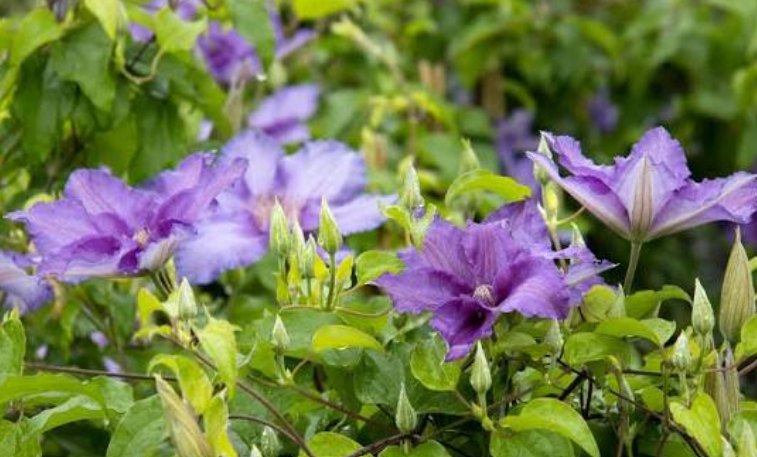
Clematis is one of the most versatile flowering vines grown in home gardens, with the genus containing more than 300 recognized species and several hundred additional named hybrids developed through more than a century of breeding. A single well-established clematis vine can produce over 100 blooms in a single flowering flush, and some repeat-blooming cultivars are capable of flowering twice in one season, once in late spring and again in late summer. Flower size varies enormously across the genus, ranging from small, bell-shaped blooms under an inch across to large, star-shaped flowers measuring 8 to 10 inches in diameter.
Clematis are traditionally sorted into 3 pruning groups based on whether they flower on old wood, new wood, or a combination of both, a classification system introduced by growers in the 1960s to simplify seasonal care. Group 1 types generally require little to no pruning and are among the hardiest, tolerating conditions down to USDA zone 3 in some cases. Group 3 types, by contrast, are typically cut back to just 12 to 15 inches each spring and produce their entire flowering display on fresh growth, making them a popular choice for gardeners who want a lower-maintenance pruning routine.
Color range across the clematis genus is exceptionally broad, spanning pure white, soft pink, deep red, violet-blue, rich purple, and clear yellow, with a significant number of cultivars also displaying two-tone or striped patterns across the petals. Double and semi-double flowering types have become increasingly popular over the past few decades, adding layered texture to a bloom shape that was traditionally flat and star-like. Long-term trial programs, including one that evaluated 224 different clematis varieties over a 22-year period, have helped identify the most reliable performers across a wide range of climates and garden conditions.
Bloom timing varies considerably depending on the type, with some clematis flowering as early as late winter and others continuing into the first hard frost of autumn. Many varieties are also valued for their attractive seed heads, which form after flowering and can remain decorative on the vine well into winter, particularly among the yellow-flowered types known for their silvery, silken-tailed seed clusters. With proper planning, a garden can host different clematis varieties in near-continuous bloom from spring through fall. Below are 57 different types of clematis, each known for its own flower shape, color, or growth habit.
Types of Clematis
Jackmanii
Jackmanii is widely considered the most classic and recognizable clematis variety, producing deep violet-purple, star-shaped blooms from early summer through fall. This vigorous climber is a Group 3 type, meaning it flowers entirely on new growth and can be pruned back hard each spring without sacrificing bloom production. Jackmanii typically produces flowers 4 to 6 inches across and remains one of the best-selling clematis cultivars worldwide.
Nelly Moser
Nelly Moser is a large-flowered cultivar known for its distinctive pale pink petals marked with a deep carmine-pink central stripe running down each sepal. This variety tends to fade in strong, direct sunlight, so its coloring is often most vivid when grown in partial shade. Nelly Moser typically produces 2 flushes of blooms per season, with flowers reaching 6 to 8 inches across.
The President
The President produces large, star-shaped flowers in a vibrant violet-blue shade with white filaments tinted toward pink or deep red at the base. This variety is a reliable repeat bloomer, often flowering from late spring through midsummer and again in early fall. The President typically reaches 6 to 10 feet in height when grown on a trellis or similar support.
Hagley Hybrid
Hagley Hybrid, also sold under the name Pink Chiffon, produces large pink-lilac flowers with contrasting chocolate-brown stamens at the center. This variety blooms in late June and continues flowering for 3 to 4 weeks, holding the Royal Horticultural Society’s Award of Garden Merit for its reliable garden performance. Hagley Hybrid is a twining climber well suited to trellises, fences, and other vertical supports.
H.F. Young
H.F. Young is considered one of the easiest clematis varieties for beginners, producing 6 to 8 inch purple-blue flowers with pale yellow anthers from late spring to early summer. This cultivar also holds the Award of Garden Merit and can be deadheaded after its first bloom to encourage a second flush in early autumn. H.F. Young is a fast-growing climber popular for trellis and wall plantings.
Bees’ Jubilee
Bees’ Jubilee is a showy Group 2 cultivar producing two-tone flowers in creamy pink with a deep cherry-red stripe running through the center of each petal. Creamy yellow filaments topped with rose-colored anthers add further contrast to the bloom. This variety typically flowers in 2 distinct flushes, one in late spring and a lighter repeat bloom in late summer.
Duchess of Albany
Duchess of Albany displays bell-shaped pink flowers accented with darker pink stripes radiating down from the center of each petal. This variety becomes notably drought-resistant once its root system is fully established, making it more forgiving than many other clematis types during dry spells. Duchess of Albany typically blooms from midsummer through early fall.
Marie Boisselot
Marie Boisselot is a large-flowered white cultivar capable of producing blooms on both old and new growth, giving it a longer overall flowering window than many single-flush varieties. This variety produces pure white flowers with creamy stamens, often reaching 6 to 8 inches across. Marie Boisselot is commonly recommended for gardeners seeking a dependable, long-blooming white clematis.
Pink Fantasy
Pink Fantasy produces soft pink flowers with a slightly deeper pink central bar running down each petal, creating a subtle two-tone effect. Like Marie Boisselot, this variety can flower on both old and new stems, extending its bloom period across most of the growing season. Pink Fantasy typically reaches a moderate climbing height suited to smaller trellises and obelisks.
Princess Diana
Princess Diana produces tulip-shaped, deep pink flowers with a satin-like sheen that sets it apart from the flatter, star-shaped blooms of many other cultivars. This variety is a vigorous climber, often reaching 8 to 10 feet in a single growing season once established. Princess Diana remains one of the most frequently recommended clematis varieties among experienced gardeners.
Étoile Violette
Étoile Violette is a viticella-type cultivar producing deep purple flowers with pale gold stamens from midsummer through early fall. This variety is known for being exceptionally hardy and easy to grow, tolerating hard pruning to the ground each winter without any loss of vigor. Étoile Violette is frequently recommended as a forgiving choice for gardeners new to growing clematis.
Madame Julia Correvon
Madame Julia Correvon produces vivid pink-red, star-shaped flowers with a slightly twisted petal form, blooming prolifically from midsummer into fall. This viticella-type variety is prized for its long flowering season and reliable performance across a wide range of climates. Madame Julia Correvon typically produces flowers around 4 inches across.
Polish Spirit
Polish Spirit is a richly colored purple viticella variety bred by a well-known Polish clematis breeder, known for producing an especially high number of blooms per vine. This cultivar flowers from midsummer through early fall and tolerates hard annual pruning without any decline in flowering. Polish Spirit typically reaches 10 to 15 feet, making it one of the more vigorous climbers in general cultivation.
Bill MacKenzie
Bill MacKenzie produces bright, sun-yellow, lantern-shaped flowers with a subtle coconut-like scent, blooming from early summer through fall. After flowering, this variety develops striking silvery seed heads that remain decorative on the vine well into winter. Bill MacKenzie is one of the most popular yellow-flowered clematis types grown for both bloom and seed head interest.
Arabella
Arabella is a semi-herbaceous variety producing lavender-blue flowers continuously from late spring through early fall, one of the longer individual bloom windows found among clematis types. Because it dies back partially each winter, Arabella is often grown as a non-climbing, mounding shrub rather than a true vine. This variety is frequently recommended for gardeners who want extended color without the need for a tall support structure.
Abundance
Abundance is a viticella-type cultivar producing rich pink, star-shaped flowers in great quantity throughout summer. This variety is valued for its long flowering season and dependable performance in cottage garden settings. Abundance typically reaches a moderate height suitable for fences and medium-sized trellises.
Viola
Viola produces velvety, dark purple flowers in exceptional profusion, making it one of the richest-colored cultivars in general cultivation. This vigorous vine can reach up to 10 feet tall and climbs reasonably well without extensive additional support. Viola is often paired with lighter-colored companion plants to highlight the depth of its purple tone.
Picardy
Picardy is a compact cultivar producing vivid violet-red flowers on a smaller vine that tops out around 5 feet, making it well suited to containers and small patio spaces. This variety is free-flowering and often produces a second bloom flush into late summer. Picardy proves that clematis vines do not need to be large to make a bold visual statement.
Pink Champagne
Pink Champagne is one of the earliest large-flowered clematis cultivars to bloom each year, producing bright pink petals with pale centers and vivid yellow stamens. This variety is a relatively narrow climber, making it well suited to tight garden spaces such as gates or narrow fence sections. Pink Champagne’s stems tend to grow straight upward, creating a distinctive vertical accent.
Guernsey Flute
Guernsey Flute is known for holding its just-opened flower buds in a distinctive flute-like shape for an extended period before fully opening into large, pure white star-shaped blooms. This variety produces flowers up to 5 inches across with striking red anthers, blooming from May through July with reliable repeat flowering into September. Guernsey Flute is considered one of the longest-flowering clematis cultivars available.
Mrs. N. Thompson
Mrs. N. Thompson is a large-flowered cultivar named after the gardener who discovered it, featuring a vivid carmine-red bar running through the center of each purple petal. This variety produces good-sized blooms twice per year, offering strong repeat performance. Mrs. N. Thompson remains a popular choice for gardeners seeking bold, high-contrast coloring.
Tumaini
Tumaini is an extremely free-flowering cultivar selected for its compact habit, typically growing only 3 to 4 feet tall, making it ideal for small gardens and container growing. This variety produces masses of blooms in both the early and late portions of the flowering season. Tumaini was named in recognition of a Tanzania-based charitable initiative associated with its breeder.
Multi Blue
Multi Blue is a double-flowered cultivar producing rich blue-purple blooms with a layered, ruffled texture created by narrow, twisted inner petals. This variety adds significant textural interest compared to the flatter, single-layer blooms of most other clematis types. Multi Blue typically flowers from late spring through midsummer with a possible light rebloom in early fall.
Diamond Ball
Diamond Ball is a Group 2 hybrid known for its rounded, ball-like double flower form in soft lavender-blue tones. This variety blooms on both old and new wood, giving it an extended flowering window compared to single-flush types. Diamond Ball is frequently listed among the standout large-flowering hybrid cultivars available to home gardeners.
Viva Polonia
Viva Polonia produces large, richly colored magenta-pink flowers with a deep red central bar running through each petal. This vining cultivar typically spreads 4 to 6 feet and should be spaced 3 to 5 feet from neighboring plants to allow room for growth. Viva Polonia is considered one of the standout large-flowered hybrids among modern clematis introductions.
Stand by Me
Stand by Me is a non-climbing, shrub-forming clematis reaching only 34 to 38 inches tall, making it well suited to container growing and small garden spaces. This variety is notably cold-hardy, tolerating conditions down to USDA zone 3, colder than many climbing clematis types can withstand. Stand by Me produces upward-facing, bell-shaped blue flowers and benefits from light staking despite its compact size.
Happy Jack
Happy Jack is a vigorous Group 3 cultivar that can grow quite tall and heavy, requiring a solid support structure such as a trellis or arbor to prevent wind damage. This variety produces an abundance of blooms on new growth each season after being cut back in early spring. Happy Jack is frequently recommended for gardeners looking for a fuller, more substantial climbing display.
Hyde Hall
Hyde Hall is a compact, large-flowered cultivar producing pure white blooms in both early and late summer. This shade-tolerant variety performs well in a range of light conditions, from full sun to partial shade. Hyde Hall is considered an easy-to-grow deciduous climber suitable for a wide variety of garden styles.
Empress
Empress produces double and semi-double soft pink flowers with deeper pink centers, blooming during summer and into early fall. This variety typically climbs 6 to 8 feet and performs best in full sun with moist, well-drained soil. Empress adds a layered, rose-like texture to the garden thanks to its semi-double bloom form.
Asagasumi
Asagasumi produces clean white flowers during spring and again in early fall, tolerating partial shade better than many other large-flowered types. This vigorous variety can grow 8 to 10 feet in a single season under favorable conditions. Asagasumi is valued for its clean, bright coloring against dark green foliage.
Neva
Neva is a compact cultivar well suited to small garden spaces, offering concentrated color without requiring extensive climbing room. This variety produces blooms in a range of hues depending on the specific selection, making it a versatile choice for container plantings. Neva remains a popular option for gardeners with limited vertical growing space.
Maidwell Hall
Maidwell Hall is a Group 1 cultivar producing frilly, semi-double flowers in lavender-blue with contrasting chartreuse stamens. This variety continues to flower lightly throughout summer after its main spring flush and develops decorative seed heads by late summer. Maidwell Hall grows 6 to 8 feet tall, making it well suited for scrambling through shrubs or over garden structures.
Margo Koster
Margo Koster is valued for its unusually long flowering season, producing irregular, coral-pink blooms with paler center bars and buttery yellow stamens from late spring through fall. This compact variety reaches 10 to 12 feet and works well for vertical growth in cottage or courtyard gardens, or as a sprawling ground cover. Margo Koster’s individual flowers measure about 3 inches across but appear in large numbers throughout the season.
Huldine
Huldine produces pearly white, cup-shaped flowers with a subtle mauve reverse side, blooming prolifically from midsummer through fall. This vigorous climber is often used to soften the appearance of fences and arbors thanks to its abundant, semi-translucent blooms. Huldine pairs particularly well with darker-flowered varieties for color contrast.
Sweet Autumn Clematis
Sweet Autumn Clematis is known for its explosive late-season display of small, star-shaped white flowers that release a strong, sweet fragrance detectable from a considerable distance. This vigorous vine can quickly cover 15 to 20 feet of fence or trellis space in a single growing season. Sweet Autumn Clematis blooms later than most other types, typically from late summer into fall.
Scarlet Leather Flower
Scarlet Leather Flower stands out among clematis types for its bright red, nodding, bell-shaped blooms, a color rarely found elsewhere in the genus, which more commonly favors purple and pink tones. Individual flowers measure only about 1 inch in diameter but create a striking pop of color against the vine’s lush green foliage. This fast-climbing type is valued specifically for its unusual coloring within the broader clematis family.
Small-Leaved Clematis
Small-Leaved Clematis is an evergreen climbing shrub with intriguing, understated blooms that appear from July through December, a longer flowering window than many deciduous types. Male and female plants on this type flower differently, with female plants developing fluffy, seed-bearing fruits after bloom. This variety adds a conversation-starting texture to fences and trellises.
Swamp Leather Flower
Swamp Leather Flower produces pinkish-purple, mildly fragrant blooms on a perennial vine despite its unappealing common name. This type tends to favor consistently moist growing conditions more than most other clematis varieties. Swamp Leather Flower remains a lesser-known but rewarding choice for gardeners with damp garden sites.
Golden Clematis
Golden Clematis produces bright yellow, lantern-shaped flowers from early summer through fall, followed by attractive silvery seed heads that persist into winter. This type is part of a broader group of yellow-flowered clematis prized for extending garden interest well beyond the main flowering period. Golden Clematis is considered reliably hardy and easy to establish.
Sugarbowl Clematis
Sugarbowl Clematis gets its name from the distinctive, upward-cupped shape of its nodding purple-blue blooms, which resemble a small sugar bowl in silhouette. This type is a woody vine with a twining, trailing growth habit, typically reaching 8 to 10 feet. Sugarbowl Clematis produces flowers with a pale, greenish-white bar visible on the reverse side of the petals.
Armand Clematis
Armand Clematis is an evergreen type valued for its early-season, pale pink flowers that release a strong almond-like fragrance detectable throughout a garden. This variety tends to mass its growth toward the top of a support, making it better suited to pergolas and garages than to full fence screening. Armand Clematis blooms in spring to early summer, earlier than most large-flowered garden hybrids.
Solitary Clematis
Solitary Clematis is a non-climbing, herbaceous type that grows as an upright shrub rather than a true vine, producing blue, bell-shaped flowers that hang gracefully from late spring through midsummer. This type does not require a trellis or other climbing support, making it a practical choice for open borders. Solitary Clematis dies back to the ground each winter before returning the following spring.
Rock Clematis
Rock Clematis is a low-growing, sun-loving type well suited to rockeries and dry garden beds where taller climbing types would struggle. This variety produces smaller blooms than large-flowered hybrids but compensates with a long flowering season. Rock Clematis tolerates poor, well-drained soil better than most other clematis types.
Alpine Clematis
Alpine Clematis belongs to one of the earliest-blooming and hardiest clematis groups, producing delicate, bell-shaped flowers in blue, purple, or pink tones from late spring to early summer. This type requires little to no pruning, making it especially low-maintenance compared to large-flowered hybrids. Alpine Clematis performs well in rock gardens, borders, and containers alike.
Anemone Clematis
Anemone Clematis is known for its vigorous, healthy growth and abundance of blooms, though individual flowers tend to be smaller and less dramatic than large-flowered hybrid types. This variety carries a light, pleasant fragrance and produces flowers in dense clusters along its climbing stems. Anemone Clematis is considered one of the sturdiest and most disease-resistant types in general cultivation.
Italian Clematis
Italian Clematis encompasses a group of vigorous, deciduous climbers known for abundant blooms across a wide range of vibrant colors, including deep purple, pink, and red tones. This type is widely regarded as one of the easiest and most floriferous clematis groups to grow, tolerating hard annual pruning without any loss of vigor. Italian Clematis types typically bloom from midsummer through early fall.
Old Man’s Beard
Old Man’s Beard is named for the fluffy, silvery seed heads that form after its small, creamy white flowers fade in late summer. This vigorous, fast-spreading type is often found scrambling through hedgerows and along fence lines in the wild. Old Man’s Beard can quickly cover large areas, making it better suited to naturalized plantings than small formal gardens.
Leather Flower
Leather Flower produces small, thick-textured, urn-shaped blooms in dusky purple or reddish tones, giving the type its descriptive common name. This type tends to favor woodland edges and partially shaded growing conditions over full sun exposure. Leather Flower remains a favorite among native plant enthusiasts for its understated, textural blooms.
Curly Clematis
Curly Clematis produces distinctive, thick-petaled flowers with curled, recurved edges in shades of lavender to purple-blue. This type has a shorter, more restrained climbing habit compared to many large-flowered hybrids, making it manageable for smaller supports. Curly Clematis blooms over an extended period from late spring through summer.
Virgin’s Bower
Virgin’s Bower is a fast-growing native climbing type producing masses of small, fragrant white flowers in mid to late summer. This vigorous vine can quickly cover 10 to 20 feet of fence or arbor space in a single season under favorable conditions. Virgin’s Bower is followed by fluffy seed heads that provide additional garden interest into fall.
Ground Clematis
Ground Clematis is a non-climbing, herbaceous type that grows as an upright, bushy plant rather than a vine, producing small, fragrant white flowers in dense clusters. This type typically reaches 3 to 4 feet tall and works well in perennial borders rather than on trellises or fences. Ground Clematis blooms throughout summer and is valued for its strong, sweet fragrance.
Josephine
Josephine is a striking double-flowered cultivar producing layered, rosette-like blooms in soft mauve-pink with a distinctive pointed petal formation. This variety is one of the most photographed clematis cultivars due to its intricate, symmetrical bloom structure. Josephine typically flowers from early summer through fall with strong repeat blooming.
Rebecca
Rebecca produces rich, velvety red flowers with a slightly ruffled petal edge, offering one of the more saturated red tones found among large-flowered hybrid cultivars. This variety blooms from early summer through fall and is considered a reliable performer across a range of climates. Rebecca typically reaches 6 to 8 feet in height.
Dr. Ruppel
Dr. Ruppel is a well-known large-flowered cultivar featuring soft pink petals with a bold, deep pink central stripe running down each sepal. This variety produces some of the largest blooms in general cultivation, with flowers regularly reaching 8 inches across. Dr. Ruppel typically flowers in 2 distinct flushes, similar in habit to Nelly Moser.
Piilu
Piilu is a compact, semi-double cultivar producing pink and white bicolor blooms with a deeper pink central bar. This variety is notably free-flowering, often producing 2 to 3 times more blooms per season than many standard large-flowered types. Piilu typically stays under 6 feet tall, making it a strong option for container growing.
Warsaw Nike
Warsaw Nike produces deep, velvety purple flowers with contrasting golden-yellow stamens, bred by the same Polish breeding program responsible for several other well-regarded viticella-type cultivars. This variety is known for its rich, saturated coloring and reliable repeat blooming from early summer through fall. Warsaw Nike typically reaches 8 to 10 feet in height.
Foxy
Foxy is a cold-tolerant type known for its elegant, understated aesthetic and reliable performance even in harsher winter climates. This variety produces smaller blooms than many showier large-flowered hybrids but compensates with strong cold hardiness and low maintenance requirements. Foxy is frequently recommended for gardeners in colder growing zones seeking a dependable clematis option.