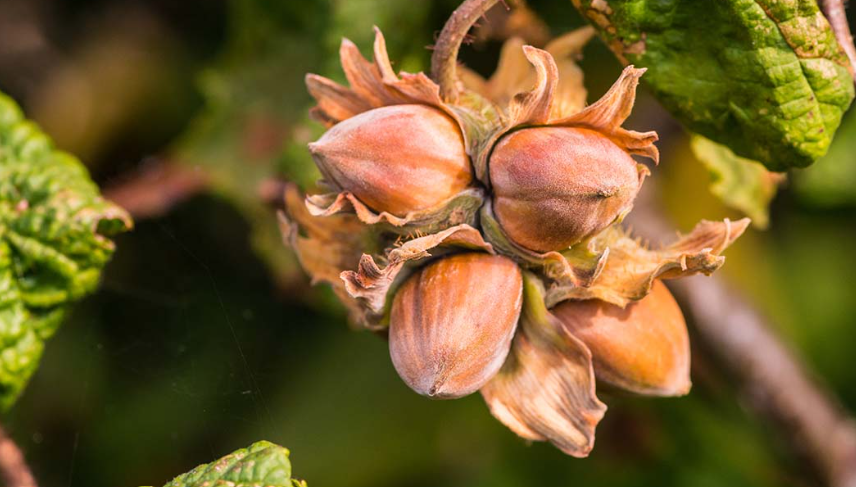
Hazelnut trees are deciduous shrubs and small trees belonging to the birch family, cultivated for thousands of years across Europe, Asia, and North America for their nutritious, oil-rich nuts and their value as productive, versatile landscape plants. With around 14 to 18 recognized species distributed across the temperate regions of the Northern Hemisphere, hazelnuts are among the most widely grown nut crops in the world, second only to almonds and walnuts in global production volume. World hazelnut production exceeds 1 million metric tons annually, with Turkey alone accounting for approximately 70 to 75 percent of global supply, followed by Italy, Azerbaijan, Chile, and the United States.
Individual hazelnut trees and shrubs vary considerably in size depending on the species and cultivar, ranging from compact multi-stemmed shrubs reaching 6 to 10 feet in height to larger tree forms reaching 20 to 30 feet when grown as single-trunked specimens. Most cultivated varieties produce their first meaningful nut crop within 3 to 5 years of planting and reach full productive maturity at around 7 to 10 years, with productive lifespans of 40 to 80 years under good conditions. Hazelnuts are wind-pollinated and most varieties require at least two compatible varieties planted nearby for cross-pollination and reliable nut production.
Hazelnuts are adapted to a wide range of temperate climates and are grown commercially and in home gardens across USDA zones 4 to 9, with different species and cultivars covering different portions of this range. The European hazelnut and its cultivars dominate commercial production in most regions, while the native American hazelnut is better adapted to the colder, more continental climate conditions of the upper Midwest and Northeast United States. The filbert — a term used interchangeably with hazelnut in many markets but more precisely referring to varieties with husks that extend beyond the nut — is the dominant form in commercial production in Oregon, which produces approximately 99 percent of the United States hazelnut crop.
Nutritionally, hazelnuts are exceptionally rich in healthy monounsaturated fats, vitamin E, manganese, copper, and dietary fiber, and are one of the most calorie-dense of all commonly consumed nuts at around 628 calories per 100 grams. They are a cornerstone ingredient in confectionery and food manufacturing worldwide, most famously as the primary nut ingredient in products like Nutella, which alone consumes approximately 25 percent of the world’s annual hazelnut supply. Beyond food production, hazelnut trees are valued in agroforestry, hedgerow planting, wildlife habitat creation, and erosion control, making them one of the most multi-functional small trees and shrubs in temperate horticulture.
Also Read: Types of Barberry Shrubs
Types of Hazelnut Trees
1. Barcelona
Barcelona is the most widely planted commercial hazelnut variety in Oregon and one of the most important cultivated hazelnuts in the world, producing large, round, high-quality nuts with a rich, sweet flavor enclosed in husks that extend slightly beyond the nut shell. It grows as a large, vigorous shrub to small tree reaching 12 to 18 feet in height and spread, producing reliable, heavy annual crops when cross-pollinated with a compatible variety such as Daviana or Butler. Barcelona has been the backbone of Oregon’s commercial hazelnut industry for well over a century and remains one of the most widely available hazelnut varieties from nurseries across the Pacific Northwest.
2. Jefferson
Jefferson is the most important modern hazelnut cultivar developed by Oregon State University’s breeding program and has become the preferred replacement for Barcelona in many Oregon commercial orchards due to its outstanding resistance to Eastern Filbert Blight — the most devastating disease affecting hazelnut production in North America. It produces large, high-quality, flavorful nuts on a vigorous, upright-growing tree reaching 12 to 16 feet in height, with excellent annual productivity and superior nut quality compared to Barcelona. Jefferson has become the most widely planted new hazelnut variety in the Pacific Northwest over the past decade and is increasingly available from mainstream nurseries across USDA zones 5 to 9.
3. Wepster
Wepster is another important Oregon State University release developed for Eastern Filbert Blight resistance, producing medium to large, high-quality nuts on a compact, upright tree reaching 10 to 14 feet in height that is somewhat smaller and more manageable than the large-growing Barcelona and Jefferson varieties. It is an excellent cross-pollinator for Jefferson and other OSU releases and is widely planted in combination with Jefferson in new commercial Oregon hazelnut orchards. The compact growth habit and good productivity make it a practical choice for both commercial growers and home garden hazelnut planting.
4. European Hazelnut
The European Hazelnut is the primary species from which the vast majority of commercial hazelnut varieties worldwide have been developed, native to Europe and western Asia and forming the foundation of hazelnut production in Turkey, Italy, Spain, France, and Oregon. It grows as a large, multi-stemmed shrub to small tree reaching 12 to 20 feet in height and spread, producing the large, flavorful, thin-shelled nuts that dominate world commercial hazelnut markets. It is hardy in USDA zones 4 to 9 and is the most widely available hazelnut species from mainstream nurseries worldwide.
5. American Hazelnut
The American Hazelnut is a native North American species found naturally across the eastern United States and Canada, growing as a thicket-forming, multi-stemmed shrub typically reaching 6 to 10 feet in height and equally wide spread. The nuts are smaller than those of European varieties but have an excellent, sweet, rich flavor, and the plant is significantly more cold-hardy than European types, surviving winter temperatures in USDA zones 3 to 9. It is extensively used in wildlife habitat plantings, native plant gardens, hedgerow restoration, and as the primary parent species in hazelnut breeding programs aimed at developing cold-hardy, disease-resistant varieties for Midwest and Northeast American production.
6. Epsilon
Epsilon is an important commercial hazelnut cultivar widely grown in Turkey, the world’s dominant hazelnut producer, and in other Mediterranean hazelnut-producing regions including Italy and Spain. It produces medium to large, round, high-quality nuts with a thin shell and rich flavor on a vigorous, productive tree reaching 12 to 18 feet in height. Epsilon is valued in commercial production for its reliable, consistent annual cropping, good nut quality suitable for both confectionery processing and fresh consumption, and reasonable adaptability to the warm, dry Mediterranean growing conditions that characterize Turkey’s primary hazelnut-producing regions along the Black Sea coast.
7. Tonda Gentile delle Langhe
Tonda Gentile delle Langhe is the most prestigious Italian hazelnut variety and is considered by many chocolate and confectionery producers to be the finest-flavored hazelnut in the world, producing small to medium, perfectly round nuts with an exceptionally rich, sweet, aromatic flavor and thin shell that makes them ideal for roasting and confectionery use. It is the primary hazelnut variety of the Piedmont region of northwestern Italy and holds Protected Designation of Origin status under European food law, which restricts use of the Piedmont Hazelnut designation to nuts produced from this variety within the defined geographic area. It grows as a moderately vigorous shrub to small tree reaching 10 to 16 feet in height.
8. Daviana
Daviana is one of the most important pollinizer varieties for commercial hazelnut production in Oregon and elsewhere, valued primarily for the long catkin season that makes it an exceptionally effective pollen producer for fertilizing other varieties including the widely planted Barcelona. It produces medium-sized, oblong nuts of decent quality on a vigorous, upright-growing shrub to small tree reaching 12 to 16 feet in height. While Daviana is not typically grown for its own nut production quality, its role as a reliable, prolific pollinizer has made it a fixture of commercial hazelnut orchards in the Pacific Northwest for over a century.
9. Butler
Butler is a productive and widely grown Oregon hazelnut variety that serves as both an important nut-producing cultivar and an effective pollinizer for Barcelona and other major commercial varieties. It produces medium to large, oblong, high-quality nuts with good flavor on a moderately vigorous shrub reaching 10 to 14 feet in height, with reliable annual productivity and good adaptability across the range of Oregon hazelnut-growing conditions. Butler is one of the most widely available hazelnut varieties from Pacific Northwest nurseries and is a popular choice for both commercial orchard planting and home garden production.
10. Hybrid Hazelnut
Hybrid Hazelnuts are crosses between the European Hazelnut and the American Hazelnut developed specifically for nut production in the colder, more continental climate conditions of the Midwest and Northeast United States, where neither pure European nor pure American species performs optimally on its own. These hybrids combine the larger nut size and superior flavor of the European parent with the cold hardiness, disease resistance, and adaptation to continental climate conditions of the American parent, typically reaching 8 to 15 feet in height depending on the specific hybrid. Programs at the University of Nebraska, Badgersett Research Farm in Minnesota, and other Midwest institutions have produced a range of named hybrid selections that are bringing commercial hazelnut production to regions previously considered unsuitable for the crop.
11. Tonda di Giffoni
Tonda di Giffoni is one of Italy’s most commercially important hazelnut varieties, originating in the Campania region of southern Italy and widely grown across Italian hazelnut-producing areas as well as in Spain, Chile, and other international production regions. It produces medium to large, round, high-quality nuts with a thin shell and excellent, rich flavor highly suited to both the fresh nut market and confectionery processing, and the tree grows vigorously to 12 to 18 feet in height with reliable annual productivity. It has become increasingly important in international commercial hazelnut production as an alternative to the more widely known Tonda Gentile delle Langhe for growers outside the Piedmont region.
Also Read: Types of Loquats
12. Yamhill
Yamhill is an Oregon State University hazelnut release named for Yamhill County, one of Oregon’s primary hazelnut-producing counties, and is valued as an early-ripening variety with good Eastern Filbert Blight resistance that produces medium-sized, high-quality nuts approximately two weeks earlier than the main commercial harvest season. It grows to 10 to 14 feet in height with a moderately vigorous, upright habit and is planted in commercial Oregon orchards both for its own nut production and as a pollinizer for Jefferson and other OSU releases. The early ripening characteristic reduces the risk of late-season weather damage to the developing crop.
13. Eta
Eta is another Oregon State University release bred specifically for Eastern Filbert Blight resistance, producing medium to large, high-quality nuts on a vigorous, upright tree reaching 12 to 16 feet in height with an early ripening season similar to Yamhill. It is planted primarily as a pollinizer for Jefferson in new commercial Oregon hazelnut orchards and shows good compatibility with the other major OSU releases. The combination of blight resistance, early ripening, and good pollinizer characteristics makes it a valuable component of modern Oregon hazelnut orchard design.
14. Casina
Casina is a southern Italian hazelnut variety widely grown in the Campania and Calabria regions of southern Italy, producing medium-sized, round, thin-shelled nuts with good flavor suitable for both confectionery processing and fresh consumption. The tree is moderately vigorous, reaching 10 to 14 feet in height, and is adapted to the warm, Mediterranean climate conditions of southern Italy where it performs more reliably than the more northerly-adapted Tonda Gentile delle Langhe. It is an important variety in the southern Italian hazelnut industry and is occasionally available from specialist nut tree nurseries in other Mediterranean climate regions.
15. Ennis
Ennis is a large-nutted Oregon hazelnut variety producing some of the biggest nuts of any commercially grown cultivar, with individual nuts significantly larger than those of Barcelona or Jefferson, and an attractive, well-formed shape that suits the in-shell fresh nut market particularly well. It grows vigorously to 14 to 18 feet in height with reliable annual productivity and requires a compatible pollinizer — typically Butler or Daviana — for good nut set. The exceptionally large nut size makes Ennis particularly valued for specialty fresh nut markets and gift packaging where visual impact and nut size are important commercial considerations.
16. Beaked Hazelnut
The Beaked Hazelnut is a native North American species closely related to the American Hazelnut, found naturally across a wide range from British Columbia to Georgia and as far west as the Rocky Mountains, growing as a thicket-forming, multi-stemmed shrub reaching 5 to 10 feet in height. It is named for the distinctive elongated, beak-like husk that extends well beyond the nut shell in a tubular projection quite different from the more open husks of other hazelnut species. The nuts are smaller than those of commercial varieties but edible and sweet-flavored, and the plant is primarily valued in North American native plant gardening and wildlife habitat planting rather than commercial nut production.
17. Turkish Hazelnut
The Turkish Hazelnut is a larger, more tree-like species than most other hazelnuts, capable of reaching 40 to 70 feet in height in its native habitat across southeastern Europe and western Asia, making it one of the largest members of the hazelnut genus. As an ornamental landscape tree it is grown for its exceptional heat, drought, and urban pollution tolerance, its attractive pyramidal form, and its ornamental catkins and foliage, as much as for its smaller but edible and flavorful nuts. It is notably more adaptable to hot, dry summer conditions than the European Hazelnut and performs well in USDA zones 4 to 7 in a wide range of landscape situations.
18. Contorta
Contorta, commonly known as Harry Lauder’s Walking Stick or Corkscrew Hazelnut, is a dramatic ornamental cultivar of the European Hazelnut with strongly twisted, contorted branches and stems that create an extraordinary sculptural effect particularly striking in winter when the bare, spiraling branches are unobscured by foliage.
It grows slowly to 8 to 10 feet in height and spread and produces edible nuts in addition to its primary ornamental value as one of the most unusual-looking deciduous shrubs available for temperate gardens. It is widely available from mainstream nurseries across USDA zones 4 to 8 and is a popular feature plant for winter garden interest.
19. Purpurea
Purpurea is an ornamental cultivar of the European Hazelnut grown primarily for its striking, rich purple-red to burgundy foliage that emerges in spring and is maintained through the growing season, making it one of the most colorful and ornamentally distinctive small trees available for temperate gardens. It grows to 10 to 15 feet in height and spread and produces small clusters of edible nuts in addition to its ornamental foliage display. The deep purple foliage is most richly colored in full sun and provides strong color contrast alongside green-leafed companions in mixed shrub and small tree plantings.
20. Tonda Romana
Tonda Romana is an important Italian hazelnut variety grown primarily in the Lazio region of central Italy, around the volcanic hill towns south of Rome, where it has been cultivated for centuries as a local specialty crop. It produces medium to large, round, high-quality nuts with a rich, sweet flavor and thin shell well-suited to the Italian confectionery industry, and the tree grows vigorously to 12 to 16 feet in height with reliable annual productivity. It holds Protected Designation of Origin status for nuts produced within its defined geographic area of production in Lazio and is an important part of the regional agricultural heritage of central Italy.
21. Siberian Hazelnut
The Siberian Hazelnut is one of the most cold-hardy of all hazelnut species, native to the harsh continental climate of Siberia, northern China, Korea, and Japan, and capable of surviving winter temperatures as low as -40°F or below — significantly colder than any European or American hazelnut species can tolerate. It grows as a compact, multi-stemmed shrub reaching 4 to 8 feet in height and produces small but edible and flavorful nuts that are an important food source for wildlife and, historically, for indigenous human populations across its native range.
It is of considerable interest to hazelnut breeders developing cold-hardy varieties for the harshest temperate growing regions, and crosses between Siberian and American hazelnuts are being explored by breeding programs in Minnesota, Wisconsin, and other extremely cold-winter states.
Design Ideas for Hazelnut Tree Gardens
Hazelnut trees offer versatile landscaping options. Create a nut-producing hedge with American Hazelnut and Beaked Hazelnut for wildlife-friendly borders. Plant Purple-Leaf Filbert in a mixed shrubbery with evergreens for year-round color contrast. Use Contorted Hazelnut as a winter focal point near a patio, paired with spring bulbs like tulips.
Establish a small orchard with Jefferson and Yamhill for commercial yields, intercropped with clover for soil health. Grow Turkish Hazelnut as a shade tree in urban yards, underplanted with shade-tolerant perennials. These designs blend aesthetics, productivity, and ecological benefits, enhancing any garden.
Growing Hazelnut Trees: Essential Tips
To cultivate hazelnut trees, plant in spring or fall in well-drained, loamy soil with a pH of 6–7.5, spacing 15–20 feet apart for cross-pollination. Dig a hole twice the root ball’s width, amend with organic compost, and water deeply during establishment. Ensure full sun (4+ hours daily) for optimal nut production, though American varieties tolerate partial shade.
Prune suckers annually to maintain a shrub or single-stem tree form, and apply a balanced fertilizer (10-10-10) in spring. Harvest nuts in late summer to fall when husks brown, using tarps or mechanical sweepers for efficiency. Protect from squirrels with netting and monitor for EFB, filbertworm, or aphids, using integrated pest management (IPM). Mulch to retain moisture and prevent weeds, avoiding trunk contact to prevent rot.