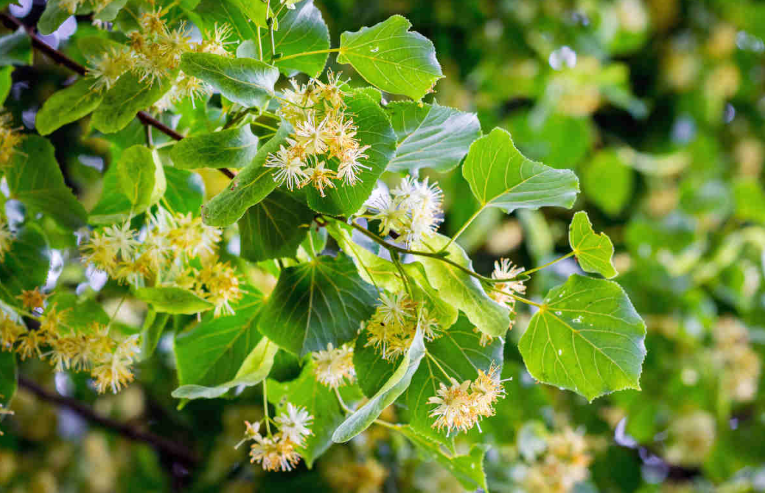
Basswood trees are large, fast-growing deciduous trees native to eastern and central North America, known for their heart-shaped leaves, fragrant summer flowers, and status as one of the best nectar sources any tree can offer a honeybee. The scientific name for the species is Tilia americana, and it belongs to the mallow family, the same broader plant family that includes hibiscus and cotton, a relationship that might surprise anyone picturing a tall shade tree next to a garden hibiscus.
According to NatureServe, American basswood ranges across an estimated 8 million square kilometers of eastern and central North America, stretching from New Brunswick west to Manitoba and south to Florida, Texas, and into Mexico. The U.S. Forest Service reports that mature trees typically reach 75 to 130 feet tall with a trunk 3 to 4 feet in diameter, though most cultivated landscape trees are usually described in the 60 to 80 foot range, and the species can grow at elevations up to nearly 5,000 feet in the southern Appalachian Mountains.
The tree’s small, fragrant, creamy-yellow flowers open in early summer and are so attractive to bees that a flowering basswood is often described as audibly buzzing from several feet away. That nectar produces a honey prized specifically for its flavor, and the tree’s lightweight, nearly odorless wood has long made it a preferred material for packing crates, along with lumber, pulpwood, and veneer. Its flowers also serve as a larval host for the eastern tiger swallowtail butterfly, and its foliage is a preferred browse for white-tailed deer.
Only 3 recognized varieties of American basswood exist, all classified as the same species rather than as separate species in their own right, and each is native to a somewhat different part of the tree’s overall range. What follows covers all 3 types of basswood trees.
American Basswood
American basswood is the widest-ranging and most commonly planted of the 3 varieties, found from New England and the upper Midwest south through the Appalachians. It typically grows 60 to 80 feet tall with a straight trunk and a rounded to pyramidal crown, and its large, dark green leaves have a matte gray underside that flutters visibly in the wind.
It thrives in full sun to partial shade and moist, well-drained, fertile soil, tolerating clay and occasionally dry conditions once established. Its considerable value to pollinators, along with its use as a shade tree in parks and along streets, has made it one of the most widely recommended native basswoods for a large landscape.
White Basswood
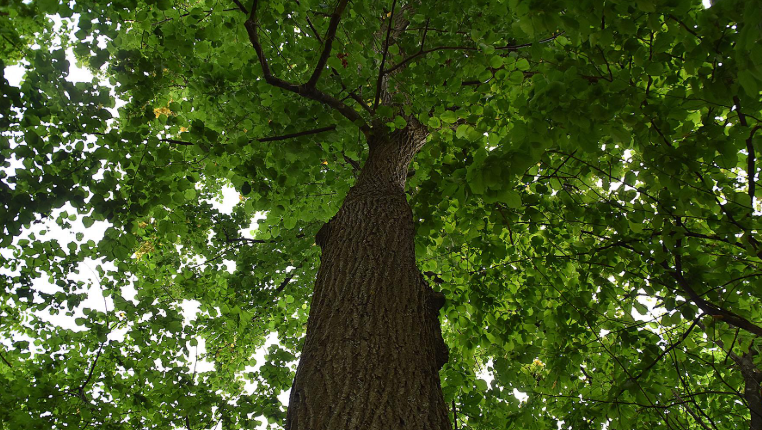
White basswood is native to rich woods, deep ravines, and streamsides across the eastern United States, and it can grow even taller than the standard American basswood, sometimes reaching 90 feet. Its common name comes from the whitish, felted underside of its leaves, a clear visual difference from the plainer gray-green undersides of American basswood foliage.
It thrives in full sun to partial shade and medium-moisture, well-drained soil, though it generally does not tolerate urban conditions as well as its more widely planted relative. Its fragrant cream and yellow flower clusters are just as attractive to bees, making it a valuable, if less commonly planted, alternative for parks and large gardens.
Carolina Basswood
Carolina basswood is the southernmost of the 3 varieties, native to the Carolinas and surrounding southeastern states, and it’s a somewhat smaller, faster-growing tree than its 2 relatives, typically reaching 30 to 60 feet. Its fragrant, drooping clusters of yellow-to-white flowers appear on the same early-summer schedule as the other basswood varieties.
It thrives in full sun to partial shade and moist soil, though it’s notably more vulnerable to fire damage and butt rot than American or white basswood. Its faster growth rate has made it a practical choice for a quicker-establishing shade tree in the warmer part of the species’ overall range.
Key Takeaways
- Basswood trees belong to the genus Tilia and include numerous species native to North America, Europe, and parts of Asia.
- They are generally recognized by their heart-shaped leaves, which often have serrated edges and pointed tips.
- Basswoods produce fragrant, pale yellow to cream-colored flowers, typically hanging in clusters beneath the foliage.
- Different types vary in size, shape, and habitat, with many developing broad, rounded crowns as they mature.
- Basswood flowers are valuable to pollinators, particularly bees, and some species are important sources of nectar for honey production.
- The trees have several practical uses, including timber, carving wood, shade planting, and ornamental landscaping.
- Identification is easier when several features are considered together, including leaf shape, flower clusters, bracts, bark, fruit, and overall growth habit.