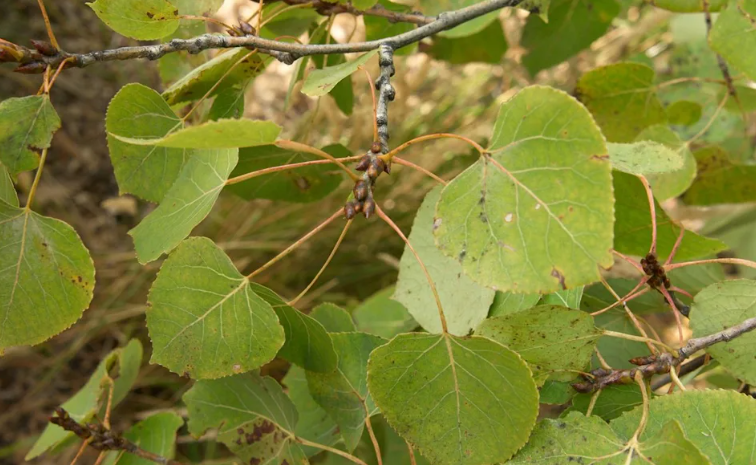
Trees with heart shaped leaves are genuinely easy to confuse with one another at a glance, and according to Colorado State University Extension’s Master Gardener program, linden leaves have a distinctly uneven, asymmetrical base where one side sits lower than the other, a detail that separates them immediately from the more evenly symmetrical heart shape found on redbud and catalpa leaves. That single base-shape check is one of the most reliable ways to sort a genuinely heart-shaped leaf into the right family before even considering flowers, bark, or fruit.
Size varies enormously across this group as well, and according to UMass Amherst’s Center for Agriculture, Food, and the Environment, eastern redbud produces leaves 3 to 5 inches long and wide, a modest scale compared to the largest entries on this list, whose leaves can reach nearly a foot across on the same basic cordate template.
Botanically, a true heart shape, called cordate in formal terms, technically refers to a leaf with 2 rounded lobes at the base meeting in a notch where the leaf stem attaches, and not every entry on this list hits that definition with perfect precision. A handful lean toward a slightly triangular or asymmetrical variation on the theme, though all remain close enough to the classic heart silhouette to earn a place here.
These trees span native North American woodlands, temperate Asian forests, and warm subtropical landscapes. What follows covers 28 trees with heart shaped leaves, along with where each one grows and the data behind its foliage.
Eastern Redbud
Eastern redbud produces alternate, simple, heart-shaped leaves 3 to 5 inches long and wide, emerging bright green in spring before deepening to a darker green through summer and finishing yellow in fall. According to UMass Amherst’s plant identification program, the tree typically grows 20 to 30 feet tall with a rounded to flat-topped shape and a distinctive zig-zag stem pattern.
It grows throughout the eastern and central United States, often the first tree to flower each spring with clusters of pink-purple blossoms appearing directly on the bark before any leaves emerge. Its short, low-branching trunk makes it a popular understory choice for smaller residential landscapes.
Western Redbud
Western redbud closely resembles its eastern relative in leaf shape, distinguished by smaller, often slightly more rounded leaves and a naturally multi-stemmed, shrubbier growth habit. Its magenta-pink spring flowers appear in the same striking, branch-hugging pattern typical of the genus.
It grows throughout California and other parts of the arid Southwest, tolerating drought and poor soil considerably better than its eastern counterpart. Its adaptability to dry conditions has made it a popular native choice for water-conscious landscaping.
Texas Redbud
Texas redbud produces notably glossy, thicker, more leathery heart-shaped leaves than eastern redbud, an adaptation that helps the tree tolerate the intense heat and drought of its native range. Its compact size and drought tolerance have made it a popular substitute for eastern redbud in warmer, drier climates.
It grows throughout central and western Texas and neighboring states, favoring the rocky, alkaline soil typical of the Texas Hill Country. Its glossy foliage catches light distinctively compared to the duller-leaved eastern species.
Mexican Redbud
Mexican redbud produces small, distinctly wavy-edged, heart-shaped leaves on a compact, often shrub-like tree well suited to hot, dry climates. Its undulating leaf margins give the foliage a slightly ruffled appearance compared to the smoother-edged leaves of other redbud species.
It grows throughout the southwestern United States and Mexico, tolerating extreme heat and reflected sun from pavement or masonry better than most other flowering trees. Its compact size makes it a popular choice for small urban landscapes and parking lot plantings.
Chinese Redbud
Chinese redbud produces heart-shaped leaves similar in size and shape to the eastern species, distinguished by a glossier leaf surface and typically more shrub-like, multi-stemmed growth habit. Its clusters of rosy-pink spring flowers are, if anything, even denser than those of eastern redbud.
It grows as a landscape ornamental throughout much of the temperate United States, valued for its compact size in smaller garden settings. Its dense flowering habit has made it an increasingly popular alternative to the more common eastern redbud.
Judas Tree
Judas tree, a European relative of redbud, produces the same characteristic heart-shaped leaves and cauliflorous flowering habit, with blossoms appearing directly on old wood and even the trunk before leaves emerge. Its name comes from a legend claiming Judas Iscariot hanged himself from a tree of this species.
It grows as a landscape ornamental in mild climates throughout parts of the United States, favoring the same warm, dry conditions found throughout its native Mediterranean range. Its rose-pink spring flowers are edible and occasionally used in salads in parts of Europe.
Northern Catalpa
Northern catalpa produces some of the largest heart-shaped leaves of any tree on this list, reaching up to 12 inches long, often arranged in distinctive whorls of 3 around the stem rather than in simple opposite pairs. Its enormous leaves combine with orchid-like white spring flowers and long, cigar-shaped seed pods to make it one of the most recognizable trees in any yard.
It grows throughout the eastern and central United States, native to a small region near the confluence of the Mississippi and Ohio Rivers before spreading widely as a landscape tree. Its coarse, almost tropical-looking foliage gives the tree an outsized presence even in a modest suburban yard.
Also Read: Trees With Long or Large Seedpods
Southern Catalpa
Southern catalpa closely resembles its northern relative in its large, heart-shaped leaves, distinguished by a slightly more fetid odor when the foliage is crushed and flowers that bloom somewhat later in the season. Its seed pods, while still impressively long, run marginally shorter than those of northern catalpa.
It grows throughout the southeastern United States, native to the Gulf Coast states before naturalizing well beyond that original range. Its unpleasant leaf odor when bruised is one of the more reliable ways to distinguish it from its northern counterpart.
Paulownia
Paulownia, also called princess tree or empress tree, produces enormous, velvety, heart-shaped leaves that can rival or exceed catalpa in size, particularly on the vigorous young growth of a recently cut or coppiced tree. Its fast growth rate, among the fastest of any tree in temperate climates, allows a seedling to reach 15 feet or more in its very first year.
It grows throughout much of the eastern United States, commonly found colonizing recently cleared or disturbed ground where its enormous leaves quickly shade out competing vegetation. Its fragrant, lavender, foxglove-like spring flowers appear before the leaves fully emerge each year.
American Basswood
American basswood, also called American linden, produces large, heart-shaped leaves 4 to 10 inches long with a distinctly asymmetrical base, one of the clearest identification features separating linden from redbud or catalpa. Its fragrant, pale yellow summer flowers hang from a distinctive strap-like bract, a structure unique to the linden genus.
It grows throughout the eastern and central United States, valued for its soft, light, easily carved wood used in everything from furniture to musical instruments. Its flowers are an important nectar source for honeybees, producing a distinctly flavored basswood honey.
Littleleaf Linden
Littleleaf linden produces smaller, more refined heart-shaped leaves than American basswood, generally 2 to 3 inches long with the same characteristic asymmetrical base and serrated margin. Its dense, uniformly pyramidal growth habit has made it one of the most widely planted street trees in the country.
It grows as a landscape and street tree throughout much of the temperate United States, native to Europe before becoming a staple of American urban forestry. Its tolerance for pollution, compacted soil, and repeated pruning makes it especially well suited to city environments.
Bigleaf Linden
Bigleaf linden produces the largest leaves of any commonly cultivated linden species, reaching up to 6 inches across with the same asymmetrical heart-shaped base typical of the genus. Its substantial, broadly rounded canopy provides some of the deepest shade of any linden species.
It grows as a landscape tree throughout parts of the temperate United States, native to Europe and valued for its imposing mature size in parks and large residential lots. Its fragrant summer flowers draw an especially heavy concentration of bees compared to smaller-leaved relatives.
Silver Linden
Silver linden produces heart-shaped leaves with a striking silvery-white, felted underside that flashes visibly whenever wind turns the foliage, distinguishing it at a glance from other linden species. That reflective leaf underside also gives the tree noticeably better heat and drought tolerance than most of its relatives.
It grows as a landscape tree throughout much of the temperate United States, native to southeastern Europe and western Asia. Its improved tolerance for urban heat and drought has made it an increasingly popular choice for city street plantings.
Crimean Linden
Crimean linden, a hybrid between silver linden and littleleaf linden, produces heart-shaped leaves intermediate in size between its 2 parent species, with a subtle silvery cast on the underside. Its dense, uniform growth habit makes it a popular formal shade tree.
It grows as a landscape tree throughout much of the temperate United States, combining the improved heat tolerance of its silver linden parent with the more compact form of littleleaf linden. Its hybrid vigor has made it a reliable performer in a range of urban growing conditions.
European Linden
European linden, also called common lime, produces heart-shaped leaves similar to American basswood but generally somewhat smaller, with the same reliably asymmetrical base. Its dense, often heavily suckering growth at the base of the trunk requires regular maintenance to keep the tree looking tidy.
It grows as a landscape and historic avenue tree throughout much of the temperate United States, long favored in European formal garden design for its tolerance of heavy pruning into hedges and allées. Its fragrant flowers, like those of its American relative, are a significant early-summer nectar source for pollinators.
White Mulberry
White mulberry produces variably shaped leaves on the same tree, some smooth-edged and heart-shaped and others deeply lobed, a trait that can make identification by leaf shape alone genuinely unreliable. It was originally introduced to North America in a failed attempt to establish a domestic silk industry, since its leaves are the preferred food of silkworms.
It grows throughout much of the United States, particularly in urban and disturbed areas where birds readily disperse its seeds after eating the sweet, berry-like fruit. It also hybridizes readily with the native red mulberry, a genuine conservation concern for the less common native species.
Also Read: Trees With White Bark
Red Mulberry
Red mulberry, native to North America, produces heart-shaped to variably lobed leaves considerably larger and rougher-textured than those of white mulberry, with a distinctly sandpapery upper surface. Its dark red to purple-black fruit, sweeter than white mulberry, is a favorite of birds throughout summer.
It grows throughout the eastern United States, favoring rich, moist bottomland soil along streams and forest edges. Its declining populations, driven partly by hybridization with introduced white mulberry, have made it a species of increasing conservation interest.
Black Mulberry
Black mulberry produces broad, heart-shaped to shallowly lobed leaves on a tree valued primarily for its intensely flavored, dark purple-black fruit, considered superior in taste to both white and red mulberry. Its fruit stains hands and pavement a deep purple wherever it falls in quantity.
It grows as a specialty fruiting tree in warm regions of the United States, native to western Asia and long cultivated throughout the Mediterranean. Its rich, wine-like fruit flavor has made it a favorite among home orchardists willing to tolerate the considerable mess it creates when fruit drops.
Paper Mulberry
Paper mulberry produces large, rough, variably lobed to heart-shaped leaves, historically valued in parts of Asia for producing high-quality paper and traditional bark cloth from its fibrous inner bark. Its leaf shape can vary dramatically even on the same branch, from simple hearts to deeply cut, multi-lobed forms.
It grows in scattered populations throughout much of the southern and eastern United States, having escaped cultivation to become a documented invasive concern in several states. Its extensive root suckering allows a single tree to expand into a dense thicket within just a few growing seasons.
Katsura Tree
Katsura tree produces small, rounded, heart-shaped blue-green leaves that turn brilliant shades of apricot, red, and yellow each fall, often releasing a scent compared to cotton candy or caramel as the fallen leaves begin to decompose. Its delicate, almost dainty leaf shape sets it apart from the coarser, larger heart-shaped leaves found on many other trees on this list.
It grows as a landscape shade tree throughout temperate regions of the United States, native to Japan and China. Its graceful, layered branching habit and distinctive fall fragrance have made it an increasingly popular specimen tree in modern landscape design.
Weeping Katsura
Weeping katsura, a cultivar bred for its distinctive cascading branch structure, produces the same small, heart-shaped, blue-green leaves as standard katsura on a tree with a dramatically different overall silhouette. Its pendulous branches create a sculptural, waterfall-like form unlike almost any other tree on this list.
It grows as a specialty landscape tree throughout temperate regions of the United States, typically grafted onto a standard trunk to achieve its cascading form. Its unusual shape makes it a popular focal point in Japanese-inspired garden design.
Bodhi Tree
Bodhi tree, also called sacred fig, produces glossy, heart-shaped leaves that taper to a distinctive long, drawn-out point, an adaptation thought to help the leaf shed tropical rainfall more efficiently. The species holds deep religious significance in Buddhism, traditionally associated with the tree under which Siddhartha Gautama achieved enlightenment.
It grows as a specialty landscape and container tree in South Florida, Hawaii, and other frost-free tropical regions of the United States. Its aggressive, wide-spreading root system makes it unsuitable for planting near foundations, sidewalks, or underground utilities.
Chinese Parasol Tree
Chinese parasol tree produces enormous, deeply lobed, heart-shaped leaves that can span nearly a foot across, supported on a smooth, distinctively green-barked trunk unlike almost any other tree on this list. Its bold, tropical-looking foliage and unusual bark color make it a striking specimen even without its inconspicuous flowers.
It grows as a landscape tree throughout the southern United States, tolerating urban pollution and heat notably well. Its large leaves provide dense summer shade, dropping to reveal the tree’s uniquely colored bark once winter arrives.
Eastern Cottonwood
Eastern cottonwood produces broadly triangular, coarsely toothed leaves with a distinctly heart-shaped to flattened base, a shape that flutters readily in even a light breeze thanks to a flattened leaf stalk similar to its aspen relatives. A mature tree can grow remarkably fast, often adding several feet of height in a single favorable growing season.
It grows throughout river bottoms and floodplains across most of the United States, among the fastest-growing native trees in North America. Its cottony, wind-dispersed seeds, released in massive quantities each early summer, are the source of its common name.
Common Lilac
Common lilac, when trained and grown as a small single-trunked tree rather than a multi-stemmed shrub, produces distinctly heart-shaped leaves alongside its famous, intensely fragrant purple flower clusters each spring. Its tree-form training has become increasingly popular in modern landscape design for adding vertical structure without sacrificing the plant’s beloved fragrance.
It grows as a landscape ornamental throughout much of the northern United States, requiring a genuine winter chill period to flower reliably each spring. Its heart-shaped leaves persist as attractive summer foliage long after the brief spring bloom period has ended.
Tuliptree
Tuliptree, also called tulip poplar, produces a distinctive 4-lobed leaf with a broad, notched tip and a base that curves inward to form a genuine heart shape where the leaf stem attaches. That unusual combination of a squared-off top and a classically cordate base makes its leaf shape unlike any other tree on this list.
It grows throughout the eastern United States as one of the tallest native hardwood trees in North America, capable of exceeding 150 feet at full maturity in old-growth conditions. Its tulip-shaped, yellow-green spring flowers, held high in the canopy, are easy to overlook despite their considerable size.
Anacahuita
Anacahuita, also called Texas wild olive, produces broad, heart-shaped, velvety leaves on a small tree valued for its clusters of fragrant, trumpet-shaped white flowers that bloom nearly year-round in frost-free conditions. Its dense, rounded canopy provides useful shade despite the tree’s generally modest overall size.
It grows throughout South Texas and northern Mexico, tolerating drought, heat, and poor caliche soil considerably better than most other flowering ornamentals. Its long, nearly continuous bloom season has made it an increasingly popular choice in xeriscape and native plant landscaping.
Sassafras
Sassafras produces 3 distinctly different leaf shapes on the very same tree, including an unlobed oval form, a 2-lobed mitten shape, and a 3-lobed form, with the base of each type often rounding into a loosely heart-like curve. That leaf-shape variability, unusual even among trees with genuinely variable foliage, makes a single sassafras remarkably easy to identify once the pattern is recognized.
It grows throughout the eastern United States, historically valued for its aromatic roots and bark, once used to flavor traditional root beer before safety concerns curtailed that commercial use. Its brilliant orange, red, and yellow fall color ranks among the most vivid of any native tree.
Things to Remember
Trees with heart-shaped leaves can look quite similar at first, but the leaves often have important differences in size, texture, margins, tips, and vein patterns. Some may have a clearly defined heart shape, while others are only slightly heart-shaped. Looking closely at these features can make identification much easier.
It is also helpful to examine more than the leaves. Bark, twigs, flowers, fruits, branching pattern, and the tree’s overall size can provide additional clues when several species have similar foliage. The location and growing conditions can also help narrow down the possibilities.
When identifying a tree with heart-shaped leaves, avoid relying on leaf shape alone. Compare several characteristics and use clear photographs of the leaves, bark, and entire tree when checking a reliable identification guide. This approach can help distinguish closely related or similar-looking trees more accurately.