The Herb With a Dragon’s Name and a Split Identity
Tarragon is a perennial herb best known for the sweet, anise-like flavor that anchors classic French cooking, yet the plant sold under that single common name actually covers a genuinely confusing split identity. The variety capable of real culinary distinction is sterile and can’t be grown from seed at all, while the variety almost universally sold as seed carries a flavor most cooks would call a disappointment by comparison.
Its scientific name, Artemisia dracunculus, comes from the Latin word for “little dragon,” a reference to the plant’s twisting, serpentine root system rather than anything about its flavor or appearance above ground. That dragon connection runs deeper than etymology alone, showing up in the herb’s French name, estragon, and in a long folk tradition of using the plant to treat venomous bites and stings.
This guide covers tarragon’s classification and naming history, how to identify it, its sprawling native range, the genuine split between its French and Russian forms, its unusual relationship with an unrelated marigold used as a substitute, how it’s used in the kitchen, and what it takes to grow it successfully.
Botanical Classification
Tarragon belongs to the genus Artemisia within the sunflower family, placing it alongside wormwood, mugwort, and sagebrush rather than among more typical kitchen herbs like basil or thyme. The species itself, Artemisia dracunculus, is described by researchers as genuinely polymorphic, meaning it varies considerably in form, chemistry, and flavor across its wild populations, which is a major part of why its internal classification remains so unsettled.
A 2011 review of the plant’s phytochemistry, published in the Journal of Agricultural and Food Chemistry, notes that taxonomists have variously described French and Russian tarragon as subspecies, varieties, or even separate species depending on the source consulted, and that differences in ploidy level, the number of chromosome sets a plant carries, appear to underlie much of the real biological difference between them. That same research notes that botanists working in the former Soviet Union have historically distinguished as many as 6 regional varieties of wild and cultivated tarragon, a level of internal complexity most gardeners never encounter in the simplified French-versus-Russian framing sold at nurseries.
Brief History
Tarragon’s association with dragons and serpents runs through much of its early recorded history, and the plant was traditionally used in parts of Europe and the Middle East as a treatment for snake bites, insect stings, and other venomous injuries, a use plausibly connected to its twisted, snake-like root structure under the folk logic of the era. Its French name, estragon, and its English common name both trace back to that same dragon-themed Latin root.
French tarragon itself, the cultivated culinary form now called Artemisia dracunculus var. sativa, is believed to have originated somewhere in the Mediterranean region before becoming closely associated with French culinary tradition specifically. Its sterility, meaning the plant can’t reproduce from seed, has meant that every French tarragon plant grown today descends from vegetative propagation, cuttings and divisions passed down through generations of gardeners and growers, rather than from any ongoing wild seed population.
Identifying Characteristics
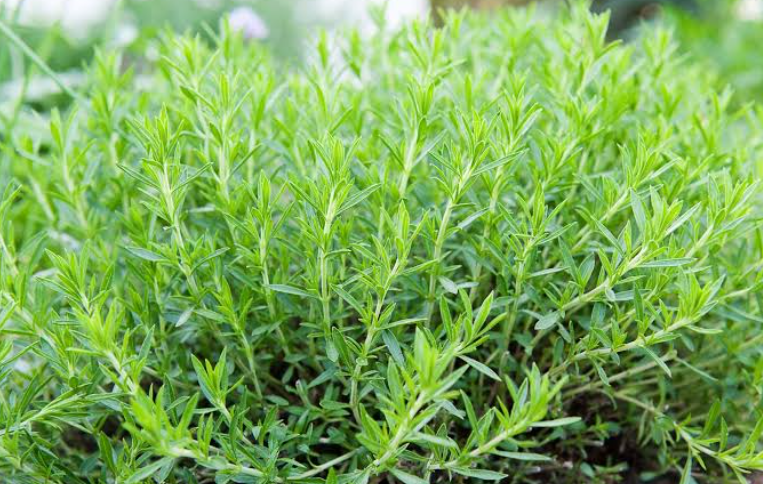
Tarragon is a bushy, upright perennial herb, typically growing somewhere between 18 and 36 inches tall with narrow, smooth-edged, lance-shaped leaves arranged along slender, branching stems. Its foliage carries the plant’s signature aromatic oils, and crushing or bruising a leaf releases tarragon’s characteristic sweet, anise-like scent, at least in French tarragon and the better specimens of Mexican tarragon discussed below.
The plant produces small, relatively inconspicuous yellow-green or cream flowers in loose clusters, though in cultivated French tarragon these flowers are functionally sterile and rarely a focus of the plant’s appearance. Its root system, true to the plant’s dragon-themed name, is notably twisted and somewhat tangled, a trait that makes dividing an established, older clump considerably more difficult than it might first appear. The plant’s aromatic character comes largely from compounds called estragole and methyleugenol, concentrated in the leaves, and the specific balance of these and other volatile oils varies considerably between French tarragon, Russian tarragon, and the wild forms discussed below, which helps explain why the same plant name can taste so different depending on which form you’ve actually grown.
Native Range and Habitat
Tarragon’s wild native range is genuinely enormous, stretching across much of Eurasia from Europe through Russia and Siberia, and across large stretches of North America as well, where it grows as a native plant in dry meadows, along roadsides, and in other disturbed habitats throughout much of the United States and Canada, including states like Arizona. That wild distribution is considerably broader than most kitchen herbs can claim, and it reflects the species’ genuine adaptability to a wide range of climates and soil conditions. Wild tetraploid populations, meaning plants carrying 4 full sets of chromosomes rather than 2, are reported mainly in Europe and Asia, while diploid populations are more typical of North America, a genetic split that researchers believe contributes meaningfully to the flavor and fertility differences seen across the species’ wild range.
Flavor and aroma vary considerably across that wild range, and in some wild populations, researchers note, the characteristic tarragon aroma most people associate with the plant is largely or entirely absent. That variability is part of why a specific cultivated selection, French tarragon, rather than any wild-collected plant, became the standard for serious culinary use.
French Tarragon vs. Russian Tarragon
The practical distinction that matters most to anyone actually trying to grow or cook with tarragon comes down to these 2 forms. French tarragon offers a sweet, refined, genuinely anise-like flavor prized in classical cooking, but it’s sterile and must be propagated by division or stem cuttings from an already-established plant, since it produces no viable seed at all.
Russian tarragon, by contrast, is considerably hardier, more vigorous, and easier to grow, and it reproduces readily from seed, which is exactly why it’s the variety almost universally sold under a generic “tarragon seed” label with no further distinction offered. Its flavor, though, is noticeably milder and often described as bitter, lacking the refined sweetness French tarragon delivers, which has led more than one disappointed home cook to wonder why their homegrown tarragon tastes nothing like what a recipe called for. The University of California Cooperative Extension puts the distinction plainly: French tarragon is the only real choice for the kitchen, and checking carefully for that specific designation, or the botanical name Artemisia dracunculus var. sativa, when buying a plant, rather than trusting a generic tarragon label or any seed packet, is the only reliable way to get the culinary variety.
Mexican Tarragon: A Different Plant Entirely
Adding to the genuine confusion around this herb’s naming, a completely unrelated plant, Tagetes lucida, is widely sold and used as “Mexican tarragon,” “Spanish tarragon,” or “Texas tarragon,” despite belonging to the marigold family rather than genus Artemisia at all. Native to Mexico and Central America, it’s been used there as a food, medicinal, and ceremonial plant for well over a thousand years, entirely independent of its more recent adoption as a tarragon substitute.
Its licorice-like flavor genuinely resembles true tarragon’s and, unlike Russian tarragon’s flavor, doesn’t diminish significantly as the plant ages, which has made it a popular and often superior substitute specifically in hot, humid climates where true French tarragon struggles to thrive. It also produces cheerful yellow, marigold-like flowers in late summer and fall, a visible ornamental feature that neither French nor Russian tarragon offers, and one more clear sign of just how different a plant Mexican tarragon actually is beneath the shared common name.
Culinary Uses
Tarragon holds a genuinely central place in classical French cooking, forming one of the 4 traditional fines herbes alongside chives, parsley, and chervil, a blend used to finish delicate dishes without overpowering them. It’s also the defining herb in Béarnaise sauce, the rich, butter-and-egg-yolk sauce that owes much of its distinctive flavor directly to tarragon.
Beyond those classic applications, tarragon pairs particularly well with chicken, fish, and egg dishes, and it’s a popular ingredient for infusing vinegar, where its flavor transfers cleanly and keeps well over time. In parts of Eastern Europe and the Caucasus, tarragon also flavors a well-known carbonated soft drink called tarkhuna, made from sugar, carbonated water, and tarragon leaves, which give the beverage its distinctive, vivid green color.
Growing Considerations
French tarragon wants full sun to light afternoon shade, well-drained soil with a pH somewhere between 6.0 and 7.5, and only moderate watering, with the soil allowed to dry out somewhat between waterings once the plant is established. It’s generally hardy in USDA zones 4 through 8, though it behaves as a relatively short-lived, somewhat tender perennial even within that range, typically remaining productive for only about 3 to 4 years before needing division.
Russian tarragon tolerates a wider range of conditions and a broader hardiness range, generally cited as USDA zones 3 through 9, reflecting its considerably greater toughness compared to the more refined French variety. Both forms have genuinely low fertility requirements, and overfeeding tends to produce soft, lush growth at some cost to flavor concentration, so skipping heavy fertilization is generally the better approach for either type.
Pests and Diseases
Tarragon has a well-earned reputation as a largely pest-free herb, with few to no serious insect problems reported across most growing conditions. The real risks instead come from fungal issues, specifically downy mildew, powdery mildew, rust, and root rot, nearly all of which trace directly back to excess moisture, whether from overly wet soil, poor air circulation, or water splashed onto the foliage.
Good spacing for airflow, watering at the base of the plant rather than overhead, and prompt removal of any damaged or diseased foliage all meaningfully reduce the risk of these fungal problems taking hold. Clearing away plant debris at the end of the growing season, rather than leaving it in place over winter, further helps limit the chance of fungal spores surviving near the plant’s crown into the following spring.
Key Takeways
- Tarragon is an aromatic perennial herb belonging to the Artemisia genus and the Asteraceae family.
- French tarragon is the type most valued for culinary use because of its distinctive sweet, anise-like flavor.
- Tarragon has slender, narrow green leaves and an upright, branching growth habit that makes it relatively easy to recognize.
- The plant is associated with Eurasia, with different tarragon types having different native or historical ranges.
- Tarragon leaves are widely used as a culinary herb, particularly in sauces, dressings, poultry, fish, vegetables, and herb blends.
- Russian tarragon is generally more vigorous and easier to grow from seed, but its flavor is usually milder than French tarragon.
- Mexican tarragon is a different plant but is commonly used as a tarragon substitute because of its similar anise-like flavor.
- Tarragon grows best in well-drained soil, adequate sunlight, and moderate watering, with protection from excessive moisture.
- French tarragon is commonly propagated through stem cuttings or division rather than seed.
- Proper identification is important because several plants are sold or referred to as “tarragon,” even though they can differ significantly in appearance, flavor, and botanical identity.
The Bottom Line
Tarragon is a genuinely more complicated plant than its simple, single common name suggests, splitting into a sterile, refined culinary variety that must be propagated by hand, a hardier but blander seed-grown relative that dominates the commercial seed trade, and a visually striking native range so vast that wild populations barely resemble each other in flavor from one region to the next. Add in a popular substitute from an entirely different plant family, and tarragon turns out to be one of the better examples in the herb garden of why a common name alone is never quite enough information to know what you’re actually growing or buying.