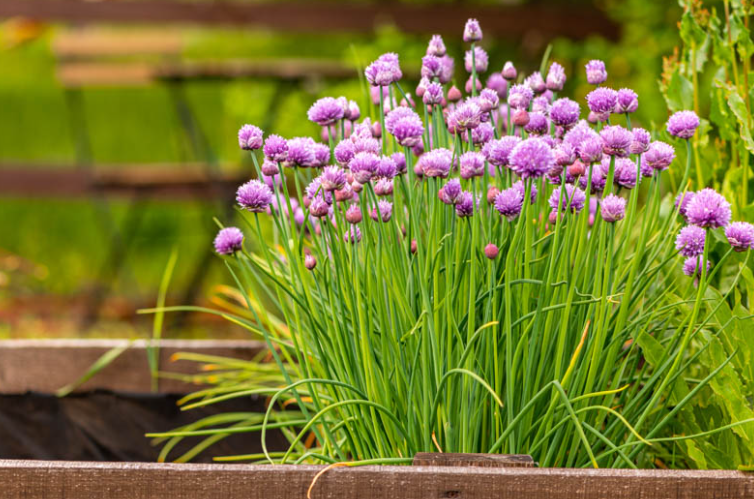
Chives: The Smallest Member of the Onion Family
Chives are the smallest cultivated species in the onion genus, yet they’ve earned a place in kitchen gardens across an enormous stretch of the globe, prized for a mild, grassy onion flavor and delicate purple blooms that double as genuine garden ornamentals. Few herbs manage to be this useful in the kitchen while also looking this good in a flower border.
What makes chives genuinely unusual among their Allium relatives is geographic: Allium schoenoprasum is the only species in the entire onion genus native to both the Old World and the New World, found growing wild across temperate Europe, Asia, and North America long before any deliberate cultivation began. That naturally wide distribution likely explains why chives have been part of human cooking for a genuinely long time, with cultivation records stretching back more than 5,000 years.
This guide covers chives’ classification and history, how to identify them, their native range, the easily confused but genuinely different garlic chive, their culinary and companion-planting uses, and what it takes to grow and care for them successfully.
Botanical Classification
Chives belong to the genus Allium, placing them alongside onion, garlic, leek, and shallot within the same broader plant family, classified today as Amaryllidaceae though older references often place it in Liliaceae or Alliaceae instead. Within that genus, chives stand out as the smallest cultivated species, typically reaching just 12 to 20 inches tall compared to the considerably larger onions and leeks that share the same genus, with the Missouri Botanical Garden’s Plant Finder listing a typical mature height and spread of about 1 to 1.5 feet.
Some botanists classify the North American populations of chives as a distinct variety, often cited as Allium schoenoprasum var. sibiricum, separate from the Eurasian form, though the 2 are similar enough in appearance and use that this distinction rarely matters to a home gardener or cook. The species name schoenoprasum itself combines Greek roots referring to a rush or reed-like plant and the color of a leek, a fitting nod to the hollow, grass-like foliage that defines the plant’s appearance.
Brief History
Chives have been cultivated for culinary purposes for more than 5,000 years, making them one of the longer-standing herbs in continuous human use. Their common English name traces back through French to the Latin word cepa, meaning onion, the same root that eventually gave English the word “chive” after passing through several intermediate forms.
Historical accounts describe European farmers planting chives along the rocky borders of flowerbeds specifically to help keep the beds free of pests like Japanese beetles, an early form of companion planting recorded by naturalists observing traditional farming practice. Chives have also held a long-standing place in traditional dishes across numerous European cuisines, particularly in France and Sweden, and their close relative within the broader fines herbes tradition of French cooking, alongside parsley, chervil, and tarragon, reflects just how embedded chives became in classical culinary practice.
Identifying Characteristics
Chives grow as small, bulb-forming herbaceous perennials, forming dense clumps of slender, hollow, tubular leaves that are round in cross-section, a trait botanists call terete. That rounded, hollow leaf shape is one of the most reliable ways to identify true chives at a glance, since the plant’s leaves genuinely look and feel like thin, green drinking straws growing directly from the base of the clump.
In late spring or summer, chives send up flower stalks, called scapes, that typically rise above the foliage and produce globular, clover-like clusters of small individual flowers in pale purple, pink, or occasionally white, subtended by a papery bract at the base of each flower head. Both the leaves and the edible flower heads carry chives’ characteristic mild onion flavor, a result of the same sulfur-based compounds responsible for pungency across the broader onion family, though the plant’s small underground bulbs are notably unpleasant tasting and essentially never used in cooking, unlike the bulbs of onion or garlic. Those same sulfur compounds are also credited with chives’ modest nutritional profile, and the leaves provide meaningful amounts of vitamins A and C alongside their culinary role.
Native Range and Habitat
Chives are genuinely native across an enormous stretch of the temperate Northern Hemisphere, found growing wild throughout much of Europe, Asia, and North America, with some researchers tracing a likely origin to the Siberian highlands before the species spread more broadly. That native range is part of what makes the plant such a reliable, adaptable garden subject nearly everywhere a temperate climate allows.
Within that broad range, wild chive populations have been documented showing some real variation, including at least one recorded instance of plants growing solitary rather than in the plant’s more typical dense clump formation, along with unusually dingy gray flowers rather than the more common pale purple. That documented variability is consistent with a species spread across such a wide and environmentally diverse native range. Some botanists have also suggested that North American chive populations deserve recognition as their own distinct variety rather than being folded into the same classification as their Eurasian counterparts, though this remains a point of ongoing taxonomic discussion rather than settled consensus.
Chives vs. Garlic Chives
Garlic chives, Allium tuberosum, are frequently confused with true chives given the shared common name and generally similar appearance, but the 2 are genuinely distinct species with several reliable differences. Where true chives have round, hollow, tubular leaves, garlic chives have flat, solid leaves, and where true chives produce pale purple or pink flowers, garlic chives produce white ones instead.
Flavor differs considerably too: true chives deliver a mild onion taste, while garlic chives, also called Chinese chives or Chinese leeks, carry a genuinely garlicky flavor more suited to the Asian cuisines where they’ve been a staple for well over a thousand years, with documented medicinal use in China dating back to at least the Liang Dynasty in the 6th century. Garlic chives are also native to Southeast Asia rather than the much broader Old World and New World range true chives occupy, and they’re slightly less cold-hardy, generally reliable only to about USDA zone 4 without additional winter protection.
Culinary Uses
Chives are used almost entirely for their fresh leaves, finely sliced and added raw or near the end of cooking to preserve their delicate flavor, since prolonged heat dulls the mild onion taste considerably. They’re a classic addition to eggs, soups, potatoes, fish, and sauces, and their place within the French fines herbes blend, alongside parsley, chervil, and tarragon, reflects their long-standing role finishing delicate dishes without overwhelming them.
Beyond the leaves themselves, chives’ edible flower heads make a genuinely attractive garnish for soups and salads, adding a mild onion flavor along with real visual appeal. For longer storage, the tip ends of the leaves can be snipped and air-dried, though chives generally lose more flavor through drying than many other herbs, which is part of why they’re most often used fresh rather than dried. Freezing chopped fresh chives is generally a more effective way to preserve their flavor for later use than drying them, since the freezing process better protects the volatile oils responsible for their characteristic taste.
Companion Planting
Chives have a long-documented history as a companion plant, valued specifically for their ability to help deter common garden pests, including aphids, Japanese beetles, and, according to some gardeners, snails and slugs as well. That pest-deterrent reputation traces back centuries, reflected in historical European farming practice that placed chives specifically along flowerbed borders for exactly this protective purpose.
Good companion choices for chives include tomatoes, carrots, roses, strawberries, and other aromatic herbs like dill, marjoram, and parsley, while legume crops like beans and peas are generally better planted elsewhere, since alliums and legumes tend to compete for similar soil resources rather than benefiting each other the way chives and tomatoes do. Deer and rabbits also tend to avoid chives thanks to their pungent aroma, an incidental benefit for a garden dealing with browsing wildlife pressure.
Growing Considerations
Chives grow easily in average, well-drained soil in full sun to partial shade, and they show real heat and drought tolerance once established, though they still perform best with medium, consistent moisture rather than extended dry stretches. They’re hardy across a wide range, generally cited as USDA zones 4 through 8 or even 4 through 10 depending on the source, reflecting the plant’s considerable adaptability inherited from such a broad native range.
Established clumps should be divided every 2 to 3 years to prevent overcrowding and reduce the risk of root disease, and division in spring or fall is also the simplest way to propagate new plants true to the parent. Chives are also easily grown from seed, but gardeners should deadhead spent flower heads promptly if they want to avoid self-seeding, since an unmanaged clump can spread more aggressively around the garden than many gardeners expect. In regions with genuinely cold winters, cutting the foliage back to ground level in late fall and applying a layer of mulch offers useful extra protection for the dormant clump.
Pests and Diseases
Chives are generally considered a pest-resistant herb, and their own pungent aroma is part of why they’re used to protect other plants. The Missouri Botanical Garden lists chives as tolerant of deer, drought, and even the toxic compound juglone produced by black walnut trees, a genuinely useful trait for a gardener trying to plant beneath or near one. That said, they’re not entirely immune to problems, and onion thrips, onion maggots, aphids, and occasionally fungus gnats can show up under the right conditions.
Fungal issues are the more common disease concern, including downy mildew, Botrytis leaf blight, and root rot, nearly all of which are encouraged by excess moisture or poor air circulation rather than any inherent weakness in the plant. Prompt removal of any discolored, spotted, or otherwise diseased foliage, combined with reasonable spacing between plants, goes a long way toward keeping chives healthy throughout the growing season.
Key Takeaways
- Chives (Allium schoenoprasum) are perennial herbs belonging to the Amaryllidaceae family and are closely related to onions, garlic, leeks, and shallots.
- The plant forms narrow, hollow, grass-like leaves that grow in dense clumps from underground bulbs.
- Chives produce attractive round clusters of pinkish-purple flowers, which can also attract bees and other pollinators.
- They are native to parts of Europe, Asia, and North America and can tolerate a relatively wide range of climates.
- Chive leaves have a mild onion-like flavor and are commonly used fresh in salads, soups, sauces, potatoes, eggs, and other dishes.
- Chives grow best in full sun to partial shade and fertile, well-drained soil that retains some moisture.
- Regular harvesting encourages fresh leaf growth and helps maintain a compact, productive plant.
- Chives can be propagated from seed or division, with division providing a quick way to establish new plants.
- Allowing some plants to flower provides ornamental value and can support pollinators in the garden.
- Chives are generally easy to grow, making them a useful choice for herb gardens, containers, borders, and small growing spaces.
The Bottom Line
Chives earn their place in nearly every kitchen garden honestly, offering a mild, versatile onion flavor, genuine ornamental appeal through their purple pom-pom blooms, a long history stretching back over 5,000 years of cultivation, and a useful second job deterring pests from nearby plants. Give them full sun, decent drainage, and a once-every-few-years division, and this smallest member of the onion family will reward you with considerably more than its modest size might suggest.