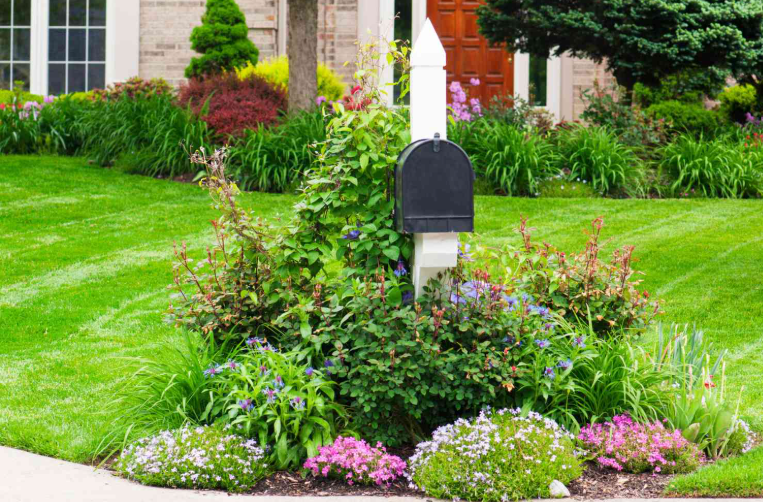
A mailbox garden has to satisfy a genuinely narrower set of requirements than almost any other planting bed in a yard. It needs to stay low enough that the mail carrier can actually see and reach the box, tough enough to survive the compacted, often poor soil found right at the curb, and low-maintenance enough to look decent without constant attention, since a mailbox bed sits at the very edge of the property and tends to get less regular care than anything closer to the house.
Cold-climate mailboxes carry an extra constraint most other garden beds never deal with: road salt. Winter plowing throws salt-laden slush and snow directly onto anything planted near the curb, and a plant that thrives everywhere else in the yard can die within a season or 2 in that specific spot if it isn’t genuinely salt tolerant. Deer and rabbit pressure tends to run higher here too, since a roadside bed often sits at the exposed edge of a property where browsing animals feel more comfortable approaching than they would deeper into a yard.
None of that rules out a genuinely attractive planting, it just narrows the field to species that can handle the specific abuse this particular spot dishes out. The University of Minnesota Extension’s guide to salt-tolerant landscape plants is a useful reference for anyone gardening near a regularly plowed or salted road. What follows covers 28 of the best plants to grow around a mailbox.
Daylily
Daylily forms a dense, low mound of grass-like foliage topped with reliable, colorful summer blooms, tolerating the poor, compacted soil common right at the curb about as well as any perennial available. Its considerable toughness means it rarely needs anything beyond an occasional deadheading.
It tolerates a wide range of soil and light conditions, and deer generally show only modest interest in it compared to more tender ornamentals.
Black-Eyed Susan
Black-eyed Susan produces cheerful yellow-orange daisy-like flowers throughout a long summer bloom period on a genuinely low-maintenance native perennial that tolerates roadside conditions well. Its reliable, self-seeding nature means a mailbox planting often fills in and thickens on its own over a few seasons.
It tolerates a range of soil conditions and full sun, staying compact enough to avoid blocking mailbox visibility or access.
Purple Coneflower
Purple coneflower tolerates poor, dry soil and considerable neglect while producing long-blooming purple flowers that draw pollinators throughout summer, a genuinely practical choice for a bed that doesn’t get regular attention. Its moderate height keeps it well clear of the mailbox opening itself.
It tolerates drought and poor soil well, and deer generally leave it alone more than many showier perennials.
Creeping Phlox
Creeping phlox forms a low, dense, mat-like groundcover that erupts into vivid pink, purple, or white flowers each spring, staying genuinely low enough to never interfere with mailbox access. Its evergreen to semi-evergreen foliage provides some structure through the rest of the year.
It tolerates poor, rocky soil and full sun, thriving in exactly the lean roadside conditions a mailbox bed often presents.
Autumn Joy Sedum
Autumn Joy sedum produces large, flat clusters of pink flowers specifically in late summer and fall, tolerating poor, dry soil and genuine neglect with real ease. Its succulent foliage provides attractive structure through the rest of the season without demanding regular water.
It tolerates drought and poor soil well, and deer generally show little interest in its fleshy leaves.
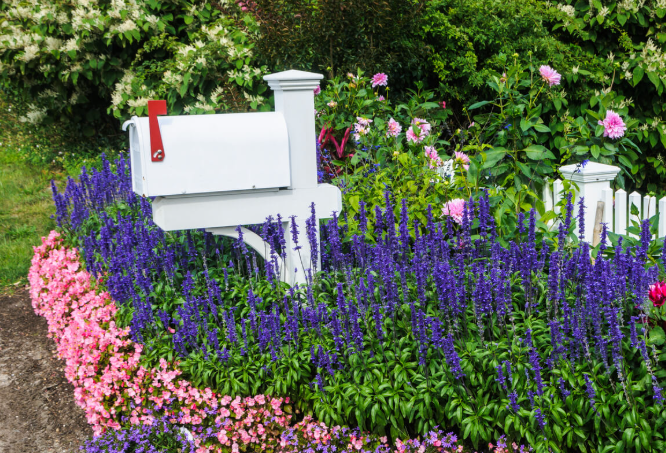
Salvia
Salvia produces spikes of tubular flowers over a genuinely long bloom period, tolerating heat, drought, and poor soil well while staying compact enough not to overwhelm a small mailbox bed. Its reliable performance with minimal care makes it a practical low-maintenance choice.
It tolerates a range of soil conditions and full sun, and deer generally avoid its aromatic foliage.
Catmint
Catmint produces long-blooming spikes of small lavender-blue flowers, tolerating heat, drought, and poor roadside soil with real ease while staying low and mounding enough to frame a mailbox post without obscuring it. Its aromatic foliage is a genuine deterrent to deer browsing.
It thrives in full sun and well-drained soil, often reblooming with a simple midsummer shearing.
Shasta Daisy
Shasta daisy produces classic white, yellow-centered daisy flowers throughout a long early to midsummer bloom period, tolerating a range of soil conditions with minimal fuss. Its clean, simple form suits a mailbox bed’s smaller scale well.
It tolerates a range of soil conditions and full sun, blooming most reliably with occasional deadheading.
Coreopsis
Coreopsis produces abundant small, daisy-like yellow flowers over a genuinely long bloom period, tolerating poor, dry soil and considerable neglect with real ease. Its fine, airy foliage stays compact enough to avoid crowding a mailbox post.
It tolerates poor, dry soil and full sun, and deer generally leave it alone.
Dianthus
Dianthus produces small, fragrant, often fringed flowers in shades of pink, red, and white on a genuinely compact plant well suited to a smaller mailbox bed. Its tidy, low-growing habit keeps it from ever obstructing the mailbox door or flag.
It tolerates full sun and well-drained soil, tolerating considerable heat once established at the curb.
Candytuft
Candytuft forms a low, spreading evergreen mound covered in white flowers each spring, staying genuinely compact and tidy enough to frame a mailbox post without any risk of blocking access. Its evergreen foliage provides year-round structure even outside the bloom period.
It tolerates poor, well-drained soil and full sun, needing only an occasional post-bloom shearing to stay neat.
Creeping Thyme
Creeping thyme forms a low, fragrant, evergreen mat that tolerates poor, dry, compacted roadside soil while releasing a pleasant scent when brushed against. Its genuinely low profile means it will never interfere with mailbox visibility or access.
It wants full sun and excellent drainage, thriving in exactly the lean conditions a curbside bed commonly provides.
Liriope
Liriope forms dense, grass-like clumps tolerating a wide range of soil and light conditions, its purple flower spikes in late summer adding seasonal interest to an otherwise foliage-focused planting. Its compact, well-behaved growth habit suits the confined space around a mailbox post well.
It tolerates poor soil and considerable neglect, and deer generally show limited interest in it.
Little Bluestem
Little bluestem forms a compact, upright clump of silvery-blue summer foliage that turns a warm copper color each fall, tolerating poor, dry roadside soil with real ease. Its moderate height provides vertical interest without ever overwhelming a small mailbox bed.
It tolerates poor, dry soil and full sun, thriving in exactly the lean conditions curbside soil commonly presents.
Rugosa Rose
Rugosa rose tolerates road salt better than almost any other flowering shrub available, making it a genuinely practical choice for a mailbox in a region with real winter plowing and salting. Its fragrant flowers and large, vitamin-rich hips add both ornamental and practical value.
It tolerates poor, sandy soil and salt exposure remarkably well, though its thorny growth needs some room to avoid crowding the mailbox itself.
Bayberry
Bayberry tolerates road salt, poor soil, and coastal-style exposure with real ease, making it a genuinely tough choice for a mailbox bed that takes a beating from winter plowing. Its aromatic, waxy berries have a long traditional use in candle-making.
It tolerates a wide range of soil and moisture conditions, and its moderate size can be kept in check with occasional pruning near the mailbox post.
Spreading Juniper
Spreading juniper tolerates poor, dry, salt-exposed soil while providing year-round evergreen structure that few other mailbox plants can match through winter. Its low, wide-growing form keeps it from ever blocking mailbox access.
It tolerates full sun, drought, and road salt well, and deer generally show little interest in its needled foliage.
Yarrow
Yarrow tolerates poor, dry soil and genuine neglect while producing flat clusters of small flowers in white, yellow, or pink atop fine, fern-like foliage. Its considerable drought tolerance makes it a low-maintenance choice for a bed that doesn’t get regular watering attention.
It tolerates poor, dry soil and full sun, and deer generally leave it alone.
Sea Thrift
Sea thrift forms tight, low, grass-like mounds topped with small pink or white pom-pom flowers, genuinely well suited to the salt exposure and poor soil a roadside mailbox bed often presents. Its compact size keeps it well clear of the mailbox itself.
It tolerates salt spray, poor soil, and drought remarkably well, reflecting its origin as a genuine coastal cliff-dwelling species.
Lavender
Lavender produces fragrant purple flower spikes on silvery, drought-tolerant foliage, tolerating poor, lean roadside soil considerably better than a richer garden bed would suggest is needed. Its aromatic foliage also genuinely deters deer browsing.
It demands excellent drainage above nearly everything else, since a wet spot at the curb poses more risk to lavender than road salt or drought ever would.
Dwarf Boxwood
Dwarf boxwood forms a naturally compact, rounded evergreen shrub requiring minimal shearing to stay tidy, providing genuine year-round structure at the base of a mailbox post. Its slow growth means it rarely needs corrective pruning to keep it from encroaching on the mailbox itself.
It tolerates a range of soil types and needs only occasional watering once established.
Dwarf Knockout Rose
Dwarf Knockout rose blooms continuously from spring through the first hard frost on a compact, disease-resistant plant requiring considerably less spraying and maintenance than older rose varieties. Its self-cleaning habit means spent blooms drop on their own without deadheading.
It wants full sun and tolerates a range of soil conditions, staying compact enough to frame a mailbox without obstructing it.
Potentilla
Potentilla produces small, buttery yellow flowers over a genuinely long summer bloom period on a compact, low-maintenance shrub tolerating poor, rocky roadside soil well. Its modest size keeps it well suited to the tight space around a mailbox post.
It tolerates poor, rocky soil and full sun, needing minimal supplemental water or fertilizer once established.
Daffodil
Daffodil provides reliable, low-maintenance spring color for years once established, and its genuine toxicity to deer and rabbits makes it one of the most dependable bulb choices for an exposed roadside bed. Its foliage dies back naturally by early summer, leaving room for other plants to take over visual interest.
It grows from a bulb planted in fall, tolerating a range of soil conditions with essentially no ongoing care required.
Crocus
Crocus provides some of the earliest spring color of any bulb, often blooming while snow is still nearby, and its small size keeps it entirely out of the way of mailbox access or visibility. Its brief but cheerful bloom is a genuine first sign of the growing season at the curb.
It grows from a corm planted in fall, tolerating a range of soil conditions with minimal ongoing care.
Allium
Allium produces striking round flower clusters atop tall, thin stems, adding genuine height and visual interest without the dense foliage that might otherwise obscure a mailbox. Its bulb-based toxicity also makes it a reliably deer- and rabbit-resistant choice.
It grows from a bulb planted in fall, tolerating a range of soil conditions and full sun with minimal ongoing care.
Zinnia
Zinnia produces flat, daisy-like flowers in a huge range of colors, offering reliable, long-lasting summer color from an easy, inexpensive annual planting that can be refreshed every year. Its long vase life also makes a mailbox bed genuinely useful as a casual cut-flower source.
It thrives in full sun and well-drained soil, blooming reliably from summer through the first frost with minimal maintenance.
Marigold
Marigold produces dense, long-blooming flower heads in warm shades of orange and yellow, tolerating poor, dry roadside soil while providing reliable color from summer through the first frost. Its strong scent is sometimes credited with deterring certain garden pests.
It thrives in full sun and average soil, blooming reliably with minimal care required and little deer interest given its pungent foliage.
Key Takeaways
Plants to grow around a mailbox should add color and interest without making the area difficult to access. Low-growing flowers, compact shrubs, ornamental grasses, and ground covers can create an attractive planting area while complementing the surrounding landscape.
Choosing suitable plants depends on sunlight, soil, climate, available space, and maintenance requirements. Plants should remain clear of the mailbox, delivery area, sidewalk, and roadway, while their mature size should be considered to prevent overcrowding. Drought-tolerant or low-maintenance plants can also be useful in locations that are difficult to water regularly.
A well-planned mailbox planting can combine different heights, textures, and flowering periods for year-round interest. Keeping plants properly trimmed and maintaining clear access to the mailbox can help the area remain attractive, practical, and easy to maintain.