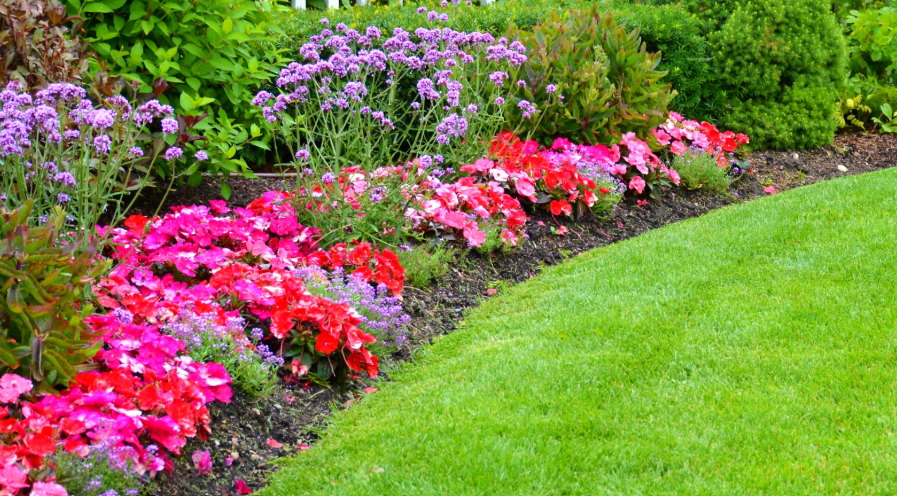
A classic perennial border works on 2 dimensions most single-species plantings never have to think about: height and timing. Traditional English border design layers plants from front to back, low, compact species along the visible edge, mid-height plants filling the middle, and the tallest perennials anchoring the back where they won’t block anything shorter, so the whole bed reads with genuine visual depth rather than a flat wall of uniform height. Get that layering wrong and a border either looks like a jumble or hides half its own plants behind the taller ones in front.
Timing matters just as much as height, and it’s the piece a lot of first-time border planners miss entirely. A bed full of perennials that all peak in June looks spectacular for 3 weeks and genuinely disappointing for the other 9 months of the growing season, so a well-planned border deliberately staggers bloom times, something flowering in spring, a different set of plants carrying summer, and a final wave of late bloomers extending color into fall. Building that succession is really the whole art of perennial border design, more than any single plant choice.
Unlike a purely low edging planting, a genuine perennial border earns its name by using the full range of heights a mixed bed can offer, from a 6-inch front-row plant to a towering 6-foot back-row specimen. The Chicago Botanic Garden’s perennial border plant recommendations offer detailed bloom-time data useful for planning that kind of seasonal succession. What follows covers 40 of the best perennial plants for borders, organized loosely from front to back.
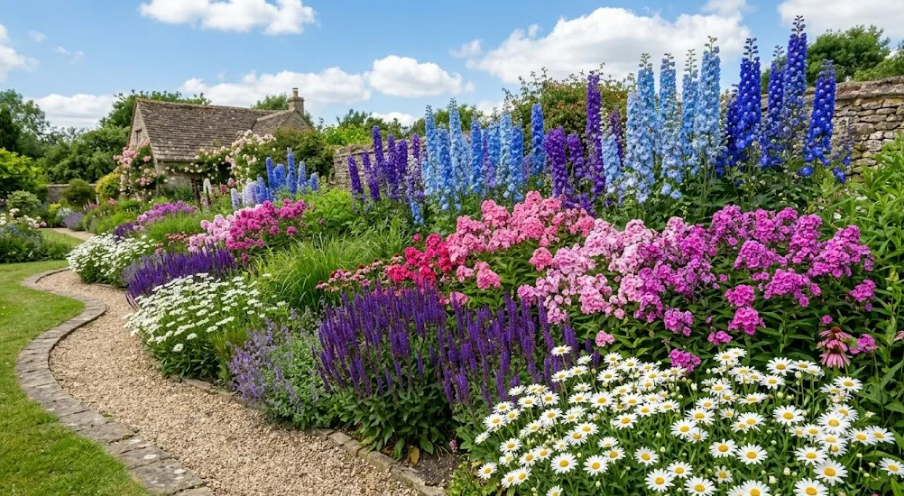
Perennial Border Plants for Landscaping
Creeping Phlox
Creeping phlox forms a dense, low, mat-like groundcover that erupts into vivid pink, purple, or white flowers each spring, making it a genuine front-of-border staple. Its evergreen to semi-evergreen foliage provides some structure through the rest of the year after the bloom fades.
It tolerates poor, rocky soil and full sun, thriving in exactly the lean conditions the front edge of a border often presents.
Catmint
Catmint produces long-blooming spikes of small lavender-blue flowers on a low, mounding plant that holds its shape reliably along the front of a sunny border. Its aromatic gray-green foliage provides attractive texture even between bloom flushes.
It thrives in full sun and well-drained soil, often reblooming with a simple midsummer shearing.
Coral Bells
Coral bells produce mounds of colorful foliage, ranging from deep purple to lime green depending on the cultivar, providing genuine year-round front-border color beyond its modest flower spikes. Its compact, predictable size makes it a popular shade-border staple.
It tolerates partial shade and well-drained soil, valued as much for foliage color as for its actual flowers.
Lamb’s Ear
Lamb’s ear produces soft, velvety, silver-gray leaves that form a genuinely tactile, low-growing front-of-border planting, its fuzzy texture inviting touch in a way few other perennials can match. Its pale color also provides useful visual contrast against darker foliage behind it.
It tolerates poor, dry soil and full sun, spreading readily enough to need occasional division to keep the front line tidy.
Dianthus
Dianthus produces small, fragrant, often fringed flowers in shades of pink, red, and white on a genuinely compact, low-growing plant well suited to a border’s front edge. Its predictable size keeps it from ever overtaking the taller plants behind it.
It tolerates full sun and well-drained soil, tolerating considerable heat once established.
Hardy Geranium
Hardy geranium, distinct from the common bedding pelargonium sold under the same name, produces delicate 5-petaled flowers over mounding, often finely cut foliage, a genuine front-to-middle border workhorse. Its long bloom period and reliable performance have made it a staple of English border design for generations.
It tolerates a range of soil conditions and partial shade, spreading gradually to form an attractive, self-sufficient clump.
Lady’s Mantle
Lady’s mantle produces chartreuse-green flower sprays above soft, scalloped leaves that hold beads of dew or rain in a genuinely striking way each morning. Its foliage alone provides real textural value along the front of a border even between bloom periods.
It tolerates partial shade and consistently moist soil, self-seeding readily enough to fill in gaps along a border’s edge over time.
Bergenia
Bergenia produces bold, large, rounded evergreen leaves that provide genuine year-round structure at the front of a border, with pink or white flower clusters emerging in early spring. Its foliage often takes on a bronze-red tint through winter, adding seasonal color when little else in the border is active.
It tolerates partial shade and a range of soil conditions, thriving with minimal ongoing care once established.
Candytuft
Candytuft forms a low, spreading evergreen mound covered in white flowers each spring, staying tidy and predictable enough to hold a genuinely crisp front-border line with minimal intervention. Its evergreen foliage provides year-round structure even outside the bloom period.
It tolerates poor, well-drained soil and full sun, needing only an occasional post-bloom shearing to stay neat.
Shasta Daisy
Shasta daisy produces classic white, yellow-centered daisy flowers throughout a long early to midsummer bloom period, a reliable middle-of-border performer with a clean, simple form. Its considerable bloom volume makes it a genuine visual anchor during its peak.
It tolerates a range of soil conditions and full sun, blooming most reliably with occasional deadheading.
Black-Eyed Susan
Black-eyed Susan produces cheerful yellow-orange daisy-like flowers throughout a long summer bloom period, a genuinely reliable middle-border perennial that bridges the gap between early summer and fall bloomers. Its reliable, self-seeding nature means a border planting often fills in and thickens on its own.
It tolerates a range of soil conditions and full sun, often self-seeding readily to expand its presence over a few seasons.
Purple Coneflower
Purple coneflower produces a large, raised central cone surrounded by drooping purple petals, blooming reliably through much of summer at a genuinely useful middle-border height. Its considerable drought tolerance once established makes it a low-maintenance choice for the middle of a mixed bed.
It tolerates poor, dry soil and full sun, thriving with considerable neglect once its root system is established.
Bee Balm
Bee balm produces shaggy, tubular flower heads in red, pink, or purple, a genuine middle-border pollinator magnet blooming through much of summer. Its aromatic foliage has a long history as a traditional herbal tea ingredient.
It tolerates a range of soil conditions and full sun to light shade, benefiting from good air circulation to avoid powdery mildew.
Russian Sage
Russian sage produces tall, airy spikes of small purple-blue flowers on silvery, aromatic foliage, a genuine middle-to-back border presence blooming from mid-summer through fall. Its long bloom period and fine texture make it a popular structural choice.
It wants full sun and well-drained soil, and cutting it back hard each spring keeps its naturally sprawling growth habit tidy.
Garden Phlox
Garden phlox produces large, fragrant flower clusters in a range of colors atop upright stems, a genuine middle-border staple blooming reliably through much of midsummer. Its considerable height and reliable performance have made it an English border classic for generations.
It tolerates full sun to partial shade and consistently moist soil, benefiting from good air circulation to avoid powdery mildew.
Peony
Peony produces lush, often intensely fragrant blooms in late spring on a genuinely long-lived middle-border perennial that can remain in the same spot for decades without needing division. Its considerable flower size makes its brief bloom period a genuine annual event worth building a border around.
It thrives in full sun and rich, well-drained soil, returning reliably year after year once established in the right spot.
Daylily
Daylily forms a dense, fibrous-rooted clump producing reliable, colorful summer blooms with essentially no fuss, a genuinely forgiving middle-border perennial. Its considerable toughness means it rarely needs anything beyond an occasional deadheading.
It tolerates a wide range of soil and light conditions, remaining one of the most reliable perennials available for a middle-border position.
Astilbe
Astilbe produces feathery, plume-like flower spikes in shades of pink, red, and white, a genuine shade-border middle-height performer where sun-loving perennials would struggle. Its fine, fern-like foliage provides attractive texture even before flowering.
It tolerates consistently moist soil and partial to full shade, struggling considerably if the soil is allowed to dry out even briefly.
Bearded Iris
Bearded iris produces large, elaborate flowers in a huge range of colors, a genuine middle-border showstopper during its relatively brief but dramatic spring bloom period. Its sword-like foliage provides structural interest even outside the bloom window.
It thrives in full sun and well-drained soil, requiring division every few years to maintain vigorous flowering.
Yarrow
Yarrow produces flat clusters of tiny flowers in white, yellow, or pink atop fine, fern-like foliage, a genuinely low-maintenance middle-border perennial tolerating poor soil and considerable neglect. Its drought tolerance makes it a reliable choice through a dry summer stretch.
It tolerates poor, dry soil and full sun, thriving on neglect once established in lean, well-drained ground.
Blanket Flower
Blanket flower produces vivid red and yellow bicolor daisy-like blooms on a genuinely drought-tolerant middle-border perennial with a long summer bloom season. Its warm color combination draws attention from across a larger bed.
It tolerates poor, sandy soil and full sun, thriving on neglect once its root system is established.
Autumn Joy Sedum
Autumn Joy sedum produces large, flat clusters of pink flowers specifically in late summer and fall, a genuinely valuable middle-border perennial filling the gap once many earlier bloomers have finished. Its succulent foliage provides attractive structure through the rest of the season.
It tolerates poor, dry soil and full sun, needing minimal water or fertilizer once established.
Hosta
Hosta produces bold, often variegated foliage in a genuine range of sizes, providing substantial middle-border structure in a shaded bed where flowering perennials often struggle. Its considerable leaf variety, in color, size, and texture, makes it a foliage-focused border anchor.
It tolerates partial to full shade and consistently moist soil, remaining one of the most popular shade perennials available.
Lupine
Lupine produces tall spikes of pea-like flowers in a range of colors, a genuine middle-to-back border presence with a striking vertical form during its late spring bloom. Its considerable height provides real structure in a cottage-style border.
It tolerates poor, well-drained soil and full sun, often struggling in the heat and humidity of a genuinely hot summer climate.
Foxglove
Foxglove produces tall spikes of tubular, bell-shaped flowers in pink, purple, or white, a genuine middle-to-back border presence despite technically behaving as a biennial in many climates. Its dramatic vertical form provides real structure among shorter, rounder border neighbors.
It tolerates partial shade and moist, well-drained soil, typically flowering in its second year before self-seeding to continue the cycle.
Delphinium
Delphinium produces tall spikes of vivid blue, purple, pink, or white flowers, a genuine back-of-border showpiece with a height few other perennials can match. Its dramatic color and form have made it a classic English cottage garden staple.
It thrives in full sun and rich, well-drained soil, typically needing staking to keep its tall flower spikes from toppling in wind or rain.
Hollyhock
Hollyhock produces tall spikes of large, open flowers in a range of colors, a genuine back-of-border anchor thanks to its considerable height. Its old-fashioned charm has kept it a garden staple for generations.
It thrives in full sun and well-drained soil, often self-seeding readily once established in a favorable spot.
Joe Pye Weed
Joe pye weed produces enormous, dome-shaped clusters of small pink-purple flowers on a tall native perennial, a genuine back-of-border presence that draws pollinators in real numbers. Its impressive scale makes it a real focal point in a larger border.
It tolerates consistently moist soil and full sun to partial shade, thriving particularly well near a rain garden or pond edge.
Ligularia
Ligularia produces bold, dramatic yellow-orange flower spikes atop large, glossy leaves, a genuine back-of-border presence for a consistently moist, partly shaded bed. Its considerable size and bold texture make it a real focal point.
It tolerates consistently wet soil and shade well, wilting dramatically if conditions turn even briefly dry, a useful visual warning sign.
Goat’s Beard
Goat’s beard produces enormous, plume-like white flower clusters on a genuinely substantial back-of-border perennial that can resemble a shrub more than a typical herbaceous plant. Its considerable scale makes a mature specimen a real anchor in a shaded border.
It tolerates consistently moist soil and partial shade, struggling in anything approaching genuine drought.
Hardy Hibiscus
Hardy hibiscus produces dinner-plate-sized flowers on a genuine back-of-border perennial, its enormous individual bloom size making it a real focal point through mid to late summer. Its considerable cold tolerance sets it apart from tropical hibiscus varieties.
It tolerates a range of soil conditions, including consistently moist ground, thriving in full sun with regular watering.
New England Aster
New England aster produces abundant purple-pink flowers specifically in late summer and fall, a genuine back-of-border perennial that fills a crucial gap once most summer bloomers have finished. Its considerable height makes it a real anchor for the final stretch of the growing season.
It tolerates a range of soil conditions and full sun, benefiting from a midsummer pinch back to encourage bushier, more floriferous growth.
Culver’s Root
Culver’s root produces tall, elegant spikes of small white flowers, a genuine back-of-border presence with a narrow, upright form that provides height without excessive width. Its native prairie origins make it a reliable, low-fuss choice.
It tolerates a range of soil moisture and full sun to partial shade, thriving with minimal ongoing care once established.
Globe Thistle
Globe thistle produces distinctive, perfectly spherical blue flower heads, a genuine back-of-border architectural presence unlike anything else in a typical mixed planting. Its unusual, textural form provides real contrast against softer, rounder border neighbors.
It tolerates poor, dry soil and full sun, thriving on considerable neglect once established.
Ironweed
Ironweed produces clusters of deep purple flowers on a tall native perennial, a genuine back-of-border presence blooming specifically in late summer when many earlier perennials have finished. Its considerable height suits a larger, more naturalized border.
It tolerates a range of soil conditions, including consistently moist ground, thriving in full sun.
Queen of the Prairie
Queen of the prairie produces enormous, fluffy pink flower clusters on a tall native perennial, a genuine back-of-border statement plant for a consistently moist bed. Its considerable height makes it a real focal point in a larger, naturalized border.
It tolerates consistently moist to wet soil and full sun to partial shade, thriving in exactly the damp conditions many other back-of-border perennials can’t handle.
Switchgrass
Switchgrass sends roots deep into the soil, a genuine back-of-border grass providing vertical structure and airy summer flower clusters that complement the flowering perennials around it. Its considerable height and drought tolerance make it a reliable anchor.
It tolerates full sun and a range of soil conditions, thriving in the same open, well-drained habitat as much of its native prairie range.
Little Bluestem
Little bluestem forms a compact, upright clump of silvery-blue summer foliage that turns a warm copper color each fall, a genuine middle-border grass providing texture and seasonal color change. Its moderate height keeps it from overwhelming a smaller border.
It tolerates poor, dry soil and full sun, thriving on exactly the lean, well-drained conditions many border perennials also prefer.
Blazing Star
Blazing star produces tall, dense spikes of purple flowers that open from the top down, a genuine middle-to-back border presence with a distinctly vertical form. Its unusual upright shape provides real contrast against the mounding habit of many other border perennials.
It tolerates a range of soil moisture and full sun, growing from a corm that multiplies readily once established.
Japanese Anemone
Japanese anemone produces elegant, simple flowers on tall, wiry stems specifically in late summer and fall, a genuine back-of-border perennial extending the border’s season right up to frost. Its graceful, swaying form adds real movement to a fall garden.
It tolerates partial shade and consistently moist soil, spreading gradually via rhizome to form an attractive colony over a few seasons.
Key Takeaways
The best perennial plants for borders can add color, texture, structure, and seasonal interest to garden beds. Perennials come in many heights, flower colors, foliage types, and growth habits, making it possible to create layered borders that remain attractive across different seasons.
Choosing suitable perennial border plants depends on climate, soil type, sunlight, available space, and maintenance needs. Taller varieties can provide background structure, while medium-sized and low-growing plants can create transitions toward pathways or lawn edges. Selecting plants with different bloom times can also extend seasonal color.
With proper planning and care, perennial borders can provide long-lasting beauty without requiring annual replanting. Giving plants adequate space, preparing the soil, watering appropriately, and removing spent flowers or damaged growth can encourage healthy growth and help maintain a neat, attractive border.