Invasive plant species in Alaska include a genuinely unusual case that illustrates just how different the state’s ecosystem is from the rest of the country. According to the Alaska Division of Agriculture’s Plant Materials Center, elodea is the first invasive freshwater aquatic plant ever documented in Alaska, and remarkably, it isn’t considered a noxious weed in any other U.S. state at all. The plant was first documented in Eyak Lake near Cordova back in 1982, but land managers didn’t recognize the threat until 2010, when it was found growing aggressively in Chena Slough near Fairbanks, degrading fish habitat, impeding boat travel, and reducing waterfront property values in a state that had previously been considered free of this kind of aquatic invader entirely.
Alaska’s overall invasive plant tracking effort is considerably more extensive than that single species, though. According to the USDA Forest Service’s Alaska Region, the state maintains a Non-native Plant Species List documenting 410 plants that have or may become established in Alaska, each assigned an invasiveness ranking score developed in collaboration with the Forest Service and the University of Alaska Fairbanks Cooperative Extension Service.
Despite that extensive tracking list, Alaska’s formal legal restrictions remain comparatively narrow, and according to UAF Cooperative Extension, the state currently has just 12 species on its official noxious weed list, with another 8 considered restricted, a considerably shorter legal roster than the hundreds of species being actively monitored. What follows covers 30 invasive plant species in Alaska, ranked among the highest invasiveness scores in the state’s official tracking system, along with where each one grows and the data behind its spread.
Elodea
Elodea, referring to several related waterweed species, forms dense underwater mats capable of taking over an entire pond or slow-moving waterway, and according to the Alaska Division of Agriculture, it’s the first invasive submerged aquatic plant ever documented in the state. It spreads primarily through fragmented stem pieces that root wherever they drift, making boats and floatplanes an effective, if accidental, way the plant travels between water bodies.
It’s established in scattered lakes and sloughs across 4 regions of Alaska since its 2010 rediscovery, degrading fish habitat and making boat travel and recreational access to affected waters genuinely difficult.
Purple Loosestrife
Purple loosestrife produces tall spikes of vivid magenta-purple flowers each summer, a display so attractive that it was originally introduced to gardens before its aggressive wetland behavior became apparent. A single mature plant can produce well over a million seeds in a season.
It’s found in scattered locations throughout Alaska, and its capacity to overwhelm native wetland vegetation elsewhere in the country has made it a high-priority watch species in the state.
Meadow Hawkweed
Meadow hawkweed produces clusters of small, dandelion-like yellow flowers on a rhizomatous perennial that spreads aggressively across pastures and disturbed meadows. Its dense mats can crowd out native forage plants within just a few growing seasons.
It grows in scattered locations across Alaska’s road corridors and disturbed open ground.
Spotted Knapweed
Spotted knapweed produces thistle-like purple-pink flower heads ringed with distinctive black-tipped bracts, releasing a root compound that suppresses the growth of neighboring plants. It’s considered one of the more damaging rangeland weeds documented in the Lower 48, giving Alaska managers reason for early concern.
It’s found in scattered infestations across parts of Alaska, particularly along transportation corridors.
Creeping Thistle
Creeping thistle, also called Canada thistle, produces small purple flower heads atop an extensive underground root system capable of sending up new shoots many feet from the original plant. A single root system can spread outward and colonize new ground within a few seasons if left unmanaged.
It grows throughout disturbed fields and roadsides in parts of Alaska.
Cheatgrass
Cheatgrass produces fine, bristly seed heads on a cool-season annual grass that dries out and becomes highly flammable earlier in the season than most native vegetation. Its rapid germination lets it outcompete native seedlings for early-season moisture.
It’s found in scattered disturbed areas across Alaska, raising wildfire concern wherever it establishes in quantity.
Bull Thistle
Bull thistle produces vivid purple-pink flower heads atop a spiny, biennial plant capable of forming dense stands in overgrazed or disturbed pastureland. Its dense covering of sharp spines makes it genuinely uncomfortable to handle.
It grows in scattered disturbed areas throughout parts of Alaska.
Crownvetch
Crownvetch produces rounded clusters of pink-purple, pea-like flowers on a sprawling, mat-forming perennial originally planted for erosion control. Its aggressive, spreading growth habit can displace native vegetation along the roadsides where it was often deliberately established.
It’s found in scattered roadside locations across parts of Alaska.
Garlic Mustard
Garlic mustard produces small clusters of white, 4-petaled flowers atop a biennial plant whose roots release chemicals into the surrounding soil that actively suppress the germination of nearby native plants. A single mother plant can produce thousands of seeds that remain viable in the soil for years.
It’s found in scattered, closely monitored locations in parts of Alaska, an early-detection priority given its documented devastation of native forest understories elsewhere.
Tansy Ragwort
Tansy ragwort produces clusters of small, bright yellow, daisy-like flowers on a plant containing toxic alkaloids capable of causing serious, cumulative liver damage in grazing livestock. Its toxicity poses a genuine risk to horses and cattle that graze on infested pasture over time.
It grows in scattered locations across parts of Alaska, particularly disturbed pastureland and roadsides.
Scotch Broom
Scotch broom produces bright yellow, pea-like flowers on a dense, woody shrub whose seeds remain viable in the soil for decades, allowing infestations to persist long after visible plants have been removed.
It’s found in scattered locations in parts of coastal Alaska.
Mouse-Ear Hawkweed
Mouse-ear hawkweed produces small, dandelion-like yellow flowers atop a low, mat-forming rosette of fuzzy, gray-green leaves. It spreads aggressively via both seed and above-ground runners, forming a dense, weed-suppressing mat.
It grows in scattered disturbed and open areas across parts of Alaska.
Black Bindweed
Black bindweed produces small, arrow-shaped leaves on a twining annual vine capable of climbing over and smothering low garden plants and crop seedlings alike. It spreads readily through agricultural seed contamination.
It’s found in scattered disturbed and agricultural areas throughout parts of Alaska.
Himalayan Blackberry
Himalayan blackberry produces clusters of white to pale pink flowers on thorny, aggressively spreading canes capable of forming impenetrable thickets. Its canes can grow more than 20 feet in a single season, rooting wherever the tip touches soil.
It’s found in scattered locations in parts of coastal Alaska, considered a serious concern in the milder, wetter regions of the state where it can establish most readily.
Giant Hogweed
Giant hogweed produces enormous, deeply lobed leaves and a thick, hollow stem marked with distinctive purple blotches, capable of towering well over head height. Its sap contains compounds that react violently with sunlight on exposed skin, causing severe burns and blistering.
It’s found in scattered, closely monitored locations in parts of Alaska, and residents are encouraged to report suspected sightings rather than attempt removal without protective equipment.
Himalayan Knotweed
Himalayan knotweed, a relative of the notorious Japanese knotweed, produces similarly aggressive, spreading growth capable of forming dense stands along disturbed and streamside ground. Its extensive rhizome network makes it difficult to eliminate once established.
It’s found in scattered locations in parts of Alaska, particularly along disturbed waterways.
European Bird Cherry
European bird cherry produces clusters of fragrant white spring flowers followed by small, dark cherries on a tree that spreads readily via bird-dispersed seed into surrounding forest edges. Its early leaf-out gives it a competitive advantage over native trees in the same habitat.
It’s established in scattered urban and forest-edge locations across parts of Alaska, particularly around Anchorage.
Chokecherry
Chokecherry, while native to much of North America, is considered invasive outside its natural Alaska range, spreading via bird-dispersed seed into forest understories where it wasn’t previously established. Its berries, though tart, are readily eaten and spread by wildlife.
It’s found in expanding populations in parts of Alaska beyond its historically native range.
White Sweetclover
White sweetclover produces tall, slender spikes of small white flowers on a biennial plant that can reach several feet tall in its second year. Its deep taproot makes it notably drought tolerant, and its aggressive seeding has made it a significant concern along Alaska’s riverbanks and floodplains.
It grows throughout disturbed soil and riverbank habitat across much of Alaska, considered one of the state’s most widespread invasive plants.
Orange Hawkweed
Orange hawkweed produces clusters of vivid orange, dandelion-like flowers atop a hairy stem that spreads aggressively via both seed and above-ground runners. A single colony can form a dense mat within just a couple of seasons.
It grows in scattered meadows and disturbed ground across parts of Alaska.
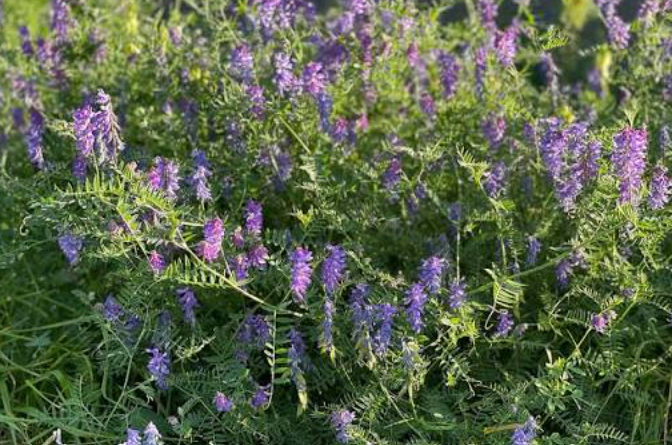
Bird Vetch
Bird vetch produces clusters of small purple, pea-like flowers on a climbing, twining vine capable of smothering native vegetation and crop plants alike. Its vigorous growth and nitrogen-fixing roots give it a competitive advantage in disturbed soil.
It grows throughout disturbed fields and roadsides across much of Alaska, considered one of the more aggressive invasive vines in the state.
Common Tansy
Common tansy produces flat clusters of small, button-like yellow flowers on an aromatic perennial that spreads through both seed and rhizomes. Its foliage can act as a skin irritant, and gloves are recommended when handling or removing it.
It grows in vacant lots and along trail edges in Alaska’s urban areas, and it’s notably winter hardy, spreading aggressively even in Fairbanks.
Siberian Peashrub
Siberian peashrub produces small yellow, pea-like flowers on a cold-hardy shrub originally planted as a windbreak and ornamental hedge. Its extreme cold tolerance allows it to spread into natural areas that would exclude less hardy invasive shrubs.
It’s found in scattered naturalized locations across parts of Alaska, particularly near older windbreak plantings.
Tall Buttercup
Tall buttercup produces glossy yellow flowers on a toxic perennial that livestock generally avoid grazing, giving it a competitive advantage in pastures where more palatable plants are preferentially eaten down.
It grows throughout disturbed pastures and roadsides across parts of Alaska.
Perennial Sowthistle
Perennial sowthistle produces clusters of yellow, dandelion-like flowers on a plant that spreads aggressively through both seed and an extensive creeping root system. It’s a persistent agricultural weed capable of regenerating from small root fragments.
It grows throughout disturbed and agricultural areas across parts of Alaska.
Quackgrass
Quackgrass spreads through an aggressive network of underground rhizomes, sending up narrow blades that closely resemble desirable turfgrass at a casual glance. Its rhizomes can regenerate an entirely new plant from even a small broken fragment.
It’s found in scattered agricultural and disturbed areas across parts of Alaska.
Reed Canarygrass
Reed canarygrass forms dense, tall stands of coarse, wide blades spreading aggressively through both an extensive rhizome system and abundant seed production. It’s considered one of the most difficult wetland grasses to control once established.
It grows throughout wet meadows, ditches, and streambanks across parts of Alaska.
Creeping Buttercup
Creeping buttercup produces glossy yellow flowers on a low, spreading perennial that roots at its stem nodes, allowing a single plant to expand into a substantial mat within a single growing season. Its rapid vegetative spread makes it a persistent lawn and garden bed nuisance.
It grows throughout moist lawns and disturbed ground across parts of Alaska.
Oxeye Daisy
Oxeye daisy produces the familiar white-petaled, yellow-centered daisy flower on a plant capable of spreading aggressively through both seed and shallow rhizomes once established in a meadow or pasture. Cattle generally avoid grazing it, letting it spread more freely than more palatable forage.
It grows throughout meadows and roadsides across much of Alaska, one of the more visually appealing but ecologically disruptive species on the state’s watch list.
European Mountain Ash
European mountain ash produces clusters of white spring flowers followed by bright orange-red berries that persist into winter, a display that made it a popular ornamental tree throughout Alaska’s urban areas. Birds readily eat and disperse its berries into adjacent natural areas.
It’s established in scattered urban and forest-edge locations across parts of Alaska, spreading beyond its original ornamental plantings.
Conclusion
Invasive plant species in Alaska can spread into forests, wetlands, roadsides, fields, and other natural areas, where they may compete with native vegetation for resources. Some species can establish quickly and alter habitats that support Alaska’s native plants and wildlife.
Learning to identify invasive plants is an important step toward managing their spread. Early detection, regular monitoring, and appropriate control methods can help prevent new infestations from becoming more difficult to manage, particularly in areas that have not previously been affected.
Protecting Alaska’s native ecosystems requires continued attention from landowners, gardeners, communities, and conservation groups. Preventing the movement of invasive seeds and plant material, choosing suitable non-invasive plants, and responding to new infestations can help maintain the health and diversity of Alaska’s landscapes.