Fruit flies can appear almost overnight, especially when ripe fruit, vegetables, spilled juice, or other moist organic material is left around the kitchen. Although these tiny insects are not usually dangerous, a large infestation can become extremely annoying and difficult to control if the breeding source is overlooked.
Fruit flies are particularly attracted to fermenting or decomposing organic matter. A female fruit fly can lay hundreds of eggs during her lifetime, and under favorable conditions, the life cycle from egg to adult can be completed in roughly a week. This rapid reproduction is why seeing a few flies around a bowl of fruit can quickly turn into a much larger problem.
The good news is that you usually do not need complicated equipment or expensive pest-control products. The most effective approach is to remove their breeding sites, clean areas where food residue accumulates, and trap the adult flies. Here are 18 simple methods you can try.
1. Remove Overripe Fruit
One of the easiest ways to get rid of fruit flies is to remove the food that attracts them.
Check your fruit bowl carefully and throw away fruit that is bruised, leaking, fermenting, or beginning to rot. Even a small damaged section can attract fruit flies.
Keep ripe fruit in the refrigerator when practical, particularly during warm weather.
2. Make an Apple Cider Vinegar Trap
Apple cider vinegar is one of the simplest homemade fruit-fly traps.
Pour a small amount into a glass or shallow container. Add a drop or two of dish soap and leave the container near the area where you see the flies.
The vinegar attracts the flies, while the soap changes the surface properties of the liquid, making it difficult for them to escape once they land in it.
Also Read: Ways of Getting Rid of Fruit Flies Naturally
3. Use a Paper Funnel Trap
A paper funnel can help concentrate fruit flies into a small container.
Roll a piece of paper into a funnel with a narrow opening at the bottom and place it over a container containing a fruit-fly attractant such as vinegar or a piece of very ripe fruit.
The flies can enter through the narrow opening but have difficulty finding their way back out.
4. Clean the Kitchen Sink
Your sink can become an overlooked source of fruit flies.
Food particles, juice, vegetable scraps, and other organic residue can accumulate around the drain, garbage-disposal area, or drain cover.
Scrub the sink thoroughly and keep the surrounding area as clean and dry as possible.
5. Clean Around the Drain
Cleaning the visible part of a drain is useful, but you should also pay attention to residue farther inside the drain.
Use an appropriate household drain-cleaning method according to the manufacturer’s instructions. Regularly flushing and cleaning drains can help reduce the organic material on which flies may feed or reproduce.
Important: Never mix different chemical drain cleaners together.
6. Empty the Garbage Regularly
Fruit flies can find plenty of food in kitchen garbage.
Fruit peels, vegetable scraps, food leftovers, empty beverage containers, and other damp waste can provide attractive feeding and breeding material.
Empty your garbage frequently, especially if it contains food waste. Clean the inside of the bin occasionally as well.
7. Wash Empty Bottles and Cans
Empty bottles and cans can retain small amounts of sugary or fermented beverages.
Before putting containers into recycling, rinse them thoroughly. Pay particular attention to bottles and cans that contained fruit juice, soda, wine, beer, or other sweet or fermented drinks.
This simple habit can remove an otherwise overlooked food source.
8. Store Fruit in the Refrigerator
Refrigeration can make your kitchen considerably less attractive to fruit flies.
Instead of leaving highly ripe fruit exposed on a countertop, store suitable fruits in the refrigerator.
If you prefer keeping certain fruits at room temperature, inspect them regularly and remove damaged pieces before they begin to ferment or decay.
9. Clean Sticky Spills Immediately
A small sticky spill may seem insignificant, but sugary liquids can attract insects.
Clean spills from countertops, floors, cabinets, tables, and appliances as soon as they occur.
Pay special attention to areas underneath fruit bowls, beverage containers, and kitchen appliances where spills can remain unnoticed.
10. Wash the Fruit Bowl
Fruit bowls can accumulate juice, pulp, and pieces of damaged fruit.
Take everything out of the bowl and wash it with warm soapy water. Dry it thoroughly before putting fresh fruit back.
Do not simply remove the visible fruit flies. Cleaning the container itself helps eliminate the residue that may be attracting them.
11. Check Potatoes and Onions
Fruit flies are not limited to fruit.
Rotting potatoes, onions, tomatoes, and other vegetables can also create an attractive source of organic material. Check your pantry or vegetable storage area for produce that has become soft, leaking, or moldy.
Remove damaged vegetables and clean the storage container or shelf.
12. Clean Under Kitchen Appliances
Food debris can accumulate underneath refrigerators, microwaves, dishwashers, ovens, and other appliances.
Because these areas are rarely cleaned, spilled liquids and food particles can remain there for surprisingly long periods.
Move appliances when it is safe and practical to do so, then vacuum or wipe the surrounding floor.
13. Keep Countertops Dry
Moisture combined with organic residue can make an area more attractive to small flies.
After preparing food, wipe countertops and dry areas around the sink. Avoid leaving wet food scraps, damp cloths, or dirty dishes sitting around for extended periods.
A cleaner, drier kitchen gives fruit flies fewer opportunities to feed.
14. Wash Reusable Kitchen Cloths
Damp kitchen towels, sponges, and cleaning cloths can collect food particles and organic residue.
Wash them regularly and allow them to dry completely between uses.
If a sponge or cloth has developed a persistent unpleasant odor or accumulated substantial residue, replacing it may be easier than trying to clean it repeatedly.
Also Read: Simple Homemade Fruit Fly Traps That Really Work
15. Cover Food and Drinks
Leaving food and drinks uncovered gives fruit flies easy access to potential food sources.
Keep prepared food covered and put leftovers into sealed containers. Cover fruit when appropriate and avoid leaving glasses containing sweet beverages exposed for long periods.
This is especially helpful when you are already dealing with an infestation.
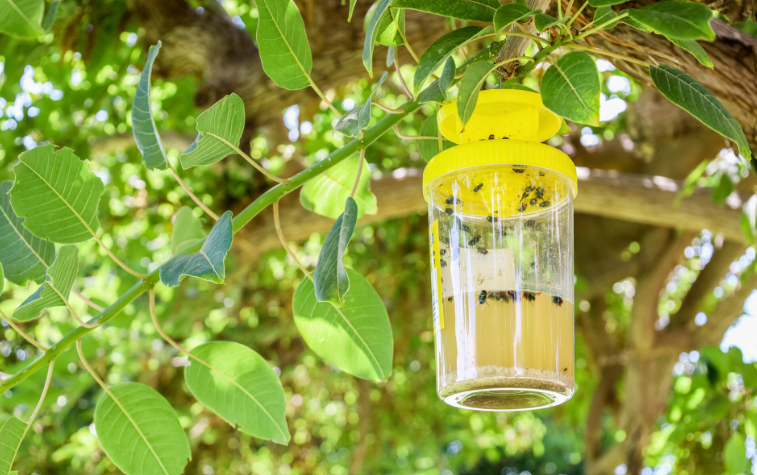
16. Use a Commercial Fruit-Fly Trap
If homemade traps are not enough, a commercially available fruit-fly trap can provide another option.
Follow the product’s instructions and position the trap close to areas where fruit flies are most active.
However, remember that a trap primarily targets adult flies. If you leave a breeding source somewhere in the kitchen, new adults may continue appearing.
17. Find the Hidden Breeding Source
This is arguably the most important step.
If fruit flies continue appearing despite using traps, look beyond the obvious fruit bowl. Check garbage containers, recycling bins, drains, compost containers, forgotten produce, spilled beverages, pantry shelves, and areas underneath appliances.
Getting rid of the adult flies without removing the source can produce only temporary results.
18. Keep the Kitchen Clean After the Infestation
Once the number of fruit flies has dropped, continue the cleaning routine.
Dispose of food waste promptly, rinse recyclable containers, clean spills, inspect produce regularly, and keep food covered.
Prevention is much easier than repeatedly dealing with a new infestation.
How Long Does It Take to Get Rid of Fruit Flies?
The time required depends largely on how quickly you eliminate their breeding source. If the source is removed and adult flies are trapped, you may notice a significant reduction within several days.
However, newly emerging adults can continue appearing for a while if eggs or larvae were already present. This is why maintaining traps and sanitation for at least several days after the flies seem to disappear can be useful.
Why Do Fruit Flies Keep Coming Back?
Fruit flies commonly return because the original breeding site was never completely eliminated.
For example, you might remove all visible fruit but still have fruit flies developing around a dirty drain, recycling container, compost bin, spilled juice, or rotting vegetable hidden in a cupboard.
Another possibility is that flies are entering from another area. If your kitchen remains clean but the problem continues, inspect nearby rooms and other potential sources of fermenting organic material.
What Is the Simplest Way to Get Rid of Fruit Flies?
For a small infestation, start with three things:
- Remove or refrigerate ripe and damaged produce.
- Clean food residue from sinks, drains, counters, garbage bins, and recycling containers.
- Set up a simple vinegar-and-dish-soap trap for adult flies.
These steps address both sides of the problem: removing the conditions that allow fruit flies to reproduce and reducing the adult population.
Final Thoughts
Getting rid of fruit flies does not necessarily require complicated pest-control methods. The key is to think beyond the insects flying around your kitchen and search for the source that is allowing them to reproduce.
Start by removing overripe produce and food waste, cleaning drains and hidden spills, washing containers, and keeping food covered. Then use a simple trap to catch remaining adults. With consistent sanitation and a little patience, a small fruit-fly problem can usually be brought under control.