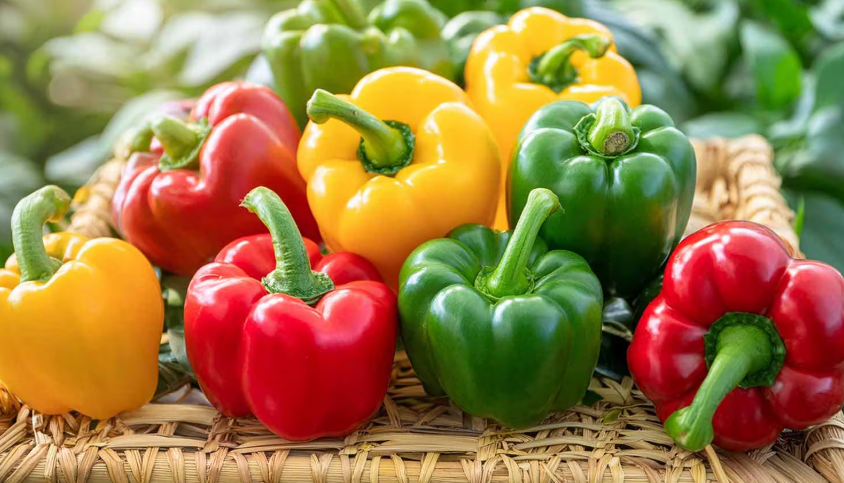
Bell peppers are among the most rewarding crops for gardeners who want a high volume of produce from a relatively small growing area. A healthy plant can continue setting flowers and developing fruit over an extended season, particularly when temperatures, nutrition, moisture, and pollination are favorable. However, the amount harvested depends heavily on the variety. Some bell peppers are bred specifically for concentrated fruit set, large marketable fruit, disease resistance, or extended harvests.
“High yielding” does not always mean that a variety produces the largest individual peppers. In fact, a smaller-fruited plant can sometimes produce more total peppers than a variety that produces a few exceptionally large fruits. Research on bell pepper genetics has found that marketable fruits per plant and average fruit weight are important contributors to overall yield.
Growing conditions also have a major influence on productivity. A variety that performs exceptionally well in a greenhouse may not produce the same results in an open garden. Likewise, disease pressure can dramatically reduce harvests. University trials have demonstrated substantial differences among bell pepper varieties in yield and disease tolerance, particularly under conditions involving diseases such as Phytophthora capsici.
The 21 varieties below are therefore selected based on combinations of documented yield potential, fruit production, vigorous growth, extended harvest periods, disease resistance, and adaptability. Some are classic open-pollinated varieties, while others are modern hybrids developed for commercial production. Actual yields will vary according to climate, planting density, soil fertility, irrigation, and growing system.
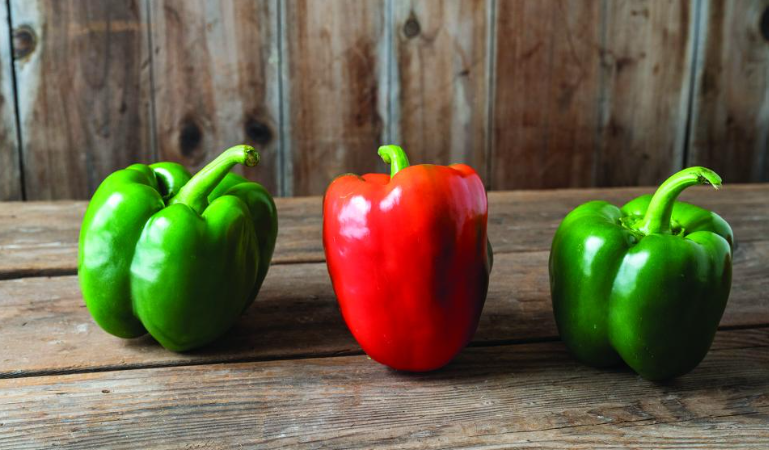
Highest-Yielding Bell Pepper Varieties
1. Commandant F1
Commandant F1 is a commercial sweet pepper variety noted for its strong productivity.
It is particularly interesting for growers because it can be cultivated in both open-field and greenhouse systems. Production information from Kenya describes harvests beginning at approximately 75 days for green fruit and around 90 days for red fruit, with reported yields of roughly 25–30 tonnes per acre in open-field production and 50–60 tonnes per acre under greenhouse conditions.
The fruits can be harvested green or allowed to develop their mature color. The variety also has reported resistance to several important pepper diseases.
2. Admiral F1
Admiral F1 is another commercial bell pepper selected for productive plants and good fruit quality.
It has characteristics similar to Commandant F1 and can be grown in both greenhouse and open-field systems.
In Kenyan production guidelines, reported yields are in the same general range as Commandant F1, with greenhouse production substantially exceeding open-field production under suitable management.
The fruits can be harvested green or allowed to mature to yellow, giving growers flexibility depending on the market.
3. California Wonder
California Wonder is one of the classic bell pepper varieties and remains popular because of its combination of productivity, adaptability, and fruit quality.
The fruits are large, blocky, thick-walled, and typically four-lobed. They can be harvested green or allowed to turn red.
One Kenyan production guide reports a yield of approximately 6,000 kg per acre under its listed production conditions.
California Wonder is particularly useful for home gardeners because the fruits are versatile enough for stuffing, roasting, grilling, salads, and fresh eating.
4. Yolo Wonder
Yolo Wonder is another traditional bell pepper with a reputation for vigorous growth and good productivity.
The fruits are blocky, firm, and thick-walled, making them suitable for both fresh markets and cooking.
Kenyan production information identifies Yolo Wonder as a popular variety for local and export markets and describes it as vigorous, compact, and high yielding.
It is a useful choice when a gardener wants a traditional green bell pepper that can also mature to red.
5. Aristotle
Aristotle is a vigorous hybrid bell pepper with considerable yield potential.
The plants produce large to extra-large, thick-walled green peppers that eventually turn red.
University of Florida production information specifically describes Aristotle as having great yield potential, with vigorous plants and resistance to several bacterial spot races as well as other diseases.
The combination of large fruit and vigorous growth makes it particularly interesting for gardeners and commercial growers seeking both productivity and marketable fruit size.
6. Bell Boy
Bell Boy is a hybrid sweet bell pepper that produces large, thick-fleshed fruits.
The peppers can reach approximately 5 inches long and nearly 4¾ inches wide, according to the University of Connecticut’s variety information. The fruit develops from green to red as it matures.
Bell Boy also has resistance to bacterial leaf spot, which can be important in areas where this disease regularly affects peppers.
7. Boynton Bell
Boynton Bell produces extra-large, thick-walled bell peppers.
The fruits are dark green when immature and turn red as they mature. Its relatively large fruit size makes each harvest valuable even when the number of peppers per plant is not exceptionally high.
The variety also has resistance to several races of bacterial leaf spot, according to University of Connecticut information.
For gardeners interested in large peppers for stuffing and market-style presentation, Boynton Bell is worth considering.
8. Ace
Ace is an early hybrid bell pepper that is particularly useful for gardeners in areas where the growing season is relatively short.
North Carolina State University’s cultivar descriptions characterize Ace as early, high yielding, and tolerant of cool weather, with maturity listed at approximately 50 days in its cultivar description.
The fruits are relatively small to medium-sized and mature from green to red.
Its combination of early production and good yields makes Ace particularly useful where gardeners cannot rely on a long, hot season.
9. Allbig
Allbig is an older open-pollinated bell pepper variety with an impressive history of productivity.
It produces large, three- to four-lobed fruits with thick walls and good flesh quality.
North Carolina State University’s cultivar descriptions identify Allbig as high yielding, with continuous fruiting over a long season under many environmental conditions.
The plants are relatively compact and heavily foliated, characteristics that can help protect developing fruit.
10. Affinity
Affinity is a hybrid bell pepper recognized for its combination of fruit quality and production.
The plants produce glossy, blocky peppers with thick walls. Cultivar descriptions report high yields of extra-large and large fruit, along with strong fruit quality.
This makes Affinity particularly attractive for gardeners who want productivity without sacrificing fruit size.
11. Bonita
Bonita is a hybrid sweet pepper known for vigorous growth and good yields.
Cultivar information describes it as having excellent vigor and high yield, particularly when plants are staked.
Staking can be particularly useful when plants carry a heavy fruit load because it reduces the risk of branches bending or breaking.
Bonita is therefore a good candidate for growers who use support systems and want to maximize productive plant growth.
12. Brigadier
Brigadier is a hybrid bell pepper that produces large and extra-large fruit.
The peppers develop from green to red and are reported to maintain their shape under cooler weather.
Its resistance to several races of bacterial leaf spot and potato virus Y adds another advantage because maintaining healthy plants is an important part of achieving high yields.
13. Blitz
Blitz is an early-maturing hybrid bell pepper with large, blocky fruit.
University of Florida information describes it as an extra-large, blocky green-to-red bell with great yield potential at first harvest.
The concentrated early fruit production can be particularly valuable for growers who want to begin harvesting substantial quantities as quickly as possible.
14. Autry
Autry is a hybrid bell pepper characterized by uniform, blocky fruit.
The plants have a concentrated fruit set, which can produce strong yields during the first harvest.
University of Florida’s cultivar information identifies Autry as having high first-pick yields and resistance to multiple races of bacterial leaf spot.
This makes it particularly interesting for commercial growers who value both uniformity and early marketable production.
15. Green Machine
Green Machine is a main-season hybrid bell pepper that produces dark-green, blocky fruit.
The plants are described as robust, with fruit that matures from dark green to red.
It also has resistance or intermediate resistance to several diseases, including bacterial leaf spot and tomato spotted wilt virus, depending on the listed disease classification.
A strong, healthy plant is particularly important when the objective is a long harvest and high total production.
16. Flavorburst
Flavorburst is a yellow bell pepper hybrid that has performed particularly well in northern growing trials.
The Seed to Kitchen Collaborative reported that Flavorburst was earlier than Procraft and substantially higher yielding than other bell peppers in one of its Spooner trials.
The variety is therefore especially interesting for gardeners who want a yellow pepper in areas where cool temperatures can make bell pepper production difficult.
17. Procraft
Procraft is a red bell pepper hybrid with large fruit and strong production characteristics.
Trials by the Seed to Kitchen Collaborative found Procraft among the varieties producing some of the highest fruit weights in Madison, Wisconsin, although its maturity was relatively late in Spooner.
This highlights an important point about bell pepper productivity: a variety can produce extremely large fruit but still require a longer season to reach its full potential.
18. Dashen
Dashen is another red bell pepper hybrid that has demonstrated strong fruit production.
In the Wisconsin trials, Dashen and Procraft produced the highest fruit weights among the tested varieties in Madison.
However, Dashen was less reliable than Procraft in some locations and was also relatively late in Spooner.
For gardeners with long, warm growing seasons, that later maturity may be less problematic.
19. Chablis
Chablis is an early sweet bell pepper that can be particularly useful for gardeners who want colored fruit relatively quickly.
The plants are relatively compact, reaching approximately 1½ feet tall, and produce blocky, thick-walled fruit around 4 inches by 3 inches.
The peppers can transition from white to orange and eventually scarlet.
Chablis also has resistance to tobacco mosaic virus and bacterial leaf spot, helping maintain plant health under disease pressure.
20. Golden Bell
Golden Bell is a yellow sweet bell pepper that produces blocky, thick-walled fruit.
The peppers begin light green and mature to deep gold.
University of Connecticut’s variety information lists a maturity of approximately 68–70 days and describes the fruit as three- or four-lobed and thick-walled.
Its relatively quick maturity makes it a useful choice for gardeners wanting a colored pepper without waiting for an especially long growing season.
21. Cute Stuff Red
Cute Stuff Red is a compact mini bell pepper that demonstrates why fruit count can be just as important as fruit size when considering productivity.
The plants produce numerous small peppers, generally around 2–3 inches, that mature from green to red.
University of Connecticut lists it as suitable for both containers and field gardens.
Although each pepper is much smaller than a large bell such as Aristotle or Boynton Bell, a productive plant can provide a steady supply of snack-sized fruit.
What Makes a Bell Pepper Variety High Yielding?
High yield is influenced by several characteristics rather than a single trait.
Fruit Number Per Plant
A plant producing many marketable peppers can outperform a plant that produces only a few exceptionally large fruits.
Recent research has found a strong relationship between marketable fruits per plant and total marketable yield, making fruit number an important selection characteristic.
Fruit Size
Fruit weight also matters.
A variety producing fewer peppers may still produce a substantial total harvest if each pepper is large and heavy. This is why varieties such as Procraft, Dashen, Aristotle, and Boynton Bell can be attractive to growers targeting large-fruited markets.
Length of Harvest
Some varieties set fruit over a prolonged period rather than producing everything at once.
Longer harvest periods can increase total production, particularly in home gardens where plants can continue growing for several months.
Disease Resistance
Disease can quickly turn a potentially high-yielding variety into a poor producer.
Bacterial leaf spot, bacterial wilt, Phytophthora diseases, viruses, and other problems can reduce fruit set or destroy plants.
For this reason, a variety with slightly lower theoretical yield but strong disease resistance can sometimes outperform a highly susceptible variety in a disease-prone garden. Research trials have demonstrated substantial genetic differences in both yield and disease resistance among bell pepper genotypes.
How to Increase Bell Pepper Yields
Even the best variety will not produce heavily if growing conditions are poor.
Bell peppers generally perform best in full sun, fertile soil, consistent moisture, and warm temperatures. Avoid allowing plants to experience prolonged drought, particularly during flowering and fruit development.
Good drainage is equally important. Waterlogged roots can weaken plants and increase the risk of root diseases.
Spacing also matters. Overcrowded plants compete for light and air circulation, while adequate spacing allows foliage to dry more quickly after irrigation or rainfall.
In greenhouse production, temperature management and pollination become particularly important. Commercial greenhouse systems can produce dramatically higher yields than open-field systems under suitable management, as illustrated by production figures reported for some commercial varieties in Kenya.
Finally, harvest peppers regularly. Removing mature fruit encourages plants to continue producing flowers and developing additional peppers rather than putting all their resources into existing fruit.
Choosing the Best High-Yield Bell Pepper
For large fruits, consider Aristotle, Boynton Bell, Bell Boy, Procraft, Dashen, and Affinity.
For early production, Ace, Chablis, Blitz, and Golden Bell are strong candidates.
For long or concentrated production, Commandant F1, Admiral F1, Autry, and Green Machine are worth considering.
For yellow peppers, Flavorburst and Golden Bell are interesting options.
For traditional open-pollinated varieties, California Wonder, Yolo Wonder, and Allbig provide a useful starting point.
For small snack peppers, Cute Stuff Red can produce numerous compact fruits while taking up relatively little space.
The ideal choice ultimately depends on whether the goal is maximum kilograms per plant, maximum number of peppers, early harvests, large fruit size, disease resistance, greenhouse production, or reliable performance in a particular climate.