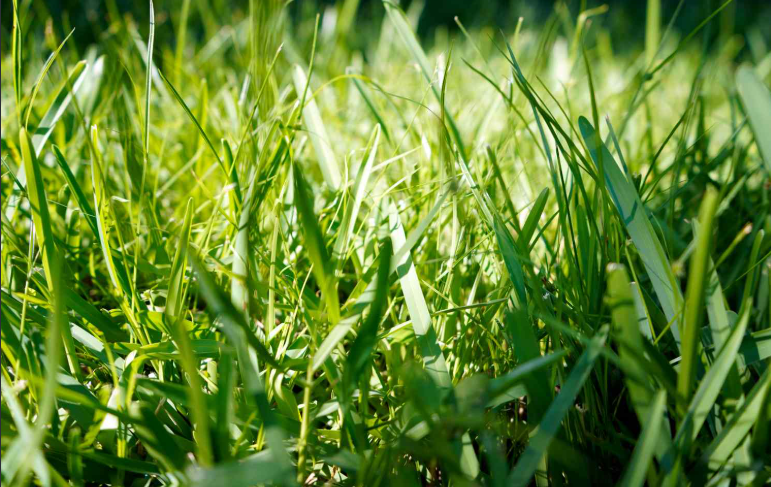
St. Augustine grass has one feature that makes it easier to identify than almost any other turf species: a distinctly blunt, rounded leaf tip on a wide blade, roughly 5 to 8 millimeters across, where nearly every other common lawn grass tapers to a sharp point instead. That single detail rules out bermudagrass and zoysiagrass almost instantly, since both narrow to a genuinely pointed blade tip no matter how coarse or broad they otherwise look. The grasses that actually cause confusion are the ones that share that same blunt-tipped, broad-bladed look, and there are more of them than most homeowners expect.
Clemson Extension points to a second, less obvious test that settles most of the remaining confusion: check how the leaves attach along the stolon. St. Augustine grows its leaves in an opposite arrangement, directly across from each other at each node, while centipedegrass and carpetgrass, its 2 closest visual rivals, both grow their leaves in an alternate pattern instead. Combine that with the seed head, since St. Augustine produces a single thick, flattened spike while carpetgrass throws up a tall, branched, almost crabgrass-like seed head, and the identification becomes fairly reliable even without a botany background.
There’s also a genuine international naming trap worth knowing about before searching for advice online. In Australia and South Africa, St. Augustine grass itself is commonly sold and marketed under the name “buffalo grass,” which has nothing to do with the American buffalograss species, Bouteloua dactyloides, an entirely different Great Plains native. The Clemson Cooperative Extension Home and Garden Information Center covers the centipede-versus-St.-Augustine distinction in more visual detail than most sources. What follows covers 12 grasses that look like St. Augustine at a glance, along with the specific feature that actually separates each one from the real thing.
Centipedegrass
Centipedegrass shares St. Augustine’s coarse, creeping, stoloniferous growth habit closely enough that the 2 are probably the most commonly confused warm-season grasses in the Southeast. The real difference is in the leaf tip and arrangement: centipede’s blades come to a narrow point rather than a blunt one, and its leaves attach to the stolon alternately rather than directly across from each other.
Its overall color also tends to run a lighter, more apple-green shade than St. Augustine’s medium-to-dark, sometimes blue-green tone, a useful visual cue even before checking the leaf details up close.
Common Carpetgrass
Common carpetgrass produces a genuinely similar broad blade to St. Augustine, especially in wet, low-lying ground where both grasses tend to thrive, and the resemblance is close enough that some regional sources treat the 2 as functionally interchangeable. The clearest giveaway is the seed head: carpetgrass sends up a tall, branched, almost crabgrass-like spike, entirely different from St. Augustine’s single thick, flattened one.
Its stolons are also noticeably thinner than St. Augustine’s stout, fleshy runners, and small hairs along the leaf margin near the base are visible on close inspection where St. Augustine’s blade stays smooth.
Broadleaf Carpetgrass
Broadleaf carpetgrass is a distinct but closely related species to common carpetgrass, sharing the same broad, blunt-ish blade and the same tall, branching seed head that separates both carpetgrasses from true St. Augustine. It tends toward an even lighter, more washed-out green than its narrower-leaved relative.
Like common carpetgrass, its stolons run noticeably thinner than St. Augustine’s, a detail that becomes obvious the moment you compare a sample of each side by side.
Zoysiagrass
Zoysiagrass can read as St. Augustine-like from a distance thanks to its dense, coarse-feeling turf, but its blade is considerably narrower, typically 2 to 4 millimeters against St. Augustine’s 5 to 8, and tapers to a genuinely fine point rather than a blunt one. It also feels stiff and wiry underfoot, a distinct contrast to St. Augustine’s thick, almost spongy texture.
Zoysia spreads by both stolons and underground rhizomes, knitting into a noticeably tighter, denser mat than St. Augustine’s purely stolon-based spread ever produces.
Bermudagrass
Bermudagrass is probably the easiest call on this list once you’re looking closely, since its blade runs far finer than St. Augustine’s, around 2 millimeters, with a sharp, pointed tip and a distinctly gray-green cast rather than St. Augustine’s deeper, sometimes blue-green color. From across a yard, though, a dense, coarse-mowed bermuda lawn can still fool an inexperienced eye.
It spreads aggressively via both stolons and rhizomes, a more complex reproductive strategy than St. Augustine’s stolon-only spread, and it tolerates far less shade than St. Augustine can handle.
Bahiagrass
Bahiagrass produces a broader blade than most turf grasses, which occasionally causes confusion with St. Augustine at a casual glance, particularly in a lawn that isn’t mowed frequently. Its growth habit is the real tell, since bahiagrass spreads via short rhizomes and grows in a more upright bunch form rather than St. Augustine’s low, sprawling stolons.
Its distinctive tall, forked seed head, resembling a narrow Y shape, looks nothing like St. Augustine’s single thick spike once the plant flowers.
Kikuyugrass
Kikuyugrass shares St. Augustine’s coarse texture and vigorous stoloniferous spread, enough that the 2 can be mistaken for each other in a Mediterranean or coastal California climate where both are sometimes grown. Its leaf blades taper to a considerably sharper point than St. Augustine’s signature blunt tip.
It spreads even more aggressively than St. Augustine, with both above- and below-ground runners that can invade adjacent garden beds if left unchecked.
Torpedograss
Torpedograss produces broad, somewhat blunt-tipped blades and spreads via thick, tenacious rhizomes, close enough in general appearance to St. Augustine that it’s sometimes overlooked as a developing infestation until it’s already well established. It’s considered a serious invasive species, particularly in wetland and lawn-adjacent areas across the Southeast.
Its rhizomes are notably tougher and more difficult to remove than St. Augustine’s stolons, and any suspected torpedograss patch is worth a confirmed identification before assuming it’s simply spreading St. Augustine.
Seashore Paspalum
Seashore paspalum forms a dense, coarse-textured turf that can resemble St. Augustine in a coastal lawn, particularly since both tolerate salt exposure that would damage more delicate turf species. Its blade is generally narrower and its seed head distinctly different, a pair of slender spikes rather than St. Augustine’s single thick one.
It requires more specialized fertility management than St. Augustine, and it’s typically installed deliberately for its salt tolerance rather than confused with St. Augustine by accident in most cases.
Dallisgrass
Dallisgrass can superficially resemble a patch of overgrown St. Augustine in a thin, mixed lawn, particularly before either plant has flowered, given its similarly broad blade. Its clumping, rhizome-based growth habit is genuinely different from St. Augustine’s low, spreading stolons, though the difference isn’t always obvious at a casual glance.
Its distinctive seed head, with widely spaced fingerlike branches and small dark spots, makes a confident identification straightforward once the plant matures.
Vasey Grass
Vasey grass, a close relative of dallisgrass, shares a similarly broad leaf blade and can cause the same kind of confusion with St. Augustine in an unmowed or neglected lawn area. Its overall growth habit tends toward a taller, more upright clump than St. Augustine’s low, creeping mat.
Its seed head closely resembles dallisgrass’s fingered spike, immediately distinguishing it from St. Augustine’s single thick, flattened one once the plant flowers.
“Buffalo Grass” (Australian and South African St. Augustine)
This entry is really a naming trap rather than a true lookalike: in Australia and South Africa, St. Augustine grass itself is commonly sold under the name buffalo grass, a completely different plant from the American buffalograss species, Bouteloua dactyloides, native to the Great Plains. Anyone reading international lawn care advice under that name is very likely reading about St. Augustine already, not a different species entirely.
The confusion runs in both directions, since American gardeners searching for “buffalo grass” advice sometimes stumble onto Australian St. Augustine content by mistake, so checking which country a source is written for matters more than it might seem before following any specific care instructions.
Key Takeaway
Several grasses can resemble St. Augustine grass, particularly because of their broad blades, green color, and spreading growth habits. However, differences in leaf texture, blade width, stolons, growth pattern, and seedheads can help distinguish similar grasses from true St. Augustine grass.
When identifying a grass, it is useful to examine more than just the leaves. The way the plant spreads, the structure of its stems, the appearance of its seedheads, and the conditions where it grows can provide additional clues. Soil type, moisture, sunlight, and climate can also help narrow down the possibilities.
Accurate identification is important when deciding how to manage a lawn or unwanted grass. Knowing whether a plant is St. Augustine grass, another desirable turfgrass, or a weed can help gardeners choose appropriate mowing, watering, fertilization, and control practices.