Cherries belong to Prunus subgenus Cerasus, a specific branch of the same genus that also gives us peaches, plums, apricots, and almonds, all grouped together within the rose family. True cherries are generally split into 2 main types: sweet cherries, descended largely from Prunus avium, and sour or tart cherries, descended from Prunus cerasus, with the sweeter type eaten fresh and the tart type more often baked into pies or processed into juice and preserves.
The fruit is believed to have originated somewhere near the Black Sea, in the region spanning modern Turkey, and cultivation spread from there across Europe and eventually the rest of the world. Cherry trees also put on one of the most recognizable spring flower displays of any fruit tree, which is exactly why ornamental, non-fruiting cherry varieties have become garden and park favorites entirely separate from the fruit-producing kinds grown commercially.
Commercial cherry production today is dominated by a handful of countries, including Turkey, the United States, and Iran, with specific American states like Washington and Michigan playing an outsized role, Washington for sweet cherries and Michigan for the tart cherries used mostly in baking and processing. A single Royal Ann cherry tree, one of the more widely known sweet cherry varieties, can produce up to 50 pounds of fruit in a single season under good conditions.
Because cherries are such a small, glossy, round, stemmed fruit, an enormous number of other plants, some genuinely related and some not related at all, have picked up “cherry” somewhere in their common name simply for looking the part. Figuring out which of those is a real cherry and which just borrowed the name is a genuinely useful skill for anyone shopping an unfamiliar market or foraging in an unfamiliar yard.
Surinam Cherry
Surinam cherry, also called pitanga, is native to South America and produces a deeply ridged, lantern-shaped fruit that ripens from green through orange to a deep red, giving it a genuinely ornamental, almost pumpkin-like silhouette in miniature. Despite the common name, it belongs to the myrtle family rather than true cherry’s rose family.
Its flavor carries a distinctive resinous, slightly spicy sweetness unlike anything found in a true cherry, and it’s typically eaten fresh or made into jam in the regions where it grows. Its glossy, ridged red skin is the main visual trait that earns it the cherry comparison at all.
Acerola
Acerola, also called Barbados cherry, is a tropical fruit from the Malpighiaceae family, entirely unrelated to true cherry despite its plump, deeply grooved, bright red appearance closely mimicking one. It’s genuinely famous for an extraordinarily high vitamin C content, which has made it a popular ingredient in juice blends and powdered supplements.
Its flavor leans tart with a texture some describe as a cross between cherry and peach, and each fruit typically contains 3 small seeds rather than the single pit found in a true cherry. That single-versus-multiple seed difference is one of the more reliable ways to tell acerola apart from the real thing once you cut one open.
Cornelian Cherry
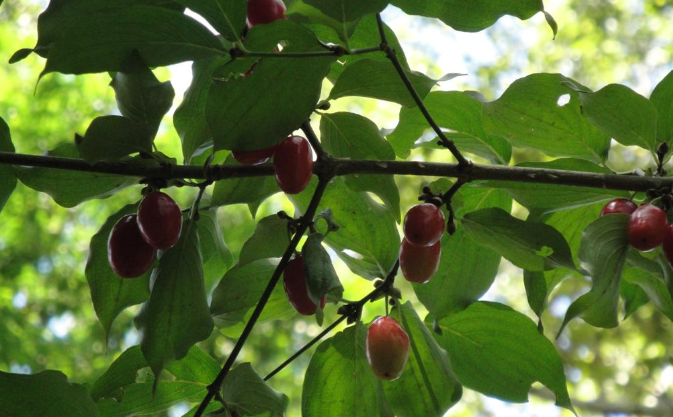
Cornelian cherry is a member of the dogwood family rather than true cherry’s rose family, producing elongated, ruby-red fruits that look more like a stretched cherry or a miniature plum than a typical round cherry. Its oblong shape alone is often enough to distinguish it from a true cherry at a glance.
The fruit carries a notably tart, slightly astringent flavor when underripe, mellowing into a more palatable sweet-tart profile once fully mature, and it’s traditionally used across parts of Europe and the Middle East for preserves, syrups, and liqueurs. Its dogwood family membership places it in an entirely different plant lineage from any true cherry despite the shared name and color.
Jerusalem Cherry
Jerusalem cherry is a nightshade species that produces small, round, bright orange-red fruits genuinely similar in size and shape to a cherry tomato or a small true cherry, but the resemblance ends there in every way that matters. Its fruit is mildly poisonous, and the plant is grown almost exclusively as a winter ornamental rather than anything meant to be eaten.
Its toxicity stems primarily from solanocapsine, a compound shared with several other nightshade relatives, and the plant poses a genuine risk to curious children, pets, and even some pet birds despite being spread naturally by certain wild bird species immune to its effects. Its bright, cherry-like fruit color is exactly the trait that makes it dangerous, since it looks tempting to eat despite being anything but safe.
Cherry of the Rio Grande
Cherry of the Rio Grande is a South American shrub in the myrtle family, bearing dark reddish-purple fruit considered by many tropical fruit growers to be among the closest-tasting of the “false cherries” to an actual true cherry. Its fruit ripens from green to a deep maroon, closely mimicking a dark sweet cherry in both color and size.
It’s grown mostly by home gardeners and specialty growers in warm climates rather than produced at any real commercial scale, and its genuinely cherry-like flavor has made it a favorite among tropical fruit enthusiasts specifically hunting for a true-cherry substitute in a climate too warm for real cherry trees to thrive. Its firmer pulp compared to a true cherry is one of the more noticeable texture differences once you actually taste one.
Grumichama
Grumichama is a close relative of cherry of the Rio Grande, also in the myrtle family and also native to South America, producing dark purple-black fruit of a similar size and shape to a true cherry. Among tropical fruit growers, it’s generally considered less convincingly cherry-flavored than its close relative, though opinions vary depending on who’s tasting it.
It thrives in warm, frost-free climates unsuitable for true cherry cultivation, which is a major part of why gardeners in those regions turn to it and its relatives as a substitute. Its glossy, dark, rounded fruit remains visually convincing even when the flavor comparison falls a little short.
Capulin Cherry
Capulin cherry, Prunus salicifolia, genuinely does belong to the same broad genus as true cherries, but it sits in a different subgenus, grouped instead among the bird cherries rather than within Cerasus, the specific branch that contains sweet and sour cherry. Native to Central and South America, its small, dark red to black fruit is sweet-tart and closely resembles a wild or sour cherry in both look and culinary use.
It thrives across a range of Latin American growing regions and is used much like a true cherry in local cooking and preserves. Its close genetic relationship to true cherry, just one subgenus removed, makes it one of the more legitimately cherry-like fruits on this entire list.
Chokecherry
Chokecherry is another Prunus species outside subgenus Cerasus, native to North America and producing small, glossy, nearly black fruit in loose hanging clusters rather than true cherry’s typically paired or single-stemmed fruit. Its name is a direct warning about its flavor, since the raw fruit is notably astringent and puckering straight off the tree.
Despite that raw astringency, chokecherries are widely used to make jelly, syrup, and wine once cooked and sweetened, a traditional use across much of North America among Indigenous peoples and later settlers alike. Its clustered growth habit, closer to a currant or elderberry than a true cherry’s typical individual stems, is a useful visual clue for telling it apart in the wild.
Hackberry
Hackberry produces small, round, orange-brown to dark purple fruit that can pass for a tiny cherry at a casual glance, despite belonging to the hemp family, a plant lineage with no close relationship to true cherry whatsoever. Its fruit is technically edible, with a thin, sweetish pulp surrounding a relatively large, hard seed.
The tree itself looks nothing like a cherry tree, with distinctively warty, corky bark that sets it apart immediately once you look past the fruit alone. Its fruit’s size and color are really the only features inviting any cherry comparison at all.
Red Currant
Red currant produces small, glossy, translucent red berries in dangling clusters, and while no single berry looks exactly like a cherry, the color and glossy skin share enough visual DNA that the comparison comes up often. It belongs to the gooseberry family, entirely unrelated to true cherry’s rose family membership.
Its flavor is notably tart and bright, well suited to jams, jellies, and baking, and its growth habit, dense clusters, hanging from thin stems, is a clear visual departure from true cherry’s typical paired fruit on longer individual stalks. Its small size alone, considerably smaller than even the smallest true cherry variety, is usually enough to settle the identification.
Rowan Berry
Rowan berry, the fruit of the mountain ash tree, grows in dense, flat-topped clusters of small, round, orange-red berries that share true cherry’s glossy skin and rounded shape without sharing its genus. It belongs to the rose family, the same broad family true cherry belongs to, but sits in an entirely different genus, Sorbus, rather than Prunus.
Raw rowan berries are notably bitter and mildly toxic in large quantities due to naturally occurring compounds that break down with cooking, which is why the fruit is traditionally made into jelly or sauce rather than eaten straight off the tree. Its dense, clustered growth habit is a clear giveaway that distinguishes it from true cherry’s more individually spaced fruit.
Hawthorn Berry
Hawthorn berry, sometimes called the haw, is a small, round, red fruit from a thorny rose-family tree, closely resembling a miniature crabapple as much as a cherry, though its size and color draw the cherry comparison often enough. Like rowan, it shares true cherry’s broader family membership while sitting in its own separate genus, Crataegus.
Its mealy, somewhat dry flesh and larger, harder seeds inside set it apart texturally from a true cherry’s juicy flesh and single smooth pit. It’s traditionally used in jellies, syrups, and herbal preparations across the regions where hawthorn grows wild.
Coffee Cherry
Coffee cherry is the fruit that coffee beans come from, and yes, it’s genuinely called a cherry in everyday coffee industry language despite belonging to the Rubiaceae family, a plant lineage about as far from true cherry as this entire list gets. The ripe fruit is glossy red, round, and roughly cherry-sized, encasing the 2 seeds that, once dried and roasted, become the coffee beans used to brew your morning cup.
Its thin, sweet pulp is edible and has even found a small market of its own as a tea or juice ingredient in some coffee-growing regions, though it’s almost always discarded during conventional coffee processing. Its name is purely a visual nod to true cherry’s appearance, with no botanical relationship behind it at all.
Jujube
Jujube, also called red date, produces a small, round to oval fruit that starts green and ripens to a reddish-brown, wrinkled skin once fully mature, closely resembling a date crossed with a small cherry. It belongs to the buckthorn family, unrelated to true cherry despite the occasional size and color comparison, particularly at the fruit’s earlier, less wrinkled ripening stage.
Its flesh is crisp and apple-like when freshly picked, turning soft and date-like as the fruit dries and shrivels with time. That shift in texture from crisp to chewy is one of the more distinctive traits separating jujube from any true cherry, which never changes texture that dramatically on the tree.
Crabapple
Crabapple covers a wide range of small-fruited apple species and cultivars, and while a typical crabapple is apple-shaped rather than round, certain smaller-fruited varieties can genuinely be mistaken for an oversized cherry, particularly when a slightly open, blossom-end indentation isn’t immediately obvious. Like true cherry, it belongs to the rose family, making it one of the closer relatives on this list even though it sits in its own separate genus, Malus.
Its bark, pale with vertical fissures, looks distinctly different from true cherry’s typically smoother, horizontally banded bark, offering a reliable way to identify the tree itself even when the fruit alone is ambiguous. Botanically, true cherry flowers have a single style while crabapple flowers have 5, a small but definitive detail for anyone comparing the 2 trees side by side in bloom.
Key Takeaways
- Many fruits resemble cherries in size, shape, color, and glossy skin, but they can belong to completely different plant families.
- Cherry lookalikes can range from edible fruits such as cranberries and red currants to fruits that should not be eaten without proper identification.
- Color alone is not enough for identification; leaf shape, fruit arrangement, size, stems, and the plant’s overall growth habit can provide important clues.
- Some cherry-like fruits grow on shrubs, vines, or small trees, making the plant itself useful for distinguishing similar-looking fruits.
- The fruits may differ significantly in taste and texture, even when their appearance is remarkably similar to sweet or sour cherries.
- Proper identification is especially important with wild fruits, since some species that resemble familiar edible cherries may be toxic or otherwise unsafe to consume.