Extremely cold hardy perennials are the backbone of gardens in places where winter lows reach -30°F, -40°F or worse. A perennial is a plant that lives for more than two years. Most garden perennials are herbaceous, which means the top dies back each fall while the roots and crown survive underground.
Annuals must be replanted every spring, but perennials return on their own for years or even decades. They usually flower for a shorter period than annuals. In exchange, they cost less over time and grow larger and fuller each season.
Plant hardiness is measured by the coldest temperature a region normally sees. The second-coldest zone in the United States has average winter lows of -50°F to -40°F, and the next zone is 10 degrees warmer. International Falls, Minnesota, lies in the warmer of those two zones, and Fairbanks, Alaska, sits at the edge of the two coldest zones of all.
Snow is the northern gardener’s best ally, because a deep, steady blanket insulates dormant crowns from the worst cold. The 50 perennials below all survive winter lows of about -40°F, and many tolerate colder. Each entry describes the plant and notes where it is grown.
1. Peony
The peony is one of the longest-lived garden perennials. A single clump can bloom for 50 years or more. It bears huge, fragrant flowers in late spring and early summer. Colors range from white and pink to deep red. The glossy foliage stays attractive until frost.
Peonies need a cold winter to flower well. Many varieties survive -50°F. Alaska now has more than 100 peony farms that export cut flowers. The plants bloom there in July and August, when no other region can supply them. Peonies are grown across the northern United States, Canada, northern Europe and Russia.
2. Siberian Iris
The Siberian iris forms a dense clump of slender, grass-like leaves. In early summer it sends up graceful flowers on tall, thin stems. The blooms are most often blue or purple, but white, yellow and pink forms exist. It grows 2 to 4 feet tall. The foliage turns golden-brown in fall.
It is far tougher than its delicate look suggests. It survives -40°F and tolerates wet soil that would rot other irises. It rarely needs dividing and has few pests. It is native to Europe and northern Asia. It is grown throughout the northern United States, Canada and Scandinavia.
3. Daylily
The daylily is among the most adaptable perennials in cultivation. Each flower lasts only one day, but a plant produces many buds over several weeks. An established clump can carry 200 to 400 flowers in a season. Plants grow 1 to 4 feet tall. More than 35,000 named varieties are registered.
The University of Minnesota describes daylilies as rugged plants that survive winters with little or no injury. They tolerate a wide range of soil and light conditions. Varieties that go fully dormant in winter are the hardiest. They form a dense mass that holds soil on slopes. Daylilies are grown in every state and across southern Canada.
4. Hosta
The hosta is the leading foliage plant for shade. Its broad leaves come in green, blue, gold and many variegated patterns. Leaf shapes may be heart-shaped, lance-like or cupped. Spikes of white or lavender flowers rise above the foliage in summer. Plants range from a few inches to 4 feet tall.
The University of Minnesota notes that hostas are hardy to the coldest or second-coldest garden zones, depending on the variety. The mounded leaves cover the soil and suppress weeds. Slugs and hail are the main problems. Hostas come from Japan, Korea and China. They are grown in shaded gardens across the northern United States and Canada.
5. Bleeding Heart
The bleeding heart bears arching stems hung with heart-shaped flowers. Each bloom is pink with a white tip. It flowers in spring, alongside tulips and daffodils. The plant grows 2 to 3 feet tall. Its soft, divided foliage often goes dormant by midsummer.
It prefers part shade and moist soil. It survives -40°F and returns reliably for many years. A white-flowered form is also widely grown. It is native to Siberia, northern China and Korea. It is grown throughout the northern United States, Canada and northern Europe.
6. Purple Coneflower
The purple coneflower is a prairie native with large, daisy-like flowers. The petals are pink-purple and surround a raised, coppery center. It blooms from midsummer into fall. Plants grow 2 to 4 feet tall. Butterflies and bees visit the flowers constantly.
It tolerates heat, drought and poor soil. It survives -40°F in well-drained ground. Goldfinches feed on the seed heads in winter. It is native to the central and eastern United States. It is grown across North America and Europe.
7. Black-Eyed Susan
The black-eyed Susan is one of the most familiar American wildflowers. Its flowers are golden-yellow with a dark brown center. It blooms heavily from midsummer to frost. Plants grow 2 to 3 feet tall. It spreads steadily to form broad clumps.
It thrives in full sun and ordinary soil. The perennial garden forms survive -40°F. It is seldom troubled by pests or deer. It is native to eastern and central North America. It is grown in gardens and roadside plantings across the continent.
8. Yarrow
Yarrow has flat-topped clusters of tiny flowers above ferny, aromatic leaves. Wild plants are white, but garden forms come in yellow, pink, red and orange. It blooms from early to late summer. It grows 1 to 4 feet tall. The flowers dry well for arrangements.
It is one of the most drought-tolerant perennials. It survives -40°F and colder. It grows best in lean, dry soil and flops in rich ground. It is native across the Northern Hemisphere. It is grown from Alaska and northern Canada to the southern states.
9. Bee Balm
Bee balm bears shaggy, crown-like flowers in red, pink, purple or white. It blooms in midsummer. Hummingbirds, bees and butterflies are strongly drawn to it. The leaves have a minty, citrus scent. It grows 2 to 4 feet tall.
It spreads by underground stems and forms large patches. It survives -40°F. Powdery mildew is its main fault, so resistant varieties are worth seeking. It is native to eastern North America. It is grown across the northern United States and Canada.
10. Garden Phlox
Garden phlox carries large, domed clusters of fragrant flowers. Colors include white, pink, red, purple and lavender. It blooms from midsummer into early fall. Plants grow 2 to 4 feet tall. It is a traditional mainstay of the summer border.
It prefers full sun and moist, fertile soil. It survives -40°F. Good air movement helps prevent mildew on the leaves. It is native to the eastern United States. It is grown throughout the northern states, Canada and Europe.
11. Creeping Phlox
Creeping phlox forms a low mat of needle-like evergreen leaves. In spring the foliage disappears under a sheet of flowers. Colors include pink, purple, blue and white. It grows only 4 to 6 inches tall. It spreads to 2 feet or more.
It is ideal for slopes, walls and rock gardens. It survives -40°F. It needs full sun and sharp drainage. It is native to the eastern and central United States. It is grown across the northern states and Canada.
12. Blanket Flower
The blanket flower has bright, daisy-like blooms in red and yellow. The colors resemble the patterns of a woven blanket. It flowers from early summer until frost. Plants grow 1 to 2 feet tall. It is one of the longest-blooming perennials.
It thrives in heat, wind and dry, poor soil. It survives -40°F if drainage is good. Plants are short-lived but reseed readily. It is native to the Great Plains and western North America. It is grown across the prairies and northern states.
13. Lupine
The lupine bears tall, dense spires of pea-like flowers. Colors include blue, purple, pink, red, yellow and white. It blooms in late spring and early summer. Its leaves are divided like the fingers of a hand. It grows 2 to 4 feet tall.
Lupines do best where summers are cool. They survive -40°F. Like other members of the pea family, they add nitrogen to the soil. Wild species are native to western North America. Garden lupines thrive in Alaska, Canada, New England and northern Europe.
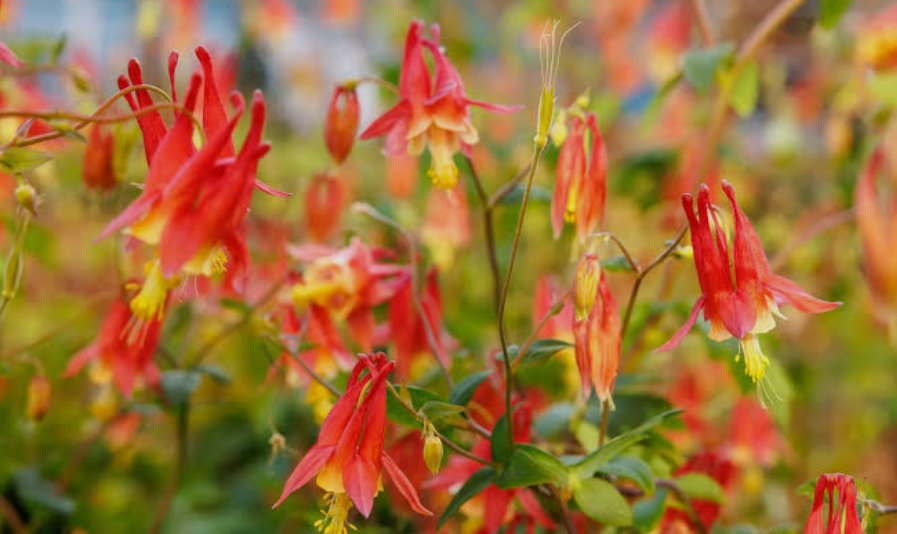
14. Columbine
The columbine has nodding flowers with long, backward-pointing spurs. Colors cover nearly the whole range, often with two shades in one bloom. It flowers in late spring. The foliage is lacy and blue-green. Plants grow 1 to 3 feet tall.
It grows in sun or part shade. It survives -40°F, and some species tolerate far colder. Alaska trials found Siberian columbines among the hardiest perennials tested. It self-sows freely around the garden. It is grown throughout the northern United States, Canada and Europe.
15. Monkshood
Monkshood bears spikes of deep blue, hooded flowers. Each bloom resembles a monk’s cowl. It flowers in mid to late summer, when few blue perennials are in bloom. It grows 2 to 4 feet tall. The leaves are dark green and deeply cut.
All parts of the plant are highly poisonous, and gloves should be worn when handling it. It survives -40°F and colder. It prefers cool summers and moist soil. It is native to the mountains of Europe and Asia. It is grown in Alaska, Canada and the northern states.
16. Lily of the Valley
Lily of the valley is a low ground cover with intensely fragrant flowers. The blooms are small, white bells on short, arching stems. It flowers in late spring. Each plant has two or three broad, upright leaves. It grows 6 to 8 inches tall.
It spreads vigorously in shade and can become invasive. It survives -40°F and colder. All parts are poisonous, including the red berries. It is native to Europe and northern Asia. It is grown across the northern United States and Canada.
17. Bearded Iris
The bearded iris has large, ruffled flowers with a fuzzy strip on each lower petal. It comes in nearly every color, often in two-tone combinations. It blooms in late spring and early summer. The leaves are stiff and sword-shaped. Plants range from 8 inches to 4 feet tall.
It grows from thick stems that sit at the soil surface. It survives -40°F in well-drained ground. Wet soil in winter is more damaging than cold. It needs full sun and dividing every few years. It is grown throughout the northern United States, Canada and Europe.
18. Oriental Poppy
The Oriental poppy has enormous, papery flowers up to 6 inches across. The classic color is orange-red with a black blotch at the base of each petal. Pink, white and salmon varieties are also grown. It blooms in early summer. The hairy foliage dies back in midsummer and returns in fall.
It has a deep taproot and resents being moved. It survives -40°F. It needs full sun and well-drained soil. It is native to the Caucasus, Turkey and Iran. It is grown across the northern states, Canada and northern Europe.
19. Iceland Poppy
The Iceland poppy has delicate, crepe-like flowers on thin, leafless stems. Colors include white, yellow, orange, pink and red. It blooms through the cool months of spring and early summer. It grows about 1 foot tall. The flowers are lightly fragrant.
It is one of the most colorful plants for the very coldest regions. It survives -50°F. It is short-lived but reseeds freely. It dislikes hot summers and fades quickly in heat. It is grown in Alaska, northern Canada and cool mountain gardens.
20. Delphinium
The delphinium produces towering spikes of flowers in rich shades of blue. Purple, pink and white forms are also grown. It blooms in early to midsummer. Tall varieties reach 5 to 6 feet and need staking. Few other perennials offer such a true blue.
Delphiniums thrive in the long, cool summer days of the far north. The University of Alaska Fairbanks has tested perennials for hardiness in its botanical garden since 1989. A Russian selection of delphinium showed superior hardiness there. The plants are short-lived in hot climates. They are grown in Alaska, Canada, the northern states and Britain.
21. Catmint
Catmint forms a soft mound of gray-green, scented leaves. It is covered in small lavender-blue flowers from late spring into summer. Shearing it after bloom brings a second flush. It grows 1 to 3 feet tall. Bees work the flowers all day.
It tolerates drought, heat and poor soil. It survives -40°F. Deer and rabbits avoid it. It is native to the Caucasus and Iran. It is grown across the northern United States and Canada.
22. Stonecrop
Tall stonecrop has thick, fleshy leaves that store water. In late summer it bears broad, flat flower heads. The blooms open pink and deepen to rusty red in fall. It grows 1 to 2 feet tall. The dried heads stand through winter.
It is one of the easiest perennials to grow. It survives -40°F. It needs full sun and does best in lean, dry soil. Butterflies flock to the flowers. It is grown throughout the northern states and Canada.
23. Hens and Chicks
Hens and chicks form tight rosettes of pointed, fleshy leaves. Each mother plant is ringed by smaller offsets. The rosettes may be green, red, purple or silver. They grow only a few inches tall. Mature rosettes send up a thick flower stalk and then die.
The plants need almost no soil or water. They survive -40°F. They grow in rock crevices, walls, troughs and even on roofs. They are native to the mountains of Europe. They are grown across the northern United States and Canada.
24. Coral Bells
Coral bells are grown for both foliage and flowers. The leaves form a low mound and may be green, purple, bronze, silver or lime. Slender stems carry tiny bell-shaped flowers in early summer. The blooms are red, pink or white. Plants grow 1 to 2 feet tall in flower.
Hardiness varies, and the old red-flowered types are the toughest. The hardiest survive -40°F. They grow in sun or part shade. The crowns can heave out of the ground in winter and should be pressed back in spring. They are grown across the northern states and Canada.
25. Astilbe
Astilbe bears feathery plumes of flowers above fern-like foliage. Colors include white, pink, red and lavender. It blooms in early to midsummer. It grows 1 to 4 feet tall. It is one of the few perennials that flowers well in shade.
It needs moist soil and suffers in drought. It survives -40°F. The dried plumes remain attractive into winter. It is native to China, Japan and Korea. It is grown in shaded gardens across the northern United States and Canada.
26. Lady’s Mantle
Lady’s mantle has rounded, pleated leaves covered in fine hairs. Raindrops and dew bead on the leaves like drops of mercury. In early summer it bears frothy sprays of chartreuse flowers. It grows 12 to 18 inches tall. It makes an excellent edging plant.
It grows in sun or part shade. It survives -40°F. It self-sows readily if the flowers are not removed. It is native to the mountains of eastern Europe and Turkey. It is grown across the northern states, Canada and Britain.
27. Cranesbill
Cranesbill is the hardy garden geranium, unrelated to the tender bedding plant. It forms a spreading mound of deeply cut leaves. The flowers are saucer-shaped and may be pink, blue, purple or white. It blooms in early summer, and some types repeat. It grows 1 to 2 feet tall.
Many species survive -40°F. The foliage often turns red in fall. It tolerates sun or part shade and suppresses weeds. It has few pests. It is grown throughout the northern United States, Canada and Europe.
28. Globeflower
The globeflower has rounded, buttercup-like flowers in yellow or orange. The blooms look like small, half-closed globes. It flowers in late spring and early summer. The leaves are dark green and deeply divided. It grows 2 to 3 feet tall.
It needs moist to wet soil and cool summers. It survives -40°F and colder. It is well suited to pond edges and damp borders. It is native to northern Europe and Asia. It is grown in Alaska, Canada and the northern states.
29. Ligularia
Ligularia is a bold plant for damp shade. Its leaves are very large and may be rounded or jagged. Some varieties have dark purple foliage. In summer it bears tall spikes or clusters of yellow-orange flowers. It grows 3 to 5 feet tall.
It needs constant moisture and wilts quickly in hot sun. It survives -40°F in most varieties. It is striking beside water. It is native to China and Japan. It is grown across the northern states and Canada.
30. Bergenia
Bergenia has large, leathery, glossy leaves that stay green all winter. The leaves squeak when rubbed between the fingers, which earns it the name pigsqueak. In early spring it bears clusters of pink flowers on thick stems. The foliage turns red-bronze in cold weather. It grows 12 to 18 inches tall.
It tolerates shade, drought and poor soil. It survives -40°F. It spreads slowly to form a ground cover. It is native to Siberia and Mongolia. It is grown across the northern United States, Canada and northern Europe.
31. Lungwort
Lungwort is an early spring bloomer for shade. Its leaves are spotted or splashed with silver. The flowers open pink and turn blue as they age. Both colors appear on the plant at once. It grows about 1 foot tall.
It prefers moist, rich soil. It survives -40°F. The spotted foliage stays attractive all season. It is native to Europe. It is grown in woodland gardens across the northern states and Canada.
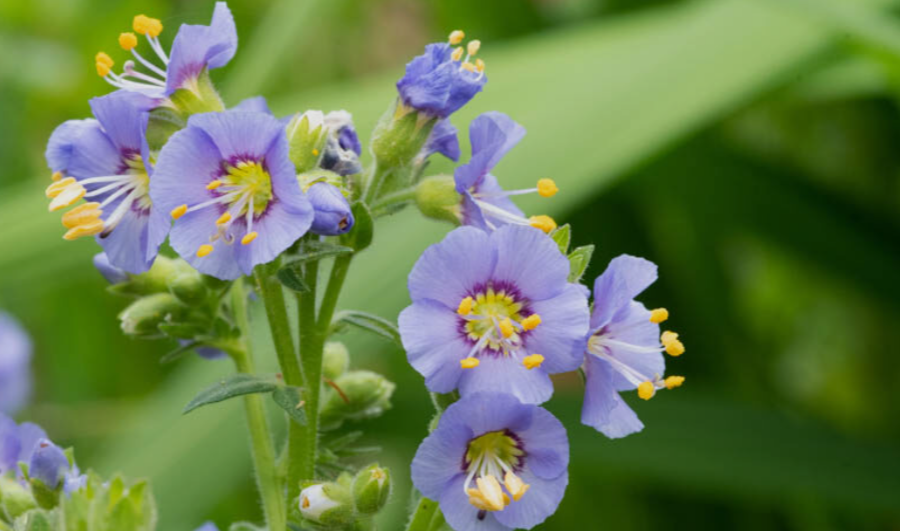
32. Jacob’s Ladder
Jacob’s ladder takes its name from its leaves. The small leaflets are arranged in pairs like the rungs of a ladder. In late spring it bears clusters of blue, bell-shaped flowers. It grows 1 to 3 feet tall. Some varieties have variegated foliage.
It prefers part shade and cool, moist soil. It survives -40°F and colder. It self-sows gently. Wild species grow across northern Europe, Asia and North America. It is grown in Alaska, Canada and the northern states.
33. Siberian Bugloss
Siberian bugloss has heart-shaped leaves and sprays of tiny blue flowers. The blooms resemble forget-me-nots. It flowers in mid to late spring. Popular varieties have silver, frosted foliage. It grows 12 to 18 inches tall.
It thrives in shade and moist soil. It survives -40°F. The foliage remains handsome until frost. It is native to Siberia and the Caucasus. It is grown across the northern United States and Canada.
34. Ostrich Fern
The ostrich fern is one of the tallest hardy ferns. Its fronds are shaped like ostrich plumes and form a vase-like clump. They can reach 3 to 5 feet tall. The young, coiled shoots are harvested in spring as fiddleheads. It spreads by underground runners.
It needs moist soil and shade. It survives -50°F. It can colonize a large area over time. It is native to northern North America, Europe and Asia. It grows wild and in gardens across Canada, Alaska and the northern states.
35. Blazing Star
Blazing star bears tall, bottlebrush spikes of purple flowers. Unusually, the flowers open from the top of the spike downward. It blooms in midsummer. The leaves are narrow and grass-like. It grows 2 to 4 feet tall.
Butterflies are strongly attracted to it. It survives -40°F. It grows from a corm and tolerates drought once established. It is native to the prairies of North America. It is grown across the northern states and Canada.
36. Goldenrod
Goldenrod carries arching plumes of tiny golden-yellow flowers. It blooms in late summer and fall. It is wrongly blamed for hay fever, which is caused by ragweed. Its pollen is heavy and carried by insects, not wind. It grows 1 to 5 feet tall.
It is one of the most valuable late-season plants for pollinators. It survives -40°F and colder. Compact garden varieties are better behaved than wild types. Most species are native to North America. It is grown and found wild across the continent.
37. New England Aster
The New England aster covers itself in daisy-like flowers in fall. The blooms are purple, pink or violet with yellow centers. It flowers from late summer until hard frost. It grows 3 to 6 feet tall. It is a key nectar source for migrating monarch butterflies.
It prefers full sun and moist soil. It survives -40°F. Cutting it back in early summer keeps it shorter and bushier. It is native to eastern and central North America. It is grown across the northern United States and Canada.
38. Joe-Pye Weed
Joe-Pye weed is a towering native perennial. It bears large, domed clusters of dusty pink flowers in late summer. The blooms draw clouds of butterflies. It grows 4 to 7 feet tall. The stems are often purple.
It thrives in moist soil and full sun. It survives -40°F. It makes a strong backdrop for the rear of a border. It is native to eastern North America. It is grown across the northern states and Canada.
39. Prairie Smoke
Prairie smoke is a low native wildflower of the northern prairies. Its nodding, pink flowers appear in spring. After flowering, each bloom turns into a wispy, feathery seed head. A mass of them looks like a haze of pink smoke. It grows 6 to 12 inches tall.
It tolerates drought and poor, dry soil. It survives -50°F. The leaves turn red and purple in fall. It is native to the northern Plains and Rocky Mountains. It is grown across the northern states and the Canadian prairies.
40. Pasque Flower
The pasque flower is one of the first perennials to bloom in spring. Its purple, cup-shaped flowers often open while snow still lies nearby. The whole plant is covered in silky hairs. Feathery seed heads follow the flowers. It grows 6 to 12 inches tall.
It needs full sun and sharp drainage. It survives -40°F and colder. The native prairie form is the state flower of South Dakota and the floral emblem of Manitoba. It is found across the northern Plains. It is grown in rock gardens throughout the northern states and Canada.
41. False Indigo
False indigo is a large, shrub-like perennial. It bears spikes of indigo-blue, pea-like flowers in late spring. The foliage is blue-green and stays clean all summer. Inflated black seed pods follow and rattle in the wind. It grows 3 to 4 feet tall and wide.
It is slow to establish but lives for decades. It survives -40°F. Its deep roots make it very drought-tolerant. It is native to the central and eastern United States. It is grown across the northern states and southern Canada.
42. Culver’s Root
Culver’s root is a tall, elegant native perennial. It bears slender, branching spires of white flowers. The spikes resemble a candelabra. It blooms in midsummer. It grows 4 to 6 feet tall.
Its leaves are arranged in rings around the stem. It survives -40°F. It prefers moist soil and full sun. It is native to the eastern and central United States. It is grown across the northern states and southern Canada.
43. Rhubarb
Rhubarb is a perennial vegetable grown for its tart leaf stalks. The stalks are red, pink or green. They are cooked with sugar for pies, sauces and jams. The leaves are very large and are poisonous. A plant can produce for 20 years or more.
Rhubarb needs cold winters to grow well. It survives -40°F and colder. It is one of the most reliable food plants in the far north. It is native to Siberia and Central Asia. It is grown in Alaska, Canada and the northern states.
44. Asparagus
Asparagus is another long-lived perennial vegetable. The edible part is the young shoot, or spear, cut in spring. Uncut spears grow into tall, feathery ferns. Female plants bear small red berries. A well-kept bed can produce for 15 to 25 years.
It takes two or three years to yield its first full crop. It survives -40°F. It needs full sun and well-drained soil. It is native to Europe and western Asia. It is grown across the northern United States and southern Canada.
45. Chives
Chives are a hardy perennial herb in the onion family. The plant forms a clump of thin, hollow, grass-like leaves. In late spring it bears round, lavender-pink flower heads. Both the leaves and flowers are edible. It grows about 1 foot tall.
It is among the first herbs ready to cut in spring. It survives -40°F and colder. It needs little care and self-sows readily. It is native across the Northern Hemisphere, including northern Canada and Alaska. It is grown in herb gardens throughout the northern states.
46. Maltese Cross
The Maltese cross bears dense, rounded heads of brilliant scarlet flowers. Each small flower has notched petals arranged in the shape of a cross. Kansas State University lists it as a summer bloomer that grows 24 to 36 inches tall. Pink and white forms also exist. Few perennials offer such a pure red.
It is an old-fashioned plant found around many prairie farmhouses. It survives -40°F and colder. It is short-lived but reseeds. It is native to Russia and northern Asia. It is grown across the Canadian prairies and northern states.
47. Snow-in-Summer
Snow-in-summer is a low ground cover with silver-gray, woolly leaves. In late spring it is blanketed in small, white flowers. The effect resembles a fresh snowfall. It grows 6 to 12 inches tall. It spreads rapidly.
It thrives in full sun and poor, dry soil. It survives -40°F. It does poorly in hot, humid summers. It is native to the mountains of Italy. It is grown across the northern states, Canada and the Mountain West.
48. Cheddar Pink
The cheddar pink is a low, mat-forming relative of the carnation. Its narrow leaves are blue-gray and evergreen. In late spring it bears fringed, pink flowers. The blooms have a strong, clove-like scent. It grows 6 to 12 inches tall.
It needs full sun and excellent drainage. It survives -40°F. It suits rock gardens, walls and the front of borders. It is native to western and central Europe. It is grown across the northern states and Canada.
49. Peach-Leaved Bellflower
The peach-leaved bellflower bears large, open bells on slender, upright stems. The flowers are blue-violet or white. It blooms in early to midsummer. The narrow leaves resemble those of a peach tree. It grows 2 to 3 feet tall.
It grows in sun or part shade. It survives -40°F. Removing spent flowers extends the bloom. It is native to Europe and western Asia. It is grown across the northern states, Canada and northern Europe.
50. Goatsbeard
Goatsbeard is a large, shrub-sized perennial for part shade. In early summer it bears huge, feathery plumes of creamy white flowers. It resembles a giant astilbe. It grows 4 to 6 feet tall and wide. The foliage is dark green and divided.
It prefers moist soil. It survives -40°F. It is slow to establish but very long-lived. It is native to North America, Europe and Asia. It is grown across the northern United States and Canada.
Key Takeaways:
- Extremely cold-hardy perennials can survive freezing winters and return year after year, making them valuable for gardens in regions with harsh climates. Popular examples include peonies, Siberian iris, sedum, and creeping phlox.
- Cold tolerance varies among perennial plants. Some varieties survive temperatures well below freezing, while others need winter protection or perform best in milder regions. Checking USDA hardiness zones helps gardeners select plants suited to their local climate.
- Many cold-hardy perennials produce colorful flowers despite harsh growing conditions. Coneflowers, daylilies, hardy geraniums, and blanket flowers offer seasonal blooms in shades of purple, yellow, red, pink, and orange.
- Cold-hardy perennials come in different sizes and growth habits, from low-growing ground covers to tall flowering plants. This variety makes them useful for borders, rock gardens, slopes, containers, and mixed perennial beds.
- Well-drained soil and appropriate planting conditions improve winter survival. Although many hardy perennials tolerate severe cold, waterlogged soil, poor drainage, and repeated freeze-thaw cycles can damage their roots.
- Choosing the right perennial depends on more than cold tolerance. Consider sunlight requirements, soil type, mature size, flowering season, water needs, and local hardiness zones to create a garden that remains attractive and resilient year after year.
Sources:
- University of Minnesota Extension: Hostas
- University of Alaska Fairbanks: Perennial Plant Trials at the Georgeson Botanical Garden
- Kansas State University: Perennial Plant List
- University of Minnesota Extension: Daylilies
- University of Alaska Fairbanks: Horticultural Crop Production for Alaska
- University of Alaska Fairbanks: peony production in Alaska
- Fine Gardening: Fairbanks, Alaska
- Gardening Know How: Cold Weather Plants for Zones 2-3
- Fairbanks Soil and Water Conservation District: Zone 2