Cold-hardy apple varieties allow orchards and backyard trees to thrive where winter lows fall to -30°F or -40°F. The apple originated in the mountains of Central Asia and has been cultivated for thousands of years. More than 7,500 varieties are now grown around the world, though only a few dozen are planted on a large scale.
Apples are among the most important fruit crops on Earth. World production exceeds 5 billion bushels a year, and China accounts for 51% of the total. The United States is the second-largest grower, with about 5% of the global crop.
The American harvest for 2025 and 2026 is forecast at 11.7 billion pounds, or 278.5 million bushels. Washington is the leading state by a wide margin, with a record crop of more than 180 million bushels. New York, Michigan and Pennsylvania follow.
Most supermarket apples come from regions with moderate winters. In the upper Midwest, the northern Plains and the Canadian prairies, ordinary varieties are killed or badly damaged by the cold. The 15 apples below were bred or selected to survive those conditions, and each entry notes where the variety is grown.
1. Honeycrisp
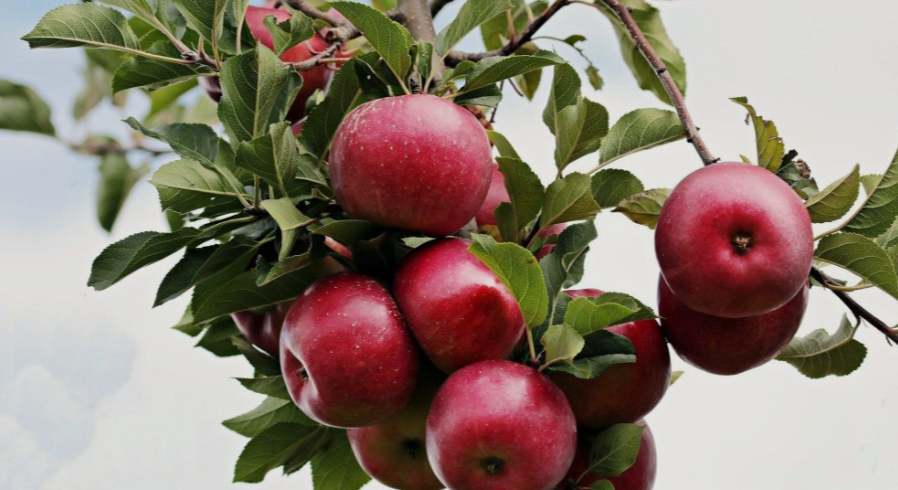
Honeycrisp is the best-known cold-hardy apple in the world. The fruit is large and red over yellow, with an explosively crisp, juicy texture. The flavor is sweet and well balanced, with mild acidity. It ripens in late September in Minnesota. It now ranks third among American varieties, with a forecast crop of 34 million bushels.
The University of Minnesota introduced it in 1991, and its breeding program has released 29 varieties since work began in 1878. The original cross was made about 30 years before the apple reached the public. North Dakota State University rates it as marginally hardy in the coldest zone, so it is best where lows stay above -30°F. It is grown in Minnesota, Wisconsin, Michigan, New York and Washington. It has also been planted in Nova Scotia, New Zealand and parts of Europe.
2. Haralson
Haralson was Minnesota’s favorite apple for decades before Honeycrisp arrived. The fruit is medium-sized, firm and red-striped, with a distinctly tart flavor. It is excellent for pies because the slices hold their shape. It ripens in early October and stores well through the winter. The flavor mellows and sweetens in storage.
The University of Minnesota introduced it in 1922 and named it for the superintendent of its fruit breeding farm. It is a descendant of the Wealthy apple. North Dakota State University describes it as the top apple in the upper Midwest. The tree is very hardy and productive, though it tends to bear heavily every other year. It is grown throughout Minnesota, Wisconsin, the Dakotas and Montana.
3. Wealthy
Wealthy was the first good apple to survive Minnesota winters. The fruit is small to medium, with red skin over a green ground. The flesh is white, crisp and juicy, with a mild, sprightly flavor and a hint of strawberry. It ripens in September. It is good for eating fresh, for cooking and for cider.
Peter Gideon raised it on the shore of Lake Minnetonka from seed obtained from Maine, and it first fruited in 1868. He named it for his wife, Wealthy Hull Gideon. By the early 1900s it was one of the top five apples grown in the United States. Genetic testing has shown it to be a cross of Duchess of Oldenburg and Jonathan. It is still grown in heritage orchards across the upper Midwest and New England.
4. Zestar
Zestar is an early apple with a flavor far better than most early varieties. The fruit is large, crunchy and juicy, with red stripes over a yellow ground. The taste is sprightly and sweet-tart, with a hint of brown sugar. It ripens in late August and early September. Unlike most early apples, it keeps for about 2 months in cold storage.
The University of Minnesota released it in the late 1990s from a cross involving State Fair. University scientists tested the trees through harsh winters and in laboratory freezers to confirm their hardiness. It is rated for the colder half of the northern apple belt. North Dakota State University notes that it is crisper and stores better than other early apples. It is grown in Minnesota, Wisconsin, Michigan, the Dakotas and Montana.
5. Sweet Sixteen
Sweet Sixteen is a red apple with one of the most unusual flavors of any variety. The flesh is crisp, juicy and very sweet. Tasters describe notes of cherry candy, anise and vanilla. The fruit is medium to large, with red stripes. It ripens in mid to late September.
The University of Minnesota released it in 1977. Montana researchers rate its cold hardiness as good. The tree is vigorous and upright and is slow to begin bearing. North Dakota State University recommends it for fresh eating. It is grown in home orchards and pick-your-own farms across the northern states.
6. Frostbite
Frostbite is a small apple with an intensely sweet, concentrated flavor. The flesh is firm and juicy. The taste is often compared to sugar cane or molasses. The skin is dark maroon over a yellow ground. It ripens in late September to early October.
The University of Minnesota grew it for decades as a breeding parent before naming it in 2008. It is a grandparent of Honeycrisp and a parent of Keepsake and Sweet Sixteen. The tree is among the hardiest the university has released. Its small size limits its appeal as a market apple, but it is prized for cider. It is grown in Minnesota, Wisconsin and other far-northern orchards.
7. Fireside
Fireside is a large, late-season apple with a sweet, mild flavor. The fruit is red-striped over green, and the flesh is firm and juicy. Tasters note hints of pear. It ripens in October. It stores well into the winter.
The University of Minnesota introduced it in 1943 and named it for President Franklin Roosevelt’s radio fireside chats. It was the second most popular Minnesota apple of its era, behind Haralson. A fully red form is sold as Connell Red. The tree is vigorous and hardy, though slightly less so than Haralson. It is grown in Minnesota, Wisconsin and Iowa.
8. State Fair
State Fair is an early apple that ripens around the time of the Minnesota State Fair. The fruit is medium-sized, with bright red stripes. The flesh is crisp and juicy, with a sprightly, tart flavor. It is good for eating fresh and for cooking. It keeps for only a few weeks.
The University of Minnesota released it in 1977. It is a parent of Zestar. The tree is hardy and productive and begins bearing young. It ripens in mid to late August, when few other apples are ready. It is grown in home orchards across Minnesota, Wisconsin and the Dakotas.
9. Hazen
Hazen is a large, dark red apple bred for the northern Plains. The flesh is greenish-yellow, juicy and mildly sweet. It is pleasant for eating fresh and also cooks well. It ripens in late August. The fruit does not store for long.
North Dakota State University lists it among the best varieties for the state and gives its parentage as Duchess crossed with Starking Delicious. The university released it in 1980. The tree is naturally small, which suits home gardens. It is hardy in the coldest growing zone of the northern states. It is grown in North Dakota, Minnesota, Montana and the Canadian prairies.
10. Goodland
Goodland is a medium to large apple with creamy yellow skin and a red blush. The flesh is crisp, juicy and aromatic. The flavor is mild and sweet-tart. It is good for both pies and fresh eating. It ripens in mid-September.
It was bred at a research station in Morden, Manitoba, and released in the 1950s. It is one of the most widely planted apples on the Canadian prairies. The tree is hardy to the coldest zones and bears reliably. The fruit bruises easily and should be handled with care. It is grown in Manitoba, Saskatchewan, Alberta and North Dakota.
11. Norland
Norland is a very early apple for the coldest regions. The fruit is medium-sized, with red stripes over a green-yellow ground. The flesh is crisp and mildly sweet when first picked. It ripens in mid-August. The apples drop from the tree and soften quickly once ripe.
It was developed in the Canadian prairie breeding program and released around 1980. The tree is naturally small and begins bearing within a few years. It is one of the hardiest large-fruited apples available. It is best eaten fresh or used for sauce soon after picking. It is grown in Saskatchewan, Alberta, Manitoba, Alaska and the northern Plains.
12. Duchess of Oldenburg
Duchess of Oldenburg is an old Russian apple with a long record in cold climates. The fruit is medium to large, with red stripes over pale yellow. The flesh is tart and juicy. It is best for pies and sauce, though it can be eaten fresh. It ripens early, in August.
The University of Wisconsin notes that it originated in Russia in the 1700s and is naturally resistant to many diseases. It can be found even in the northern parts of Wisconsin. It reached the United States in the 1830s and became a foundation of northern orchards. It is a parent of both Wealthy and Hazen. It is grown in the upper Midwest, New England and the Canadian prairies.
13. Yellow Transparent
Yellow Transparent is one of the earliest apples to ripen anywhere. The skin is smooth and pale, turning from clear white to light yellow. The flesh is white, soft and sharply tart. It makes a smooth, pale applesauce. It ripens in July in most northern areas.
It came from Russia and was imported to the United States around 1870. Old northern nursery catalogs describe the tree as vigorous and extremely hardy. The fruit bruises easily and keeps for only a few days. It bears at a young age and crops heavily. It is grown in home orchards across the northern United States, Canada and northern Europe.
14. Antonovka
Antonovka is the most famous apple of Russia and one of the hardiest in the world. The fruit is large and golden-yellow. The flesh is firm, juicy and very tart. It has a strong, distinctive aroma. It is used mainly for cooking, baking and preserving.
Early American growers called it the King Apple of the Steppes. Established trees are reported to survive winter lows of about -50°F. Its seedlings are widely used as a hardy rootstock for other varieties. It ripens in early fall and keeps moderately well. It is grown in Russia, Belarus, Poland and the Baltic states, and in cold parts of North America.
15. Wolf River
Wolf River is known for the enormous size of its fruit. A single apple can weigh a pound or more. The skin is pale yellow, heavily striped with red. The flesh is soft and mild, with little acidity. It is used almost entirely for baking, drying and apple butter.
It originated in central Wisconsin in the 1870s, near the river that gave it its name. It is an old-time favorite around the state. The tree is very hardy and long-lived, and it resists several common diseases. Cooks like to say that one apple makes a pie. It is grown in Wisconsin, Minnesota, Michigan and New England.
Key Takeaways:
- Cold-hardy apple varieties can survive harsh winter temperatures, making them suitable for regions with long winters and short growing seasons. Varieties such as ‘Haralson’, ‘Goodland’, and ‘Norkent’ are popular choices for colder climates.
- Apple varieties differ in their winter hardiness, with some better suited to extreme cold than others. Selecting cultivars adapted to the local climate helps reduce winter damage and improve long-term tree health.
- Cold-hardy apple trees still need suitable growing conditions, including well-drained soil, adequate sunlight, and regular moisture during the growing season. Good site selection can help trees withstand seasonal temperature changes.
- Late spring frosts can damage apple blossoms, even when the trees tolerate severe winter cold. Choosing varieties with appropriate bloom times for the region can help reduce the risk of losing a crop.
- Most apple varieties require compatible pollination partners to produce a reliable harvest. Planting two compatible varieties that flower at similar times can improve fruit set, although some cultivars are partly self-fertile.
- Choosing the right cold-hardy apple depends on more than temperature tolerance. Consider fruit flavor, intended use, disease resistance, harvest time, mature tree size, and local growing conditions when selecting varieties for a home orchard.
Sources:
- University of Minnesota: All University of Minnesota Apple Varieties
- North Dakota State University: The Best Apples for North Dakota
- University of Wisconsin: Antique Apples
- University of Minnesota: Zestar
- North Dakota State University: Common Apple
- Montana State University: Wealthy apple
- Montana State University: fruit research cultivars
- Minnesota Historical Society: Wealthy apple
- US Apple Association: 2025 outlook
- FreshFruitPortal: USApple outlook report 2025
- FreshFruitPortal: US apple growers and global markets
- Mpls.St.Paul Magazine: Minnesota apples ranked
- KSTP: Minnesota-grown apples
- Star Tribune: Minnesota’s apple family tree
- Wisconsin State Horticultural Society: Antonovka