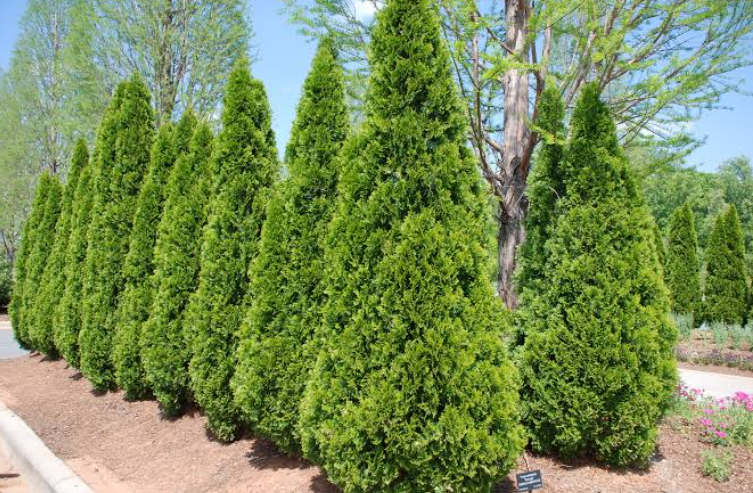
Wet soil can be one of the more challenging conditions for gardeners. Areas that stay saturated after rain may have poor drainage, a high water table, or naturally heavy soil that holds moisture for long periods. Many popular landscape trees struggle in these conditions because their roots need access to oxygen as well as water. When soil remains waterlogged, oxygen levels around the roots can fall dramatically, increasing the risk of root stress and disease.
Fortunately, not every evergreen tree requires dry, sharply drained soil. Several evergreen species have naturally adapted to wetlands, swamps, floodplains, stream edges, and other moisture-rich environments. These trees can tolerate periodic flooding or consistently moist ground much better than species adapted to dry upland conditions. Some can even become valuable landscape plants in areas where other trees repeatedly fail.
Evergreen trees are particularly useful in wet landscapes because they maintain their foliage throughout the year. They can provide privacy, wind protection, wildlife habitat, shade, and visual structure during every season. Depending on the species, you can find options ranging from towering conifers to smaller ornamental trees that work in residential landscapes.
The 28 trees below include wet-soil-tolerant conifers and broadleaf evergreens. Their tolerance varies, however, so “tolerates wet soil” does not necessarily mean a tree can survive in permanently submerged ground. Before planting, consider whether your site is occasionally wet after rainfall, consistently soggy, or subject to standing water for extended periods.
1. Bald Cypress
Bald cypress (Taxodium distichum) is one of the best-known trees for wet soil. It naturally grows in swamps, floodplains, and along rivers and lakes across the southeastern United States.
Despite being a conifer, bald cypress is deciduous and loses its soft, feathery needles in autumn. Mature trees can exceed 100 feet in favorable conditions, so they are better suited to large landscapes.
One of its most fascinating features is the development of distinctive “knees” in very wet environments. The tree also develops attractive reddish-brown bark and a broad, spreading crown with age.
2. Pond Cypress
Pond cypress (Taxodium ascendens) is closely related to bald cypress and is naturally associated with wet habitats.
It develops a narrower, more upright crown and can tolerate poorly drained conditions.
Like bald cypress, it is deciduous rather than truly evergreen, despite being a conifer. Its ability to tolerate wet ground makes it useful around ponds, wetlands, and water features.
3. Eastern Red Cedar
Eastern red cedar (Juniperus virginiana) is an adaptable evergreen conifer native to much of eastern and central North America.
It is generally associated with well-drained conditions, but established trees can tolerate a range of soils and occasional wetness better than many drought-adapted conifers.
The tree develops dense blue-green foliage and can reach 40–50 feet or more. It is especially useful for wildlife habitat and screening.
4. Atlantic White Cedar
Atlantic white cedar (Chamaecyparis thyoides) naturally occurs in wetlands, swamps, and wet forests along parts of the eastern United States.
It develops a narrow, pyramidal form and scale-like blue-green foliage.
The species can reach approximately 60–80 feet, although young trees are much smaller.
It is one of the better evergreen choices for consistently moist acidic soils.
5. White Spruce
White spruce (Picea glauca) is a hardy evergreen conifer native to northern North America.
Although it prefers well-drained soil, it can tolerate periodically wet conditions and a range of soil types.
The tree can reach 50–100 feet in the wild, depending on conditions. Dwarf cultivars are available for smaller landscapes.
6. Black Spruce
Black spruce (Picea mariana) is especially well adapted to wet, acidic environments.
It naturally grows in bogs, muskegs, and cold northern wetlands.
The tree typically develops a narrow, pointed crown and relatively short branches.
It is an excellent choice for cold climates where the soil remains moist for long periods.
7. Sitka Spruce
Sitka spruce (Picea sitchensis) is a large evergreen native to the Pacific coastal region of North America.
It naturally grows in moist forests and areas receiving substantial rainfall.
The species can reach extraordinary dimensions, with mature trees sometimes exceeding 200 feet in height. Consequently, it is mainly appropriate for large properties.
8. Western Red Cedar
Western red cedar (Thuja plicata) is a large evergreen native to western North America.
It naturally occurs in moist forests and along streams and can tolerate wet conditions better than many other large conifers.
Its aromatic, scale-like foliage remains green throughout the year.
The species can become enormous, so sufficient space is essential.
9. Northern White Cedar
Northern white cedar (Thuja occidentalis), also called arborvitae, is highly adaptable.
It can grow in moist soils and is commonly found in low-lying areas and near wetlands.
The species can reach approximately 40–50 feet, while numerous dwarf cultivars remain much smaller.
Its dense foliage makes it particularly useful for privacy screens.
10. Eastern Hemlock
Eastern hemlock (Tsuga canadensis) prefers cool, moist environments and naturally occurs near streams and in shaded forests.
It has graceful, drooping branches and short, soft needles.
Mature trees can reach 60–70 feet or more.
Eastern hemlock performs best in cool conditions and should generally be protected from intense heat and drought.
11. Carolina Hemlock
Carolina hemlock (Tsuga caroliniana) is a southeastern species with an attractive narrow crown.
It prefers moist, cool conditions and can tolerate reasonably moist soils.
Unlike some wetland specialists, it does not require permanently saturated ground.
Its elegant shape makes it useful as a specimen tree in suitable climates.
12. Sweetbay Magnolia
Sweetbay magnolia (Magnolia virginiana) is an excellent broadleaf evergreen or semi-evergreen for moist landscapes.
It naturally grows in swamps, wetlands, and along waterways.
The tree produces fragrant, creamy-white flowers and glossy leaves with silvery undersides.
Depending on climate, it can range from a large shrub to a tree approximately 10–60 feet tall.
13. Southern Magnolia
Southern magnolia (Magnolia grandiflora) is a famous evergreen tree of the southeastern United States.
It prefers moist, fertile soil but can tolerate temporarily wet conditions when drainage is not permanently saturated.
The huge glossy leaves and fragrant white flowers make it an impressive landscape specimen.
Trees can reach 60–80 feet, although compact cultivars such as ‘Little Gem’ are available.
14. Redbay
Redbay (Persea borbonia) is an evergreen broadleaf tree native to the southeastern United States.
It commonly occurs in coastal forests, swamps, and moist woodlands.
The aromatic leaves resemble those of bay laurel and can provide food for wildlife.
It can reach roughly 30–60 feet in favorable conditions.
15. Live Oak
Live oak (Quercus virginiana) is a broadleaf evergreen famous for its massive spreading branches.
It naturally occurs in the southeastern United States and can tolerate periodically moist conditions.
Although it can exceed 60 feet tall, its canopy can become dramatically wider than its height.
It is best suited to large properties where there is enough room for its mature crown.
16. Water Tupelo
Water tupelo (Nyssa aquatica) is a deciduous tree rather than a true evergreen, but it deserves recognition for its exceptional wet-soil tolerance.
It is naturally found in swamps and floodplains and can grow in areas that remain flooded for extended periods.
Trees can reach 75–100 feet.
Its brilliant autumn foliage provides considerable seasonal interest.
17. Black Gum
Black gum (Nyssa sylvatica) is another deciduous tree that tolerates moist soils.
It can grow in low-lying areas, wetlands, and periodically saturated ground.
The species is particularly valued for its spectacular red, orange, and purple autumn foliage.
It can reach 60 feet or more, although smaller cultivars are available.
18. American Holly
American holly (Ilex opaca) is an evergreen broadleaf tree with glossy, spiny leaves.
It prefers moist, well-drained soil but can tolerate some wetness.
Female trees produce bright red berries when pollinated by a compatible male plant.
Mature trees can reach 30–50 feet, making them suitable for larger gardens and woodland landscapes.
19. Dahoon Holly
Dahoon holly (Ilex cassine) is particularly well adapted to moist and wet environments.
It naturally occurs in swamps, wet woods, and areas near water in the southeastern United States.
The evergreen foliage is relatively narrow and glossy, while female plants can produce red berries.
It can reach approximately 20–40 feet.
20. Yaupon Holly
Yaupon holly (Ilex vomitoria) is a highly adaptable evergreen native to the southeastern United States.
It tolerates different soil conditions, including periods of wetness, although permanently waterlogged soil is not ideal.
It can be grown as a shrub or trained into a small tree.
Compact forms make it useful in residential landscapes.
21. Wax Myrtle
Wax myrtle (Morella cerifera) is an evergreen shrub or small tree that performs particularly well in moist conditions.
It naturally occurs in wet coastal habitats, swamps, and lowlands.
The foliage is aromatic, and female plants produce small berries that are valuable to wildlife.
Depending on growing conditions, plants can reach 15–25 feet.
22. Florida Anise
Florida anise (Illicium floridanum) is an evergreen shrub or small tree native to moist forests and swamps in the southeastern United States.
It produces glossy, aromatic foliage and unusual star-shaped reddish flowers.
The plant can reach around 10–15 feet and is particularly useful for shaded, moisture-rich landscapes.
It performs best in acidic, consistently moist soil.
23. Dahoon Holly ‘Eagleston’
‘Eagleston’ holly is a popular hybrid holly selection used in warm-climate landscapes.
It develops an upright, evergreen form and can tolerate moist conditions when planted in suitable soil.
The dense foliage makes it useful for screening and privacy.
It can be maintained as a smaller tree through selective pruning.
24. Possumhaw Holly
Possumhaw holly (Ilex decidua) is actually deciduous, but it is strongly associated with moist environments and deserves consideration when evergreen foliage is not essential.
It grows naturally along streams, wetlands, and floodplains.
Female trees produce abundant red berries that can remain attractive after the leaves have fallen.
25. Red Maple
Red maple (Acer rubrum) is deciduous rather than evergreen, but it is one of the most adaptable trees for wet soils.
It naturally occurs in wetlands and low-lying areas across much of eastern North America.
Its brilliant red autumn foliage makes it a valuable landscape tree.
Mature trees can reach approximately 40–70 feet.
26. River Birch
River birch (Betula nigra) is another deciduous tree particularly well adapted to wet soil.
It naturally grows along streams and rivers and tolerates periodic flooding.
Its peeling bark provides attractive year-round interest even though the tree loses its leaves during winter.
It can reach approximately 40–70 feet.
27. Pond Apple
Pond apple (Annona glabra) is a tropical evergreen tree naturally associated with swamps, marshes, and wet coastal areas.
It can tolerate very wet conditions and is particularly suited to warm climates.
The tree produces unusual, custard-apple-like fruits and glossy green foliage.
It can reach around 30–40 feet under favorable conditions.
28. Gumbo-Limbo
Gumbo-limbo (Bursera simaruba) is a tropical evergreen or semi-evergreen tree native to parts of the Caribbean, Mexico, Central America, and Florida.
It is adaptable to different soil conditions and can tolerate periodically wet ground once established.
The tree is recognized by its reddish, peeling bark and attractive branching structure.
It can grow 40–60 feet tall, so it is best suited to spacious warm-climate landscapes.