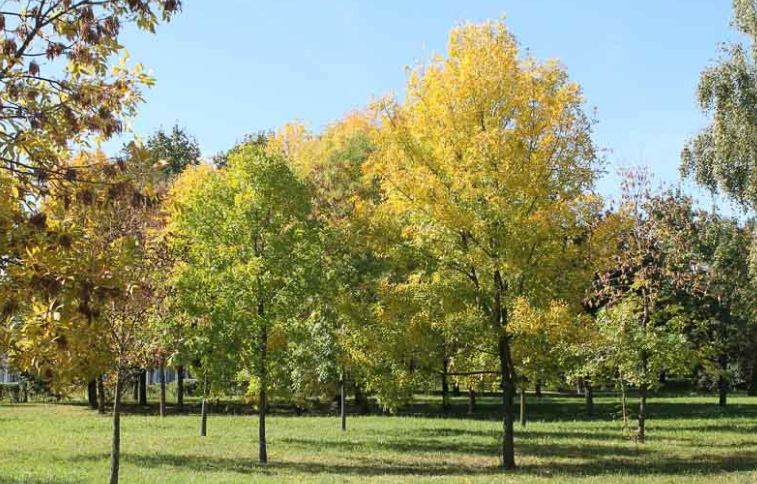
European ash (Fraxinus excelsior), also known as common ash, is a large, graceful deciduous tree native to much of Europe, including Britain. It is one of the most recognisable woodland trees in the UK, particularly in winter when its distinctive black buds stand out against its grey branches.
Under suitable conditions, European ash can become a very large tree, commonly reaching around 35 m and occasionally approaching 40 m. It is also remarkably long-lived. Forestry England gives a typical lifespan of around 300 years, while the Woodland Trust notes that exceptionally old ash trees can reach 400 years or more. Some technical woodland guidance gives an even greater potential longevity for exceptional specimens.
European Ash at a Glance
| Feature | Details |
|---|---|
| Scientific name | Fraxinus excelsior |
| Common names | European ash, common ash, ash |
| Family | Oleaceae |
| Type | Deciduous broadleaf tree |
| Native range | Europe, parts of western Asia and North Africa |
| Typical mature height | 30–35 m |
| Maximum height | About 40 m |
| Growth rate | Medium to moderately fast |
| Approximate annual growth | Around 30–60 cm under favorable conditions |
| Lifespan | Around 300 years; exceptional trees can live 400+ years |
| Flowers | Small purple flowers in spring |
| Fruit | Winged seeds called keys |
| Soil | Fertile, deep, well-drained soils |
| Light | Full sun to partial shade |
| Hardiness | Very hardy |
| Main concern | Ash dieback |
Growth rates are approximate. Actual growth varies considerably with soil, climate, moisture, competition, age and tree health.
What Does European Ash Look Like?
European ash is a tall tree with an upright trunk and a broad, relatively open crown. Mature trees often develop a graceful, domed appearance, with branches that create a distinctive architectural framework.
Young trees generally have relatively smooth grey bark, while older specimens develop darker, more deeply fissured bark. The leaves are compound, usually made up of several pairs of leaflets arranged along a central stalk. Individual leaflets have pointed tips and serrated edges.
One of the easiest ways to identify European ash in winter is by its black buds. They are unusually dark and velvety-looking compared with the buds of many other native trees. The opposite arrangement of the buds and twigs is another useful identification feature.
European Ash Growth Rate
European ash is generally considered a medium-growing tree, although young trees growing in favorable conditions can put on substantial annual growth. A British native-tree growth guide classifies ash as having a medium growth rate, while its ability to colonize suitable open ground can make it appear relatively fast when conditions are good.
For practical gardening purposes, an established European ash may add roughly 30–60 cm of height per year, although this should be treated as a broad estimate rather than a guaranteed figure. Young trees with plenty of moisture, fertile soil and adequate space can grow more rapidly, while mature trees naturally slow down as they approach their eventual size.
Growth also depends heavily on competition. An ash growing with plenty of light and root space can develop much faster than one competing with mature woodland trees for water and nutrients.
How Tall Does European Ash Grow?
European ash is definitely a tree for a large landscape rather than a small garden. Mature trees commonly reach around 30–35 m, while exceptional specimens can grow to approximately 40 m.
Its ultimate spread can also be considerable. The open crown allows plenty of light to reach the woodland floor, which is one reason ash woodland can support a rich mixture of grasses, wildflowers and other plants.
When planting one, allow considerably more room than the size of a young nursery tree might suggest.
How Long Does European Ash Live?
European ash has a potentially impressive lifespan.
A typical healthy tree can live for around 300 years, according to Forestry England. The Woodland Trust notes that ash trees can reach 400 years, particularly when growing under favorable conditions.
However, lifespan is not fixed. Soil conditions, drought, storms, competition, pests and diseases can all shorten the life of an individual tree. The biggest modern threat is ash dieback, which has dramatically changed the prospects for ash populations across Britain.
Where Does European Ash Grow?
European ash naturally occurs across much of Europe and extends into parts of western Asia and North Africa. In Britain, it is widespread in woodlands, hedgerows, farmland, scrub and other habitats.
It performs particularly well in fertile, deep and well-drained soils. It can tolerate a relatively broad range of conditions, but neutral to alkaline or base-rich soils are especially suitable.
Ash can also tolerate some shade, particularly when young. However, good access to light becomes increasingly important as the tree develops and competes with surrounding vegetation.
Soil Requirements
For the best growth, plant European ash in soil that is:
- Deep and fertile
- Well drained
- Moist but not permanently waterlogged
- Neutral to alkaline where possible
- Rich enough to support strong root development
Avoid planting it where the soil remains saturated for long periods. Although ash can occur in a range of moisture conditions, drainage and soil fertility strongly influence its performance.
If planting a young tree, improving compacted soil before planting can be more beneficial than simply adding fertilizer. Good root development during the first few years is important for establishing a large future tree.
European Ash Flowers and Seeds
European ash has relatively inconspicuous flowers compared with flowering trees such as cherry or hawthorn. The flowers appear in spring before or around the time the foliage develops and can have a purplish appearance.
The female flowers develop into distinctive winged fruits known as keys or samaras. They hang in clusters and are dispersed by wind. Their flattened shape allows them to spin as they fall, which explains the familiar nickname “helicopters.”
The seeds can remain attached to the tree for some time, making the clusters particularly noticeable during autumn and winter.
Why Are European Ash Trees Important for Wildlife?
European ash has considerable ecological value. Its relatively open canopy allows sunlight to reach plants growing underneath, while its early leaf fall creates a longer period of light at ground level.
Ash trees provide habitat and food for a large range of organisms, including insects, fungi, lichens, birds and other wildlife. The Woodland Trust’s tree species handbook records nearly 1,000 associated species, with some particularly dependent on ash.
Older ash trees can become especially valuable because cavities, deadwood and fissured bark provide additional habitats for insects, fungi, bats and other organisms.
European Ash Timber
Ash wood has been valued for centuries because it is strong, tough and relatively shock-resistant. These qualities made it particularly useful for products that need to withstand repeated impacts.
Traditional uses include:
- Tool handles
- Axes and hammers
- Oars
- Sporting equipment
- Furniture
- Flooring
- Agricultural implements
Its combination of strength and flexibility has made ash one of Britain’s most useful native hardwoods.
European Ash and Ash Dieback
The biggest issue facing European ash today is ash dieback, a serious disease caused by the fungus Hymenoscyphus fraxineus.
The disease can cause leaf loss, dead shoots, crown dieback and, eventually, tree death. Young trees can be particularly vulnerable, while some mature trees survive for considerably longer or show signs of natural tolerance.
This means that planting European ash requires more consideration than it once did. Healthy trees should be monitored for symptoms, particularly where they stand beside roads, paths, buildings or other areas where falling branches could create a safety hazard.
Importantly, not every ash tree affected by the disease dies immediately. Some individual trees show greater tolerance, and these survivors are considered important for the future recovery of the species in Britain.
How to Identify European Ash in Winter
European ash is particularly easy to identify during the leafless season.
Look for:
- Black, velvety buds
- Opposite buds and branches
- Smooth grey twigs
- Flattened winged seed clusters
- A tall trunk with an open crown
- Grey-brown bark that becomes fissured with age
The black buds are probably the most useful feature for beginners because relatively few native British trees have such distinctive dark winter buds.
Is European Ash Good for a Garden?
European ash can make an impressive landscape tree, but its eventual size makes it unsuitable for many residential gardens.
A large country property, parkland, woodland edge or spacious rural landscape can provide the room it needs. In a small suburban garden, however, planting a tree capable of reaching 35–40 m can eventually create problems with overhead branches, shade, roots and available space.
Before planting one, consider its mature height and spread rather than the size of the young tree at the garden center.
Pruning European Ash
Young European ash trees may require formative pruning to develop a strong structure and remove badly positioned or damaged branches.
Avoid excessive pruning simply to keep a naturally large tree artificially small. Heavy pruning can produce vigorous regrowth and may create structural problems.
For mature trees, significant pruning should generally be carried out by a qualified arborist, particularly when branches are large or the tree is located near buildings, roads or public areas.
Trees affected by ash dieback also require particular care because dead branches can become hazardous.
Fun Facts About European Ash
- European ash can reach approximately 40 m in height.
- Healthy trees can live for around 300 years, while exceptional specimens may survive for 400 years or more.
- Its black winter buds make the species surprisingly easy to identify when it has no leaves.
- Ash is one of the last native British trees to come into leaf in spring and one of the first to lose its leaves in autumn.
- Its winged seeds are commonly called keys or helicopters because they spin as they fall.
- European ash belongs to the olive family, Oleaceae.
- Ash wood has traditionally been used for everything from tool handles and oars to furniture and sporting equipment.
- The tree’s open canopy allows considerable light to reach the ground, helping create rich woodland-floor habitats.
European Ash vs. Other Common British Trees
European ash has several characteristics that make it relatively easy to distinguish from other large native trees.
| Feature | European Ash | English Oak | Beech | Sycamore |
|---|---|---|---|---|
| Mature height | 30–40 m | 20–40 m+ | 30–40 m | 20–35 m |
| Leaf type | Compound | Lobed | Simple, oval | Large, palmate |
| Winter buds | Black | Brown | Long and pointed | Green |
| Fruit | Winged keys | Acorns | Nuts | Winged paired seeds |
| Growth | Medium to moderately fast | Moderate | Moderate | Relatively fast |
| Lifespan | About 300+ years | Often several centuries | Several centuries | Several centuries possible |
| Main modern concern | Ash dieback | Various pests/diseases | Drought stress | Various pests/diseases |
Is European Ash Evergreen?
No. European ash is deciduous, meaning it loses its leaves every autumn.
Interestingly, its leaves can remain green when they fall rather than developing the intense yellow or red colors associated with some other deciduous trees. Its relatively early leaf drop also contributes to the bright, open character of ash woodland.
Is European Ash Fast Growing?
European ash is best described as medium-growing to moderately fast-growing, rather than one of Britain’s very fastest trees.
It can make strong annual growth when young and growing in fertile, suitable conditions, but species such as willow, poplar and some birches can grow substantially faster. A useful estimate for established ash is around 30–60 cm of height growth per year, although actual performance can vary widely.
The tree’s eventual size is more important than its annual growth rate when deciding where to plant it.
Key Takeaways
European ash (Fraxinus excelsior) is an impressive native tree with a combination of large mature size, long lifespan, useful timber, distinctive appearance and exceptional wildlife value. Given good conditions, it can grow into a 30–40 m tree and potentially live for several centuries.
Its future in Britain is complicated by ash dieback, but surviving trees and naturally tolerant individuals remain important for the long-term recovery of the species. For anyone with sufficient space and an interest in native trees, European ash remains one of Britain’s most fascinating and ecologically significant broadleaf species.
The key point for gardeners is simple: give ash plenty of room, provide suitable soil and monitor tree health carefully. Its eventual size and the continuing threat from ash dieback should both be considered before planting.
Further References
- Utah State University Extension — European Ash (Fraxinus excelsior).
Utah State University — European Ash
A useful identification source covering leaves, black buds, flowers, samaras, bark, mature characteristics, and the species’ native distribution in Europe and Asia Minor. - Cornell University — Woody Plants Database: Fraxinus excelsior.
Cornell University — European Ash
Provides information on mature height and spread, foliage, hardiness, soil tolerance, sunlight, cultivars, and susceptibility to pests including emerald ash borer. - University of Illinois Urbana-Champaign — European Ash (Fraxinus excelsior).
University of Illinois — European Ash
Useful for describing European ash as a large deciduous shade tree, including its rounded habit, mature size, dark-green foliage, USDA hardiness, and geographic origin. - University of Nebraska–Lincoln — European Ash Tree Identification.
University of Nebraska–Lincoln — European Ash Identification
An excellent reference for identification, with details on the opposite compound leaves, black buds, bark, twigs, flowers, samara fruits, mature size, and USDA hardiness. - University of Florida IFAS Extension — Fraxinus excelsior (Common Ash).
University of Florida IFAS Extension — Common Ash
Useful for an in-depth description of the tree’s growth habit, mature dimensions, leaves, flowers, winged fruits, bark, ornamental characteristics, and landscape uses.