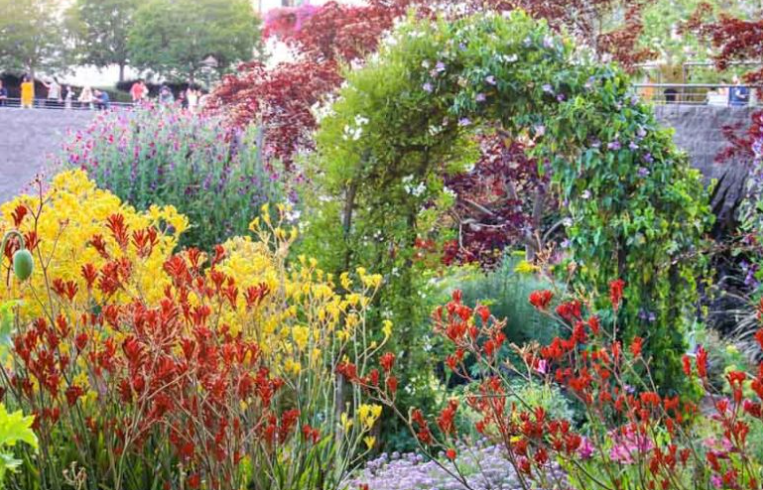
Drought tolerant plants survive dry spells through a handful of well-documented adaptations, including deep roots that reach water far below the surface, small, waxy, or hairy leaves that lose less moisture to the wind, silvery foliage that reflects heat, and fleshy tissue that stores water for later. Australia is the ideal testing ground for these traits, since more than two-thirds of the continent is classified as arid or semi-arid, making it the driest inhabited continent on Earth.
Gardens are a surprisingly large part of the water equation. The Australian Government’s YourHome guide notes that around 40 percent of household water is typically used outdoors, and Australian Bureau of Statistics figures from 2000-01 put the national average at 44 percent, with households in Queensland, South Australia, Western Australia, and the Australian Capital Territory using more than half of their water outside. A single garden sprinkler can use roughly 1,000 litres per hour, which is why plant choice makes such a large difference to a household’s total water use.
The Millennium Drought, which scorched much of southern Australia from 1996 to 2010, showed just how quickly water habits can change when supply gets tight. In Perth, average daily water use per household fell from 317 litres in 2000-01 to 279 litres in 2003-04 as restrictions took hold, and that period pushed many gardeners toward native and Mediterranean-climate plants that could cope with far less irrigation.
Drought tolerant does not mean no water at all, though. Almost every plant on this list needs regular watering through its first summer or two while its roots establish, and most also need free-draining soil and a layer of mulch to perform well. The Australian Government’s YourHome outdoor water use guide explains how to group plants by water need and set up a water-efficient garden. What follows covers 35 drought tolerant plants for Australia.
Kangaroo Paw
Kangaroo paw is native to the south-west of Western Australia, where the red and green kangaroo paw is the state’s floral emblem. Its furry, tubular flowers sit on tall stalks above strappy leaves and are a favourite of nectar-feeding honeyeaters.
It thrives in full sun and sandy, well-drained soil, and it dislikes wet feet and humid summers. Cutting the spent flower stalks back to the base after flowering keeps the clump tidy and encourages a fresh flush of growth.
Grevillea
Grevillea is a huge Australian genus, with species found in almost every part of the continent and a wide range of sizes, from ground-hugging mats to small trees. Its spidery, nectar-rich flowers attract honeyeaters and other birds, and many hybrids flower for most of the year.
It thrives in full sun and well-drained soil once established. Some species are sensitive to high phosphorus, so a native-plant fertiliser or no fertiliser at all is the safest choice.
Bottlebrush
Bottlebrush is native to eastern Australia, and its brush-like red flower spikes are among the most recognisable native blooms in suburban streets. The flowers are rich in nectar and draw lorikeets, honeyeaters, and a steady stream of insects.
It tolerates dry spells well once established, although several species also handle wet soil, which makes it a flexible choice. A light prune straight after flowering keeps the shrub dense and encourages more flower spikes the following season.
Golden Wattle
Golden wattle is Australia’s national floral emblem, and Wattle Day is celebrated every 1 September. Its fluffy golden flower balls appear in late winter and early spring, often when little else is blooming.
It thrives in full sun and a wide range of soils, and it copes with long dry periods once its roots are established. It is a relatively short-lived tree, often declining after around 15 years, so it is worth planting a replacement before the original tires.
Old Man Saltbush
Old man saltbush is a hardy native shrub found across the arid and semi-arid inland, where it has long been valued as stock fodder in dry seasons. Its soft, silvery-grey leaves are rich in salt, and it is edible for people as well.
It tolerates drought, heat, and salty or alkaline soil that would stop most other plants. Clipping it into a hedge or leaving it to spread as a rounded shrub both work, and regular trimming keeps it dense.
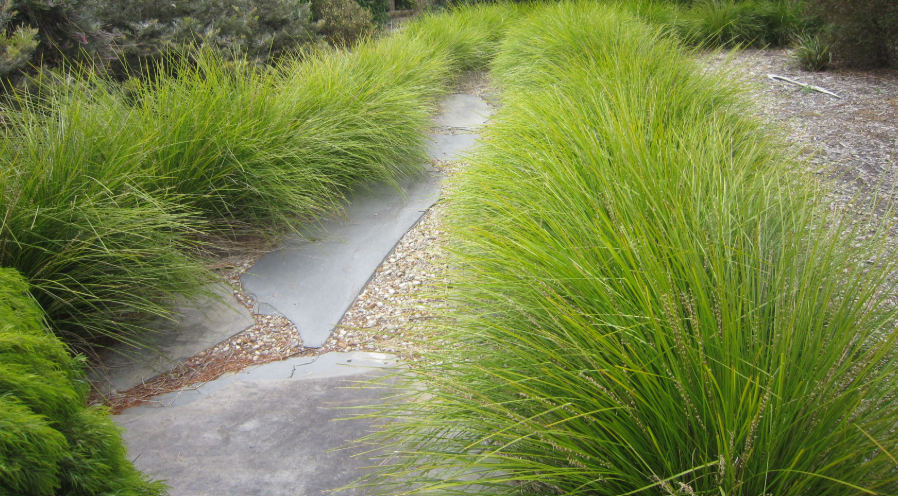
Lomandra
Lomandra, also called mat rush, is a tough, clumping native found in nearly every Australian state. Its long, strappy leaves have been used by Aboriginal peoples for weaving baskets and mats, and it is now one of the most widely planted native landscaping plants in the country.
It tolerates drought, poor soil, and light foot traffic, and it copes with both full sun and shade. Cutting the whole clump back hard every few years refreshes tired foliage and makes room for new growth.
Kangaroo Grass
Kangaroo grass is a native perennial tussock grass that grows across most of the continent and was an important seed crop for Aboriginal peoples in many regions. In summer it produces distinctive reddish-brown seed heads that shimmer in the wind.
It thrives in full sun and tolerates poor soils and extended dry periods once established. Cutting it back in late winter clears the old growth and lets fresh green shoots emerge.
Correa
Correa is a group of native shrubs from southern Australia, and their bell-shaped flowers, often in red, pink, green, or cream, appear through autumn and winter. That off-season flowering is one reason honeyeaters love them.
Unlike many drought tolerant plants, correa handles dry shade well, which makes it a valuable option under trees. It prefers reasonably good drainage, and a mulch layer helps keep its roots cool through summer.
Emu Bush
Emu bush belongs to a large group of plants found almost entirely in Australia, with well over 200 species, most of them in the arid and semi-arid regions. Their tubular flowers come in a wide range of colours and are popular with birds.
It thrives in full sun and sharply drained soil, and it tolerates heat, frost, and long dry spells. Overwatering is the most common cause of failure, so it is best planted in a raised bed or on a slope in heavier soils.
Silver Cassia
Silver cassia is a native shrub from the arid inland, prized for its soft, silvery foliage and masses of yellow flowers in late winter and spring. Its silver leaves reflect heat and reduce water loss, which is exactly why it thrives in dry country.
It thrives in full sun and poor, well-drained soil, tolerating drought and frost. It is relatively short-lived, often lasting around 10 years, so light pruning after flowering helps keep it compact and extends its life.
Sturt’s Desert Pea
Sturt’s desert pea is the floral emblem of South Australia, a spectacular arid-zone groundcover with claw-shaped red flowers marked by a glossy black centre. It grows naturally across the dry inland and flowers after rain.
It is notoriously difficult in home gardens, since it hates root disturbance and humid conditions. Gardeners often buy plants grafted onto a hardier rootstock and grow them in pots or raised beds with very sharp drainage.
Banksia
Banksia is a distinctly Australian genus with around 170 species, most of them found in the south-west of Western Australia. Its cylindrical flower spikes are followed by woody seed cones, and the nectar-rich blooms are a magnet for honeyeaters and native bees.
It thrives in full sun and low-nutrient, well-drained soil, and many species are sensitive to phosphorus fertilisers. Good air circulation and free drainage are more important than extra water once plants are established.
Hakea
Hakea is an Australian genus of tough shrubs and small trees, many with stiff, prickly foliage that offers small birds shelter from predators. Its clusters of small flowers can be white, cream, pink, or red, depending on the species.
It tolerates poor soils, wind, and long dry spells, so it is often used for windbreaks and screening. The spiny leaves can be unpleasant to handle, so it is best planted away from paths and play areas.
Westringia
Westringia, also called coastal rosemary, is a compact native shrub from the southeastern coast, valued for its grey-green leaves and small white or mauve flowers. It is one of the most popular native hedging plants in Australia.
It tolerates salt spray, wind, poor soil, and dry conditions, and it can be clipped into neat shapes. Regular light trimming keeps it dense, and it flowers on and off for much of the year.
Pigface
Pigface is a fleshy, ground-hugging succulent that grows on Australian coasts and produces bright pink or yellow daisy-like flowers, followed by edible fruits that Aboriginal peoples have long eaten. Its trailing stems root as they spread, making it useful for stabilising sandy soil.
It thrives in full sun and sandy, free-draining soil, and it tolerates drought, salt, and wind. It is worth choosing the native species rather than the South African relative, which has become an environmental weed in parts of the country.
Paper Daisy
Paper daisy, also called everlasting daisy, is a group of native daisies whose papery flower bracts keep their colour long after cutting. They are found across the continent, and mass displays of everlasting daisies after rain are a famous wildflower spectacle in Western Australia.
It thrives in full sun and well-drained soil, and it copes with dry conditions once established. Cutting the flowers when they are just fully open gives the best results for drying.
Native Bluebell
Native bluebell is a widespread Australian wildflower that produces delicate blue, star-shaped flowers on slender stems. It grows naturally in grasslands, woodlands, and rocky outcrops across much of the country.
It thrives in full sun to light shade, and tolerates poor soil and dry conditions once established. It looks best in drifts through a native meadow or among tussock grasses, where it can self-seed gently.
Blue Flax Lily
Blue flax lily is a tough native perennial with arching, strappy leaves and starry blue flowers in spring, followed by vivid blue berries. It grows naturally across most of eastern and southern Australia.
It tolerates dry shade better than most drought tolerant plants, which makes it useful under established trees. Trimming off tired leaves in late winter tidies the clump, and the plant recovers quickly.
Grass Tree
Grass tree is an iconic Australian plant with a thick trunk, a skirt of grassy leaves, and a tall flower spike. It grows extremely slowly, only a few centimetres a year, and individuals can live for many hundreds of years.
It thrives in full sun and sandy, well-drained soil. It is protected in several states, so it is important to buy nursery-grown plants rather than wild-harvested specimens.
Mulla Mulla
Mulla mulla is a group of native plants from the arid inland, known for their soft, feathery pink or purple flower spikes. They flower after rain in the wild, and the blooms are a favourite of native bees.
It thrives in full sun and very well-drained soil, and it can rot in humid or wet conditions. Growing it in a raised bed or pot with a gritty mix gives it the best chance of success.
Cushion Bush
Cushion bush is a native shrub from the southern Australian coast, prized for its soft, silvery-white foliage that forms a rounded mound. Its tiny yellow flowers are inconspicuous, so it is grown mainly as a foliage plant.
It thrives in full sun and sandy, well-drained soil, and it is highly tolerant of salt spray and wind. Light trimming keeps it compact, but it does not respond well to being cut back into old wood.
Ghost Gum
Ghost gum is a striking eucalypt from central Australia, recognisable by its smooth, chalky white bark and often twisting trunk. It was famously painted by Albert Namatjira and remains an icon of the outback.
It tolerates extreme heat, drought, and poor soils, but it needs plenty of space and sunshine. It is not suited to small gardens, and it dislikes heavy, poorly drained soils.
Mallee
Mallee is a term for multi-stemmed eucalypts that grow from an underground lignotuber, which stores energy and lets the plant resprout after fire. The mallee country of southern Australia is named after this growth habit.
It tolerates drought, poor soil, and heat, and many mallee species have attractive bark and flowers. Because they stay smaller than most gum trees, they suit medium-sized gardens.
Desert Oak
Desert oak is a distinctive tree from central Australia, with drooping, needle-like foliage that looks like a pine. Young trees develop deep roots that reach water far below the surface, which is the secret to their survival in arid sand plains.
It grows slowly and needs full sun and sandy, well-drained soil. It is best suited to warm inland gardens, and it resents being moved once planted.
Kurrajong
Kurrajong is a tough native tree from eastern Australia, and its leaves have been used as emergency livestock fodder in droughts. Aboriginal peoples have also roasted its seeds and eaten them.
It thrives in full sun and tolerates poor soil, heat, and dry conditions once established. The seed pods contain fine hairs that irritate the skin, so it is worth wearing gloves when handling them.
Queensland Bottle Tree
Queensland bottle tree is a striking native with a swollen, bottle-shaped trunk that stores water, letting it survive long dry seasons. It is native to central Queensland, where Aboriginal peoples and early settlers used the stored water in times of need.
It grows slowly and thrives in full sun and free-draining soil. It is very sensitive to waterlogging, so it should never be planted in heavy clay or low-lying spots.
Thryptomene
Thryptomene is a group of native shrubs from Western Australia, with tiny pink or white flowers that cover the arching branches in late winter and spring. They are a favourite of florists as well as bees.
It thrives in full sun and sandy, well-drained soil, and it tolerates dry conditions. Light pruning after flowering keeps the plant bushy, but it should not be cut back into old wood.
Geraldton Wax
Geraldton wax is a native shrub from Western Australia, prized for its waxy pink, white, or purple flowers and its aromatic foliage. It is widely grown commercially as a cut flower.
It thrives in full sun and sharply drained, sandy soil, and it tolerates drought once established. Regular light tip pruning stops it becoming leggy, and good air circulation helps prevent fungal problems.
Fan Flower
Fan flower is a widespread native groundcover that produces masses of fan-shaped purple, blue, or white flowers. It is found across most of Australia and has become popular as a trailing plant for baskets and rockeries.
It tolerates heat, dry spells, and poor soil, and it flowers for months. Trimming it back lightly after each flush of flowers keeps it neat and encourages a fresh flush.
Running Postman
Running postman is a native creeping pea from southern Australia, valued for its bright red flowers that appear in late winter and spring. It scrambles over the ground or climbs low structures, making it a useful groundcover.
It thrives in full sun to part shade and tolerates drought once established. It needs well-drained soil and does best when it has room to spread out.
Spinifex
Spinifex is a spiky hummock grass that dominates vast stretches of the arid interior, forming dense, prickly mounds that protect small animals and reduce water loss. Aboriginal peoples have traditionally used its resin as a strong natural adhesive.
It thrives in full sun and sandy, well-drained soil. It is rarely used in ordinary gardens because of its sharp foliage, but it is a good choice for arid landscape plantings and rock gardens.
Quandong
Quandong is a native tree from the arid inland, grown for its bright red edible fruit, which is rich in vitamin C and has been eaten by Aboriginal peoples for thousands of years. It tolerates drought remarkably well.
It is a partial root parasite, which means it needs a host plant nearby, such as a wattle or saltbush, to grow well. It thrives in full sun and sandy, well-drained soil.
Bulbine Lily
Bulbine lily is a native perennial with bright yellow, star-like flowers held above grassy leaves, found across much of southern and eastern Australia. Its tubers were traditionally eaten by Aboriginal peoples.
It tolerates poor soils and dry conditions, and it flowers from spring through summer. It looks best in a drift, and it dies back in hot, dry weather before resprouting after rain.
Lavender
Lavender is not native to Australia, but it is widely grown here and is one of the best-known Mediterranean drought tolerant plants. Its fragrant purple flower spikes attract bees and are used for cut flowers and oils.
It thrives in full sun and sharply drained soil, and it dislikes humid summers, especially along the tropical and subtropical coasts. Pruning lightly after flowering keeps the plant compact and prevents it becoming woody.
Olive Tree
Olive tree is another Mediterranean plant that grows well across much of southern Australia, thanks to its deep roots and tough, waxy leaves. It is grown here for both oil and table olives, and as an ornamental tree.
It tolerates drought and poor soil, but feral olives have become an environmental weed in parts of South Australia and Victoria. It is worth choosing a named fruiting variety and keeping fallen fruit picked up.
Key Takeaways
- Drought-tolerant plants can survive with less water once established, making them useful for Australia’s dry and water-limited regions.
- Australia has many native drought-resistant plants, including Grevillea, Callistemon, Kangaroo Paw, Lomandra, and Westringia.
- The best plant choices depend on local conditions, including climate, soil type, rainfall, frost, and exposure to heat and wind.
- Native Australian plants are often well adapted to local conditions and can provide food and shelter for native birds, bees, butterflies, and other wildlife.
- Drought tolerance does not mean plants require no water; newly planted specimens generally need regular watering until their roots become established.
- Using mulch, well-drained soil, and efficient irrigation can help drought-tolerant plants establish and reduce water loss.
- Many drought-tolerant Australian plants can be used for landscaping, borders, hedges, ground cover, containers, and wildlife gardens.