Beefsteak Tomato: What the Name Really Means and How to Grow One
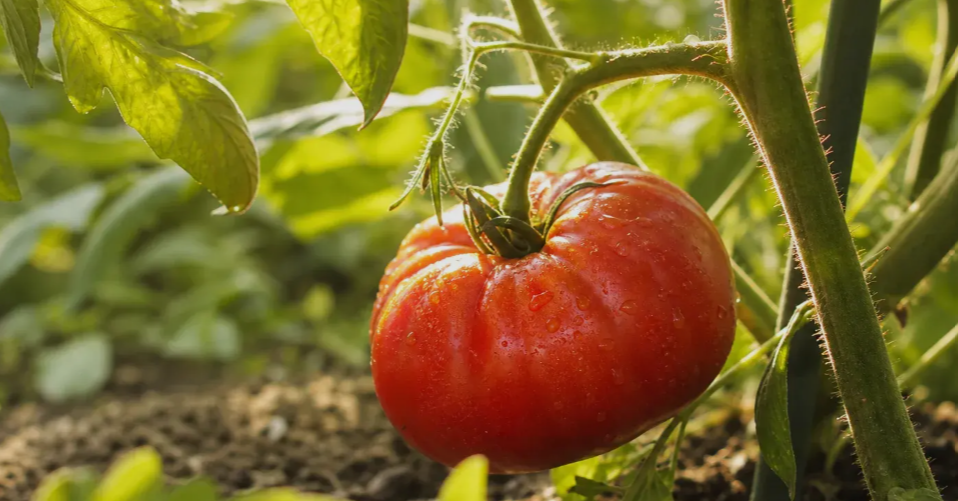
Beefsteak is the name gardeners give to the biggest slicing tomatoes, the thick-fleshed, sandwich-covering fruits that can weigh a pound or more. It describes a type rather than a single variety, and the type includes everything from hybrids like Big Beef to heirlooms like Brandywine and Cherokee Purple. Because the label covers so much ground, knowing what beefsteaks have in common helps you choose one and grow it well.
Their shared traits cut both ways. The same size and meatiness that make beefsteaks prized at the table also make them slower to ripen, heavier on the vine, and more prone to odd shapes and cracking than smaller tomatoes. University extension programs have measured many of those trade-offs, and the numbers explain why beefsteaks reward gardeners who plan for them.
This guide covers what counts as a beefsteak and how sizes and ripening times compare. It then looks at the main types and the problems that come with big fruit. It closes with advice on supporting and watering the plants and on using the harvest.
What Is a Beefsteak?
University of California Cooperative Extension describes beefsteaks as generally large to very large tomatoes, usually somewhat irregular in shape, that often take longer to ripen. That definition fits most of the tomatoes gardeners call beefsteaks, from the smooth globes of modern hybrids to the lumpy, ribbed fruit of old heirlooms. Tomato Dirt adds that most beefsteak tomatoes are indeterminate, meaning the vines keep growing and setting fruit all season.
The word also names a specific cultivar. Texas A&M AgriLife lists a variety simply called Beefsteak, an indeterminate type with a long 95 days to maturity. Epic Gardening reports that many beefsteak varieties have been bred using it as a parent. Epic Gardening reports that the name first appeared in an 1869 seed catalog that compared the thick slices of a specialty tomato to a steak, though that’s a hobby-site claim worth treating with caution.
How Big Is a Beefsteak?
Size is the defining trait, and growers have formal categories for it. A Cornell Cooperative Extension trial of 16 beefsteak varieties at a New York farm graded fruit as extra-large above 12 ounces, large at 10 to 12 ounces, medium at 8 to 10 ounces, and small at 6 to 8 ounces. In that system, even a 10-ounce slicer counts as large, and a true heavyweight is anything above 12 ounces.
Gardening sources describe a wide range. Tomato Dirt lists typical beefsteaks at 10 to 16 ounces and says some can weigh up to 4 pounds. The University of California Master Gardeners of Contra Costa County list individual varieties at figures like 8 ounces for Black Krim, 12 ounces for Cherokee Purple, 16 to 24 ounces for Brandywine Red, and up to 24 ounces for Big Rainbow.
A Look at Real Varieties
The Contra Costa County Master Gardeners’ 2023 beefsteak list gives a useful snapshot of how much the type varies. Big Beef is a red hybrid at 10 to 16 ounces and 73 days, Brandywine Pink is a 16-ounce open-pollinated heirloom at 90 days, and Brandywine Red is listed at 16 to 24 ounces and 75 days. Caspian Pink runs 16 ounces or more in 80 days, and Ananas Noire reaches 16 to 24 ounces in 80 days.
The same list includes smaller, faster options. Chef’s Choice Pink is a hybrid at 12 to 14 ounces in 75 days, Chef’s Choice Orange is 9 to 12 ounces in 75 days, and Bush Champion II is a determinate hybrid of 8 to 12 ounces that ripens in just 65 days. Those numbers show that beefsteak doesn’t have to mean slow, though the biggest fruit usually take the longest.
Days to Maturity
Beefsteaks tend to be late or midseason tomatoes. The Contra Costa list gives a range of 65 to 90 days across its entries, with most of the large heirlooms landing between 75 and 90. Colorado State University Extension counts under 69 days as early, 70 to 80 as midseason, and more than 81 as late.
By that scale, Big Beef at 73 days is midseason, Brandywine Pink at 90 days is late, and Bush Champion II at 65 days is early. For gardeners with short summers, the practical advice is to pick beefsteaks from the shorter end of the range or start plants early and protect them from cool weather. A long wait for a huge tomato isn’t worth it if frost arrives first.
Colors and Types
Beefsteaks come in nearly every color. The Contra Costa list includes pink, red, orange, yellow-red bicolor, deep red-green, and multicolor types, along with the dark purple-brown of Cherokee Purple and Black Krim. Rutgers’ 2025 variety list groups its beefsteaks and extra-large types by color too, with red, pink, yellow, orange, and bicolor fruit on plants from 3 to 8 feet tall.
Hybrid and heirloom beefsteaks differ in more than genetics. Hybrids like Big Beef and Chef’s Choice are bred for uniform fruit and disease resistance, while open-pollinated heirlooms like Brandywine and Cherokee Purple are prized for flavor but tend to be less uniform. The choice usually comes down to whether you want a dependable crop or a distinctive one.
Determinate Beefsteaks
Most beefsteaks are tall indeterminate vines, but a few are compact determinate types. Bush Champion II, a determinate hybrid at 65 days, is the Contra Costa list’s example, and Rutgers’ 2025 list includes an early dwarf beefsteak. Determinate plants stay shorter and ripen most of their fruit at once.
North Carolina State’s extension leaflet puts determinate tomatoes at 1 to 5 feet and indeterminate ones at 5 to 8 feet. A determinate beefsteak can be a good choice for a small garden or large container, though the total yield is usually lower than from a vining plant. It also means all your giant fruit ripens within a short window.
Why Beefsteaks Crack and Deform
Large fruit comes with shape problems. Catfacing, the puckered, scarred, lumpy look at the blossom end, is most common on large-fruited varieties. University of Maryland Extension says tomato flowers don’t develop or pollinate properly when temperatures fall below 52 to 54 degrees Fahrenheit, and that the rounder and larger the fruit, the greater the chance of catfacing.
Washington State University’s HortSense fact sheet agrees that large-fruited varieties seem particularly susceptible, and notes that catfacing may be limited to early fruit developing during cool periods, with fruit set later in the season coming out normal. University of Maryland adds that heavy pruning of indeterminate varieties may increase catfacing, and that older cultivars appear more susceptible. A University of Wisconsin publication says catfacing appears most frequently on older heirloom varieties.
Cracking and Blossom-End Rot
Big tomatoes also split and rot. Cracking is associated with large swings in soil moisture, and University of Wisconsin Extension recommends watering regularly and mulching 2 to 3 inches deep to even them out. The same source says blossom-end rot results from calcium not reaching the fruit, and that consistent watering and moderate nitrogen are the best prevention.
University of Florida extension notes that heirloom varieties in general aren’t disease resistant, have a shorter shelf life, and are highly susceptible to bruising. A Missouri State presentation lists Brandywine as an example with lower yields than hybrids and a lack of disease resistance. If those problems worry you, a modern hybrid beefsteak like Big Beef is a safer starting point.
Growing Beefsteaks
Plant beefsteaks in full sun in rich, well-drained soil. Give each plant plenty of room, since the vines are large, and set a strong cage or stake at planting time so you don’t damage roots later. The University of Georgia notes that staking gives extra security against wind and heavy fruit loads.
Heat matters even for tomatoes that like warm weather. The University of Maryland reports that pollination and fruit formation can be disrupted when daytime temperatures exceed 90 degrees Fahrenheit and nights stay above 70, and shade cloth blocking about 30 percent of sunlight can help. Cornell describes pruning suckers as a season-long chore for indeterminate tomatoes, and Arizona’s extension service says unchecked growth shades the fruit and reduces air circulation.
Harvesting and Ripening
Beefsteaks are heavy, so handle them gently and support the fruit as it ripens. Pick when the fruit has developed full color for its type, since a pink beefsteak and a red one ripen to very different shades. Tomato Dirt notes that beefsteaks are large and heavy, often weighing a pound or more, so strong support matters as the fruit ripens.
Because large fruit takes longer to ripen, the first beefsteaks often arrive weeks after the first cherry tomatoes. Many gardeners plant an early variety alongside a beefsteak to bridge the gap. Keeping notes on the first ripe fruit each year helps you time future plantings.
Cooking With Beefsteaks
Beefsteaks are slicing tomatoes first. Their high flesh-to-seed ratio makes thick slices that hold together on sandwiches and burgers, and Tomato Dirt notes that the same trait makes thick sauces with minimal cooking time. Tomato Dirt lists varieties such as Brandywine, Big Beef, Cherokee Purple, Mortgage Lifter, and Black Krim as popular for different uses.
For fresh eating, let the fruit ripen fully and slice it just before serving. For sauce, a few large fruits go a long way. Plantix notes that catfaced fruit isn’t marketable but still retains its taste and can be eaten safely, so trim off the damaged area and use the rest.
Choosing a Beefsteak
Start with your season length and your tolerance for risk. If summers are short or cool, choose an early hybrid like Bush Champion II or a midseason one like Big Beef. If you have a long, warm season and want maximum flavor, try a heirloom like Brandywine, Cherokee Purple, or Black Krim.
Many gardeners plant several types and compare them. A hybrid beefsteak provides a reliable base crop, and one or two heirlooms add variety and flavor to the table. Keeping notes on days to ripe fruit, fruit size, and problems each year helps you refine your choices.
The Bottom Line
Beefsteak tomatoes earn their reputation with size, thick flesh, and slicing quality, and they ask for more time, support, and steady care in return. Their common problems, catfacing, cracking, and blossom-end rot, are well understood and mostly manageable. Pick the variety that fits your season, water evenly, support the vines, and you’ll have tomatoes big enough to cover the bread.