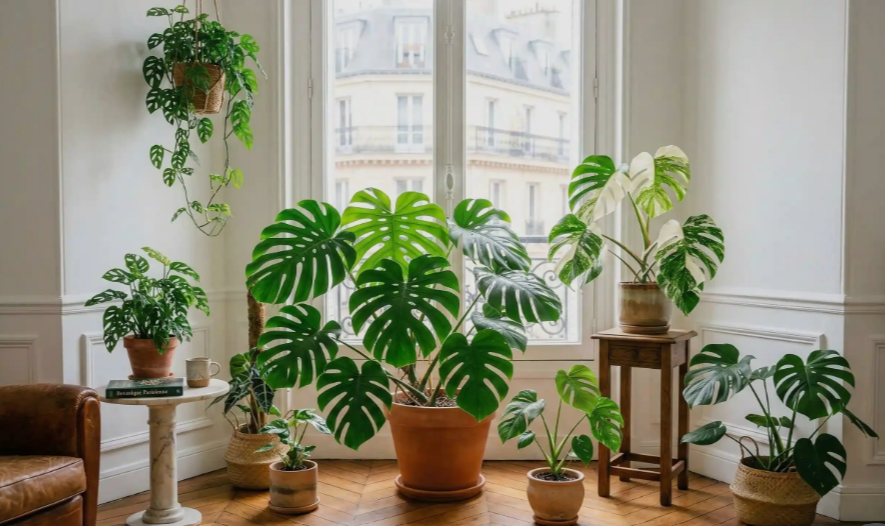
Monstera Adansonii is a fast-growing tropical vine with heart-shaped leaves full of natural oval holes, and it has become one of the best-loved foliage houseplants in North American homes. Gardeners know it by many friendly names, including Swiss cheese vine, five holes plant, Adanson’s monstera and monkey mask. It comes from the rainforests of Central and South America and has been a popular indoor plant for a long time. In the wild it grows as a climber, gripping tree trunks with its aerial roots and working its way up toward the filtered light under the forest canopy. The species is named after Michel Adanson, an 18th-century French naturalist whose plant studies shaped early botany.
The plant belongs to the arum family, the same group that gives us philodendrons, pothos and peace lilies. There are more than 50 monstera species, plus many cultivars. Within that group, Monstera Adansonii is the smaller, more delicate cousin of the big split-leaf Swiss cheese plant. The two are often mixed up, but the larger plant has bigger leaves, while Monstera Adansonii stays smaller and grows quickly. Its foliage is thinner and more papery, and the holes, called fenestrations, sit inside the leaf instead of splitting out to the edges.
Indoors, Monstera Adansonii is easy to manage. According to Penn State Extension, it can eventually reach 3 to 8 feet tall and 1 to 3 feet wide as a houseplant, and its leaves are much smaller than the larger monstera’s, with distinctive oval holes on a denser, quite vigorous plant. Most leaves on a potted plant are about 4 to 10 inches long. Because the vines can trail from a hanging basket or climb a pole, the same plant can fill a high shelf, soften a bare corner or turn into a green column next to a window.
Its popularity has grown sharply in recent years. The National Garden Bureau named 2025 the “Year of the Monstera.” Part of the appeal is that its striking, lacy look comes with a forgiving care routine. Once you understand its rainforest origins (bright filtered light, steady moisture, warmth and humidity), keeping it healthy is simple. The 16 growing points below cover everything from picking a plant to fixing the most common problems.
1. Choose a Healthy Plant
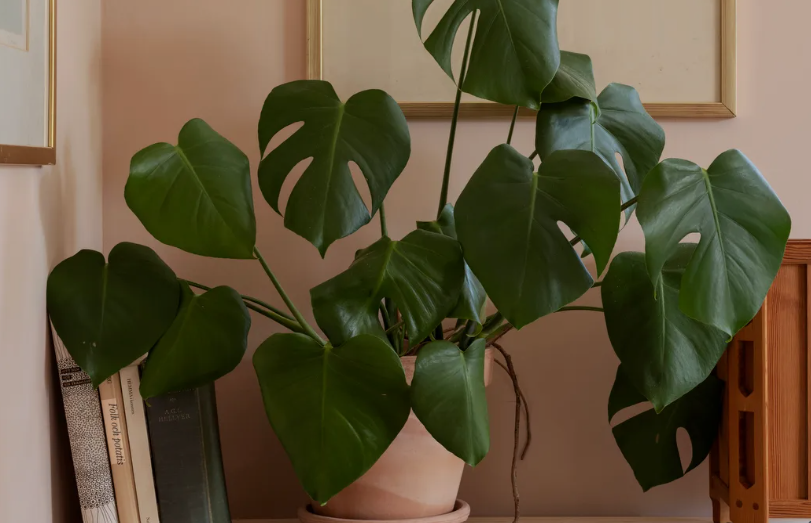
Start with a plant that has firm green stems, several leaves that already show holes, and no yellowing, sticky residue or webbing under the leaves. Young plants often have small, solid leaves, and that is normal, because fenestrations develop as the plant matures and gets enough light. Tip the plant gently out of its nursery pot if the seller allows it, and look for white or light tan roots rather than dark, mushy ones. A plant with 3 or 4 vines in one pot will look fuller much sooner than a single trailing stem. Keep any new plant away from your other houseplants for about 2 weeks so hidden pests can’t spread.
2. Provide Bright, Indirect Light
Light matters more than anything else for Monstera Adansonii, because it controls both growth speed and how many holes each leaf forms. An east-facing window, or a spot 3 to 5 feet back from a south or west window, gives the bright filtered light it gets under a rainforest canopy. The University of Wisconsin–Madison Extension notes that monstera can grow under fluorescent light but won’t form its leaf perforations when the light is too weak. Several hours of harsh afternoon sun can scorch the thin leaves and leave crispy brown patches. In dim homes, a full-spectrum LED grow light run for 10 to 12 hours a day works very well.
3. Keep Temperatures Warm and Steady
This tropical vine grows best between 65 and 80°F, which matches the comfortable range of most heated homes. Growth slows a lot below 60°F, and long exposure under 50°F can cause leaf damage or kill the plant outright. Keep it away from cold drafts by exterior doors, single-pane windows in winter, and air-conditioning vents that blow directly on the foliage. Heating vents cause problems too, because the hot, dry air quickly dries out the edges of the leaves. Gardeners in frost-free parts of southern Florida, southern Texas and Hawaii can grow it outdoors in shade year-round, but most of North America should keep it inside from fall through late spring.
4. Raise the Humidity
In its native forests, Monstera Adansonii lives in air that often stays above 70% relative humidity. It adapts to typical household levels of 40 to 60%, but it looks its best when the air isn’t bone dry. Grouping several plants together creates a small humid pocket, and a pebble tray filled with water under the pot adds a little moisture as it evaporates. A small cool-mist humidifier set near the plant is the most reliable fix, especially in winter when furnaces drop indoor humidity below 30%. Bathrooms and kitchens with a bright window are also good spots because they naturally hold more moisture.
5. Pick the Right Pot
Always use a container with at least one drainage hole, because standing water at the bottom of a pot is the fastest route to root rot. Choose a pot only 1 to 2 inches wider than the root ball. An oversized pot holds extra wet soil that the roots can’t use. Plastic and glazed ceramic pots hold moisture longer, which suits growers who tend to underwater. Unglazed terracotta breathes and dries faster, which helps if you water often. For a trailing display, a hanging basket lets the vines spill over the sides and hang 2 to 3 feet or more.
6. Use a Chunky, Well-Draining Soil Mix
Monstera Adansonii is a climbing plant whose roots are used to loose, airy material rather than heavy, compacted ground. A good mix is about 1 part quality indoor potting soil, 1 part orchid bark and 1 part perlite, with a handful of coco coir or sphagnum moss added if you like. This holds enough moisture for steady growth while leaving air pockets so the roots can breathe. Slightly acidic to neutral soil, around pH 5.5 to 7.0, suits it well. Avoid dense garden soil and moisture-control mixes, which stay soggy for too long.
7. Water When the Top Layer Dries
The rule is simple: water thoroughly, then wait until the top 1 to 2 inches of soil feel dry before watering again. In spring and summer that usually works out to about once a week, while in winter it may be every 10 to 14 days because growth slows and the soil dries more slowly. Pour water slowly until it runs out the drainage hole, then empty the saucer within 15 to 20 minutes so the roots don’t sit in water. Drooping, curling leaves with bone-dry soil mean the plant is thirsty. Yellowing lower leaves with damp soil usually point to overwatering. Room-temperature water is better than cold tap water, which can shock the roots.
8. Feed During the Growing Season
A fast-growing vine needs a steady supply of nutrients to keep making new leaves. Penn State Extension recommends feeding monstera every 2 weeks during the growing season and once a month through winter with a balanced houseplant fertilizer. Dilute a liquid fertilizer such as a 10-10-10 or 20-20-20 formula to half the label strength to avoid burning the thin roots. Water the plant first, then apply fertilizer to moist soil rather than dry. If you see a white crust on the soil surface or brown leaf tips, flush the pot with plain water to wash out built-up salts.
9. Give It Something to Climb
Because it’s a natural climber, Monstera Adansonii often grows larger leaves with more holes when it can climb. A moss pole, a coir-wrapped stake or a small wooden trellis pushed into the pot at planting time gives the aerial roots something to grip. Loosely tie the vines to the support with soft plant ties or garden velcro every 6 to 8 inches, and the aerial roots will gradually attach on their own. Misting a moss pole now and then encourages the roots to grow into it. If you would rather have a cascading look, let the vines trail from a basket instead, though the leaves usually stay a little smaller.
10. Prune to Shape and Encourage Fullness
Regular pruning keeps the plant compact and pushes it to branch rather than grow 1 or 2 long, bare vines. Use clean, sharp scissors or pruners and cut just above a node, the small bump on the stem where a leaf and aerial root grow. New shoots usually appear from the node just below the cut within 3 to 6 weeks. Spring and early summer are the best times for heavy pruning because the plant recovers fastest. Remove any yellow, damaged or diseased leaves at the base of their stems whenever you spot them.
11. Propagate from Stem Cuttings
Monstera Adansonii is one of the easiest houseplants to multiply, and pruned vines can go straight into propagation. Each cutting should be 4 to 6 inches long with at least 1 node and 1 or 2 leaves, because roots only grow from the node. Place the cuttings in a jar of water with the nodes submerged, or press them into damp sphagnum moss or a light soil mix, then keep them in bright, indirect light. Change the water every 5 to 7 days. Roots usually appear in 2 to 4 weeks, and once they reach 2 to 3 inches long the cutting can be potted. Planting 3 to 5 rooted cuttings together in one pot quickly gives you a bushy new plant.
12. Repot Every 1 to 2 Years
A healthy Monstera Adansonii usually needs repotting every 12 to 24 months, ideally in spring. Signs it’s ready include roots circling the inside of the pot or poking out of the drainage hole, water running straight through, and growth slowing in the middle of summer. Move up only 1 pot size, loosen the outer roots gently, and set the plant at the same depth it grew before. Water well after repotting and keep the plant out of strong light for about a week while the roots settle. Skip fertilizing for 4 to 6 weeks, because the fresh mix already holds nutrients.
13. Keep the Leaves Clean
Dust builds up quickly on indoor foliage, and a dusty layer blocks some of the light the leaves need. Every 2 to 4 weeks, wipe both sides of each leaf gently with a soft, damp cloth, supporting the leaf with your other hand because the thin blades tear easily. A lukewarm shower every couple of months rinses the whole plant and knocks off any pests starting to build up. Avoid commercial leaf-shine products, which can clog the leaf pores and attract more dust over time. Cleaning time is also the best chance to check for early pest problems.
14. Watch for Common Pests
Spider mites, mealybugs, thrips and scale are the pests that most often attack Monstera Adansonii indoors. The NC State Extension Plant Toolbox lists fern scale as a common insect problem for this plant. That pest looks like tiny white or brown flecks stuck to the stems and leaf undersides. Fine webbing and speckled, dull leaves point to spider mites, which thrive in warm, dry air. Wipe off light infestations with a cloth dipped in soapy water, then treat the whole plant with insecticidal soap or neem oil every 7 days for at least 3 rounds. Raising the humidity also helps keep mites from coming back.
15. Fix Leaf Problems Early
Most leaf problems trace back to light, water or humidity, so the symptoms are useful clues. Yellow leaves with soggy soil point to overwatering or poor drainage, while brown, crispy edges usually mean dry air, underwatering or too much direct sun. New leaves with no holes, long gaps between leaves and pale, stretched vines almost always mean the plant needs more light. Black, soft stems near the soil line are a sign of root rot. In that case, cut away the damaged roots, repot the plant in fresh, dry mix, and take a few healthy cuttings as a backup. Losing 1 or 2 of the oldest leaves now and then is normal and nothing to worry about.
16. Place It Safely Around Pets and Children
Like other members of the arum family, Monstera Adansonii contains needle-shaped calcium oxalate crystals in its leaves and stems. A review by the University of Florida IFAS Extension names Adanson’s monstera as a common houseplant that is toxic to cats, dogs and humans. The crystals can pierce the lining of the mouth, causing burning and irritation, along with drooling, swelling and vomiting if any part is chewed. A hanging basket or high shelf keeps the trailing vines out of reach of curious pets and toddlers. Wear gloves when pruning if you have sensitive skin, and wash your hands afterward, since the sap can irritate.
Sources
Monstera as a Houseplant – Penn State Extension
Monstera – University of Wisconsin–Madison Extension
Monstera adansonii – NC State Extension Plant Toolbox
Common Poisonous Houseplant Species in Florida – UF/IFAS Extension
Holey Leaves – UF/IFAS Charlotte County Extension