Air purifying plants became popular after a 1989 NASA study tested common houseplants in sealed chambers. Scientists found that the plants, their roots and the microbes in their potting soil absorbed indoor pollutants such as benzene, formaldehyde and trichloroethylene. NASA’s researchers later suggested one healthy plant in a 6- to 8-inch pot for every 100 square feet of living space.
The real-world picture is more modest. In 2019, Drexel University researchers reviewed 196 experiments from 12 studies and found that normal ventilation clears indoor pollutants far faster than plants can. They calculated that it would take 100 to 1,000 plants per square meter of floor space to match a building’s air system or a couple of open windows.
That does not make houseplants useless. Studies at the University of Technology Sydney and elsewhere have linked indoor plants to lower stress, better mood and higher job satisfaction. Living walls with fans that pull air through the roots, sometimes called biofilters, may also clean air more effectively than single pots.
The best approach is to treat these plants as healthy, attractive companions that may help a little, alongside good ventilation and fewer chemical sources. The 50 plants below are the ones most often named in air-quality studies and recommendations, and each entry notes where the plant is native.
1. Snake Plant
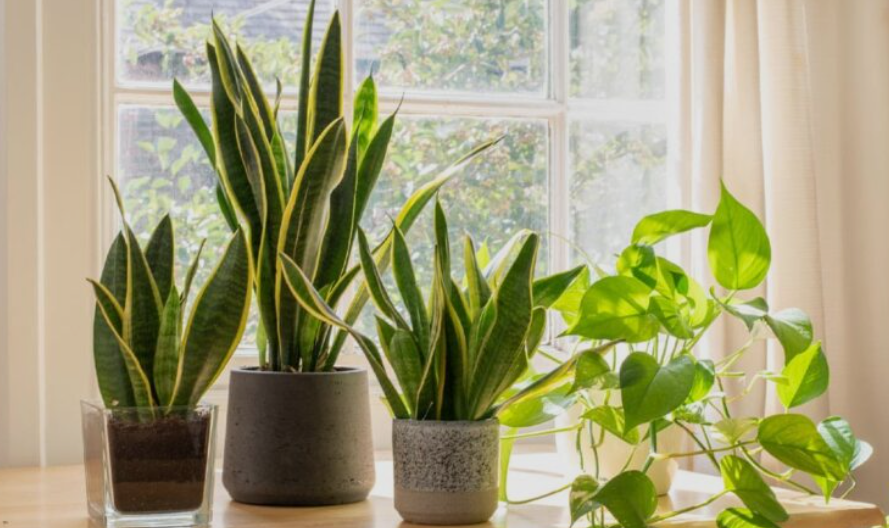
The snake plant is the most famous low-maintenance air purifying plant. Its leaves are stiff, upright and sword-shaped. They are dark green with lighter gray-green bands. Many forms have bright yellow edges. The plant grows 1 to 4 feet tall. It spreads slowly by underground stems.
It was one of the plants tested in NASA’s 1989 study, under the name mother-in-law’s tongue. It opens its leaf pores mainly at night to save water. It tolerates low light, dry air and weeks without water. Overwatering is the most common way to kill it. It is mildly toxic to pets if chewed. It is native to tropical West Africa, from Nigeria to the Congo.
2. Peace Lily
The peace lily is one of the few air purifying plants that flowers readily indoors. Its leaves are glossy, dark green and lance-shaped. Its flowers are white, sail-like hoods around a cream spike. The plant grows 1 to 3 feet tall. It blooms several times a year in good light. It droops visibly when it needs water.
It was among the plants tested in NASA’s study and performed well. Researchers at the University of Technology Sydney also found that it reduced indoor VOC levels in office trials. It tolerates low light better than most flowering plants. Its leaves contain crystals that irritate the mouth of pets and children. It prefers evenly moist soil. It is native to the tropical rainforests of Central and South America.
3. Spider Plant
The spider plant is one of the easiest houseplants to grow. Its leaves are long, narrow and arching. They are usually green with white stripes. Mature plants send out long stems carrying small white flowers. Baby plantlets form at the ends of those stems. The plant looks best in a hanging basket.
The University of Connecticut lists it among houseplants that improve indoor air quality. The same publication notes that NASA found the roots and potting soil also help remove pollutants. It is safe for cats and dogs. It tolerates a wide range of light and temperatures. The plantlets root easily in water or soil. It is native to tropical and southern Africa.
4. Golden Pothos
Golden pothos is a fast-growing trailing vine. Its leaves are heart-shaped and glossy green. They are splashed with yellow or cream. The vines can grow many feet long indoors. They trail from shelves or climb a support. It is also called devil’s ivy.
It was tested in NASA’s study and is often recommended for beginners. It tolerates low light, though its variegation fades in deep shade. It roots easily from stem cuttings in water. It is toxic to pets if chewed. In tropical climates it escapes gardens and climbs trees. It is native to Mo’orea in French Polynesia.
5. English Ivy
English ivy is a classic trailing and climbing vine. Its leaves are dark green, glossy and lobed. Many cultivars have white, cream or gold variegation. It climbs by small aerial roots. Indoors it is usually grown in hanging baskets. It can also be trained on small topiary frames.
It was tested in NASA’s study and has performed well in several laboratory trials. It prefers cool rooms and bright, indirect light. Warm, dry air invites spider mites. Its leaves and berries are toxic if eaten. Outdoors it is invasive in parts of North America. It is native to Europe, western Asia and North Africa.
6. Boston Fern
The Boston fern is a lush, feathery fern. Its fronds are long, arching and bright green. They are divided into many small leaflets. The plant forms a full, rounded mound. It grows 2 to 3 feet tall and wide. It looks best in a hanging basket or on a stand.
The University of Connecticut lists it among plants that improve indoor air quality. Later studies by NASA’s lead researcher also ranked it highly. It needs high humidity and evenly moist soil. Dry air causes its fronds to drop leaflets. It is safe for cats and dogs. It is native to tropical regions of the Americas, including Florida, the Caribbean and Central America.
7. Areca Palm
The areca palm is a graceful, clumping palm. Its fronds are feathery and arch outward. Its stems are yellowish and ringed like bamboo. It grows 6 to 8 feet tall indoors. It is also called butterfly palm. It forms dense clumps over time.
NASA’s lead researcher later ranked it among the best plants for removing indoor pollutants. It also releases a good deal of moisture into the air. It needs bright, indirect light. It is safe for pets. It prefers evenly moist, well-drained soil. It is native to Madagascar.
Also Read: Plants that Produce a Lot of Oxygen
8. Bamboo Palm
The bamboo palm is a slender, clumping palm. Its stems are thin and cane-like. Its fronds are dark green and feathery. It grows 4 to 7 feet tall indoors. It forms a narrow, upright clump. It is also called reed palm.
It was tested in NASA’s study and performed well against formaldehyde. It tolerates lower light than many palms. It is safe for pets. It needs regular watering and good drainage. Spider mites can be a problem in dry air. It is native to Mexico and Central America.
9. Lady Palm
The lady palm is an elegant, slow-growing palm. Its leaves are fan-shaped and deeply divided. Each fan has several broad, glossy segments. Its stems are covered in brown fiber. It grows 4 to 7 feet tall indoors. It forms a dense clump.
NASA’s lead researcher later rated it among the best plants for indoor air. It tolerates low light very well. It grows slowly and needs little pruning. It is safe for pets. It prefers moist, well-drained soil. It is native to southern China and Taiwan.
10. Kentia Palm
The kentia palm is one of the most widely used indoor palms. Its fronds are long, dark green and gracefully arching. It grows from a single slender trunk. It can reach 10 feet indoors over many years. It grows slowly. It tolerates hotel lobbies and dim offices.
Researchers at the University of Technology Sydney have studied it extensively in work on indoor plants and the indoor environment. In their trials, kentia palm reduced indoor VOC levels along with peace lily and Janet Craig dracaena. It tolerates low light and dry air. It is safe for pets. It dislikes soggy soil. It is native only to Lord Howe Island, between Australia and New Zealand.
11. Dwarf Date Palm
The dwarf date palm is a small, elegant palm. Its fronds are fine, feathery and arching. Its trunk is slender and textured. It grows 4 to 6 feet tall indoors. Sharp spines grow at the base of its fronds. It is also called pygmy date palm.
NASA’s lead researcher later included it among effective indoor air plants. It needs bright light to grow well indoors. Its spines require careful handling. It prefers evenly moist soil. It is popular for patios as well as interiors. It is native to southeastern China, Laos and Vietnam.
12. Rubber Plant
The rubber plant is a bold indoor tree. Its leaves are large, thick and glossy. They are dark green, burgundy or variegated. New leaves emerge from red sheaths. It can grow 6 to 10 feet tall indoors. It branches when pruned.
NASA’s lead researcher later rated it highly for removing formaldehyde. Its large leaves give it a lot of surface area. It tolerates moderate light. Its milky sap can irritate skin. It is toxic to pets if chewed. It is native from northeastern India and Nepal to Myanmar, southern China, Malaysia and Indonesia.
13. Weeping Fig
The weeping fig is a popular indoor tree. Its leaves are small, glossy and pointed. Its branches arch gracefully. It grows 4 to 10 feet tall indoors. Its trunks can be braided. It is also called benjamin fig.
It was tested in NASA’s study. It is notorious for dropping leaves when moved or chilled. It needs bright, indirect light and steady conditions. Its sap and leaves can irritate pets. Its pollen-free leaves can still trigger allergies in some people. It is native to southern and southeastern Asia and northern Australia.
14. Narrow-Leaf Fig
The narrow-leaf fig is a graceful indoor tree. It is often sold as ficus alii. Its leaves are long, narrow and dark green. They droop like willow leaves. It grows 5 to 8 feet tall indoors. Its trunk can be braided or single.
NASA’s lead researcher later included it among effective indoor plants. It drops fewer leaves than the weeping fig. It tolerates moderate light. It needs regular watering. Its sap can irritate skin and pets. It is native to southern and southeastern Asia.
15. Fiddle-Leaf Fig
The fiddle-leaf fig is a fashionable indoor tree. Its leaves are very large and shaped like a violin. They are leathery and strongly veined. It can grow 6 to 10 feet tall indoors. It grows upright on a single trunk. It branches when pruned.
Its large leaves give it a big surface area for gas exchange. It needs bright, steady light. It dislikes drafts and being moved. Dust should be wiped from its leaves regularly. It is toxic to pets if chewed. It is native to the lowland rainforests of western Africa, from Cameroon to Sierra Leone.
16. Janet Craig Dracaena
Janet Craig dracaena is a tough, leafy indoor plant. Its leaves are glossy, dark green and strap-shaped. They grow in rosettes on upright canes. It grows 3 to 6 feet tall indoors. It is very slow-growing. It holds its leaves for years.
It was tested in NASA’s study and is one of the most researched indoor plants. University of Technology Sydney trials also found it reduced indoor VOCs. It tolerates low light very well. It is sensitive to fluoride in tap water. It is toxic to pets. It is native to tropical Africa.
17. Warneckei Dracaena
Warneckei dracaena is a striped form of the same species as Janet Craig. Its leaves are long and sword-shaped. They are green with white or gray stripes. It grows on upright canes. It reaches 3 to 6 feet tall indoors. It grows slowly.
It was tested in NASA’s study and listed by the University of Connecticut. It tolerates moderate to low light. Its leaf tips brown in dry air or with fluoride. It prefers to dry slightly between waterings. It is toxic to pets. It is native to tropical Africa.
18. Corn Plant
The corn plant is a classic cane-style dracaena. Its leaves are broad, arching and corn-like. The popular form has a yellow-green stripe down each leaf. It grows on thick, woody canes. It can reach 6 feet or more indoors. It is also called mass cane.
It was tested in NASA’s study and listed by the University of Connecticut. Mature plants sometimes produce fragrant white flowers at night. It tolerates low light. It is toxic to pets. It needs well-drained soil. It is native to tropical Africa, from Sudan to Mozambique and west to the Ivory Coast.
19. Dragon Tree
The dragon tree is a slender, palm-like dracaena. Its leaves are very narrow and stiff. They are green with red edges. They form tufts on the tips of thin, twisting stems. It grows 5 to 8 feet tall indoors. It is also called red-edged dracaena.
It was tested in NASA’s study. It is one of the most drought-tolerant dracaenas. It tolerates moderate light. Its stems can be bent and trained into interesting shapes. It is toxic to pets. It is native to Madagascar.
Also Read: Houseplants That Do Not Need Sunlight
20. Lucky Bamboo
Lucky bamboo is not a true bamboo but a dracaena. Its stems are green and jointed like bamboo. Its leaves are narrow and twisted. It is often grown in water with pebbles. Its stems are trained into spirals and braids. It stays small indoors.
It is associated with good fortune in Chinese tradition. It is one of the easiest plants to keep alive. It tolerates low light. Its water should be changed regularly. It is toxic to pets. It is native to Central Africa, especially Cameroon.
21. Chinese Evergreen
Chinese evergreen is a colorful, low-light foliage plant. Its leaves are oval and pointed. They are patterned in green, silver, cream, pink or red. The plant forms a dense clump. It grows 1 to 3 feet tall. It is very tolerant of neglect.
It was tested in NASA’s study and listed by the University of Connecticut. It tolerates low light and dry air. Red and pink varieties need more light. It is toxic to pets. It dislikes cold drafts. It is native to the tropical forests of southeastern Asia and New Guinea.
22. Heartleaf Philodendron
Heartleaf philodendron is a trailing vine with glossy leaves. Its leaves are heart-shaped and bright green. The vines can grow several feet long. It can trail from shelves or climb a pole. It grows quickly. It is one of the easiest houseplants.
It was tested in NASA’s study and performed well against formaldehyde. It tolerates low light. It roots easily from cuttings. It is toxic to pets and children if chewed. It forgives occasional dry soil. It is native to Central America, the Caribbean and northern South America.
23. Elephant Ear Philodendron
Elephant ear philodendron is a large-leaved climbing philodendron. Its leaves are long, arrow-shaped and glossy. They can grow 1 to 2 feet long. The plant climbs a moss pole indoors. It grows quickly. It makes a bold statement plant.
It was tested in NASA’s study and listed by the University of Connecticut. It needs bright, indirect light. Its large leaves should be dusted regularly. It is toxic to pets. It prefers evenly moist soil. It is native to tropical South America.
24. Lacy Tree Philodendron
Lacy tree philodendron is a large, self-heading philodendron. Its leaves are big and deeply cut. They are glossy and dark green. The plant grows from a short, thick trunk. It can spread 4 to 6 feet wide. It is also called split-leaf philodendron.
It was tested in NASA’s study and listed by the University of Connecticut. It needs space and bright, indirect light. Its aerial roots grow from the trunk. It is toxic to pets. It tolerates some drought. It is native to southern Brazil, Paraguay, Bolivia and northern Argentina.
25. Arrowhead Plant
The arrowhead plant is a compact vine with arrow-shaped leaves. Its leaves are green, cream, pink or bronze. Young leaves are arrow-shaped, and older ones become lobed. The plant starts bushy and later trails or climbs. It grows quickly. It is easy to propagate.
It is often included in air-quality plant lists. It tolerates moderate to low light. Pinching keeps it compact. It is toxic to pets. It prefers evenly moist soil. It is native to tropical forests from Mexico to Bolivia.
26. Dumb Cane
Dumb cane is a bold foliage plant. Its leaves are large and oval. They are green splashed with cream or white. The plant grows on thick, upright stems. It reaches 3 to 6 feet indoors. It grows fairly quickly.
It is often recommended for brightening dim rooms. Its sap contains crystals that cause painful swelling of the mouth. That reaction gave it its common name. It should be kept away from pets and children. It tolerates moderate light. It is native to the tropical Americas, from Mexico to Argentina.
27. ZZ Plant
The ZZ plant is one of the toughest houseplants. Its leaves are glossy, waxy and dark green. They grow on stiff, upright stems. The plant stores water in thick underground stems. It grows 2 to 3 feet tall. It grows slowly.
It is often recommended for offices with little natural light. It can survive weeks without water. Overwatering is its main danger. It is toxic to pets if chewed. Its glossy leaves need only occasional dusting. It is native to eastern Africa, from Kenya to South Africa.
28. Cast-Iron Plant
The cast-iron plant earned its name by surviving almost anything. Its leaves are long, broad and dark green. They rise directly from the soil. The plant forms a dense clump. It grows 2 to 3 feet tall. It grows very slowly.
It tolerates deep shade, dry air, cool rooms and irregular watering. It was a favorite of Victorian parlors for that reason. It is safe for pets. Its small purple flowers bloom at soil level and are rarely noticed. It can also grow outdoors in shady gardens in mild climates. It is native to Japan and Taiwan.
29. Parlor Palm
The parlor palm is a small, graceful palm. Its fronds are delicate and feathery. It grows on slender, green stems. It reaches 2 to 4 feet tall indoors. It grows slowly. It is often sold in mixed clumps.
It is one of the best palms for low light. It has been a popular houseplant since Victorian times. It is safe for pets. It prefers evenly moist soil. It produces small yellow flowers on mature plants. It is native to the rainforests of southern Mexico and Guatemala.
Also Read: Houseplants That Like Coffee Grounds
30. Ponytail Palm
The ponytail palm is not a true palm but a succulent. Its trunk swells at the base to store water. A fountain of long, narrow leaves sprouts from the top. The leaves curl and cascade like a ponytail. It grows slowly to 3 to 6 feet indoors. It can live for decades.
It is often included in lists of easy, air-friendly plants. It needs bright light and little water. It tolerates dry indoor air very well. It is safe for pets. Overwatering causes its trunk to rot. It is native to eastern Mexico.
31. Aloe Vera
Aloe vera is a succulent known for its soothing gel. Its leaves are thick, fleshy and gray-green. They have small teeth along the edges. The plant forms a stemless rosette. It grows 1 to 2 feet tall. It produces offsets around its base.
It is often included on air-purifying plant lists. It needs bright light and very little water. Its gel is used on minor burns and skin irritation. The yellow sap under the skin is toxic to pets. It suits sunny windowsills. It is thought to be native to the Arabian Peninsula.
32. Jade Plant
The jade plant is a long-lived succulent shrub. Its leaves are thick, oval and glossy green. They often turn red at the edges in sun. The plant grows thick, woody trunks. It reaches 2 to 3 feet indoors. It can live for many decades.
North Carolina State University describes it as a popular, low-maintenance houseplant worldwide. Like the snake plant, it opens its leaf pores mainly at night to save water. It needs bright light and dry soil between waterings. It is mildly toxic to pets. It is easy to grow from a single leaf. It is native to the Eastern Cape and KwaZulu-Natal in South Africa.
33. Gerbera Daisy
The gerbera daisy is a cheerful flowering plant. Its flowers are large and daisy-like. They come in red, orange, pink, yellow and white. Its leaves are rough and grow in a rosette. It grows about a foot tall. It blooms repeatedly in good light.
It was tested in NASA’s study and was one of the top performers in its chamber tests. It needs bright light to keep flowering. It prefers soil that dries slightly between waterings. It is safe for pets. Indoors it is often treated as a short-lived plant. It is native to South Africa.
34. Florist’s Chrysanthemum
The florist’s chrysanthemum, or pot mum, is a popular flowering gift plant. Its flowers come in nearly every color except blue. They can be daisy-like, button-shaped or pompom-like. The plant forms a compact mound. It blooms for several weeks. It is usually treated as temporary indoors.
It was tested in NASA’s study and listed by the University of Connecticut. It needs bright light while flowering. It is toxic to cats and dogs. After blooming, many types can be planted outdoors. Some do not survive cold winters. It originated in China, where it has been cultivated for centuries.
35. Moth Orchid
The moth orchid is the most popular flowering houseplant. Its flowers are flat and moth-shaped. They come in white, pink, purple, yellow and patterns. They bloom on long, arching stalks. Blooms can last two to three months. Its leaves are broad and fleshy.
The University of Connecticut lists orchids among plants valued for indoor air. Many orchids take in carbon dioxide at night. It needs bright, indirect light and loose bark mix. It is safe for pets. It reblooms when exposed to cooler nights in fall. It is native to southeastern Asia, the Philippines and northern Australia.
36. Bromeliad
Bromeliads are colorful plants with rosettes of stiff leaves. The most common indoor types have bright red, orange, pink or yellow flower bracts. The bracts last for months. The leaves form a central cup that holds water. Each rosette flowers once and then produces offsets. The plants grow 1 to 2 feet tall.
The University of Connecticut lists bromeliads among plants valued for indoor air. Many take in carbon dioxide at night. They need bright, indirect light. They are safe for pets. The central cup should be refreshed with clean water. They are native to the tropical Americas, from Mexico to Brazil.
37. Christmas Cactus
The Christmas cactus is a flowering succulent. Its stems are flat and segmented. They arch and trail. Its flowers are tubular and bright pink, red, white or orange. They bloom at the tips of the stems in winter. A plant can live for decades.
The University of Connecticut lists it among plants that take in carbon dioxide at night. It needs cool nights and long darkness in fall to set buds. It prefers more water than desert cacti. It is safe for pets. It is often passed down through families. It is native to the coastal mountains of southeastern Brazil.
38. Purple Waffle Plant
The purple waffle plant is a small, colorful foliage plant. Its leaves are crinkled like a waffle. They are green above and purple beneath. The plant spreads into a low mound. It grows about 6 to 9 inches tall. It suits hanging baskets and small pots.
A University of Georgia study described by North Dakota State University tested 28 common houseplants against five indoor pollutants. Purple waffle plant was among the strongest performers in that study. It needs bright, indirect light and humidity. It is safe for pets. It prefers evenly moist soil. It is native to Malaysia and Java.
39. Wax Plant
The wax plant is a trailing vine with thick, waxy leaves. Its leaves are oval and glossy. Many forms are variegated in cream or pink. It produces round clusters of star-shaped, fragrant flowers. The flowers look like porcelain. It blooms from the same spurs year after year.
The variegated wax plant was among the top performers in the University of Georgia study. It needs bright, indirect light. It prefers to dry out between waterings. It is safe for pets. Its flower spurs should not be cut off. It is native to eastern Asia and northeastern Australia.
40. Asparagus Fern
The asparagus fern is not a true fern but a relative of asparagus. Its stems are covered in tiny, needle-like leaves. They give the plant a soft, feathery look. The stems arch and trail. It grows quickly. It can produce small red berries.
It was among the top performers in the University of Georgia study. It needs bright, indirect light. Its stems have small thorns. Its berries are toxic to pets. It is invasive outdoors in Florida and Hawaii. It is native to southern Africa.
41. Purple Heart
Purple heart is a trailing plant with vivid purple leaves. Its leaves are long and slightly fuzzy. Its stems are thick and jointed. It produces small pink flowers. It grows quickly. It spills attractively from pots.
It was among the top performers in the University of Georgia study. It needs bright light to keep its color. In low light it turns greenish. Its sap can irritate sensitive skin. It is easy to grow from cuttings. It is native to eastern Mexico.
Also Read: Types of Jade House Plants
42. Prayer Plant
The prayer plant is a colorful foliage plant that moves daily. Its leaves are oval and patterned. They show green blotches and red veins. At night the leaves fold upward like praying hands. The plant grows about a foot tall. It spreads slowly.
It is often included on lists of air-friendly houseplants. It needs medium light and high humidity. Dry air browns its leaf edges. It is safe for pets. It prefers evenly moist soil. It is native to the tropical forests of Brazil.
43. Rattlesnake Plant
The rattlesnake plant is a striking patterned foliage plant. Its leaves are long and wavy-edged. They are light green with dark green spots. Their undersides are deep purple. The plant forms an upright clump. It grows about 1 to 2 feet tall.
It is related to the prayer plant and its leaves also move slightly at night. It needs medium, indirect light. It requires high humidity and steady moisture. It is safe for pets. It is sensitive to tap water minerals. It is native to the rainforests of Brazil.
44. Monstera
Monstera is a bold, climbing plant with split leaves. Its leaves are large, glossy and heart-shaped. Mature leaves develop deep cuts and holes. It climbs with thick aerial roots. It can grow 6 to 8 feet tall indoors. It is also called Swiss cheese plant.
Its large leaves give it a lot of surface area. It needs bright, indirect light and a moss pole. It is toxic to pets if chewed. In the wild it produces an edible fruit. It grows quickly in warm rooms. It is native to tropical forests from southern Mexico to Panama.
45. Umbrella Plant
The umbrella plant is a bushy indoor shrub. Its leaves are made of glossy leaflets arranged like umbrella spokes. Many forms are variegated in yellow or cream. It grows 3 to 6 feet tall indoors. It branches readily. It is also called dwarf schefflera.
It is often included on air-quality plant lists. It tolerates moderate light. It drops leaves if overwatered. It is toxic to pets. It can be trained as a bonsai. It is native to Taiwan and Hainan Island in China.
46. Bird’s Nest Fern
The bird’s nest fern has broad, undivided fronds. Its fronds are glossy, bright green and wavy. They grow in a rosette around a central crown. The crown looks like a bird’s nest. The plant grows 1 to 3 feet across. It grows slowly.
It is often included on air-friendly plant lists. It tolerates lower humidity than most ferns. It needs medium, indirect light. Water should not be poured into its central crown. It is safe for pets. It is native to tropical Asia, eastern Africa, northern Australia and Polynesia.
47. Kimberley Queen Fern
The Kimberley Queen fern is an upright sword fern. Its fronds are stiff, narrow and dark green. They grow straight up instead of drooping. The plant forms a neat, vase-shaped clump. It grows 2 to 3 feet tall. It tolerates dry air better than the Boston fern.
It is related to the Boston fern and often recommended alongside it. It needs bright, indirect light. It prefers evenly moist soil. It is safe for pets. It also grows outdoors in warm climates. It is native to Australia.
48. Flamingo Flower
The flamingo flower is a glossy flowering plant. Its flowers are heart-shaped, waxy bracts. They come in red, pink, white or purple. A spike rises from the center of each bract. Its leaves are dark green and heart-shaped. Each bloom lasts for weeks.
It is often listed among air-friendly flowering plants. It needs bright, indirect light and humidity. Its sap contains crystals that irritate the mouth. It is toxic to pets. It blooms most of the year in good conditions. It is native to the rainforests of Colombia and Ecuador.
49. Baby Rubber Plant
The baby rubber plant is a compact peperomia. Its leaves are thick, round and glossy. They are green or variegated with cream. The plant forms a bushy mound. It grows about a foot tall. It stores water in its leaves.
It is often included on lists of easy indoor plants. It tolerates moderate light. It prefers to dry out between waterings. It is safe for pets. It suits desks and shelves. It is native to southern Florida, Mexico, the Caribbean and northern South America.
50. Croton
The croton is a vividly colored foliage plant. Its leaves are thick and leathery. They are splashed with red, orange, yellow, green and purple. Leaf shapes range from broad ovals to narrow ribbons. It grows 2 to 4 feet tall indoors. Its colors brighten in strong light.
It is often included on air-friendly plant lists. It needs bright light to keep its colors. It drops leaves when moved or chilled. Its sap is toxic and can irritate skin. It should be kept from pets and children. It is native to Indonesia, Malaysia, northern Australia and the western Pacific islands.
Also Read: HousePlants With Dark Green Leaves
51. Dwarf Banana
The dwarf banana is a compact form of the banana plant grown indoors. Its leaves are huge, paddle-shaped and bright green. They unfurl from a central stem made of tightly wrapped leaf bases. Indoor plants usually grow 4 to 6 feet tall. Older plants may flower and set small bananas in very bright rooms. The leaves tear easily in drafts but keep growing.
The University of Connecticut lists the banana among houseplants that improve indoor air quality. Its very large leaves give it a lot of surface area. It needs bright light, warmth and plenty of water. It grows quickly in summer and slows in winter. It is safe for cats and dogs. Edible bananas descend from wild species native to Southeast Asia and New Guinea.
52. Satin Pothos
Satin pothos is a trailing vine with silvery leaves. Its leaves are heart-shaped and matte dark green. They are speckled with shimmering silver spots. The vines trail from shelves or climb a support. It grows more slowly than golden pothos. It is also called silver vine.
It is often included in lists of easy, air-friendly vines. It tolerates moderate to low light. Its leaves curl when it needs water. It is toxic to pets if chewed. It roots easily from stem cuttings. It is native to Southeast Asia, from India and Thailand to Malaysia, Borneo and the Philippines.
53. Money Tree
The money tree is a small indoor tree often sold with a braided trunk. Its leaves are glossy and divided into five to seven leaflets. They spread like the fingers of a hand. Indoors it usually grows 3 to 6 feet tall. Its trunk stores water. It is linked to good fortune in East Asian tradition.
It is often recommended for homes and offices. It tolerates medium light. It prefers to dry slightly between waterings. It is generally considered safe for pets. In the wild it produces large pods with edible, nut-like seeds. It is native to the wetlands of Central and South America, from southern Mexico to Brazil.
54. Rex Begonia
The rex begonia is grown for its spectacular leaves. Its leaves are large and often spiral-shaped. They are patterned in silver, pink, purple, red and green. Many have a metallic sheen. The plant forms a low, bushy clump. It grows about a foot tall.
It is often included on lists of decorative indoor plants. It needs medium, indirect light and high humidity. Its soil should stay lightly moist but never soggy. Its stems and roots are toxic to pets. Hundreds of named varieties exist. Its wild ancestors are native to the forests of northeastern India, southern China and Vietnam.
55. Polka Dot Plant
The polka dot plant is a small, colorful foliage plant. Its leaves are oval and soft. They are speckled with pink, red or white dots. The plant forms a bushy mound. It grows about a foot tall. It grows quickly.
It is often added to mixed pots and terrariums. It needs bright, indirect light to keep its color. Pinching the tips keeps it compact. It is generally considered safe for pets. It can become leggy after flowering. It is native to Madagascar.
56. Maidenhair Fern
The maidenhair fern is one of the most delicate houseplants. Its fronds are made of tiny, fan-shaped leaflets. They are bright green and hang from thin, black stems. The plant forms a soft, airy mound. It grows about 1 to 2 feet tall. Its fronds tremble in the slightest breeze.
It is often included on lists of air-friendly ferns. It needs high humidity and constantly moist soil. Even one dry spell can shrivel its fronds. It is safe for pets. It thrives in bathrooms and terrariums. It is native to the tropical Americas, from Mexico and the Caribbean to Brazil.
57. White Bird of Paradise
The white bird of paradise is a large, banana-like indoor plant. Its leaves are huge, paddle-shaped and gray-green. They grow from upright stems in a fan shape. Indoors it can reach 6 to 8 feet tall. Mature plants may produce white and blue flowers shaped like a bird’s head. It grows quickly in bright light.
Its large leaves give it a lot of surface area. It needs bright light and room to spread. It prefers soil that dries slightly between waterings. It is mildly toxic to pets. Its leaves naturally split in strong air movement. It is native to the coastal forests of eastern South Africa.
Further Sources:
- Drexel University: Potted Plants Don’t Improve Air Quality
- University of Connecticut: Houseplants for Healthier Indoor Air
- University of Technology Sydney: Do Potted Plants Improve the Indoor Environment?
- North Carolina State University: Jade Tree
- North Dakota State University: Plants Are Nice to Look At and Could Save Your Life
- Environmental Health Perspectives: Planting Healthier Indoor Air
- Technology Networks: Indoor Plants Aren’t the Key to Better Air
- Philadelphia Inquirer: Drexel study on houseplants
- Nursery and Garden Industry Australia: The positive effects of office plants