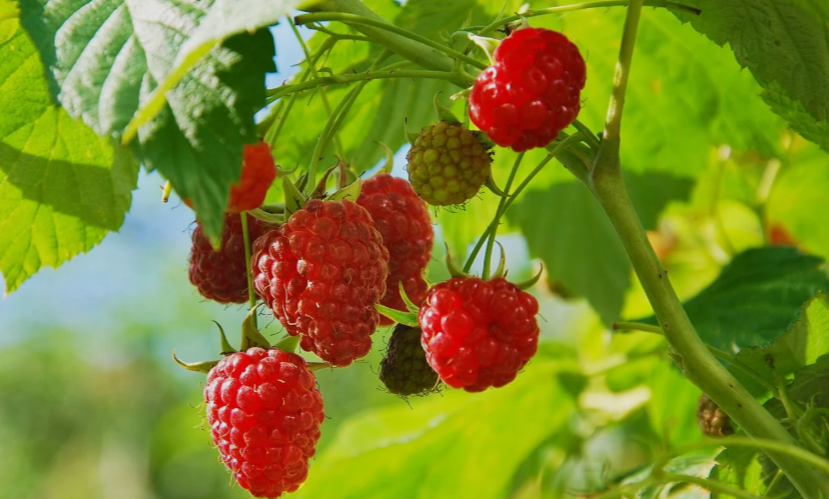
Cold hardy raspberry varieties are some of the most dependable fruits a northern gardener can plant. The raspberry belongs to the rose family and grows wild across the cooler parts of Europe, Asia and North America. Its roots live for many years, but each cane lives for only two.
That two-year cycle divides raspberries into two types. Summer-bearing varieties fruit on canes in their second year, while fall-bearing varieties fruit at the tips of first-year canes. Fall-bearers can be mowed to the ground each spring, so winter never touches the canes that carry the crop.
Raspberries come in four colors. Red is the most common, yellow raspberries are simply reds that make no red pigment, black raspberries are a separate species, and purples are crosses between red and black. Red types are the hardiest, and purple and black types are generally less so.
Much of the breeding for cold regions was done in Canada, especially at a research station at Morden, Manitoba. The 15 varieties below are those most often recommended by northern universities, and each entry notes where they are grown.
1. Boyne
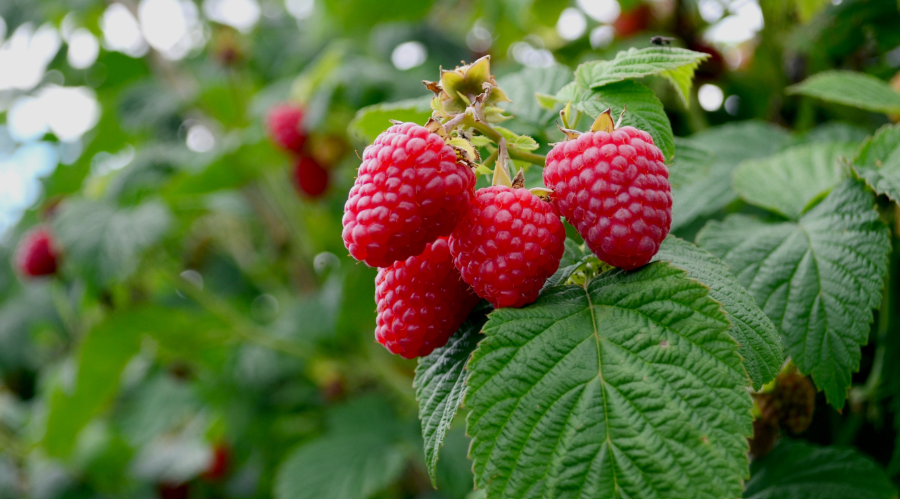
Boyne is the benchmark for winter hardiness in red raspberries. Its berries are small to medium and dark red. The flavor is sweet-tart, and the fruit is excellent for jam and freezing. It ripens early, in late June to early July. The canes are sturdy, upright and about 5 feet tall.
It came from a cross made at Morden, Manitoba, in 1947 and was released in 1960. North Dakota State University describes it as productive and very winter-hardy. Ontario’s agriculture ministry rates it hardy to about -33°F. It is very susceptible to a cane disease called anthracnose. It is grown across the Canadian prairies, the northern Plains, the upper Midwest and New England.
2. Killarney
Killarney is a sister of Boyne from the same cross. Its berries are brighter red, firmer and glossy. The flavor is very good, and the fruit holds up well in baking. It ripens a few days after Boyne. The canes are spiny and send up many suckers.
It was released from Morden in 1961. The University of Minnesota notes that it is so productive the crop weighs down the upright canes. Montana trials found it and Boyne the most productive varieties over three years. It is prone to mildew and cane diseases. It is grown in Manitoba, Ontario, Montana, the upper Midwest and northern New England.
3. Souris
Souris is a Manitoba raspberry valued for its flavor. The fruit is sweet and tart, with an excellent, classic raspberry taste. Taste panels rated it above Boyne. The berries are medium-sized and bright red. It ripens at the same time as Boyne.
It was bred at Morden and named for a river and town in Manitoba. Provincial trials describe it as extremely winter-hardy. It produces plenty of new canes each year. It is on Manitoba’s list of recommended summer-bearing varieties. It is grown across Manitoba, Saskatchewan and the northern Plains.
4. Latham
Latham is the oldest hardy raspberry still widely planted. Its berries are large, bright red and firm. The flavor is sweet and mild. It ripens in mid-July, over a long period. The plants are vigorous.
The University of Minnesota released it in 1920. Montana researchers call it the long-time standard red raspberry for the North. It has excellent cold hardiness and tolerates the coldest garden zones. The fruit can be crumbly in some seasons. It is grown in Minnesota, the Dakotas, Montana, New England and Canada.
5. Nova
Nova combines hardiness with good fruit quality. Its berries are medium to large, firm and shiny. The flavor is bright and slightly acidic. The canes have far fewer thorns than most varieties. It ripens in early to mid-season.
It was released in Nova Scotia in 1981 from a cross that included Boyne. North Dakota State University rates it hardy in the coldest zone it covers. It resists several cane diseases. It often gives a small second crop in fall. It is grown in Atlantic Canada, Ontario, Manitoba, the upper Midwest and New England.
6. Festival
Festival is a compact, nearly thornless raspberry. Its berries are medium-sized and bright red. The flavor is good, and the fruit is firm. The canes are short and seldom need support. It ripens in midseason.
It was bred in Ottawa and released in the 1970s. The University of Minnesota rates its hardiness as very good to good. The plants are productive for their size. Its lack of thorns makes picking easy. It is grown in Ontario, Quebec, Minnesota and the northern states.
7. Prelude
Prelude is the earliest raspberry of the season. It begins to fruit in mid to late June, several days ahead of Boyne. The berries are medium-sized, round and dark red. The flavor is mild and pleasant. The canes are very dense.
Cornell University released it in the late 1990s. Penn State Extension notes that it also gives a light fall crop on its first-year canes. It is hardy through most northern areas. North Dakota State University cautions that its buds may not survive in the coldest parts of that state. It is grown in New York, New England, the upper Midwest and Ontario.
8. Encore
Encore is a late-season raspberry that extends the summer harvest. Its berries are large, firm and cone-shaped. The flavor is good and mildly sweet. It ripens in late July and early August. The canes are vigorous, upright and nearly spineless.
Cornell University released it in the late 1990s. It has shown good winter hardiness in New York and Nova Scotia. It has been injured in colder parts of Ontario, so it suits the milder northern zones. It does best on a trellis. It is grown in New York, New England, Michigan and Atlantic Canada.
9. Red Mammoth
Red Mammoth is a large-fruited raspberry from Saskatchewan. Its berries are noticeably bigger than those of Boyne. The fruit is bright red and firm. It ripens in midseason. The canes are strong and productive.
It was developed at the University of Saskatchewan. In Manitoba trials it was among the top yielders. The same trials rated it extremely winter-hardy. It is on Manitoba’s list of recommended summer-bearing varieties. It is grown in Saskatchewan, Manitoba, Alberta and the northern Plains.
10. Red River
Red River is a fall-bearing raspberry bred for the prairies. It fruits on first-year canes in late summer. The berries are medium-sized and bright red. The flavor is good. It ripens early enough to finish before hard frost.
It was released from Morden, Manitoba, and has Boyne in its background. Most fall-bearing raspberries ripen too late for the prairies. Red River is one of the few that reliably matures a crop there. The canes can be mowed each spring. It is grown in Manitoba, Saskatchewan and the northern Plains.
11. Polana
Polana is an early fall-bearing raspberry from Poland. It ripens about 2 weeks before the standard fall variety. The berries are medium to large and glossy red. The flavor is mild. The canes are short and seldom need staking.
It was released in 1991. North Dakota State University notes that the canes are very hardy and produce impressive yields. Its early ripening is its main advantage in the North. The fruit can be irregular in shape. It is grown in Poland, Canada, the upper Midwest and New England.
12. Autumn Britten
Autumn Britten is a fall-bearing raspberry with very large fruit. The berries are firm and flavorful. They are bright red and uniform. It ripens ahead of the older fall varieties. The canes are moderately vigorous.
It was bred in England. The University of Minnesota rates its hardiness as very good to good. It is among the most commonly grown red raspberries in Ontario. Its fruit quality is rated slightly better than that of its parent. It is grown in Britain, Ontario, the upper Midwest and New England.
13. Heritage
Heritage is the traditional standard among fall-bearing raspberries. Its berries are medium-sized, firm and bright red. The flavor is good and moderately sweet. The canes are vigorous and upright. Plantings are durable and long-lived.
Cornell University released it in 1969. It ripens late and needs a fairly long season to finish its crop. The University of New Hampshire notes its high yields and late timing. In the coldest regions, frost often arrives before the harvest is complete. It is grown across the northern United States, southern Canada and Europe.
14. Royalty
Royalty is the most popular purple raspberry. Its berries are large and turn from red to deep purple. They are sweet when fully ripe. The fruit is prized for jam and jelly. It ripens late, about 11 days after Boyne.
It was bred at Cornell University. It is very vigorous and productive. It resists the aphid that spreads raspberry viruses. It is less hardy than red raspberries and can suffer winter injury in the coldest areas. It is grown in New York, Pennsylvania, Michigan, Wisconsin and Ontario.
15. Jewel
Jewel is the most widely grown black raspberry. Its berries are large, glossy and black. The flavor is rich and intense. The fruit ripens together over a short period. It is less seedy than other black varieties.
It was bred at Cornell University. North Dakota State University calls it the hardiest black raspberry, though it is not hardy in the coldest zone. It resists more diseases than other black types. The canes are tall and vigorous. It is grown in New York, Pennsylvania, Ohio, Michigan and the upper Midwest.
Key Takeaways:
– Raspberry varieties differ in winter hardiness: Raspberries (Rubus idaeus and related species) vary in their ability to withstand freezing temperatures. Many red raspberry cultivars tolerate cold winters, although hardiness depends on the variety, growing conditions, and cane maturity.
– Several varieties are suitable for colder climates: ‘Boyne’, ‘Killarney’, ‘Nova’, and ‘Prelude’ are popular options for gardeners in regions with cold winters. Always check local recommendations because performance varies by location.
– Raspberries come in different colors: Red is the most familiar raspberry color, but varieties also produce black, purple, and yellow fruits. Color, flavor, berry size, and ripening time depend on the cultivar.
– Summer-bearing and everbearing types differ: Summer-bearing raspberries generally produce one main crop on second-year canes, while primocane-fruiting varieties can produce a crop on first-year canes, often in late summer or autumn.
– Proper growing conditions improve productivity: Raspberry plants generally thrive in full sun, fertile soil, good drainage, and consistent moisture. Pruning, adequate spacing, and suitable support help maintain healthy canes and improve air circulation.
– Choose varieties based on your local climate: Consider winter temperatures, USDA hardiness zones, disease resistance, harvest timing, and the length of your growing season. Selecting a variety suited to your region helps protect plants from winter injury and supports more reliable fruit production.
Sources:
- North Dakota State University: The Best Raspberry Cultivars for North Dakota
- Penn State Extension: Raspberry Varieties for Pennsylvania
- University of Minnesota Extension: Growing raspberries in the home garden
- University of Minnesota Extension: Raspberry types and varieties
- North Dakota State University: Raspberries for North Dakota
- University of New Hampshire Extension: Raspberry and Blackberry Varieties
- Michigan State University: raspberry variety fact sheet
- Montana State University: Red Raspberries for Western and Southwestern Montana
- University of Vermont: notes on raspberry varieties
- Ontario: Raspberry variety description
- Manitoba Agriculture: Raspberry Cultivar Evaluation 2005-2007
- American Pomological Society: Boyne Raspberry
- American Pomological Society: Souris Red Raspberry
- American Pomological Society: Raspberry Breeding in Canada