Controlling weeds in your garden or lawn works best as a combination of strategies rather than relying on any single method, since most weeds have evolved several different ways to survive a single tactic. A weed with a deep taproot shrugs off shallow tilling, a weed with a massive seed bank shrugs off a single season of hand-pulling, and a weed adapted to compacted soil shrugs off almost anything short of actually changing the soil conditions that let it thrive there in the first place.
That’s why the most effective long-term weed control programs combine mechanical removal, cultural practices that make the desired plants more competitive, and targeted chemical or organic interventions used at the right time rather than as a blanket solution. Timing in particular makes an enormous difference, since a pre-emergent treatment applied a week too late does essentially nothing, while a well-timed round of hand-pulling before a single weed sets seed can prevent thousands of future plants.
What follows covers 28 of the most effective methods for controlling weeds in gardens and lawns, along with the data and timing details that make each one actually work.
Hand Pulling
Hand pulling remains one of the most reliable weed control methods for small areas and isolated plants, particularly effective on annual weeds and young perennials before their root systems become extensive. Pulling immediately after rain or irrigation, when soil is loose, makes it far easier to remove the entire root system rather than snapping off the top and leaving a taproot behind to regrow.
It works on virtually any weed type in any garden setting, though perennial weeds with extensive rhizome systems, such as bindweed or quackgrass, often require repeated pulling over multiple seasons to fully exhaust their underground energy reserves.
Hoeing
Hoeing, particularly with a sharp stirrup or hula-style hoe, cuts young weed seedlings off just below the soil surface with minimal disturbance to surrounding soil, making it one of the fastest methods for treating a large area of small weeds at once. It’s most effective when weeds are still in the seedling stage, generally under 2 inches tall, since larger weeds with established roots can simply regrow from the cut point.
It works best in vegetable gardens and open beds where regular, shallow cultivation between rows can be maintained on a weekly basis throughout the growing season.
Mulching with Organic Material
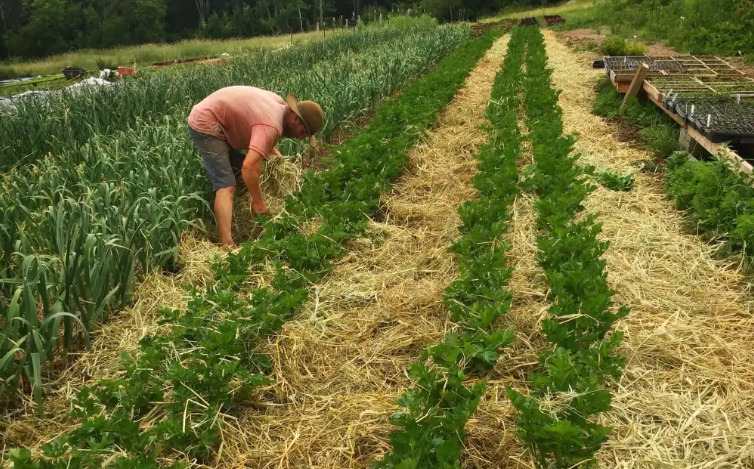
Mulching with wood chips, straw, or shredded leaves blocks sunlight from reaching weed seeds at the soil surface, preventing germination while also improving soil moisture retention and structure as the mulch breaks down over time. A layer of 2 to 4 inches is generally recommended, since thinner layers allow enough light through for weeds to still germinate.
It works throughout garden beds, around trees and shrubs, and in perennial borders, though mulch should be kept a few inches away from plant stems and tree trunks to avoid rot and pest issues.
Cardboard or Newspaper Sheet Mulching
Cardboard or newspaper sheet mulching, sometimes called sheet mulching or lasagna gardening, involves laying flattened cardboard or several layers of newspaper directly over existing weeds before covering with mulch or compost, smothering the weeds beneath by blocking both light and air. The cardboard breaks down naturally over several months, adding organic matter to the soil as it decomposes.
It works especially well for converting an existing lawn or weedy area into a new garden bed without tilling, since the smothering layer kills most existing vegetation in place rather than requiring it to be removed first.
Landscape Fabric
Landscape fabric, a woven or spun synthetic material, blocks light to the soil surface while still allowing water and air to pass through, making it a longer-lasting alternative to organic mulch for pathways, around shrubs, and in perennial beds. Unlike plastic sheeting, it doesn’t need to be removed for planting, since holes can simply be cut wherever a plant is installed.
It works best in permanent plantings rather than annual vegetable beds, since the fabric interferes with the kind of regular soil amendment and replanting that vegetable gardens typically require each season.
Soil Solarization
Soil solarization uses clear plastic sheeting to trap solar heat and raise soil temperature high enough to kill weed seeds, and according to University of California’s Statewide Integrated Pest Management Program, the method involves covering moist soil with clear plastic for 4 to 6 weeks during the hottest part of the year, heating the top 12 to 18 inches of soil to temperatures lethal to most weed seeds. The technique also helps control several soilborne diseases and nematodes at the same time.
It works best in warm, sunny climates during peak summer heat, and is most practical for garden beds being prepared for fall planting rather than areas needed earlier in the growing season.
Soil Occultation
Soil occultation, sometimes called tarping, uses opaque black or silage tarps rather than clear plastic to smother existing vegetation by blocking light entirely rather than relying on heat buildup. Unlike solarization, it works effectively in cooler climates and shorter timeframes, often needing just several weeks to kill existing weeds and encourage seed germination followed by death from lack of light.
It works well as a bed preparation technique in home vegetable gardens and small farms, particularly popular among no-till growers looking to avoid soil disturbance while still clearing a bed of existing vegetation.
Boiling Water
Boiling water poured directly onto weeds provides an immediate, chemical-free way to kill unwanted plants growing in cracks, driveways, and pathways where more selective methods aren’t practical. The scalding water destroys plant cell structure on contact, typically killing the visible top growth within a day, though perennial weeds with deep roots often require repeated applications.
It works best on small-scale spot treatments in non-planting areas like patios and walkways, since the boiling water will just as readily kill any desirable nearby plants it contacts.
Flame Weeding
Flame weeding uses a propane torch to pass a brief burst of intense heat over young weeds, rupturing plant cells without necessarily reducing the plant to ash, and is most effective against young annual weeds in the seedling stage rather than established perennials. A single pass is often enough to kill small weeds within a day or two as the damaged tissue dies back.
It works well along driveways, gravel paths, and between pavers, though extreme caution and local fire regulations should be checked before use, particularly during dry conditions or near mulch and other flammable material.
Vinegar Spray
Vinegar spray, using household or higher-concentration horticultural vinegar, acts as a contact herbicide that damages the leaf surface of weeds it touches, most effective against young annual weeds in full sun. Higher-concentration horticultural vinegar, typically 20% acetic acid compared to the 5% found in household vinegar, produces more thorough burn-down but requires careful handling given its corrosive strength.
It works best as a spot treatment for young weeds in cracks and pathways, though it generally only damages the above-ground portion of a plant, meaning perennial weeds with substantial root reserves often regrow after treatment.
Corn Gluten Meal
Corn gluten meal, a byproduct of corn processing, was discovered to have natural pre-emergent herbicidal properties by a researcher at Iowa State University’s Department of Horticulture in 1986, working from an unrelated turfgrass disease study. The product inhibits root formation in germinating seeds rather than preventing germination outright, and is typically applied at a rate of around 20 pounds per 1,000 square feet, which also delivers a meaningful dose of nitrogen fertilizer at the same time.
It works as an organic alternative to synthetic pre-emergent herbicides in lawns and garden beds, though it must be applied before weed seeds germinate each season, since it has no effect on weeds that are already established.
Pre-Emergent Herbicides
Pre-emergent herbicides, whether synthetic or organic, work by preventing weed seeds from successfully germinating or establishing roots, making timing the single most important factor in their effectiveness. Most need to be applied before soil temperatures reach the specific threshold that triggers germination for the target weed, often around 50 to 55 degrees Fahrenheit for crabgrass in many regions.
It works well for preventing annual weeds like crabgrass and foxtail in lawns, though it has no effect on weeds that have already emerged and provides no benefit against perennial weeds that regrow from existing roots each year.
Selective Post-Emergent Herbicides
Selective post-emergent herbicides target specific categories of already-growing weeds, most commonly broadleaf weeds in lawns, while leaving grass largely unaffected due to differences in how the chemicals are absorbed and metabolized by different plant types. These products are typically applied directly to actively growing weeds during mild temperatures, since extreme heat or drought stress can reduce effectiveness or damage the surrounding turf.
It works well for treating dandelion, clover, and other broadleaf lawn weeds without harming the grass itself, though repeated or excessive use can contribute to herbicide resistance developing in treated weed populations over time.
Non-Selective Post-Emergent Herbicides
Non-selective post-emergent herbicides kill essentially any plant they contact, making them useful for clearing an entire area of vegetation before starting a new garden bed or lawn, but requiring careful, targeted application to avoid damaging desirable nearby plants. Most work systemically, meaning they’re absorbed into the plant and transported to the roots, which makes them more effective against perennial weeds than purely contact-based options.
It works best for spot-treating isolated weeds or clearing an entire area before replanting, and should be applied on calm, dry days to prevent drift onto nearby desirable vegetation.
Mowing at the Correct Height
Mowing at the correct height, generally taller rather than shorter for most cool-season lawns, significantly reduces weed density by shading the soil surface and increasing competition for light, water, and nutrients during the critical weed seedling stage. According to Ohio State University’s Ohioline Extension, taller mowing heights also help retain soil moisture and reduce heat stress on turf during summer, further improving the lawn’s ability to outcompete weeds.
It works as a foundational lawn care practice rather than a targeted treatment, generally following a rule of never removing more than a third of the grass blade length in a single mowing.
Overseeding Thin Turf
Overseeding thin or bare patches of lawn with fresh grass seed closes gaps in the turf canopy that would otherwise provide an open opportunity for weed seeds to germinate and establish. Fall is generally the most effective time to overseed cool-season lawns, since cooler temperatures and reduced weed competition give new grass seedlings a better chance to establish before winter dormancy.
It works as a proactive, preventive strategy rather than a treatment for existing weeds, most effective when combined with proper fertilization and watering to help new grass establish quickly.
Proper Fertilization
Proper fertilization, applied at the right rate and timing for the specific grass or plant species being grown, helps desirable plants grow thick and vigorous enough to outcompete weeds for available light, water, and nutrients. Over-fertilizing, particularly with high-nitrogen products, can sometimes favor certain weed species just as much as the desired turf or garden plants, so following soil test recommendations rather than guessing at rates matters considerably.
It works best as an ongoing part of general lawn and garden care rather than a standalone weed treatment, since healthy, dense plant growth is one of the most effective long-term deterrents against new weed establishment.
Deep, Infrequent Watering
Deep, infrequent watering encourages grass and garden plants to develop deep root systems capable of accessing moisture well below the soil surface, giving them a competitive advantage over many shallow-rooted weed species that depend on frequent surface moisture. Watering once or twice a week to a depth of several inches, rather than daily shallow watering, is generally recommended for established lawns.
It works as a cultural practice that indirectly discourages weeds by favoring deep-rooted desirable plants, particularly effective against shallow-rooted annual weeds that struggle during dry periods between waterings.
Improving Soil Drainage and Aeration
Improving soil drainage and aeration reduces the compacted, poorly drained conditions that many aggressive weeds, including broadleaf plantain and prostrate knotweed, specifically thrive in. Core aeration, which removes small plugs of soil to relieve compaction, is typically performed once or twice a year during a lawn’s active growing season.
It works particularly well in high-traffic areas like paths, gates, and play areas where soil compaction from foot traffic tends to concentrate weed problems in predictable locations.
Adjusting Soil pH
Adjusting soil pH to suit the desired lawn or garden plants can indirectly discourage weeds that are specifically adapted to more extreme acidic or alkaline conditions than most cultivated plants prefer. Moss and certain sorrel species, for example, tend to thrive in overly acidic soil, and correcting the pH with lime can shift the competitive balance back toward turf and desired plants.
It works as a longer-term soil improvement strategy rather than an immediate fix, generally requiring a soil test first to determine the actual pH and the correct amount of amendment needed.
Cover Cropping
Cover cropping involves planting a fast-growing crop, such as winter rye or clover, specifically to occupy bare soil during the off-season, crowding out weeds through sheer competition while also improving soil structure and fertility. Certain cover crops, particularly cereal rye, also release natural compounds into the soil that can suppress the germination of some subsequent weed seeds.
It works best in vegetable gardens and larger growing areas during fall and winter when beds would otherwise sit bare and open to weed colonization.
Crop Rotation
Crop rotation, moving different plant families to different garden beds each season, disrupts the life cycles of weeds that have adapted to thrive alongside specific crops grown repeatedly in the same location. Rotating crops also allows different weed management techniques, such as varying cultivation timing or depth, to be used against whatever weed species has become dominant in a given bed.
It works best in vegetable gardens managed over multiple growing seasons, since a single season of rotation provides limited benefit compared to a consistent multi-year rotation plan.
Dense and Companion Planting
Dense and companion planting reduces available bare soil and light penetration to the ground, making it considerably harder for weed seeds to germinate and establish between closely spaced desirable plants. Certain companion plant combinations also provide natural pest and disease benefits alongside the weed suppression that comes simply from filling available growing space.
It works particularly well in ornamental and vegetable beds where spacing can be planned intentionally, though overly dense planting can sometimes reduce airflow enough to increase fungal disease risk.
Weed-Suppressing Groundcovers
Weed-suppressing groundcovers, such as creeping thyme, clover, or ajuga, occupy space that would otherwise sit as bare or thinly planted soil, physically crowding out weed seedlings while often requiring less maintenance than turfgrass. Many groundcover species also spread aggressively enough to fill in gaps quickly once established.
It works well in areas where traditional lawn struggles, including shaded spots and slopes, replacing bare or thin ground with a living, low-maintenance planting that leaves little room for weeds to establish.
Preventing Weeds From Setting Seed
Preventing weeds from setting seed, by removing or mowing them down before flowers mature into viable seed, directly reduces the size of the weed seed bank stored in the soil for future seasons. A single mature weed can often produce thousands of seeds, meaning a few minutes spent removing flowering weeds before they set seed can prevent a substantially larger problem the following year.
It works as an ongoing maintenance habit rather than a one-time treatment, most effective when combined with regular monitoring throughout the growing season rather than addressing weeds only once they’ve become a visible problem.
Edging Garden Beds
Edging garden beds with a physical barrier, whether metal, plastic, or simply a clean-cut trench, prevents lawn grass and other spreading weeds from creeping into cultivated beds via runners or rhizomes. A properly maintained edge also makes it easier to spot and address any new weed growth along the border before it spreads further into the bed.
It works as a preventive maintenance practice around the perimeter of any garden bed, most effective when combined with periodic re-trenching or edge maintenance, since grass runners can eventually grow over or under a shallow barrier.
Using Weed-Free Mulch and Compost
Using weed-free mulch and compost avoids introducing new weed seeds into a garden bed that’s otherwise been carefully managed, since uncomposted manure, poorly processed compost, and certain bulk mulch sources can carry viable weed seed. Compost that’s been properly heated to a sufficient temperature during the composting process generally kills most weed seeds before the finished product is ever applied to a garden.
It works as a preventive measure rather than a treatment, most valuable for gardeners who source mulch or compost from bulk suppliers rather than producing it entirely from their own yard waste.
Biological and Targeted Grazing Control
Biological and targeted grazing control uses natural predators, pathogens, or grazing animals to manage specific weed species, most commonly deployed against large-scale infestations of invasive plants like leafy spurge or kudzu rather than typical home garden weeds, and detailed identification guides like Purdue University’s Turfgrass Weed Control for Professionals are often the starting point for correctly identifying which of the 105 or more common turf weeds a targeted program needs to address. Targeted goat grazing in particular has become an increasingly popular method for clearing dense brush and vine infestations on larger properties.
It works best for significant infestations of aggressive perennial weeds on larger properties, generally impractical for small home gardens but genuinely effective as part of a longer-term management plan on acreage-scale land.
Further References
- How Do I Control Weeds in My Garden? — Iowa State University Extension — Covers cultivation, hand-pulling, mulching, and other practical methods for managing weeds in home gardens.
- Weed Management in Landscapes — UC Statewide IPM Program — Provides detailed guidance on prevention, mulching, hand-weeding, cultivation, mowing, solarization, and integrated weed management.
- Organic Methods for Weed Control — Iowa State University Extension — Discusses organic approaches including hand-pulling, digging, cultivation, mulching, mowing, and other non-synthetic methods.
- Weed Management in Lawns — UC Statewide IPM Program — Useful for lawn-specific strategies, including maintaining healthy turf, removing weeds before they set seed, and using herbicides only when necessary.
- Weed Management — University of Nevada, Reno Extension — Explains cultural, mechanical, and biological weed-control approaches, including mulching, proper irrigation, mowing, hand-pulling, and cultivation.