Weeds that are edible make up a surprisingly large share of the plants most gardeners spend their summer pulling and discarding, and several of them turn out to be more nutritious than the vegetables planted right next to them. Before trying any of the plants on this list, positive identification is essential, since a number of edible weeds have toxic look-alikes, and harvesting location matters just as much as species, since roadside plants, treated lawns, and areas frequented by pets can carry contaminants that no amount of washing fully removes.
With that caution in mind, edible weeds have quietly built a following among foragers, chefs, and home gardeners looking to make better use of what’s already growing in their yard. Several, including purslane and lamb’s quarters, have been specifically studied for their nutritional content and have been found to outperform many cultivated leafy greens on measures like calcium, iron, and omega-3 fatty acid content. Others, like dandelion and chicory, have been eaten and even deliberately cultivated across Europe and Asia for centuries, only to be reintroduced to American gardeners as a “new” superfood in recent years.
These plants grow across an enormous combined range, from temperate lawns and disturbed farmland to wetlands, woodland edges, and mountain meadows, with most having originated in Europe or Asia before naturalizing across North America. A handful are native species that were already part of Indigenous diets across the continent long before European settlement introduced most of the others.
What follows covers 30 weeds documented as edible, along with where each one grows, its typical size, and the data that helps with identification and safe use.
Dandelion
Dandelion is native to Europe and Asia and now grows across virtually every temperate region on Earth, typically found in lawns, meadows, and disturbed ground. Every part of the plant is edible, from the young leaves, which are best harvested before flowering to avoid excessive bitterness, to the flower petals and the roasted root, which has long been used as a coffee substitute. A single flower head can produce between 150 and 200 seeds, and a mature plant’s taproot can extend 2 to 3 feet into the soil.
It grows throughout nearly all of North America, and its leaves contain notably more vitamin A than spinach on a per-serving basis, along with substantial amounts of vitamin K and calcium.
Purslane
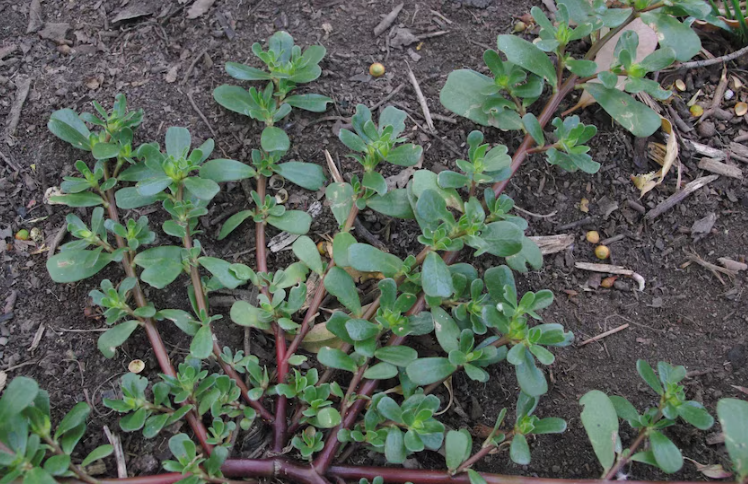
Purslane is native to a range spanning the Mediterranean, the Middle East, and parts of Asia, though it now grows as a naturalized weed across most of the world, typically found in gardens, cultivated fields, and disturbed sandy or loamy soils. According to Mississippi State University Extension, the entire plant is edible with a mild, tangy flavor and crunchy texture, and it contains higher levels of omega-3 fatty acids than most other leafy green vegetables. Its thick, succulent stems and leaves can be eaten raw in salads or cooked, and a single plant can produce up to 240,000 seeds over a growing season.
It grows throughout the United States, particularly thriving in the heat of mid to late summer when many other garden greens have already bolted or gone dormant.
Lamb’s Quarters
Lamb’s quarters, also called wild spinach, is native to Europe and Asia, typically found in gardens, cultivated fields, and other nutrient-rich disturbed soils. According to Clemson Cooperative Extension’s Home and Garden Information Center, it’s a close relative of quinoa and can reach an average height of 3 feet, occasionally growing as tall as 6 feet under favorable conditions. Its young leaves, dusted with a distinctive white, powdery coating, can be eaten raw or cooked much like spinach, and it contains roughly 3 times the calcium found in cultivated spinach.
It grows throughout North America as one of the most common garden and agricultural weeds, thriving in the same nutrient-rich soil conditions that vegetable gardens typically provide.
Chickweed
Chickweed is native to Europe, typically found in lawns, gardens, and shaded, moist disturbed ground, particularly during the cooler months of spring and fall. Its small, tender leaves and stems have a mild, slightly grassy flavor and can be eaten raw in salads or lightly cooked, most commonly harvested while the plant is still low and before its small white flowers fully open. A mature plant typically stays under a foot tall, sprawling in a dense mat across the ground.
It grows throughout most of the United States and Canada, favoring cool, moist conditions and often disappearing entirely once summer heat sets in.
Broadleaf Plantain
Broadleaf plantain is native to Europe and Asia, typically found in lawns, compacted soil, and along walkways and driveways where few other plants can establish. Despite its unrelated name, it has no connection to the banana-like plantain fruit; instead, its young, tender leaves can be eaten raw in salads, while older, tougher leaves are more commonly cooked. A mature plant produces a flowering spike that can release several thousand seeds per season.
It grows throughout nearly all of North America, thriving specifically in the compacted, disturbed soil found along paths and in heavily trafficked lawn areas.
Curly Dock
Curly dock is native to Europe and western Asia, typically found in disturbed fields, pastures, and roadsides across a wide temperate range. Its young leaves have a tangy, lemony flavor from naturally occurring oxalic acid and are best eaten cooked, since that acidity mellows considerably with heat, while the mature seeds can be ground into a flour substitute. A mature plant can reach 3 feet tall, with a single seed stalk capable of producing thousands of reddish-brown seeds.
It grows throughout most of North America, commonly found alongside other common weeds in disturbed pastures and agricultural field margins.
Stinging Nettle
Stinging nettle is native to Europe, Asia, and North Africa, typically found in nutrient-rich, moist soil along stream banks, woodland edges, and disturbed ground. Its leaves and stems are covered in fine hairs that inject an irritating compound on contact, but cooking, drying, or blanching fully neutralizes the sting, after which the leaves can be used much like spinach and are notably high in iron and protein. A mature plant typically reaches 3 to 7 feet tall, spreading via underground rhizomes into dense colonies.
It grows throughout most of North America, and gloves are strongly recommended when harvesting, since the stinging hairs remain active on fresh, uncooked plant material.
Wood Sorrel
Wood sorrel is native to a wide range across North America, Europe, and Asia, typically found in lawns, gardens, and shaded woodland edges. Its clover-like leaves and small yellow flowers have a tart, lemony flavor from oxalic acid content and are typically eaten raw in small quantities as a garnish or trail snack rather than as a primary green. A mature plant stays low, generally under 6 inches tall, spreading by both seed and creeping stems.
It grows throughout most of the United States and Canada, often mistaken for common clover despite its distinctly heart-shaped, three-part leaves and sour taste.
White Clover
White clover is native to Europe and western Asia, typically found in lawns, pastures, and meadows across a wide temperate range. Its leaves, flowers, and seed pods are all edible, with the flowers sometimes dried and ground into a flour additive, though raw clover is generally eaten only in modest amounts due to compounds that can cause digestive discomfort in larger quantities. A mature plant stays low, spreading via creeping stolons that root at each node along the ground.
It grows throughout North America, commonly planted deliberately in pastures and lawns as a nitrogen-fixing forage and cover crop in addition to appearing as a spontaneous weed.
Wild Violet
Wild violet is native to North America, typically found in lawns, woodland edges, and moist, shaded garden beds. Its heart-shaped leaves and purple or white flowers are both edible, with the flowers commonly used to garnish salads or candied for decorating desserts, and the leaves containing a notably high vitamin C content relative to their size. A mature plant stays low, generally under 8 inches tall, spreading by both seed and short rhizomes.
It grows throughout most of the eastern and central United States and Canada, often considered a persistent lawn weed despite its edible and ornamental value.
Henbit
Henbit is native to Europe and Asia, typically found in lawns, gardens, and cultivated fields during the cooler months of the growing season. Its small, purple, tubular flowers and young leaves have a mild, slightly peppery flavor and can be eaten raw in salads or cooked, most palatable when harvested before the plant becomes too fibrous. A mature plant typically stays under a foot tall, favoring cool weather and often dying back once summer heat arrives.
It grows throughout most of the United States, frequently appearing alongside its close relative purple deadnettle in lawns and fields during early spring.
Chicory
Chicory is native to Europe, western Asia, and North Africa, typically found along roadsides, in fields, and on disturbed ground across a wide temperate range. Its young leaves can be eaten raw or cooked with a bitter, slightly nutty flavor, while its root has a long history of being roasted and ground as a coffee substitute or additive. A mature plant can reach 3 to 5 feet tall, with distinctive sky-blue flowers that typically close by early afternoon.
It grows throughout most of the United States and southern Canada, often found growing alongside dandelion in similar disturbed, sunny habitats.
Common Sowthistle
Common sowthistle is native to Europe and now naturalized worldwide, typically found in agricultural fields, gardens, and disturbed ground. Its young leaves have a mild flavor similar to lettuce and can be eaten raw or cooked, though older leaves become increasingly bitter and are generally better suited to cooking. A mature plant can reach 4 feet tall, with milky sap released when the stem is broken.
It grows across most of the United States, thriving especially in nutrient-rich, disturbed agricultural and garden soil.
Redroot Pigweed
Redroot pigweed, a common type of wild amaranth, is native to the Americas, typically found colonizing disturbed fields, gardens, and pastures. Its young leaves can be eaten raw or cooked much like spinach, and its tiny seeds, produced in enormous quantities by a single mature plant, can be cooked into a grain similar to cultivated amaranth or quinoa. A mature plant typically reaches 3 to 6 feet tall, with a single plant capable of producing well over 100,000 seeds.
It grows throughout North America as one of the most common and troublesome agricultural weeds, thriving in the same nutrient-rich conditions favored by cultivated row crops.
Shepherd’s Purse
Shepherd’s purse is native to Europe and Asia, typically found in gardens, lawns, and disturbed ground across a wide temperate range. Its young leaves have a peppery, slightly bitter flavor similar to arugula and can be eaten raw or cooked, while its distinctive heart-shaped seed pods are also edible and carry a similarly peppery bite. A mature plant typically reaches 6 to 18 inches tall, completing its life cycle quickly enough to produce several generations in a single growing season.
It grows throughout nearly all of North America, often among the first weeds to flower in early spring.
Garlic Mustard
Garlic mustard is native to Europe, typically found in shaded woodland understories, forest edges, and disturbed ground. Its leaves carry a distinctive garlic-and-mustard flavor and can be eaten raw or cooked, most tender and mild when harvested from young, first-year plants before the flowering stalk emerges. A mature flowering plant can reach 3 feet tall and produce several thousand seeds, which remain viable in the soil for up to 5 years.
It grows throughout the northeastern and midwestern United States and eastern Canada, where it’s classified as an aggressive invasive species that foraging can help manage in affected woodlands.
Wild Garlic
Wild garlic, also called field garlic, is native to Europe, typically found in lawns, fields, and disturbed ground, especially prominent in late winter and early spring. Its slender, hollow leaves and small underground bulbs both carry a strong garlic flavor and can be used much like chives or scallions in cooking. A mature plant typically reaches 1 to 3 feet tall, spreading through both seed and small bulb offsets.
It grows throughout the eastern and central United States, often considered a persistent lawn weed specifically because its bulbs survive mowing and most manual pulling attempts.
Cattail
Cattail is native throughout North America, Europe, and Asia, typically found in marshes, pond edges, and other consistently wet, shallow-water habitats. Multiple parts of the plant are edible across different seasons, including the young shoots in spring, the immature green flower spikes in early summer, and the starchy rhizomes, which can be processed into a flour substitute. A single mature plant can produce well over 200,000 seeds from its distinctive brown, sausage-shaped seed head.
It grows across nearly all of North America, forming dense colonies in wetland margins that have historically served as an important food source for many Indigenous communities.
Watercress
Watercress is native to Europe and central Asia, typically found growing directly in or along the edges of clean, cold-running streams and spring-fed waterways. Its peppery, slightly bitter leaves can be eaten raw in salads or lightly cooked, and it’s notably rich in vitamin K and vitamin C relative to its size. A mature plant grows as a sprawling, semi-aquatic mat, rooting readily at stem nodes that contact the water or wet soil.
It grows throughout much of North America in suitable clean-water habitats, though foragers are advised to harvest only from unpolluted water sources, since it can absorb contaminants and parasites from contaminated waterways.
Field Pennycress
Field pennycress is native to Europe and Asia, typically found in disturbed agricultural fields, roadsides, and waste ground. Its young leaves carry a pungent, mustard-like flavor and can be used sparingly raw or cooked, while its small round seeds have drawn recent agricultural research interest as a potential biofuel and cover crop. A mature plant typically reaches 1 to 2 feet tall, completing its life cycle as a winter annual.
It grows throughout much of the northern and central United States, favoring the same disturbed, nutrient-rich agricultural soils as many other edible weeds on this list.
Common Mallow
Common mallow is native to Europe, North Africa, and parts of Asia, typically found in lawns, gardens, and disturbed ground across a wide temperate range. Its round, slightly fuzzy leaves and small immature seed pods, sometimes called “cheeses” for their shape, are both edible, with a mild flavor and a mucilaginous texture similar to okra when cooked. A mature plant typically sprawls 1 to 2 feet across, favoring compacted or poor soil where more delicate plants struggle.
It grows throughout most of North America, often found growing in the same disturbed, compacted ground favored by broadleaf plantain.
Wild Mustard
Wild mustard is native to Europe and Asia, typically found in agricultural fields, roadsides, and disturbed ground across a wide temperate range. Its young leaves, flowers, and immature seed pods are all edible with a peppery, mustard-like flavor, and its mature seeds can be ground into a mustard condiment similar to cultivated varieties. A mature plant can reach 2 to 4 feet tall, with bright yellow flowers appearing in dense clusters.
It grows throughout much of North America as a common agricultural weed, particularly troublesome in cereal grain and canola fields where it competes directly with related cultivated crops.
Common Milkweed
Common milkweed is native to eastern and central North America, typically found in fields, roadsides, and prairie habitats. Certain young growth stages, including very young shoots, unopened flower buds, and immature seed pods, have a long history of use as a cooked vegetable among some communities, but the plant contains bitter, potentially toxic compounds that must be reduced through multiple changes of boiling water, and it should never be eaten raw or without proper preparation knowledge. A mature plant typically reaches 3 to 5 feet tall, with fragrant pink flower clusters that serve as an essential food source for monarch butterfly caterpillars.
It grows throughout most of the eastern and central United States, and given the genuine risk of misidentification and improper preparation, first-time foragers are strongly encouraged to learn directly from an experienced forager or a detailed regional guide before attempting to eat it.
Ground Ivy
Ground ivy, also called creeping Charlie, is native to Europe and parts of Asia, typically found in lawns, shaded garden beds, and moist disturbed ground. Its small, rounded, scalloped leaves carry a minty, slightly bitter flavor and have historically been used to make an herbal tea, most commonly harvested from young spring growth. A mature plant stays low, generally under 6 inches tall, spreading aggressively across the ground via creeping stems that root at each node.
It grows throughout most of North America, often considered one of the most difficult lawn weeds to control specifically because of its low-growing, mat-forming habit.
Japanese Knotweed
Japanese knotweed is native to Japan, Taiwan, and northern China, typically found along riverbanks, roadsides, and disturbed ground in temperate climates. Its young, hollow spring shoots have a tart, rhubarb-like flavor and can be cooked into dishes similar to those made with rhubarb, though only the youngest, most tender shoots, generally under a foot tall, are palatable before the stems toughen. A mature plant can reach 10 feet tall in a single growing season, spreading through an extremely aggressive underground rhizome system.
It grows throughout the northeastern and Pacific Northwest United States, where it’s classified as one of the most damaging invasive plant species on the continent, making harvesting an incidental benefit of control efforts already underway in many affected areas.
Evening Primrose
Evening primrose is native to North America, typically found in fields, roadsides, and disturbed prairie habitats. Its root, harvested from first-year plants before flowering, has historically been cooked as a root vegetable, while the young leaves and flowers are also edible, generally in smaller quantities due to their more bitter flavor. A mature flowering plant can reach 3 to 5 feet tall in its second year, with pale yellow flowers that typically open in the evening and close again by midday.
It grows throughout most of the United States and southern Canada, favoring the same disturbed, sunny habitats common to many other biennial weeds on this list.
Yarrow
Yarrow is native to Europe, Asia, and North America, typically found in meadows, roadsides, and disturbed grassland across a wide climatic range. Its feathery, aromatic leaves can be used sparingly as a seasoning herb, most often dried for tea, though it carries a distinctly bitter flavor that limits most culinary use to small quantities. A mature plant typically reaches 1 to 3 feet tall, with flat-topped clusters of small white to pale pink flowers throughout summer.
It grows throughout nearly all of North America, historically used across many cultures both as a food seasoning and for a range of traditional herbal applications.
Common Burdock
Common burdock is native to Europe and northern Asia, and according to Utah State University Extension’s Urban Edibles program, its younger, more tender leaves are best harvested in the morning after dew has dried or in the late afternoon once the heat of the day has passed, and are prepared much like spinach. Its taproot, dug up with a shovel from first-year plants, is also edible and is a well-known vegetable in Japanese cuisine, where it’s cultivated deliberately rather than treated as a weed. A mature second-year flowering plant can reach 3 to 6 feet tall, with the familiar hooked burs that give the plant its name.
It grows throughout most of North America, typically found along fences, trails, and disturbed pasture edges.
Miner’s Lettuce
Miner’s lettuce is native to western North America, typically found in shaded, moist woodland habitats and disturbed ground, particularly common in California and the Pacific Northwest. Its round, cup-shaped leaves and small white flowers are entirely edible with a mild, slightly succulent flavor, commonly eaten raw in salads much like cultivated lettuce. A mature plant typically stays under a foot tall, thriving specifically in the cool, wet conditions of winter and early spring.
It grows throughout California, the Pacific Northwest, and parts of the interior West, historically valued by California Gold Rush-era miners as a fresh source of vitamin C to prevent scurvy, which is how it earned its common name.
Wintercress
Wintercress, also called yellow rocket, is native to Europe and Asia, typically found in fields, gardens, and disturbed ground, particularly noticeable in early spring when it’s often one of the first plants to flower. Its young leaves have a peppery, mustard-like flavor similar to watercress and are best harvested before flowering, since the leaves become increasingly bitter once the plant bolts. A mature flowering plant can reach 1 to 2 feet tall, with dense clusters of small yellow flowers.
It grows throughout most of the northeastern and midwestern United States, commonly found growing alongside other early-spring edible weeds like chickweed and henbit.
Key Takeaways
Edible weeds show that some plants commonly removed from lawns, gardens, and paths can also have culinary value. Dandelions, purslane, lambsquarters, chickweed, and several other weeds have traditionally been used as greens, herbs, roots, or other foods. Their usefulness, however, depends on correct identification and knowing which parts of the plant are suitable for consumption.
The most important consideration is safety. Never eat a wild plant simply because it resembles a known edible species. Plants should be positively identified before consumption, and weeds growing beside roads or in areas treated with pesticides, herbicides, or other chemicals should be avoided. Reliable botanical references and university extension resources are especially valuable when learning about edible weeds.
Further References
- University of Maine Cooperative Extension — Facts on Edible Wild Greens in Maine. Covers several commonly eaten wild greens, including dandelion, lambsquarters, orache, and purslane, while also discussing poisonous wild plants. University of Maine Cooperative Extension — Facts on Edible Wild Greens in Maine
- Virginia Cooperative Extension — Weeds in the Home Vegetable Garden. Discusses edible weeds such as dandelion, purslane, chickweed, cress, mustards, and lambsquarters, along with the importance of proper identification. Virginia Cooperative Extension — Weeds in the Home Vegetable Garden
- NC State Extension — Weeds. Provides a useful table of edible weeds and their edible parts, while emphasizing correct identification and avoiding plants exposed to chemicals or roadside contamination. NC State Extension — Weeds
- Cornell University — Common Lambsquarters. Provides botanical identification information for lambsquarters and notes its use as a salad green or cooked pot herb. Cornell University — Common Lambsquarters
- Cornell University — Common Purslane. Covers the identification, growth, reproduction, and edible qualities of common purslane, a widespread edible weed. Cornell University — Common Purslane