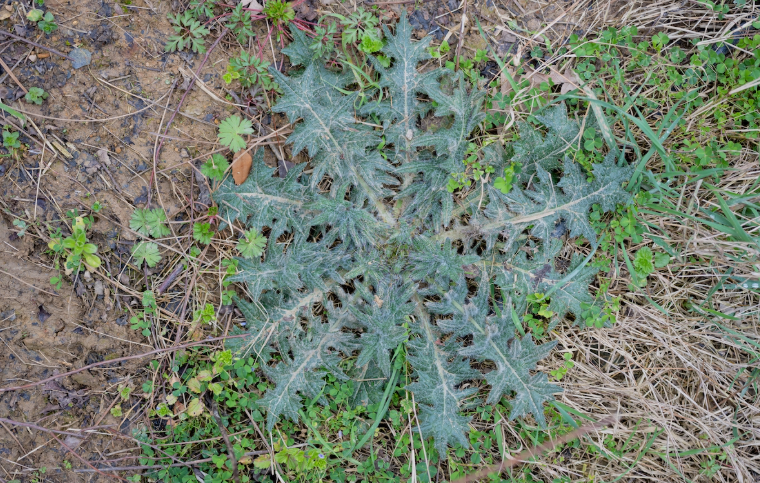
Weeds with thorns cause a specific kind of frustration for gardeners, farmers, and hikers alike, since unlike a woody shrub that announces its defenses year-round, many of these plants start out as an unassuming rosette of leaves before bolting into a genuinely painful obstacle within a single growing season. That fast life cycle is part of what makes thorny weeds so difficult to manage, since a patch that looks harmless in early spring can be armed with sharp spines, prickles, or barbed burs by midsummer.
Unlike the thorny shrubs and trees that defend themselves permanently across many years of growth, most of the plants on this list are annuals, biennials, or fast-spreading perennials that rely on aggressive seed production or root spread rather than sheer size to persist. Several are classified as officially regulated noxious weeds in multiple U.S. states specifically because of the combination of their defensive armor and their ability to take over pastures, roadsides, and disturbed ground with startling speed.
These weeds come from a genuinely global set of origins, with many introduced to North America from Europe, the Mediterranean, and Asia through contaminated grain seed, ship ballast, or deliberate introduction before their invasive potential was understood. Others are native North American species that have simply proven exceptionally good at colonizing the disturbed, overgrazed, or cultivated ground that human activity has created across the continent.
What follows covers 25 weeds known for their thorns, spines, or prickles, along with where each one grows, its typical size, and the data that sets it apart from less defended weedy competitors.
Canada Thistle
Canada thistle, despite its name, is native to Europe and Asia rather than Canada, and according to University of Minnesota Extension, it was introduced to North America as a seed contaminant in the 1600s and has since become one of the most aggressive perennial weeds on the continent. It spreads primarily through an extensive horizontal root system, with root fragments as small as a third of an inch capable of producing an entirely new plant. A mature stand typically reaches 3 to 5 feet tall, with small purple flower heads and prickly leaf margins along the stem.
It grows across most of North America, Europe, and temperate Asia, and is classified as a prohibited noxious weed in more than 30 U.S. states due to its ability to rapidly displace pasture forage and native vegetation.
Bull Thistle
Bull thistle is native to Europe, western Asia, and North Africa, typically found colonizing disturbed pastures, roadsides, and overgrazed fields across a wide climatic range. Unlike Canada thistle, it’s a biennial that spends its first year as a low rosette before sending up a heavily spined flowering stalk that can reach 6 feet tall in its second year. Its stems and leaves are covered in stiff, sharp spines, and a single plant can produce several thousand seeds before dying at the end of its second growing season.
It grows throughout most of North America, having spread widely since its introduction, and remains one of the most commonly encountered thistle species in pastures and disturbed ground across the continent.
Musk Thistle
Musk thistle, also called nodding thistle, is native to Europe and western Asia, typically found on disturbed rangeland, pastures, and roadsides in temperate climates. It’s identifiable by its large, showy purple flower heads, which characteristically droop or “nod” to one side once fully open, and by the broad, spiny wings that run along its stem. A mature plant can reach 6 feet tall and produce over 10,000 seeds in a single growing season.
It grows across most of the United States and southern Canada and is designated a noxious weed in the majority of U.S. states, where it can rapidly dominate overgrazed pastureland.
Scotch Thistle
Scotch thistle is native to Europe and western Asia, typically found on disturbed, overgrazed rangeland and along roadsides in dry, temperate climates. It’s among the largest thistle species, with mature plants capable of reaching 12 feet tall and developing broad, spine-covered leaves that can exceed 2 feet in length, giving the plant an almost shrub-like silhouette despite being a true biennial herb. Its dense covering of woolly hairs gives the foliage a distinctive grayish-white appearance.
It grows across the western United States in particular, where dense infestations can form impenetrable stands that exclude livestock and wildlife from otherwise usable rangeland.
Plumeless Thistle
Plumeless thistle is native to Europe and Asia, typically found in disturbed pastures, hayfields, and roadsides across a broad temperate range. It closely resembles musk thistle but produces smaller, more numerous flower heads and lacks the characteristic nodding habit, staying upright even at full maturity. A mature plant typically reaches 3 to 6 feet tall, with sharply spined leaves running the full length of the stem.
It grows throughout much of the northern and midwestern United States and is regulated as a noxious weed in numerous states, where it reduces pasture capacity and displaces desirable forage species.
Milk Thistle
Milk thistle is native to the Mediterranean region, typically found on disturbed, dry ground and roadsides across southern Europe and North Africa. It’s easily identified by the distinctive white marbling on its glossy green leaves, along with stiff, sharp spines running along every leaf margin. A mature plant reaches 3 to 6 feet tall, and while it’s cultivated commercially in some regions for its seed extract, it behaves as an aggressive escaped weed in others.
It grows widely across California, the southwestern United States, and parts of the East Coast, and is classified as a noxious weed in several western states due to its toxicity risk to livestock under certain conditions.
Yellow Starthistle
Yellow starthistle is native to the Mediterranean region and parts of Asia, typically found on dry, disturbed rangeland and roadsides in warm, arid climates. Its bright yellow flower heads are surrounded by long, stiff, sharp spines that can exceed half an inch in length, making mature stands genuinely hazardous to walk through. A single plant can produce over 100,000 seeds in a season, and a mature infestation can consume enormous quantities of soil moisture, drying out rangeland for other species.
It grows extensively across California, where it has infested millions of acres of rangeland, and is present in most other western states as a regulated noxious weed.
Purple Starthistle
Purple starthistle is native to the Mediterranean region, typically found in similar dry, disturbed rangeland habitats to its yellow-flowered relative. Its rose-purple flower heads are armed with stout, sharp spines up to an inch long, among the longest of any starthistle species, and its deep taproot allows it to persist through drought conditions that would kill many competing plants. A mature plant typically reaches 2 to 3 feet tall.
It grows primarily in California, where it’s classified as a noxious weed, though its distribution remains more limited than yellow starthistle across the broader western United States.
Malta Starthistle
Malta starthistle, also called tocalote, is native to the Mediterranean region, typically found in disturbed grassland and roadside habitats in warm, dry climates. It closely resembles yellow starthistle but produces shorter spines, generally under half an inch, and tends to flower somewhat earlier in the season. A mature plant reaches 1 to 3 feet tall, often growing in mixed stands alongside its more aggressive yellow-flowered relative.
It grows widely across California and the southwestern United States, and while considered less problematic than yellow starthistle, it still displaces native grassland vegetation where it establishes.
Spiny Sowthistle
Spiny sowthistle is native to Europe and western Asia, typically found in disturbed fields, gardens, and roadsides across a wide temperate range. Its lobed leaves are lined with sharp, spiny teeth, and while the plant resembles a dandelion in its yellow flower heads, its spiny foliage and milky sap set it clearly apart. A mature plant typically reaches 2 to 4 feet tall, completing its life cycle as an annual or short-lived biennial.
It grows throughout most of North America as a widespread agricultural and garden weed, particularly common in cultivated fields and disturbed soil.
Prickly Lettuce
Prickly lettuce is native to Europe and western Asia, typically found colonizing disturbed ground, fields, and roadsides across a wide climatic range. Its leaves carry a distinctive row of small, sharp prickles along the underside of the midrib, and the plant characteristically twists its leaves to align vertically with the sun, earning it the nickname “compass plant.” A mature plant can reach 3 to 5 feet tall, producing a milky sap when broken that has led to its historical use in folk medicine.
It grows throughout most of North America as one of the most common agricultural weeds, particularly troublesome in wheat and other cereal grain fields.
Puncturevine
Puncturevine, also called goathead, is native to southern Europe, and according to University of California’s Statewide Integrated Pest Management Program, it forms low, mat-like growth spreading 2 to 5 feet in diameter from a central taproot. Its notorious woody seedpods break apart into hard, spiny burs, each carrying 2 sharp spines capable of puncturing bicycle tires, shoe soles, and bare feet alike. Seeds can remain viable in the soil for up to 5 years, making established infestations persistent even after removal of visible plants.
It grows throughout California and much of the warmer, drier United States, thriving specifically in hot, dry conditions along roadsides, orchards, and pastures where other plants struggle to establish.
Sandbur
Sandbur is native to North and South America, typically found colonizing sandy soils, beaches, disturbed fields, and roadsides in warm-temperate to subtropical climates. Its seed heads develop into small, extremely sharp, spiny burs that detach readily and cling to skin, clothing, and animal fur, a highly effective seed dispersal strategy that also makes barefoot walking through infested areas genuinely painful. A mature plant typically reaches 1 to 2 feet tall, spreading along the ground in a sprawling, mat-like habit.
It grows across most of the southern and central United States, thriving especially in loose, sandy soils where turfgrass and other groundcovers struggle to compete.
Horsenettle
Horsenettle is native to the southeastern United States, and according to the University of Missouri’s Weed Identification Guide, it’s a rhizomatous perennial with conspicuous spines covering both the stems and leaves, reaching up to 3 feet in height. Its star-shaped white to pale purple flowers give way to small, yellow, tomato-like berries containing up to 170 seeds each, meaning a single mature plant can produce over 5,000 seeds annually. Nearly every part of the plant except the ripe fruit is toxic to grazing livestock.
It grows throughout the southeastern, eastern, and north-central United States, favoring dry, disturbed sites such as open woods, roadsides, and overgrazed pastures.
Buffalobur
Buffalobur is native to the Great Plains and southwestern United States and northern Mexico, typically found on disturbed, overgrazed rangeland and around livestock corrals. Every part of the plant above ground, including the stems, leaves, and the calyx surrounding its fruit, is covered in stiff, sharp yellow spines, making it one of the most thoroughly armed weeds in the nightshade family. A mature plant typically reaches 1 to 2 feet tall, with bright yellow flowers appearing throughout summer.
It grows across most of the central and western United States, having spread well beyond its original Great Plains range through contaminated livestock feed and seed.
Russian Thistle
Russian thistle, widely known by its common name tumbleweed, is native to the steppes of Russia and Central Asia, typically found colonizing disturbed, arid, and semi-arid ground across a broad climatic range. Its bushy, rounded form is covered in stiff, sharp-tipped leaves that become increasingly spiny as the plant matures through the growing season. Once mature and dried, the entire plant breaks off at the base and rolls with the wind, scattering seed across considerable distances, sometimes several miles in strong wind conditions.
It grows throughout the western and central United States, having spread rapidly since its accidental introduction through contaminated flax seed in the 1870s.
Common Teasel
Common teasel is native to Europe, and according to University of Illinois Extension’s invasive species program, it grows as a spiny biennial reaching up to 7 feet tall in its second year, with hollow, spine-ridged stems and large, prickly, cup-shaped opposite leaves. Its distinctive egg-shaped flower heads, covered in stiff spines, typically bloom purple and remain standing through winter even after the plant has died. A single flower head can produce over 2,000 seeds.
It grows across most of the eastern and midwestern United States, where it’s classified as invasive and can rapidly dominate prairies, roadsides, and conservation plantings.
Cutleaf Teasel
Cutleaf teasel closely resembles common teasel and shares the same European native range, but is distinguished by its deeply cut, lobed leaves and typically white rather than purple flowers, blooming somewhat later in the season. Like its close relative, it grows as a spiny biennial reaching up to 7 feet tall, with hollow, prickly stems and cup-shaped opposite leaves that can hold rainwater at their base. It’s considered even more aggressive than common teasel in some regions due to its ability to establish denser stands.
It grows throughout much of the eastern and midwestern United States, favoring similar disturbed grassland, roadside, and floodplain habitats to common teasel.
Spiny Amaranth
Spiny amaranth is native to tropical regions of the Americas, typically found in disturbed fields, gardens, and pastures across warm-temperate to tropical climates. A pair of sharp, needle-like spines grows at each leaf node along the stem, a distinguishing feature that separates it from the many other amaranth species that lack any spination at all. A mature plant can reach 3 to 5 feet tall and produce hundreds of thousands of seeds, making it a persistent problem in cultivated fields.
It grows throughout the southern and central United States and has spread to warm regions worldwide, thriving especially in nutrient-rich, disturbed agricultural soil.
Prickly Poppy
Prickly poppy is native to the southwestern United States and Mexico, typically found on dry, disturbed rangeland, roadsides, and desert grassland. Its blue-gray, deeply lobed leaves are covered in sharp spines along the veins and margins, and the entire plant, including the flower buds and seed capsules, carries some degree of spination. A mature plant typically reaches 2 to 4 feet tall, with large, showy white or yellow poppy-like flowers appearing throughout the warm season.
It grows across much of the southwestern and south-central United States, thriving in overgrazed pastures where livestock have depleted more palatable competing vegetation.
Jimsonweed
Jimsonweed is native to the Americas, though its exact origin is debated, and it’s now found as a weed on every inhabited continent in disturbed fields, barnyards, and roadsides. While its foliage and stems are unarmed, its distinctive egg-shaped seed capsules are covered in stout, sharp spines up to half an inch long, giving the plant its alternate name of thorn apple. A mature plant can reach 3 to 5 feet tall, and every part of the plant is highly toxic if ingested.
It grows throughout most of the United States as a common weed of cultivated fields and disturbed ground, particularly in nutrient-rich soils around livestock operations.
Devil’s Claw
Devil’s claw is native to the southwestern United States and Mexico, typically found on disturbed, sandy soils in desert grassland and along roadsides. While the growing plant itself has no spines, its distinctive seedpods develop long, curved, woody claws as they dry, splitting open in a shape that closely resembles a cloven hoof or grasping claw, capable of hooking onto animal fur or clothing to disperse seed. A mature plant sprawls 2 to 3 feet across, with large, sticky, hairy leaves and showy pink to purple trumpet-shaped flowers.
It grows across the arid Southwest and has spread as an agricultural weed into parts of the Midwest through contaminated crop seed and machinery.
Cocklebur
Cocklebur is native to the Americas, typically found colonizing disturbed fields, riverbanks, and pastures across a broad range spanning temperate to subtropical climates. Its oval seed burs are covered in dozens of stiff, hooked spines, each ending in a sharp point capable of catching in fur, wool, and clothing with remarkable efficiency. A mature plant typically reaches 2 to 4 feet tall, and its seedlings are notably toxic to livestock, particularly pigs.
It grows throughout most of North America as a common agricultural weed, especially troublesome in soybean and other row crop fields where it competes aggressively for light and nutrients.
Common Burdock
Common burdock is native to Europe and northern Asia, typically found in disturbed pastures, roadsides, and woodland edges across a wide temperate range. Its large, round flower heads are covered in stiff, hooked bracts that mature into the familiar burs responsible for inspiring the invention of hook-and-loop fastener technology in the 1940s. A mature plant, growing as a biennial, can reach 3 to 6 feet tall in its flowering second year, with enormous basal leaves exceeding a foot in length during its first-year rosette stage.
It grows throughout most of North America, having spread widely since its introduction, and remains a common sight along fences, trails, and pasture edges.
Spiny Sida
Spiny sida is native to tropical regions of the Americas, typically found in disturbed fields, pastures, and roadsides across warm-temperate to tropical climates. Sharp, paired spines grow at the base of its leaf stalks, a feature that distinguishes it from many similar-looking weedy mallow relatives that lack any spination. A mature plant typically reaches 2 to 4 feet tall, with small yellow flowers appearing throughout the growing season and a tough, fibrous stem that can be difficult to mow or cultivate through.
It grows throughout the southeastern and south-central United States, thriving particularly in cultivated row crop fields where its tough stems can damage or clog farm equipment.
Key Takeaways
Weeds with thorns and prickles are often easy to notice but can sometimes be surprisingly difficult to identify accurately. Thistles are among the most recognizable examples, with species such as Canada thistle and bull thistle differing in their leaves, stems, roots, and growth habits. Learning these identifying features can help distinguish one prickly weed from another and prevent desirable plants from being mistaken for weeds.
Because many thorny weeds can spread through seeds, roots, or both, identification is an important first step in managing them. Canada thistle, for example, can spread through an extensive creeping root system as well as wind-dispersed seeds. When identifying an unfamiliar plant, look at the overall growth habit, leaf shape, flower color, stem characteristics, and root system rather than relying on prickles alone.
Further References
- Ontario Ministry of Agriculture, Food and Rural Affairs — Canada Thistle. Detailed identification guide covering the leaves, flowers, stems, roots, life cycle, and distinguishing characteristics of Canada thistle. Ontario Ministry of Agriculture, Food and Rural Affairs — Canada Thistle
- Ontario Ministry of Agriculture, Food and Rural Affairs — Bull Thistle. Provides identification information for bull thistle, including its spiny leaves, hairy stems, flowers, roots, and growth cycle. Ontario Ministry of Agriculture, Food and Rural Affairs — Bull Thistle
- Cornell University — Canada Thistle. A useful weed-science reference describing Canada thistle’s prickly leaves, flowers, roots, reproduction, and differences from similar thistles. Cornell University — Canada Thistle
- Utah State University Extension — Canada Thistle Identification and Control. Explains the identification, biology, spread, and management considerations of this aggressive perennial weed. Utah State University Extension — Canada Thistle Identification and Control
- U.S. National Park Service — Invasive Plant Profile: Canada and Bull Thistles. Compares Canada thistle and bull thistle and explains several of the characteristics that can be used to tell them apart. National Park Service — Invasive Plant Profile: Canada and Bull Thistles