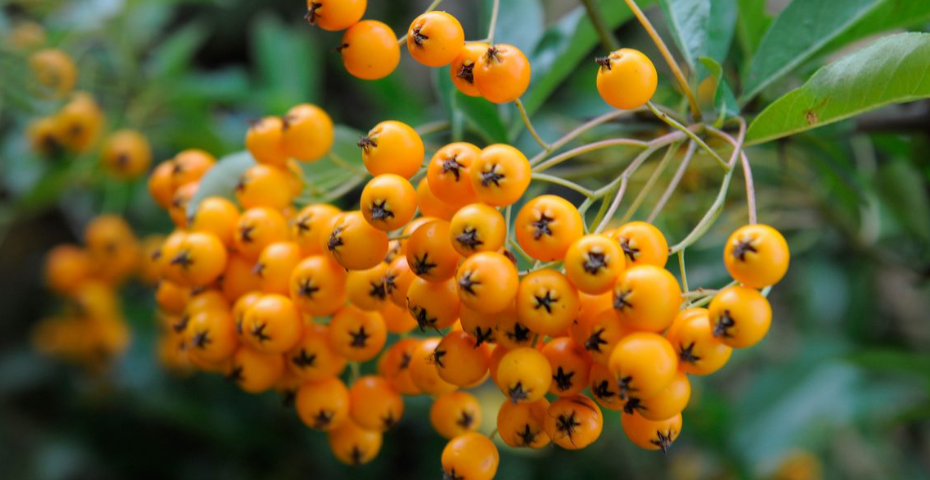
Shrubs with yellow berries bring a color to the winter and fall landscape that red and purple-fruited plants simply can’t match, standing out sharply against bare branches, evergreen foliage, or a dusting of snow. Yellow fruit is relatively uncommon in the plant world compared to red, since red pigments tend to attract fruit-eating birds more effectively, which means most yellow-berried shrubs are either naturally occurring color variants or cultivars specifically selected by breeders for their unusual fruit color. That rarity is part of what makes them so valued by gardeners looking for something distinctive.
These shrubs come from a genuinely wide range of native habitats, from the cold steppes of Central Asia to the coastal dunes of the eastern United States, and several are cultivated forms of species better known for producing red or purple fruit. Understanding where a given shrub grows naturally matters for more than curiosity’s sake, since it usually points directly to the growing conditions, soil type, and climate a plant will tolerate best once transplanted into a home landscape.
Hardiness varies enormously across this list as well, spanning USDA zones as cold as 2 up to warm zone 10 conditions, so matching a shrub’s origin to a specific yard’s climate is the first real step before considering size or bloom time. Growth rate, mature height, and berry persistence through winter also vary considerably, with some of these shrubs holding their fruit for months and others stripped clean by birds within days of ripening.
What follows covers 18 shrubs known for producing yellow, gold, or amber-toned fruit, along with where each one grows natively, its typical size, and the growing data that sets it apart from its more common red-berried relatives.
Shrubs With Yellow Berries
Sea Buckthorn
Sea buckthorn grows natively across a huge range spanning Europe, northern Asia, and the Himalayan foothills, where it colonizes coastal dunes, riverbanks, and rocky mountain slopes that few other shrubs can tolerate. According to a University of Nevada, Reno Extension publication on seaberry, the shrub produces an abundance of yellow-orange to red berries roughly 0.3 inches long that cling tightly to two-year-old and older stems and persist through the entire winter. It reaches 10 to 15 feet tall and just as wide, and its extreme cold hardiness down to USDA zone 2, combined with its tolerance for poor, sandy, and even saline soils, has made it a popular choice for erosion control as much as for its vitamin-rich fruit.
North Dakota State University’s Agriculture Extension confirms this hardiness in its own regional guide, noting that sea buckthorn was introduced to North America in 1923 and has since become valued in shelterbelt plantings across the northern Plains for its silvery foliage and long-persisting orange fruit. A single mature female shrub can produce several pounds of berries annually once established, though male and female plants must be grown in proximity since the species relies on wind for pollination.
Golden Currant
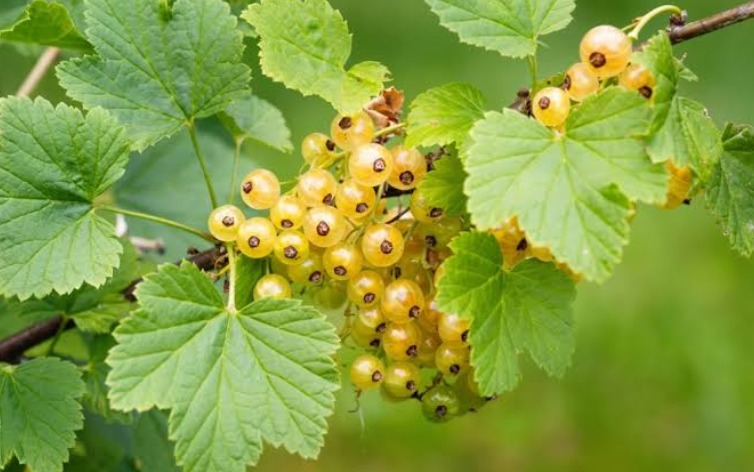
Golden currant is native to a wide swath of the western and central United States, growing wild along stream banks, canyon bottoms, and open woodland edges from the Pacific coast east into the Great Plains. It typically reaches 5 to 8 feet tall with an arching, multi-stemmed form, and its tubular yellow spring flowers, which carry a spicy clove-like fragrance, are followed by berries that ripen from yellow to a deep amber or black depending on the individual plant and ripening stage. Its drought tolerance is considerably higher than most cultivated currants, reflecting its adaptation to the dry interior climates where it grows wild.
Golden currant tolerates USDA zones 2 through 8 and performs well in both full sun and partial shade, making it flexible for a range of planting sites. Its berries, which average around 0.4 inches across, are edible and were historically an important food source for Native American communities across its range, often dried for winter storage alongside other wild fruit.
Yellow-Fruited Winterberry Holly
Winterberry holly is native to wetlands, swamps, and damp thickets across the eastern United States, and while the species overwhelmingly produces red berries, several cultivars have been selected specifically for their golden-yellow fruit instead. The most widely available of these, a branch sport discovered on a red-berried variety, is documented by the North Carolina Extension Gardener Plant Toolbox, which describes it as a slow-growing, rounded shrub reaching 5 to 8 feet tall and wide, with orange-yellow, quarter-inch berries that persist heavily through winter given a nearby male pollinator.
Because winterberry holly is deciduous, its bare branches make the yellow fruit especially striking against a winter backdrop once the leaves drop each fall. It tolerates USDA zones 3 through 9 and, unlike most hollies, thrives in consistently wet or poorly drained soil, making it a strong choice for rain gardens and low-lying areas where many other shrubs would struggle.
American Bittersweet
American bittersweet is native across most of the eastern and central United States and southern Canada, typically found scrambling along woodland edges, fence rows, rocky hillsides, and stream banks as far west as Wyoming and Montana. As detailed by the North Carolina Extension Gardener Plant Toolbox, its round, half-inch capsules start out green before the outer casing matures to a bright yellow-orange, splitting open in fall to reveal red seeds inside, a combination that gives the plant its layered yellow-and-red display. It grows as a vigorous woody vine reaching 20 to 25 feet when given something to climb, though without support it sprawls into a dense, shrub-like tangle.
It tolerates USDA zones 3 through 8 and adapts to a wide range of soils, including dry and clay-heavy sites where more delicate ornamentals often fail. Because it’s dioecious, meaning individual plants are either male or female, a single male plant is typically needed for every 6 to 9 female plants to ensure a heavy fruit set each fall.
Yellow-Fruited European Cranberrybush Viburnum
European cranberrybush viburnum is native across Europe, North Africa, and parts of northern Asia, and while most wild and cultivated forms produce translucent red fruit, a specific yellow-fruited cultivar has long been grown for its unusual amber-gold berries that glow when backlit by low sun. The shrub reaches 8 to 12 feet tall with a rounded, spreading form, and its maple-like leaves turn shades of red and purple in fall, creating a striking contrast against the pale yellow fruit clusters that ripen at the same time.
It tolerates USDA zones 3 through 8 and prefers full sun to partial shade with consistently moist soil, though established plants handle brief dry spells reasonably well. Its berries persist on the branch well into winter in most climates, since birds tend to pass over the yellow fruit in favor of more visible red-berried shrubs nearby.
Yellow-Fruited Firethorn
Firethorn is native to a broad region spanning southern Europe through the Caucasus and into China, where it grows as a dense, thorny shrub along rocky hillsides and scrubland. While red-fruited cultivars dominate the nursery trade, several yellow and gold-berried selections have been bred specifically to diversify the plant’s fall and winter display, producing berry clusters in shades ranging from pale butter-yellow to deep amber-gold. A mature plant typically reaches 6 to 10 feet tall and wide, with dense, evergreen foliage that provides year-round structure in addition to its seasonal fruit.
It tolerates USDA zones 6 through 9 and thrives in full sun, producing its heaviest berry crop when given at least 6 hours of direct light daily. Its sharp thorns, which can exceed an inch in length on older wood, make it a popular choice for security hedging in addition to its ornamental appeal.
Yellow-Fruited Cotoneaster
Cotoneaster is native to a wide swath of temperate Asia, particularly China and the Himalayan region, where dozens of wild species grow across rocky slopes and forest margins at a range of elevations. Most cultivated cotoneasters produce red or orange-red berries, but certain selections have been developed with pale yellow to golden fruit instead, offering an alternative for gardeners wanting to avoid the ubiquitous red display seen throughout most fall landscapes. These shrubs typically reach 8 to 12 feet, with small white spring flowers giving way to dense clusters of berries by early fall.
It tolerates USDA zones 5 through 8 and adapts to a range of soil types as long as drainage is adequate, showing good resistance to both drought and urban pollution once established. Its berries generally persist into midwinter, offering an extended food source for birds after most other fruiting shrubs have already been stripped bare.
Yellow-Fruited American Elderberry
American elderberry is native throughout most of the eastern and central United States and southeastern Canada, commonly found along stream banks, fence rows, and the damp edges of fields and woodlands. While the species is best known for its dark purple-black berries, a specific golden-leaved cultivar produces fruit that ripens to a translucent amber-yellow rather than the typical near-black color, making it visually distinct from standard elderberry plantings. It grows quickly, often reaching 6 to 10 feet within just a few seasons, with broad, flat flower clusters in early summer that draw in a wide range of pollinators.
It tolerates USDA zones 3 through 9 and prefers full sun to light shade with consistently moist soil, tolerating brief flooding better than most other fruiting shrubs on this list. Its berries, like those of standard elderberry, require cooking before consumption, since raw fruit and other plant parts contain compounds that can cause stomach upset.
Silver Buffaloberry
Silver buffaloberry is native to the northern Great Plains and Rocky Mountain foothills, growing wild along riverbanks, floodplains, and disturbed prairie soils from Canada south into the central United States. Its silvery, willow-like leaves make it easy to identify even before fruiting, and its berries, which can range from bright red to a more unusual amber-yellow depending on the individual plant, cling tightly to thorny branches through much of the fall. A mature shrub typically reaches 6 to 18 feet, with considerable variation depending on soil and moisture conditions.
It tolerates USDA zones 2 through 7 and handles alkaline, saline, and drought-prone soils better than almost any other shrub on this list, a trait tied directly to its adaptation to the harsh conditions of the northern Plains. Historically, its tart berries were an important food source for Indigenous communities and early settlers across its native range, often mixed with fat and dried meat to make pemmican.
Yellow-Fruited Nandina
Nandina, commonly called heavenly bamboo despite not being a true bamboo, is native to eastern Asia, including China, Japan, and parts of India, where it grows as an understory shrub in woodland and forest-edge habitats. While the species is overwhelmingly grown for its bright red winter berries, a specific white-to-pale-yellow-fruited cultivar has long been available for gardeners wanting a softer color palette. It reaches 4 to 8 feet tall with an upright, cane-like growth habit, and its lacy, evergreen-to-semi-evergreen foliage turns shades of red and bronze in cooler weather.
It tolerates USDA zones 6 through 9 and adapts to both full sun and considerable shade, though berry production is generally heaviest with more direct light. Its berries persist on the plant for months, often lasting from late fall well into the following spring in milder climates.
Golden Raspberry
Golden raspberry is a naturally occurring color variant of the widely cultivated red raspberry, a species native to Europe and parts of temperate Asia that has since been bred into countless commercial and garden varieties worldwide. Rather than the typical anthocyanin pigments that give most raspberries their red color, golden-fruited types lack that pigment, resulting in berries that ripen to a translucent amber-yellow instead. The canes typically reach 4 to 6 feet, spreading via underground suckers into dense thickets if left unmanaged.
It tolerates USDA zones 3 through 9 and prefers full sun with well-drained, slightly acidic soil, producing its heaviest fruit set on second-year canes in most climates. Its berries tend to be noticeably sweeter and lower in acidity than red raspberries, a difference attributed to the same pigment absence that gives the fruit its distinctive color.
Northern Bayberry
Northern bayberry is native to the eastern coast of North America, from Newfoundland south to North Carolina, where it grows as a tough, salt-tolerant shrub along dunes, coastal thickets, and sandy, exposed sites. Its small, waxy, grayish-yellow berries cluster tightly along the stems and persist through winter, historically prized for the fragrant wax that can be rendered from the fruit and used in candle-making. A mature shrub typically reaches 5 to 10 feet, spreading readily by root suckers to form dense colonies over time.
It tolerates USDA zones 3 through 7 and handles poor, sandy soil, salt spray, and drought with little difficulty, reflecting its adaptation to harsh coastal exposure. Because it’s dioecious, only female plants produce the waxy yellow-gray berries, and a nearby male plant is required to ensure consistent fruiting each fall.
Golden Dewdrop
Golden dewdrop, also called Duranta, is native to a broad swath of Mexico, the Caribbean, and Central and South America, where it grows as a sprawling, semi-woody shrub along forest edges and disturbed open ground in tropical and subtropical climates. It produces small clusters of lavender-blue flowers throughout the warm season, followed by dense clusters of round, bright golden-yellow berries that persist on the plant for weeks at a time. A mature shrub can reach 10 to 18 feet in frost-free climates, though it’s typically kept smaller through regular pruning in cultivated landscapes.
It tolerates USDA zones 9 through 11 and struggles with any prolonged frost, making it primarily a container or indoor plant outside of the warmest parts of the country. Its berries are toxic if ingested by humans and pets, a detail worth noting despite their ornamental appeal, though birds appear to consume them without apparent harm.
Yellow-Fruited Skimmia
Skimmia is native to a range spanning the Himalayas, China, and Japan, where it grows as a low, shade-tolerant shrub in the understory of cool, moist mountain forests. While most cultivated skimmias produce bright red berries, certain cream-to-pale-yellow-fruited selections have been developed for gardeners seeking a softer winter display against the plant’s glossy, dark evergreen foliage. It stays compact, typically reaching just 2 to 4 feet tall and wide, making it well suited to smaller shaded gardens or woodland borders.
It tolerates USDA zones 6 through 8 and strongly prefers partial to full shade with consistently moist, acidic soil, struggling noticeably in full sun or alkaline conditions. Like several other dioecious shrubs on this list, it requires both male and female plants nearby to produce its signature berry display each winter.
Yellow-Fruited Chinese Holly
Chinese holly is native to eastern China, Korea, and Taiwan, where it grows in a range of woodland and scrub habitats across a fairly broad climatic zone. While red-berried selections dominate the nursery trade, at least one long-cultivated variety produces bright golden-yellow fruit instead, offering an alternative to the classic red-and-green holiday color scheme often associated with the species. It typically reaches 6 to 10 feet tall with dense, spiny, evergreen foliage that provides year-round structure and screening.
It tolerates USDA zones 7 through 9 and adapts to both full sun and partial shade, showing good tolerance for heat, humidity, and a range of soil types once established. Its berries typically persist from fall through much of winter, though heavy bird activity in some regions can strip a plant considerably faster than in others.
Yellow-Fruited Bush Honeysuckle
Bush honeysuckle species are native across a wide range spanning eastern Asia and parts of Europe, where several species grow as dense, multi-stemmed understory shrubs along forest edges and disturbed ground. While most widely known bush honeysuckles produce red or orange-red berries, certain individual plants and select cultivars produce fruit in shades of translucent yellow instead, occurring as a natural color variation within otherwise typical populations. These shrubs generally reach 6 to 12 feet tall with an arching, fountain-like form and small, tubular spring flowers that give way to paired berries by midsummer.
It tolerates USDA zones 3 through 8 and grows vigorously in a wide range of soil and light conditions, a trait that has made several bush honeysuckle species invasive across parts of North America outside their native range. Its rapid growth and heavy fruit production mean it spreads readily by bird-dispersed seed wherever it’s planted.
Autumn Olive
Autumn olive is native to eastern Asia, including China, Japan, and Korea, where it grows across a range of open, disturbed habitats from lowland scrub to mountain forest edges. While the species most commonly produces silvery-red fruit speckled with tiny scales, a yellow-fruited form exists and is occasionally sold for its more unusual color, ripening to a pale golden hue rather than the typical red. It’s an exceptionally vigorous shrub, often reaching 12 to 20 feet tall and wide within just a few years of planting.
It tolerates USDA zones 3 through 9 and thrives in poor, sandy, or nitrogen-deficient soils thanks to its ability to fix atmospheric nitrogen through root nodules, a trait that once made it popular for reclaiming degraded land. That same vigor has since made it a significant invasive concern across much of the eastern United States, and its planting is now discouraged or restricted in a number of states.
Yellow Goji Berry
Goji, also known as wolfberry, is native to a wide region spanning northern China, Mongolia, and parts of the Himalayan foothills, where it grows as a sprawling, thorny shrub along riverbanks and rocky slopes in cold, arid climates. While the species is overwhelmingly associated with its familiar bright red-orange fruit, a golden-yellow-fruited form is occasionally cultivated as a novelty, offering the same tart, slightly sweet flavor in an unusual color. It typically reaches 3 to 6 feet tall with arching, willowy stems that benefit from support or regular pruning to keep the plant from sprawling excessively.
It tolerates USDA zones 5 through 9 and handles poor, alkaline, and even saline soils with relative ease, reflecting its origins in the harsh growing conditions of Central Asia. Its berries ripen over an extended season from midsummer into fall, and a single established plant can produce several pounds of fruit annually once mature.
Further References
- North Carolina State University Extension — Winter Gold Winterberry (Ilex verticillata ‘Winter Gold’).
NC State Extension — Winter Gold Winterberry
One of the strongest references for yellow-berried shrubs. It describes ‘Winter Gold’ as a female winterberry cultivar producing orange-yellow fruits that appear in late summer and can persist through winter. It also covers mature size, sunlight, soil, hardiness, and pollination requirements. - University of Connecticut — Winterberry and Yellow-Fruited Cultivars.
University of Connecticut Home Garden Education — Winterberry
Useful for explaining the range of winterberry fruit colors. The source notes that while most winterberries have red fruit, cultivars such as ‘Goldfinch’ produce golden-yellow berries, while others produce orange fruit. - University of Maryland Extension — Winterberry Holly (Ilex verticillata).
University of Maryland Extension — Winterberry Holly
Provides reliable information on winterberry’s identification, mature size, flowers, habitat, sunlight and soil requirements, and ornamental value. It also notes that cultivars have been developed with different fruit colors, including yellow. - North Carolina State University Extension — Ilex and Holly Cultivars.
NC State Extension Plant Toolbox — Holly
Particularly useful if your article includes yellow-fruited holly cultivars beyond winterberry. NC State lists cultivars such as ‘Fallaw’, a female holly with yellow fruits, along with information on plant characteristics and pollination. - Cornell University — Shepherdia (Buffaloberry) Growing Information.
Cornell Guide to Growing Fruit — Buffaloberries
A useful reference for buffaloberry shrubs. Cornell describes fruits that can range from scarlet to yellow and provides information on plant size, hardiness, soil tolerance, fruiting, and the need for male and female plants for pollination. - Trees and Shrubs Online — Cornus drummondii and Yellow-Fruited Forms.
Trees and Shrubs Online — Cornus drummondii
Useful for a less commonly discussed yellow-fruited shrub. The source documents Cornus drummondii and notes that some forms produce striking yellow berries, providing an unusual ornamental fruit display.