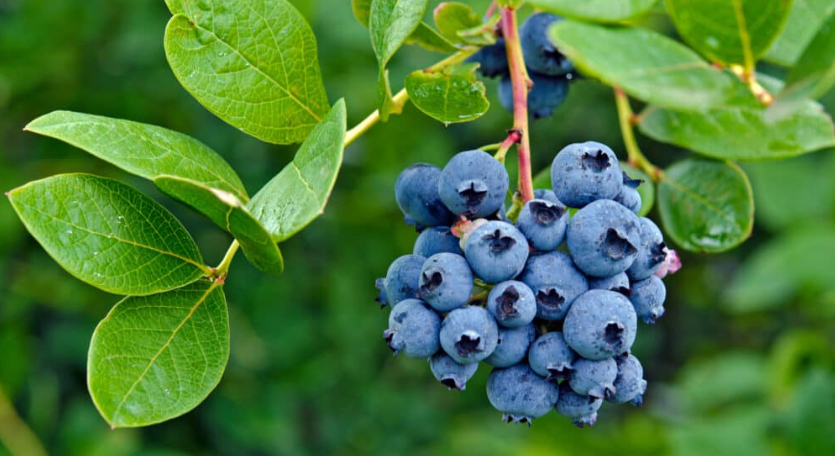
Huckleberries are among the most recognizable wild berries in North America, but they are not the only small, round fruits that can look similar. Depending on the species, huckleberries may be red, blue, purple, or nearly black, which means several unrelated berries can easily be mistaken for them.
This resemblance is especially noticeable when berries are growing in forests, along trails, or in natural gardens. Blueberries, bilberries, serviceberries, juniper berries, and several other fruits can share similar colors and shapes. However, their leaves, stems, growth habits, flowers, and fruit structures can be quite different.
If you are trying to identify a berry, never rely on appearance or color alone before eating it. Some wild berries can be poisonous. The safest identification process considers the entire plant and its habitat and, when necessary, uses a reliable regional field guide or local extension service.
1. Blueberries
Blueberries are probably the berries most commonly confused with huckleberries. Both belong to the genus Vaccinium, and their fruits can be remarkably similar in size, shape, and color.
Ripe blueberries are generally blue to blue-black and often have a whitish, powdery coating called bloom. Huckleberries can have a similar appearance, although different huckleberry species produce fruits ranging from red to dark purple and black.
One useful identification clue is the fruit structure. Depending on the species, blueberries and huckleberries differ in the number and arrangement of seeds and other internal characteristics.
Also Read: How to Grow Huckleberries From Cuttings
2. Bilberries
Bilberries are close relatives of blueberries and huckleberries and can look almost identical at first glance.
The European bilberry (Vaccinium myrtillus) produces small, dark blue to purple berries. Unlike many cultivated blueberries, bilberries often have strongly colored flesh.
They grow on low shrubs and are commonly found in acidic woodland, heath, and upland environments. Their small size and dark coloration make them particularly easy to confuse with certain huckleberries.
3. Serviceberries
Serviceberries belong to the genus Amelanchier and are unrelated to Vaccinium, but their ripe fruits can resemble dark huckleberries.
The berries usually begin reddish and mature to purple, blue, or almost black. They are produced on shrubs or small trees rather than the typical low-growing berry bushes associated with some huckleberries.
Serviceberries are edible when properly identified and are valued by both people and wildlife. Their toothed leaves and overall shrub structure provide useful identification clues.
4. Black Currants
Black currants (Ribes nigrum) produce clusters of dark purple-black berries that can superficially resemble black huckleberries.
The major difference is the way the fruits grow. Black currants typically hang in clusters, while huckleberry fruits may occur singly or in different arrangements depending on the species.
Black currant leaves are also quite distinctive, usually broad and lobed with a characteristic aromatic smell when crushed.
5. Blackberries
Blackberries can sometimes be mistaken for huckleberries when viewed from a distance, especially when both are growing in the same woodland environment.
However, a blackberry is an aggregate fruit, meaning it consists of numerous tiny drupelets joined together. A huckleberry is a single berry rather than a cluster of drupelets.
Blackberries are also typically produced on canes, often with thorns or prickles. This growth habit makes them relatively easy to distinguish once you examine the entire plant.
6. Elderberries
Elderberries can produce dark purple or nearly black fruits that superficially resemble dark huckleberries.
The fruits occur in large clusters, which is one of the easiest ways to distinguish them from many huckleberry species. Elderberries are produced on larger shrubs or small trees rather than compact berry bushes.
Correct identification is particularly important with elderberries because some parts of certain Sambucus plants can be harmful if improperly prepared.
7. Aronia Berries
Black chokeberry (Aronia melanocarpa) produces dark berries that can resemble large huckleberries.
The fruits are generally larger and often occur in clusters. They are known for their strongly astringent taste when eaten fresh.
Aronia shrubs also have relatively broad leaves, providing another useful clue. Their berries are increasingly grown in gardens for ornamental and edible purposes.
8. Juniper Berries
Juniper berries can look remarkably similar to some dark huckleberries because they are small, round, and often blue-black when mature.
However, these are not true berries botanically. They are berry-like cones produced by juniper plants.
The plant itself provides an obvious identification clue: junipers are evergreen conifers with needle-like or scale-like foliage. Never identify a wild fruit solely by its blue color.
9. Chokecherries
Chokecherries (Prunus virginiana) produce small fruits that mature from red to dark purple or nearly black.
The fruits usually appear in hanging clusters, unlike many huckleberries. Chokecherry plants are also generally larger, growing as shrubs or small trees.
Their fruits contain pits, which is another major difference from many small Vaccinium fruits.
10. Nannyberries
Nannyberry (Viburnum lentago) produces oval fruits that mature from green to pinkish and eventually dark blue or blue-black.
The berries are generally larger and more elongated than typical huckleberries. They are produced in clusters on woody shrubs.
The leaves are also distinctive, with a relatively broad shape and finely toothed edges.
11. Black Nightshade Berries
Black nightshade is particularly important to mention because its berries can look deceptively similar to some edible dark berries.
The plant belongs to the Solanum genus and is unrelated to huckleberries. Its small dark berries can appear in clusters, and the plant’s leaves and flowers are very different from those of Vaccinium.
Because species identification within the nightshade group can be complicated and some related plants are toxic, do not eat unidentified berries that resemble huckleberries.
Also Read: Best Berry Bushes for Backyard Planting
12. Pokeberries
Pokeberries (Phytolacca americana) become dark purple or nearly black when mature.
They are usually arranged in elongated clusters on tall herbaceous plants, making the overall growth habit quite different from a huckleberry shrub.
Pokeweed should not be treated as an edible substitute for huckleberries. Proper identification is essential, and the plant contains compounds that can cause illness.
13. Dewberries
Dewberries are close relatives of blackberries and can produce dark purple-black fruits.
Like blackberries, dewberries are aggregate fruits made up of many small drupelets. They typically grow along trailing or low-growing canes.
The fruit may look somewhat similar to a large dark huckleberry from a distance, but the segmented structure becomes obvious when examined closely.
14. Hackberries
Hackberries are produced by trees in the genus Celtis. Their small fruits can turn dark purple or reddish-purple when mature.
Unlike huckleberries, hackberries grow on trees rather than low shrubs. Their fruits also contain a relatively large hard seed.
If a plant has a substantial woody trunk and tree-like canopy, you are almost certainly not looking at a typical huckleberry.
15. Mulberries
Mulberries can be dark purple, black, or reddish and may look somewhat like elongated huckleberries.
However, mulberries are aggregate fruits made up of numerous tiny segments. They are usually produced on trees, although young trees can sometimes appear shrub-like.
The large, heart-shaped or lobed leaves are another useful identification feature.
How to Tell a Huckleberry From a Lookalike
When identifying berries, don’t focus exclusively on the fruit. Instead, examine five major characteristics.
1. Look at the Plant
Is it a low shrub, tall shrub, vine, or tree? Huckleberries are generally woody shrubs, although their size varies considerably among species.
2. Examine the Leaves
Leaf shape, arrangement, margins, texture, and whether the plant is evergreen or deciduous can provide valuable clues.
3. Check How the Fruit Is Arranged
Are berries growing individually, in small groups, or in large clusters? Fruit arrangement is one of the easiest ways to distinguish huckleberries from currants, elderberries, chokecherries, and several other lookalikes.
4. Examine the Fruit Structure
Blackberries and mulberries consist of many small segments. Huckleberries are not aggregate fruits.
5. Consider the Habitat
A plant growing in a Pacific Northwest conifer forest may be more likely to be a native huckleberry than an unfamiliar species growing in a roadside ditch or cultivated landscape. Habitat is useful, but it should never be the sole identification method.
Huckleberries and Their Main Lookalikes
| Berry | Similarity to huckleberries | Main clue |
|---|---|---|
| Blueberry | Very high | Similar Vaccinium fruit |
| Bilberry | Very high | Small dark fruit |
| Serviceberry | High | Grows on larger shrubs |
| Black currant | High | Fruits occur in clusters |
| Blackberry | Moderate | Aggregate fruit |
| Elderberry | Moderate | Large fruit clusters |
| Aronia | Moderate | Larger clustered fruits |
| Juniper berry | Moderate | Grows on evergreen conifer |
| Chokecherry | Moderate | Fruit clusters and stone |
| Nannyberry | Moderate | Larger oval clustered fruits |
| Black nightshade | High visually | Different plant family; caution required |
| Pokeberry | Moderate | Tall herbaceous plant |
| Dewberry | Moderate | Segmented aggregate fruit |
| Hackberry | Moderate | Grows on trees |
| Mulberry | Moderate | Segmented fruit and tree habit |
Are All Berries That Look Like Huckleberries Safe to Eat?
Absolutely not.
Visual similarity does not mean that two berries are equally safe to consume. Some plants have edible fruits but toxic leaves, seeds, or unripe fruit, while others contain compounds that can cause illness.
This is especially important with unfamiliar wild berries. If you cannot positively identify the plant, do not eat it.
A good field guide should show the entire plant—not just the fruit—and provide information about leaves, stems, flowers, habitat, and fruiting season.
Final Thoughts
There are many berries that look like huckleberries, ranging from close relatives such as blueberries and bilberries to completely unrelated plants such as mulberries, chokecherries, currants, and juniper.
The easiest way to distinguish them is to look beyond berry color. Plant structure, leaf arrangement, fruit clusters, fruit construction, habitat, and season can provide much stronger identification clues.
For gardeners and foragers alike, learning these differences is more useful than memorizing berry colors. And when dealing with wild fruit, safety should always come first: if you cannot confidently identify a berry and the plant it came from, leave it where it is.
References
- USDA Forest Service — Fire Effects Information System: Botanical and ecological information for huckleberries and related Vaccinium species. USDA Forest Service FEIS
- Oregon State University Extension Service: Resources on Pacific Northwest native berries, huckleberries, and plant identification. Oregon State University Extension Service
- University of California Agriculture and Natural Resources — Integrated Pest Management: Plant identification and information on numerous berry-producing plants. UC Agriculture and Natural Resources
- USDA Natural Resources Conservation Service — PLANTS Database: Authoritative botanical and distribution information for North American plants. USDA NRCS PLANTS Database