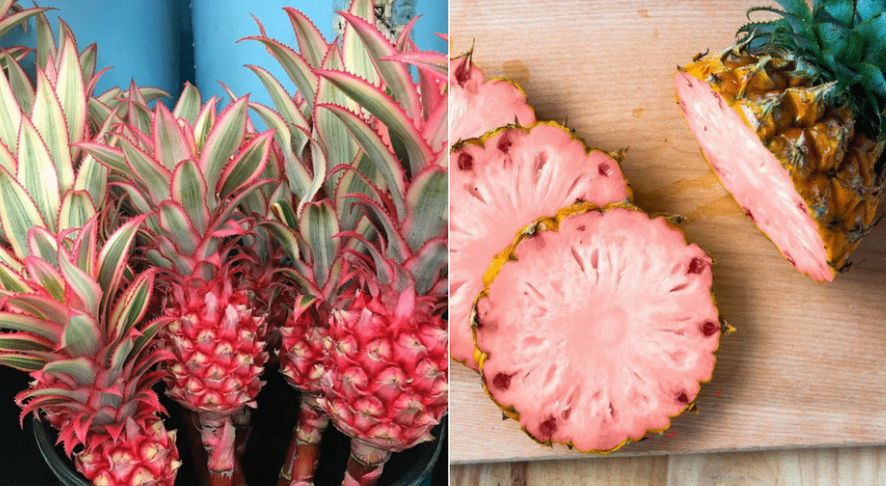
Pineapples are usually associated with juicy yellow or golden flesh, but a much rarer type has attracted attention for its unusual rosy-pink interior. The best-known example is Pinkglow® pineapple, a specialty pineapple developed by Fresh Del Monte. Its pink color comes from lycopene, a naturally occurring pigment also found in foods such as tomatoes and watermelon.
There is, however, an important distinction when discussing “pink pineapples.” There are not currently six widely recognized commercial pineapple varieties with naturally pink flesh. Pinkglow is the principal commercially available pink-fleshed pineapple, while several other specialty pineapples are sometimes included in online lists because they have unusual red, pinkish, or colorful characteristics.
To avoid inventing varieties, this guide separates the genuine pink-fleshed pineapple from related specialty types. The result is a useful identification guide covering six pineapples that people may encounter when searching for pink, red, or unusually colored pineapple varieties.
1. Pinkglow® Pineapple
Pinkglow® is the best-known pineapple with genuinely pink flesh. It was developed by Fresh Del Monte and officially introduced to consumers in 2020 after more than 16 years of development. The fruit is grown commercially in Costa Rica and is produced in limited quantities.
Its unusual color comes from lycopene, the same natural pigment responsible for the red and pink tones of tomatoes, watermelon, and pink grapefruit. In ordinary pineapples, lycopene is converted into other pigments, contributing to the familiar yellow flesh. Pinkglow was developed so more lycopene remains in the fruit.
The flesh is described as pale pink, juicy, tender, and relatively low in acidity, with a sweet, fruity flavor and subtle candy-like notes. Pinkglow pineapples are also distinctive because their crowns are removed before sale, allowing the crowns to be replanted as part of the production system.
Also Read: Pineapples That Taste Like Coconut
2. Rubyglow® Pineapple
Rubyglow® is another specialty pineapple from Fresh Del Monte that is sometimes mentioned alongside Pinkglow when people search for unusually colored pineapples. Its name refers primarily to its distinctive red exterior rather than making it a second standard pink-fleshed pineapple.
Unlike Pinkglow, Rubyglow should not automatically be described as a pineapple with pink flesh. The interior is closer to the conventional pineapple color family, while the outside provides much of its visual appeal.
This distinction is important for an accurate article. Fresh Del Monte lists Rubyglow alongside Pinkglow and Honeyglow as one of its proprietary specialty pineapple products, but Pinkglow remains the company’s specifically pink-interior pineapple.
3. Honeyglow® Pineapple
Honeyglow® is another premium pineapple developed by Fresh Del Monte. It is included here because it is sometimes confused with the company’s other novelty-colored pineapples when people search for unusual pineapple varieties.
Honeyglow is not a true pink-fleshed pineapple. Its flesh has a golden appearance, making it fundamentally different from Pinkglow. The name reflects its sweet flavor profile and distinctive golden fruit rather than a pink interior. Fresh Del Monte currently lists Honeyglow among its proprietary pineapple offerings.
For gardeners and fruit enthusiasts, Honeyglow is therefore better considered a related specialty pineapple, not one of six genuine pink-fleshed varieties. Keeping that distinction prevents misleading identification.
4. Red Spanish Pineapple
Red Spanish is a traditional pineapple group known for its reddish-orange or reddish-brown exterior. It is one of the historically important pineapple types cultivated in tropical regions.
Despite its name, Red Spanish does not mean that the edible flesh is bright pink like Pinkglow. The interior is generally yellowish to pale yellow, so it should not be marketed as a true pink-fleshed pineapple.
Its inclusion on pink-pineapple lists is therefore mainly useful for comparison. The contrast between its colorful exterior and conventional interior illustrates why judging a pineapple’s flesh color from its skin can be misleading.
5. Sugarloaf Pineapple
Sugarloaf pineapple is a distinctive traditional type named for its characteristic shape and exceptionally sweet flavor. It is particularly associated with tropical production and specialty fruit markets.
The flesh is generally pale yellow to white rather than pink. Its light interior can sometimes look unusual compared with the deeper yellow flesh of standard supermarket pineapples.
Sugarloaf is therefore another pineapple that should be kept separate from genuine pink-fleshed cultivars. Its value in a pink-pineapple guide is as a comparison with other specialty pineapples that have unusual appearances without actually having pink flesh.
6. Smooth Cayenne Pineapple
Smooth Cayenne is one of the world’s historically important pineapple groups and has been widely cultivated for fresh consumption and processing. It is known for its cylindrical fruit and relatively smooth leaf margins.
Its mature flesh is normally yellow or golden-yellow, not pink. This makes it a useful benchmark when comparing conventional pineapples with the unusual Pinkglow.
Because Smooth Cayenne is so widely recognized, it demonstrates just how unusual Pinkglow really is. Most familiar commercial pineapples remain within the yellow-to-golden flesh range, while Pinkglow stands apart because of its deliberately developed pink coloration.
Are There Really Six Pink Pineapples?
No—not in the strict sense. If “pink pineapple” means a pineapple whose edible flesh is genuinely pink, Pinkglow® is the major commercially recognized example. Fresh Del Monte specifically describes Pinkglow as its pineapple with a pink interior.
The other five pineapples above are included because they are specialty or traditional pineapple types that can appear in searches for unusual-colored pineapples. However, their flesh should not be incorrectly described as pink.
This distinction is particularly important for anyone writing about pineapple varieties. A pineapple with a red exterior, pale flesh, or unusual shape is not necessarily a pink-fleshed pineapple. Pinkglow gets its characteristic interior color from retained lycopene, making it genuinely different from conventional yellow-fleshed varieties.
What Makes Pinkglow Pineapple Pink?
The pink color is associated with lycopene, a carotenoid pigment naturally present in pineapple. During development, conventional pineapple plants convert much of this pigment into beta-carotene, contributing to their familiar yellow coloration.
Pinkglow was developed using biotechnology to alter this pigment pathway, allowing more lycopene to remain in the fruit. The USDA identifies Pinkglow as a bioengineered pineapple with increased carotenoid levels and pink flesh.
Fresh Del Monte says the pineapple was developed over more than 16 years and is grown in Costa Rica. It is harvested in limited quantities, making it considerably less common than conventional pineapple varieties.
Also Read: Different Types of Pineapple
What Does Pink Pineapple Taste Like?
Pinkglow is generally described as sweeter and less acidic than conventional pineapple. Specialty Produce describes its flesh as tender and juicy, with fruity, subtly floral notes and lingering sweetness.
The flavor is still recognizably pineapple, but its lower acidity can make it seem smoother and less sharp. Recent tasting reports have similarly described it as juicy, sweet, and less tart than many conventional pineapples.
It can be eaten fresh or used in recipes where ordinary pineapple would normally be used. Its unusual color also makes it particularly eye-catching in fruit salads and other dishes.
References
- Fresh Del Monte — Pinkglow® Pineapple: Official information about Pinkglow, its pink flesh, production, and specialty status. Fresh Del Monte Pineapples
- USDA Agricultural Marketing Service — BE Pineapple Crop Summary: Information on the bioengineered pink-fleshed pineapple and its carotenoid characteristics. USDA BE Pineapple Summary
- Fresh Del Monte — Pinkglow® Development and Availability: Information about the development and global expansion of Pinkglow. Fresh Del Monte Pinkglow Information
- Specialty Produce — Pinkglow™ Pineapple: Detailed information about appearance, flesh, flavor, availability, and production. Specialty Produce — Pinkglow Pineapple