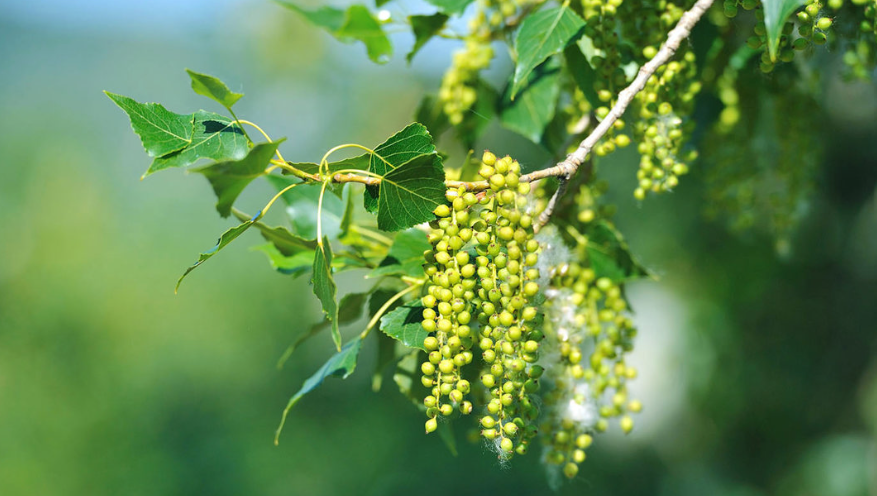
The black poplar tree is one of Europe’s most ecologically significant native hardwoods and, in Britain specifically, one of its rarest, with wild populations now reduced to a fraction of their historical numbers. Recognized by its gnarled, leaning trunk and deeply fissured bark, this once-common floodplain tree has become a symbol of conservation urgency across parts of its native range.
This article covers everything to know about the black poplar, from its botanical background to its identifying traits, growing needs, and landscape applications.
Botanical Classification
The black poplar belongs to the willow family, placing it alongside willows, aspens, and other poplars within one of the most widespread plant families found across temperate climates. Within that family, it sits in the poplar genus, a group of roughly 25 to 35 recognized species distributed throughout the Northern Hemisphere. The black poplar is a deciduous broadleaf tree and, like nearly all its poplar relatives, is dioecious, meaning individual trees are either male or female, a trait that has significantly complicated conservation efforts for the species in parts of its range.
The tree found growing natively in the British Isles is classified as a distinct subspecies, differing from the continental European form by its downy leaves and shoots, its often leaning growth habit, and a trunk frequently covered in prominent burrs and bosses, features generally absent from the smoother-barked continental variety. The species is also known to hybridize readily with other poplars, and a widely planted hybrid cross has become common across much of Europe, occasionally complicating efforts to distinguish true native black poplars from their hybrid relatives in the landscape.
Brief History
The black poplar has grown across the floodplains and river valleys of Europe for thousands of years, historically thriving in the naturally shifting, periodically flooded conditions of major river systems where its wind-dispersed seeds could readily establish on freshly exposed bare soil. In Britain, the species was once a common and familiar sight across the countryside, valued for centuries as a source of timber for construction, cart-making, and other practical uses, given its light, shock-resistant wood.
The steady decline of the species across much of northwestern Europe accelerated significantly from the 18th century onward, as river management projects, drainage schemes, and the conversion of floodplains to agricultural land eliminated much of the naturally disturbed, damp ground the tree depends on for seed germination. Compounding this habitat loss, the widespread introduction and planting of a vigorous hybrid cross between the black poplar and the North American eastern cottonwood, valued for its faster growth and greater timber yield, gradually displaced native plantings across many parts of Europe throughout the 19th and 20th centuries.
By the late 20th century, conservationists in Britain had identified the black poplar as the country’s most endangered native timber tree, prompting dedicated survey, propagation, and planting initiatives aimed at preserving the genetic diversity of the remaining wild population. These efforts have continued into the 21st century, with ongoing conservation programs working to identify, protect, and propagate surviving native specimens across the tree’s fragmented remaining range.
Identifying Characteristics
The black poplar is a large tree, capable of reaching heights of 80 to 100 feet at maturity, with a broad, often irregular crown and a distinctive leaning or twisted trunk that sets it apart from the straighter growth habit of many other poplar species. The bark is dark gray-brown and deeply fissured, giving the tree its common name, and older specimens frequently develop prominent burrs, bosses, and knobbly growths along the trunk, features considered a key identifying trait of the true native form in Britain.
The leaves are glossy, diamond to triangular in shape, typically 2 to 4 inches long, with finely serrated edges and a faint scent of balsam that can often be detected on close inspection. In autumn, the foliage turns a warm golden yellow, providing seasonal color before the leaves drop. The native British subspecies is further distinguished by fine downy hairs found along its young shoots, leaves, and leaf stalks, a trait not typically present in the smoother continental form of the species.
Catkins appear in early spring before the leaves emerge, with male catkins displaying a reddish color and female catkins a yellow-green tone, both pollinated by wind. Following successful pollination, female trees produce copious amounts of cottony, wind-dispersed seed in late spring, though a shortage of nearby male trees across much of the species’ fragmented modern range has made successful natural pollination increasingly rare in some regions.
Habitat and Distribution
The black poplar is native to a broad swath of Europe and parts of western Asia, with its historical range extending from the British Isles across continental Europe. Within Britain, the species is now most prevalent in isolated pockets across Shropshire, Cheshire, Somerset, and East Anglia, a dramatic contraction from its once-widespread presence throughout the country’s river valleys and floodplains.
The species favors boggy, low-lying conditions, thriving near ditches, floodplains, and other consistently damp ground where periodic natural disturbance historically exposed the bare soil its seeds require for germination. This dependence on increasingly rare floodplain habitat, combined with extensive historical drainage and land-use change, has been a primary driver behind the species’ sharp decline across much of its range.
Conservation surveys in Britain have documented an estimated population of only around 7,000 wild black poplars remaining nationally, and strikingly, only a few hundred of these are female trees, a severe imbalance that has left successful natural regeneration through seed exceptionally rare, since a compatible male and female tree must grow within effective pollination distance of one another for viable seed to form.
The species also plays a significant ecological role where it does persist, serving as a food plant for the caterpillars of several moth species, including the hornet moth, wood leopard moth, and poplar hawk moth, while its early spring catkins provide a valuable pollen and nectar source for bees and other pollinating insects.
USDA Hardiness Zone and Growing Needs
The black poplar grows reliably across USDA hardiness zones 3 through 9, giving it a broad climate range consistent with its extensive native distribution across the varied temperate conditions of Europe and western Asia.
For those planting or managing the species, several growing considerations are especially relevant.
Full sun to part shade exposure supports healthy growth, with the species showing good tolerance for a range of light conditions compared to some more sun-dependent poplar relatives. Soil moisture needs are considerable, and the species performs best in deep, rich soils in damp river valleys, tolerating waterlogged and poorly drained ground far better than most other large hardwood trees, though it also grows well in good, deep loams under drier conditions. Soil pH tolerance is broad, with the species accepting chalky, alkaline soils in addition to more neutral conditions.
Spacing should account for the tree’s substantial mature size and vigorous, invasive root system, with most arborists recommending at least 50 feet of clearance from structures, drainage systems, and underground utilities. Wind and site exposure tolerance is notably strong, making the species a practical choice for exposed sites, shelterbelts, and windbreak plantings where many other large trees would struggle.
Disease susceptibility is a significant consideration, since poplar species as a group, including the black poplar, are prone to a variety of fungal diseases, including cankers, leaf rusts, and poplar scab, issues that have compounded the conservation challenges already facing the species in parts of its range.
Pollination requirements are a critical factor for anyone hoping to support natural seed production, since the species is dioecious and requires both a male and female tree growing in reasonably close proximity, a combination that has become increasingly difficult to achieve given the small, scattered nature of many remaining wild populations.
Root suckering is common following damage or disturbance, and fallen or cut trees frequently send up vigorous new shoots directly from the root system. Pruning is best conducted during dormancy in late winter to reduce sap loss and minimize disease entry points.
Landscape Uses
The black poplar’s strong tolerance for waterlogged soils and exposed sites has historically made it a valuable choice for shelterbelts, woodland plantings, and parkland settings, particularly in low-lying areas where few other large trees perform as reliably.
In recent decades, the species has taken on a distinct and increasingly prominent landscape role centered on conservation planting, with dedicated programs across Britain specifically propagating and reintroducing genetically verified native specimens to gardens, parks, riverside restoration projects, and community woodlands as part of a broader effort to preserve the tree’s dwindling genetic diversity.
The tree’s considerable size, vigorous root system, and susceptibility to various fungal diseases mean it is generally unsuitable for small residential gardens or sites near buildings, making it far better suited to large rural properties, floodplain restoration schemes, and dedicated conservation plantings with adequate space to accommodate its eventual scale.
Property owners and land managers interested in supporting the species are often encouraged to source verified native stock specifically, since the widespread presence of hybrid black poplar crosses across much of Europe means that ordinary nursery stock may not represent the true, increasingly rare native form the conservation community is working to preserve.
Fun Facts and Additional Notes
Britain’s entire wild population of native black poplars is estimated at only around 7,000 trees, with fewer than 600 of these being female, making natural seed regeneration a rare event across most of the country’s remaining population.
The native British subspecies earns its scientific designation, meaning birch-leaved, from the way its leaf tips are drawn out to a fine point reminiscent of a silver birch leaf, a subtle but useful identification feature that distinguishes it from other poplar relatives.
Despite its rare and endangered status in Britain, the black poplar does not receive the same legal protection given to some other threatened native species, though individual trees are sometimes safeguarded through Tree Preservation Orders where local authorities recognize their conservation value.
Hybrid black poplars, widely planted for their faster growth and greater timber yield, frequently host mistletoe, a plant that has never been documented growing on a genuine native black poplar, giving conservationists and tree enthusiasts a useful field clue when trying to distinguish true native specimens from their more common hybrid relatives.
The black poplar remains a powerful symbol of habitat loss and conservation resilience across parts of its European range, valued today as much for its rarity and ecological importance as for its historical role as a common floodplain tree. For anyone considering the species, particularly in Britain, sourcing verified native stock and providing the damp, open conditions it requires offers a meaningful way to support the long-term survival of one of Europe’s most endangered native hardwoods.